Apple Cider Donuts
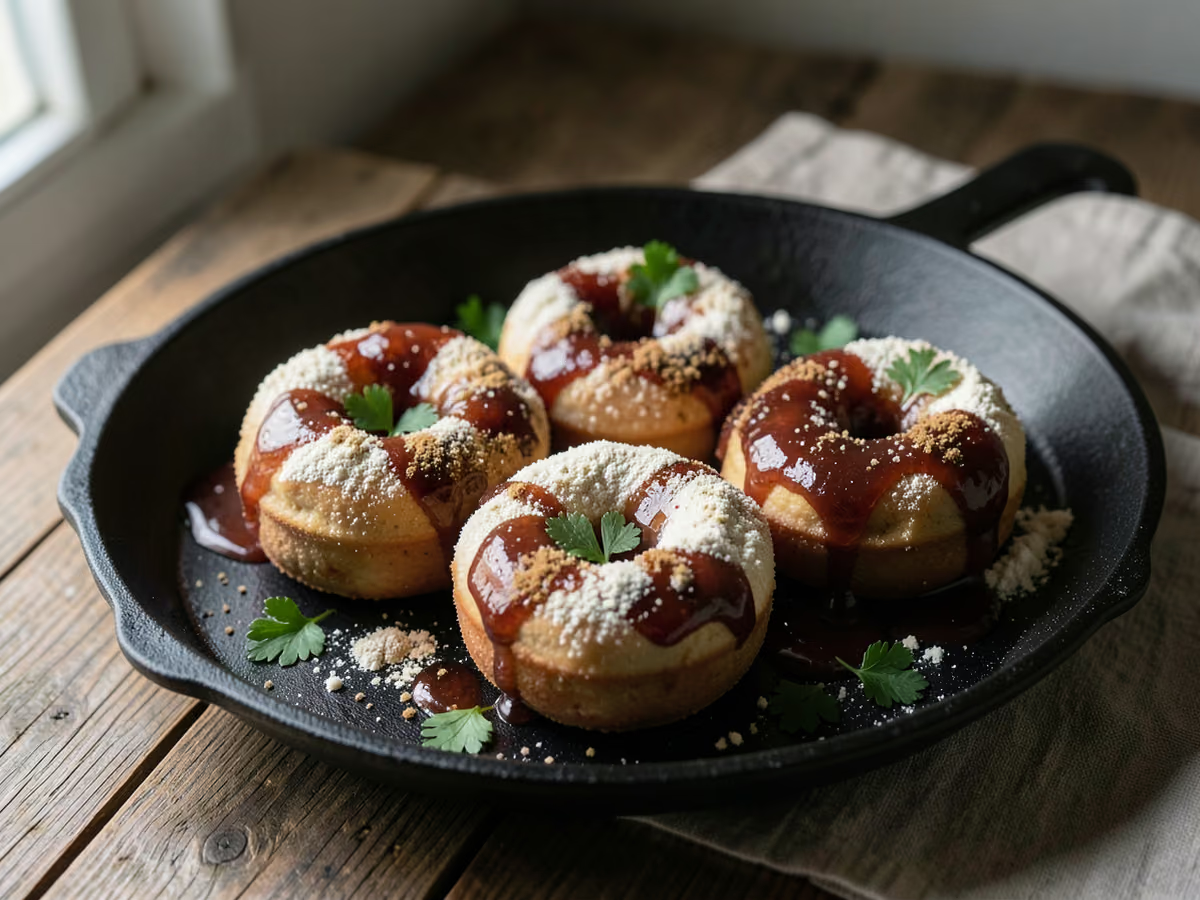
Orchard season, baked instead of fried: cloudy, unfiltered juice simmers down to a syrup, folds into a brown-sugar batter, and comes out of the oven as a dozen tender rings. This batch of apple cider donuts - the sweet press, not the vinegar jar - reduces 240 ml of juice to 120 ml. That step decides everything. Deep apple flavor, or a bland, gummy crumb. Your oven does the rest in 18 minutes. Brush and coat the donuts while they are still warm, then serve them before the sugar loses its crackle and the last of the warmth goes.
- Prep
- 25 min
- Cook
- 18 min
- Total
- 43 min
- Serves
- 12
Ingredients
What you’ll need — tap to tick off as you go
- 240 ml
- 250 g
- 2 tsp
- ½ tsp
- 2 ½ tsp
- ½ tsp
- ½ tsp
- 110 g
- 180 g
- 50 g
- 60 g
- 1 tsp
Process
Timers built in · swap anything · ask as you cook
Pour 240 ml of the cloudy, unfiltered juice into a small saucepan and simmer it over medium heat until it collapses to about 120 ml, 10 to 12 minutes. You are looking for a glossy, syrupy liquid that coats the pan. This step builds the flavor. Unreduced juice carries too much water, and watery batter steams into gummy rings instead of rising tender. Set the pan aside to cool completely.
Heat the oven to 180°C, rack centered. Grease two 6-cavity donut pans generously - every curve, and the center post of each cavity, not just the flat. Do not skip the posts. A fully heated oven sets the crumb evenly, and a thoroughly greased pan lets each ring slide free whole instead of tearing at the post. (There is no need to flour the pans; the fat alone releases them.)
In a large bowl, whisk 250 g all-purpose flour, 2 tsp baking powder, 0.5 tsp baking soda, 1 tsp of the ground cinnamon, 0.5 tsp ground nutmeg, and 0.5 tsp fine salt until you see no streaks of leavener. Whisking now breaks up the lumps that would otherwise survive the gentle fold, and a lump that slips into the oven bakes into a dry pocket no amount of cinnamon sugar will hide.
In a second bowl, whisk the granulated sugar, 50 g packed light brown sugar, and 60 g of the melted unsalted butter until smooth, then whisk in the egg, 60 g yogurt, and 1 tsp vanilla extract. Give it a full minute. The mix should look glossy. (It's fine if a few small butter flecks remain; they bake away.)
Pour the cooled reduction into your wet mixture and whisk until the color evens into a light amber. Cool means cool. A warm pour would start setting the egg before the flour even arrives.
Add the dry ingredients to the wet and fold with a spatula just until no dry streaks remain. Your batter will be thick and scoopable, closer to a soft cookie dough than to a cake batter. Stop mixing right there. Every extra stroke builds gluten, and gluten turns a tender donut tough. (Small lumps bake out, so leave them.)
Spoon or pipe the batter into the prepared pans, filling each cavity about three-quarters full, and smooth the tops with the back of the spoon. A zip-top bag with the corner snipped pipes the neatest rings and keeps your hands clean. Do not push past three-quarters. Batter that climbs the center post bakes lopsided.
Bake for 14 to 18 minutes at 180°C, until the tops spring back under a light press and a toothpick into the thickest part comes out clean or with a few dry crumbs. Don't worry if the tops look pale when the timer sounds. The toothpick has the final word. If it returns wet batter, give the pans 2 more minutes and test again.
Leave the donuts in the pans for 5 minutes, then lift them onto a wire rack. Five minutes does the work: it firms the crumb just enough that each ring holds together as you move it, and the rack keeps the undersides from steaming against hot metal. And this is the part to keep - rushing the turn-out costs you a donut or two, stuck at the post.
Stir the 80 g granulated sugar and the remaining 0.5 tsp ground cinnamon together in a wide bowl. Brush each warm donut all over with the 50 g melted butter, then press it into the sugar until every curve is coated. (Work over the bowl so the overshoot falls back into the sugar.) Butter laid on while the donut is warm soaks in and grabs the sugar. Coat a cold donut and the coating slides off in patches.
Serve the donuts warm or at room temperature. Warm is the way to enjoy them best: the crumb is at its tenderest in the first few hours, while the cinnamon sugar still crackles under a thumb. A batch like this is worth repeating.
Why this recipe works
Simmering does the heavy lifting. The water must go. Those 240 ml of pressed juice carry far more water than 250 g of flour can absorb, and the pot time boils it off; what is left behind - solids, sugars, and apple flavor - concentrates into something raw juice cannot match. The acidity matters too, because it wakes the baking soda. That lift, on top of the baking powder, opens a tender crumb. Melted butter keeps the gluten strands short, so the rings bake cakey rather than chewy. Cool the reduction before it meets the wet mix. Warm liquid would start setting the egg at the wrong moment.
Equipment
- Two 6-cavity donut pans, cavities about 8 cm across
- Small saucepan for the reduction
- Large bowl and a medium mixing bowl
- Balloon whisk
- Silicone spatula
- Wire cooling rack
- Pastry brush
- Piping bag, or a zip-top bag with the corner snipped
Kitchen notes
Kitchen notes
- Reduce the juice a day ahead and chill it; the cooling wait disappears and the concentrated flavor has time to settle.
- Wondering which jug to buy? Skip the shelf-stable juice aisle: for these donuts, cider means the cloudy press, never the vinegar.
- Bake the two pans side by side on the middle rack, and rotate them front to back halfway through if your oven runs hot on one side; even color is the sign of steady heat.
- Coat in small relays. Brush and sugar two donuts at a time while the rest stay warm in the pan, so every ring meets the sugar at the same temperature.
- Let the donuts cool completely before they go into a bag or box; warm rings steam each other soft and the coating turns tacky.
- Room-temperature egg and yogurt blend into the melted butter without seizing into flecks; cold ones need extra whisking and never quite smooth out.
Common mistakes
- Dense, gummy rings: unreduced juice flooded the batter, overmixing built gluten, or packed flour added 20 to 30 g nobody asked for. Simmer the juice to 120 ml, weigh the flour, and fold only until you see the dry streaks vanish.
- Dry, tough crumb: the flour measured heavy or the bake ran long. Spoon and level your 250 g, treat 14 to 18 minutes as the window, and trust the spring-back test. The clock lies.
- Coating sliding off in sheets? The donuts were brushed too hot or drowned in butter. Let them cool 5 minutes, lay on a thin, even layer of butter, and toss them in the cinnamon sugar immediately.
- Rings stuck at the center post: skimpy greasing. Coat every ridge and the post itself, and give the donuts their 5 minutes of rest before you turn them out. (A scale ends most baking debates; this one is about coverage.)
- Flat, pale donuts: tired leaveners or an early pull. Check the dates. Old powder and a quick pull both show up pale; wait for a clean toothpick.
- Gummy in the middle? The juice went in unreduced. Simmer it down to 120 ml, and let it cool fully before it touches the egg and sugars.
Serving suggestions
- Serve them warm: cold milk, black coffee, or a mug of hot spiced juice alongside - the drink cuts the sugar, and your crumb is at its best within the hour, while the outer shell still has its snap.
- Stack a batch in a lined basket for a fall breakfast or brunch. They travel well. The cinnamon sugar holds through a car ride.
- A day-old donut split and warmed in a buttered skillet turns into a breakfast worth setting an alarm for, crisp at the edges and soft in the middle.
- Leftover donuts make a fast dessert over vanilla ice cream or thick yogurt. Crumble them in warm. Let the sugar melt into the cream.
Variations
- Muffin-tin version: bake the batter in a greased muffin tin at 180°C for 16 to 20 minutes, or press 8 cm rings out on parchment. The crumb trades a little tenderness for a muffin's shape, and the coating covers the difference.
- Mini rings: smaller cavities bake faster. Start checking early, and lean on the spring-back test rather than the timer.
- Glazed instead of sugared: skip the cinnamon sugar and spread a thin maple or vanilla glaze over the cooled donuts; the crumb stays soft a day longer under the glaze.
- Want a thicker shell? Wait a minute after the first coat, then brush and sugar each donut a second time for a double layer.
Refrigerator
- RefrigeratorA sealed tin keeps them 2 days at room temperature, or 4 days in the refrigerator. Past the 2-hour mark, anything you have not eaten belongs in a container, not on the counter.
- ReheatingA 150°C oven brings your donuts back in 5 minutes, and the warm-up is worth it for the coating alone. Re-brush with melted butter and toss in a fresh round of cinnamon sugar before serving.
- FreezingFreeze the uncoated rings flat on a tray, then seal them in a zip-top bag; they keep up to 2 months. A 1-hour thaw on the counter, a 5-minute warm-up at 150°C, and the coating goes on last, because cinnamon sugar will not survive the freezer.
- Make aheadThe reduction and the two bowls keep up to 1 day apart: simmer the juice, mix the dry and the wet mixtures separately, cover both, and refrigerate. Fold them together the moment before baking, because the leaveners start working as soon as the batter comes together.
Updated:
How this recipe was developed
- Sally's Baking Addiction, Baked Apple Cider Donuts (stove-reducing cider to concentrate its flavor; the reduction must cool before it meets the batter; baked, not fried)
- Chef John / Allrecipes, Baked Apple Cider Donuts (two 6-cup donut pans filled three-quarters full; the spring-back test and lightly browned tops as doneness signs; cinnamon-sugar finish)
- King Arthur Baking Ingredient Weight Chart (1 cup all-purpose flour = 120 g; spoon and level or weigh, since scooped flour overmeasures)
- USDA FSIS, Leftovers and Food Safety (refrigerate within 2 hours; keep refrigerated 3 to 4 days; frozen food stays safe but loses quality)
Editorial references are kept internally for verification. This page makes no claim of external certification or professional testing.
FAQ
The questions we get asked most
Why did my donuts come out dense and gummy?
Nine times out of ten it is the juice: poured in unreduced, 240 ml carries far too much water into the bowl, and that extra liquid steams the crumb into something bouncy and tight instead of baking it soft and open, which is why the reduction is the step you cannot skip. Overmixing and heavy flour finish the job. Fold just until the dry streaks vanish, and weigh the 250 g if you can. Your batter should scoop like soft cookie dough, thick enough to mound on the spoon but loose enough to settle into the pans on its own.
Can I bake these without a donut pan?
Yes. A greased muffin tin bakes the same batter at 180°C for 16 to 20 minutes, or you can shape 8 cm rings on a parchment-lined sheet. No problem if they come out muffin-shaped; the coating hides most shape sins. Either route gives you a more muffin-like crumb, still spiced and tender.
Can I use bottled apple juice instead of pressed juice?
Use 240 ml of clear bottled juice plus 1 tsp lemon juice, and reduce it to 120 ml the same way. Bottled juice has the sugar and the acid you need. What you lose is the cloud, so expect a slightly lighter body and a tamer apple note.
How do I know when the donuts are done?
Press a top: it should spring back. A toothpick into the thickest part should come out clean or with a few dry crumbs. Wet batter on the toothpick means 2 more minutes and another test. Judge by the toothpick, because pale tops alone may just mean your oven runs cool, and the toothpick is the only judge that never gets it wrong.
Can I make the batter ahead of time?
Not the finished batter, because the leaveners start working the moment it comes together. Reduce the juice and mix the dry and the wet bowls separately up to 1 day ahead, covered and refrigerated. Fold them together just before you fill the pans.
Why did the cinnamon sugar turn wet and clumpy?
The donuts were coated too hot, or the butter went on too heavy. Wait the full 5 minutes after they leave the pans, brush a thin layer of butter, and press each donut into the sugar right away; a dry, even coat comes from restraint, not enthusiasm.
Can I freeze these donuts?
Yes, though coat them after thawing. Freeze the bare rings in a single layer, seal them in a zip-top bag, and they hold up to 2 months. Thaw them 1 hour at room temperature, give them 5 minutes at 150°C, then brush and coat.
Ask KitchenMind about this recipe
Tell it what’s different tonight — it works within the actual recipe.