Baked Jalapeño Poppers
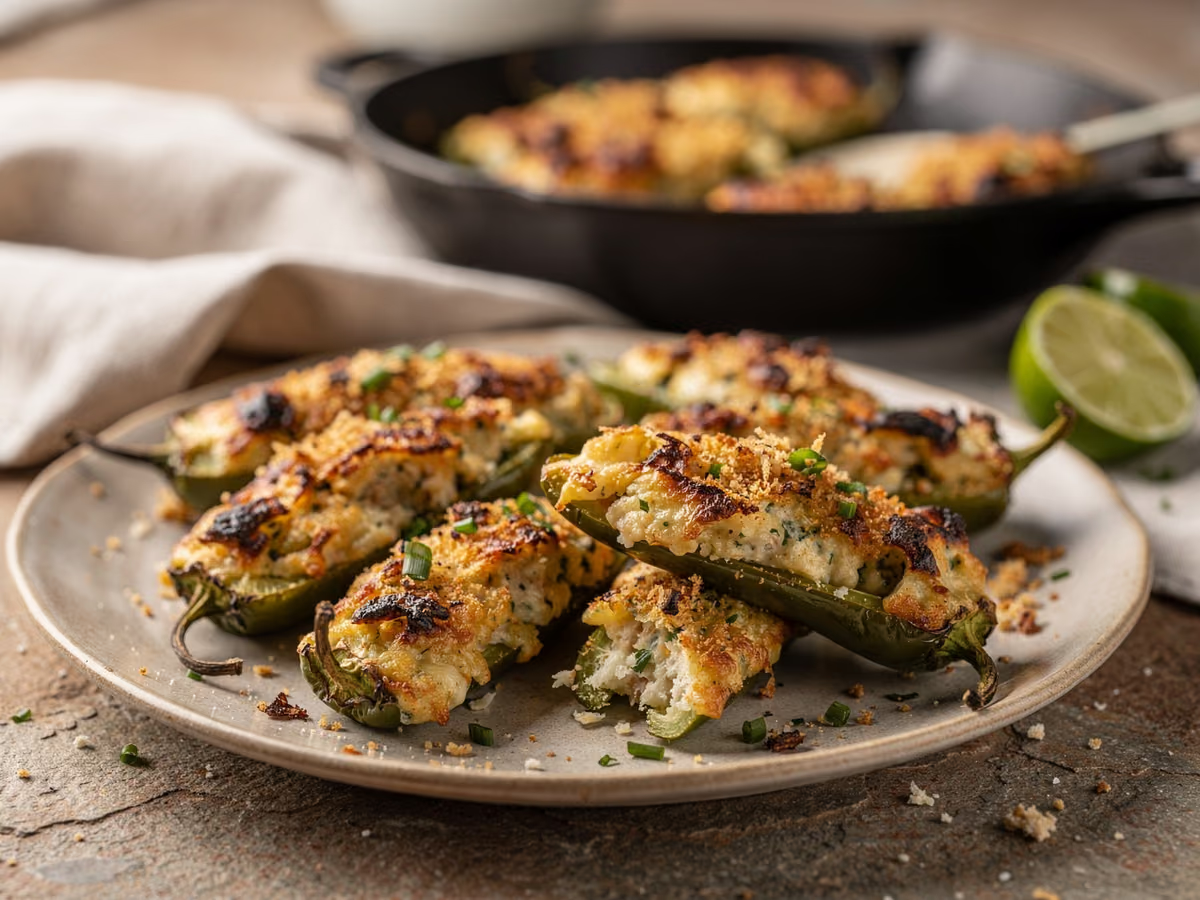
Two dozen jalapeño halves, a scoop of cream cheese and sharp cheddar, and a panko lid that crackles under the fork: that is the whole architecture. The oven does the rest at 200°C in 20 minutes or less, with no frying oil, no splatter, and no second pan to scrub. Prep runs 20 minutes, most of it spent seeding peppers. The tray goes from counter to oven in one move, and four people can finish it before the cheese stops pulling.
- Prep
- 20 min
- Cook
- 20 min
- Total
- 40 min
- Serves
- 4
Ingredients
What you’ll need — tap to tick off as you go
- 200 g
- 100 g
- ½ tsp
- ½ tsp
- ¼ tsp
- ¼ tsp
- 50 g
- 1 tbsp
Process
Timers built in · swap anything · ask as you cook
Heat the oven to 200°C with a rack in the upper third, and line a rimmed sheet with parchment or set a wire rack inside it. A fully heated oven sets your panko before the peppers release water. A slow start steams the topping soft.
Rinse the peppers and dry them completely, then halve each one lengthwise through the stem so every piece keeps a handle. Scoop out the seeds and scrape the white walls with a small spoon, leaving as much membrane as your heat tolerance allows. Water is the enemy here. Wipe each hollow dry, because a wet cavity turns to steam and loosens the filling from below.
Beat the 200 g cream cheese in a medium bowl until it is smooth (a stand mixer is overkill here), then fold in 100 g cheddar, the two sliced green onions, 0.5 tsp garlic powder, 0.5 tsp smoked paprika, salt (0.25 tsp) and black pepper (0.25 tsp). Stop when the mix looks even. Overworking warms the cheese and gives you a loose filling that slumps as it bakes.
Spoon the filling into each half, pressing it into the corners and mounding it about a centimeter above the rim. The mound settles in the oven, so a flush fill ends up concave. Set the stuffed halves on your sheet with a finger of space between them (crowding steams them).
Toss the 50 g panko with 1 tbsp olive oil in a small bowl until every flake is slick, then scatter it over the filling and press gently so it sticks. Oil is what turns the crumbs golden. Dry panko on a wet filling simply absorbs steam and stays pale.
Bake at 200°C for 18–20 minutes, until the peppers bend when you lift one and the topping is deep golden. Cool on the sheet for 5 minutes. The filling holds heat long after it stops looking molten, so that wait is a burn guard as much as a texture step.
Why this recipe works
Capsaicin is stored in the white placenta that lines the inner wall, not in the seeds, so scraping with a spoon does more for heat control than any rinse. Cream cheese supplies fat and stabilizers that hold the filling together once it is hot, and the cheddar melts into that base, carrying salt and a sharper edge that keeps the whole bite from tasting flat. Panko is dry and coarse, which lets each flake drink the olive oil and brown instead of steaming, and a 200°C oven sets that crumb before the peppers slump. Every half stays a scoopable boat, never a puddle.
Equipment
- Rimmed baking sheet, about 30 x 40 cm
- Wire rack that fits inside the sheet
- Parchment paper
- Small spoon or melon baller
- Medium bowl and flexible spatula
- Small bowl for the panko
- Chef's knife and cutting board
- Kitchen gloves for sensitive skin
Kitchen notes
Kitchen notes
- Taste one pepper before you stuff the rest. A thin sliver from the stem end tells you how hot your batch really is. (Heat can triple between two pods in the same bag.)
- Want a crisper lid? Run the tray under the broiler for the last 1-2 minutes. Stand at the door. Panko goes from gold to black in seconds.
- Want a dry bottom? A wire rack is the better choice over parchment when your peppers tend to leak: the filling drips clear, and the bottoms stay dry instead of sitting in moisture.
- For a softer pepper, blanch the halves for 2 minutes in boiling water, then drain and dry them well before stuffing, because the oven then only has to melt the cheese and brown the crumb rather than soften the flesh.
- Salt the filling, never the empty peppers. Salting the halves draws water to the surface, and a wet tray is the fastest route to a soggy crumb.
- If the crumb browns before the peppers soften, don't worry: tent the tray with foil and give it 3 more minutes. No thermometer needed for these; the bend of the pepper tells you more than any reading.
Common mistakes
- Soggy topping: the panko went on dry or the pepper hollows were still wet, so steam rose into the crumb instead of escaping through it. Dry the insides, and toss every crumb with the full tablespoon of oil.
- A punishing burn: too much membrane survived the scrape, and jalapeño heat varies pod to pod. Clean the walls completely for a mild tray, and taste a sliver before you commit the rest.
- Cheese spilling onto the sheet: the halves were overfilled or packed too tightly. Mound just above the rim, and leave space between peppers so hot air can move.
- Pale, sandy crumb? The oven ran cool or your tray sat on the bottom rack. Bake at 200°C in the upper third, and give a stubborn tray 1-2 minutes under the broiler.
- Flat, collapsed boats: thin-walled pods soften faster than the filling sets. Buy 8 cm peppers of even size, and pull the tray as soon as they bend.
Serving suggestions
- Serve them hot from the sheet, while the cheese still pulls and your crumb is at its crispest, with a stack of napkins and something cold to drink.
- Something cold and crunchy alongside: jicama sticks, cucumber spears, or a plain cabbage slaw.
- A bowl of salsa verde or a thin avocado sauce for dipping, kept on the side so the topping stays dry.
- Any leftover filling spreads well on toast the next morning. These are made for sharing, and a tray this size empties fast.
Variations
- Mild tray: use mini sweet peppers for half the batch and tuck them toward the cooler edge of the sheet, since they soften sooner than jalapeños and should come out first when you test the tray.
- Hotter tray: leave a band of membrane down one side of each half and add a dust of cayenne to your panko.
- Smoked gouda filling: go with 50 g of smoked gouda in place of 50 g of the cheddar. The melt loosens a little, so mound slightly less and expect a softer set.
Refrigerator
- RefrigeratorCool the tray first, then layer any leftover poppers flat in a covered container and refrigerate for up to 3 days, keeping them topping-side up so the crumb survives instead of steaming against the lid. Keep them topping-side up so your crumb survives.
- ReheatingWarm them on a sheet at 180°C for 8-10 minutes, until the filling is hot through; 74°C at the center is the USDA target for reheated food. Skip the microwave. It turns panko to paste.
- FreezingFreeze stuffed halves without topping on a sheet until firm, then bag them for up to 3 months. Bake from frozen at 200°C for 25-30 minutes and add the crumb after the first 10 minutes. Baked poppers reheat from frozen at 180°C in 10-12 minutes.
- Make aheadYou can fill the tray up to 24 hours before baking, cover, and chill; hold the oiled panko in its bowl until the moment of baking. A cold tray needs 2-3 extra minutes in the oven.
Updated:
How this recipe was developed
- USDA FSIS, Leftovers and Food Safety (refrigerate within 2 hours; keep 3 to 4 days; reheat to 74°C)
- USDA FSIS, Safe Minimum Internal Temperature Chart (leftovers and casseroles reheated to 74°C)
- New Mexico State University Chile Pepper Institute, The Chile Cultivars of New Mexico (capsaicinoids form in the placenta, not the seeds)
- The Kitchn, Jalapeño Poppers (even-size pods, toasted panko for a crisp topping, 20-22 minute bake)
Editorial references are kept internally for verification. This page makes no claim of external certification or professional testing.
FAQ
The questions we get asked most
How do I make jalapeño poppers less spicy?
Scrape out every bit of the white membrane, since that is where capsaicin is stored, and rinse the hollows under cold water. A 30-minute soak pulls out a little more heat, and full-fat cream cheese and cheddar blunt what is left. Taste one raw sliver before you stuff the rest.
Can I prepare jalapeño poppers ahead of time?
Yes, up to 24 hours. Stuff the halves, cover the tray, and chill; keep the oiled panko in a separate bowl and scatter it just before baking. Cold filling needs 2-3 extra minutes in the oven.
Can I freeze jalapeño poppers?
Both ways work. Freeze stuffed, untopped halves on a sheet until firm, then bag them; bake from frozen at 200°C for 25-30 minutes, adding the crumb after 10. Fully baked poppers reheat from frozen at 180°C in 10-12 minutes.
Why are my jalapeño poppers soggy?
Water, almost always. Dry the pepper hollows, use block cream cheese rather than the spreadable tub, and do not overfill. A wire rack lets steam escape from below instead of collecting on your parchment.
Can I use a different type of pepper?
Yes, and the choice changes the bite. Mini sweet peppers make a mild tray, serranos a hotter one, and poblanos a larger, meatier popper that needs a few extra minutes. Match the pod size within a tray so they finish together.
How do I know when jalapeño poppers are done?
The pepper should bend when you lift it and the topping should be deep golden. Insert a thin knife into the center of one popper and leave it there for 5 seconds; if it comes out hot to the touch, the filling is set all the way through, and a blade that feels only warm means the tray needs more time. If the crumb browns early, tent the tray with foil.
Ask KitchenMind about this recipe
Tell it what’s different tonight — it works within the actual recipe.