- Prep
- 10 min
- Cook
- 50 min
- Total
- 60 min
- Serves
- 12
Ingredients
What you’ll need — tap to tick off as you go
- 1 ½ l
- 200 g
- 2 tbsp
- ½ tsp
- 30 g
Process
Timers built in · swap anything · ask as you cook
Grease a 20 cm square tray or shallow dish with a little ghee and line the base with baking paper. Set it near the stove before you start.
Pour the whole milk into a wide, heavy-bottomed pan and bring it to a boil over medium heat, stirring often so it does not catch.
Lower the heat and simmer the milk, stirring every couple of minutes and scraping the sides and base, for about 30 to 35 minutes until it has reduced by roughly half and thickened to a light cream consistency.
Add the granulated sugar and stir until it dissolves completely, then keep cooking over medium-low heat.
Add 2 tbsp ghee and the ground cardamom, and continue stirring constantly for 10 to 15 minutes. The mixture will bubble, then gradually pull away from the sides of the pan and form a soft mass.
Test the set: drop a small spoonful onto the greased tray. It is ready when it holds its shape and does not spread after 30 seconds. If it spreads, cook 3 to 4 minutes more and test again.
Tip the mixture into the prepared tray and press it into an even layer about 2 cm thick with the back of a greased spoon.
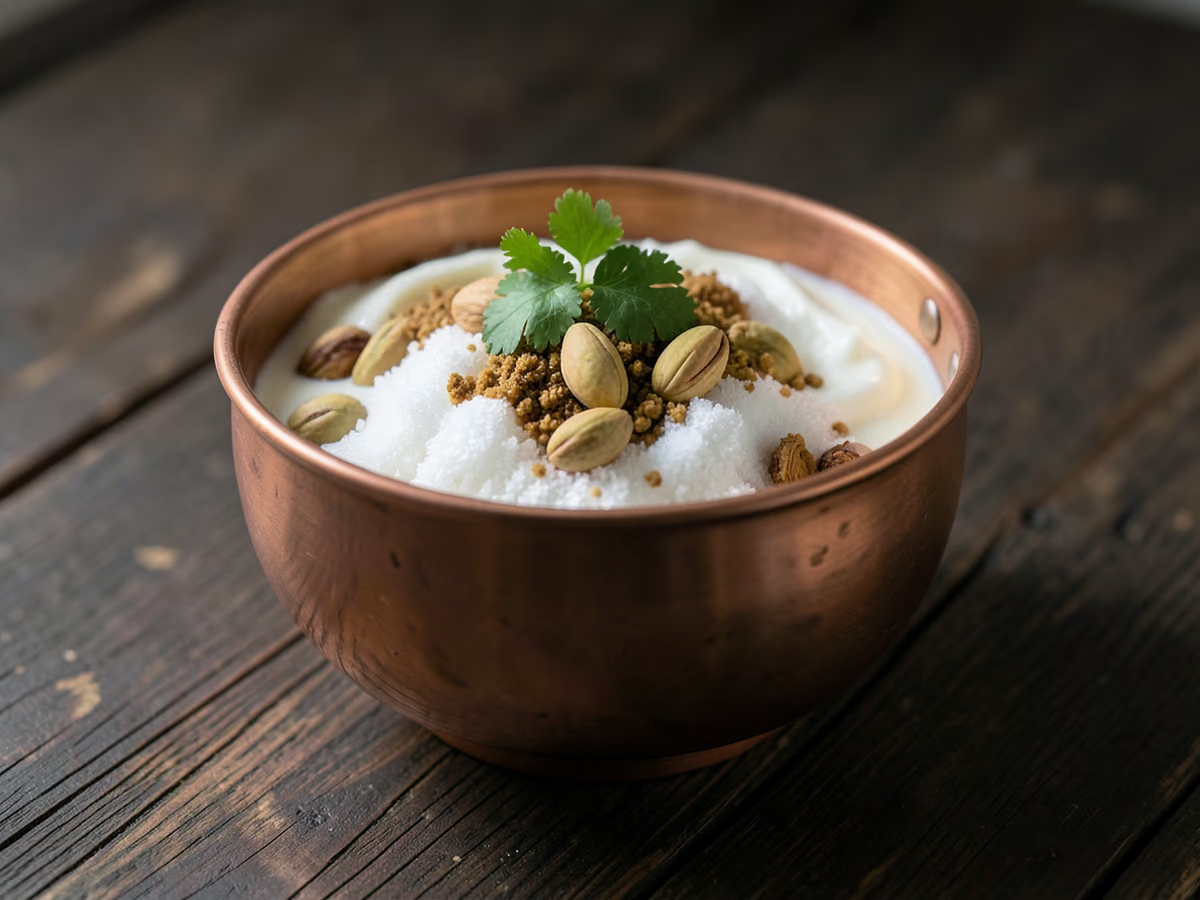
Scatter the chopped pistachios over the top and press them in lightly. Leave at room temperature for 2 to 3 hours until fully firm.
Run a knife around the edge, lift the slab out, and cut into 12 diamonds or squares with a sharp knife.
Kitchen notes
Kitchen notes
- The most common mistake is undercooking: if the barfi still looks glossy and wet when you press it, return the pan to the heat and stir for a few more minutes. It should look matte and leave the sides of the pan clean.
- Use a wide pan, not a deep narrow one. More surface area means faster evaporation and less risk of scorching the milk at the base.
- Stir constantly once the sugar goes in. Sugar makes the mixture catch and burn much faster than plain milk.
- If the mixture turns grainy after cooling, it was cooked too long or stirred too hard at the end. Next time pull it off the heat as soon as it forms a soft, non-sticky mass.
Substitutions
- whole milk→whole milk plus 100 g milk powder stirred in during the last 10 minutes for a faster, firmer set
- ghee→unsalted butter
- pistachios→blanched almonds or cashews, chopped
- ground cardamom→1 tsp rose water added off the heat
Storage & reheating
Keep the cut barfi in an airtight container at room temperature for up to 3 days, or in the fridge for up to 1 week; refrigerating makes it slightly firmer, so let it sit at room temperature for 15 minutes before serving. For longer storage, layer pieces between sheets of baking paper in a freezer-safe box and freeze for up to 2 months, then thaw in the fridge overnight. Do not reheat barfi; it is eaten at room temperature.
FAQ
The questions we get asked most
Why is my barfi still soft and sticky after cooling?
It was not cooked long enough, so too much moisture remains. Return the mixture to the pan and cook over medium-low heat, stirring constantly, for 5 to 10 minutes more, then do the spoon test again. It is ready when a drop on a greased plate holds its shape and feels dry to the touch.
Can I make barfi with milk powder instead of reducing fresh milk?
Yes. Combine 200 g milk powder, 150 ml whole milk, 100 g sugar and 2 tbsp ghee in a pan and cook over medium-low heat for 8 to 10 minutes until it forms a soft mass. It is much faster but slightly less rich than the slow-reduced version.
Why did my barfi turn grainy or chewy?
Graininess comes from cooking past the set point or stirring too vigorously once the mixture thickens, which makes the sugar crystallise. Chewiness means it was cooked too long. Pull it off the heat as soon as it leaves the sides of the pan and press it into the tray without overworking it.
How do I know when the barfi is done?
Drop a small spoonful onto the greased tray. If it holds its shape, does not spread and feels firm rather than sticky after 30 seconds, it is done. Another sign is that the mixture pulls away from the sides of the pan and looks matte instead of glossy.
Can I freeze barfi?
Yes. Cut it into pieces, layer them between sheets of baking paper in a freezer-safe box and freeze for up to 2 months. Thaw overnight in the fridge and bring to room temperature before eating; the texture stays close to fresh.
Can I add chocolate or other flavours to barfi?
Yes, but add them at the end. Stir 2 tbsp cocoa powder or 1 tsp rose water into the mixture in the last 2 minutes of cooking, after it has thickened, so the added liquid does not stop it setting. Nuts and saffron can be folded in at the same point.
How long does barfi keep and how should I store it?
At room temperature in an airtight container it keeps for up to 3 days, and in the fridge for up to 1 week. Keep pieces separated with baking paper if stacking. Bring to room temperature for 15 minutes before serving so it softens slightly.
Ask KitchenMind about this recipe
Tell it what’s different tonight — it works within the actual recipe.