- Prep
- 10 min
- Cook
- 25 min
- Total
- 35 min
- Serves
- 4
Ingredients
What you’ll need — tap to tick off as you go
- 300 g
- 1 tbsp
- 1 tbsp
- 30 g
- 2 tbsp
- 500 ml
- 1 tsp
- ½ tsp
- 10 g
Process
Timers built in · swap anything · ask as you cook
Put the coarse bulgur in a bowl, cover with cold water, swish for 10 seconds, then drain through a fine sieve and set aside. This removes excess starch so the grains stay separate.
Heat the olive oil and butter in a wide heavy pan over medium heat until the butter foams.
Add the onion and green bell pepper and cook for 5 to 6 minutes, stirring, until soft and just turning golden at the edges.
Stir in the tomato paste and red pepper paste and fry for 1 minute until the paste darkens slightly and smells sweet rather than raw.
Add the grated tomato and cook for 3 to 4 minutes until the mixture thickens and most of the liquid has evaporated.
Add the drained bulgur, salt and black pepper and stir for 2 minutes so every grain is coated in the tomato mixture.
Pour in the hot water, stir once, and bring to a gentle simmer. Do not stir again after this point.
Cover the pan, lower the heat, and cook for 12 to 15 minutes until the bulgur has absorbed all the water and small steam holes appear on the surface.
Take the pan off the heat, lay a clean kitchen towel over the rim, replace the lid, and rest for 10 minutes so the grains finish steaming and firm up.
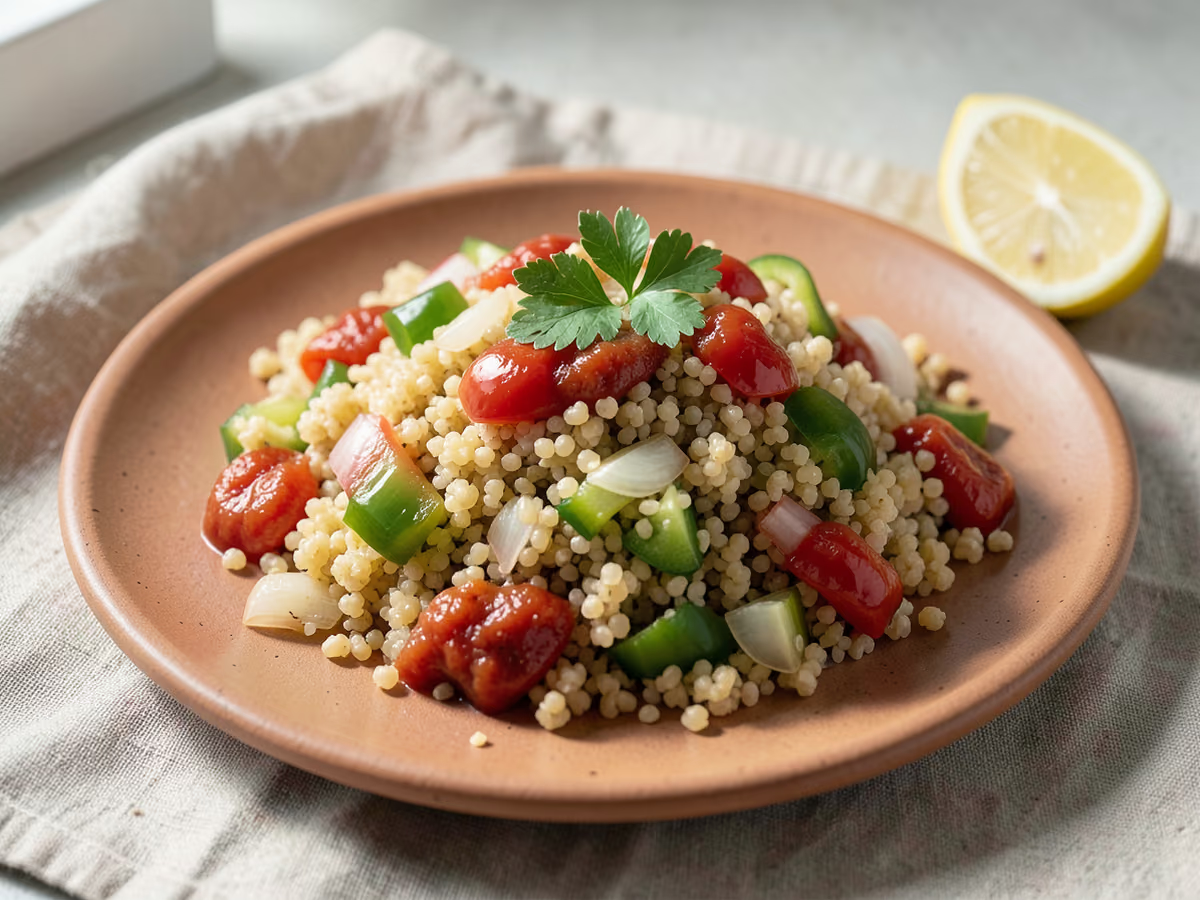
Fluff gently with a fork, fold in the chopped parsley, and serve.
Kitchen notes
Kitchen notes
- The most common mistake is stirring the pilaf while it simmers; stirring releases starch and turns the grains sticky. Stir only before the water goes in, then leave it alone.
- Rinsing and draining the bulgur is not optional if you want separate grains. Skipping it gives a gluey, porridge-like texture.
- The towel-under-the-lid rest is the Turkish trick that absorbs condensation and stops the top layer going soggy. Do not skip it.
- Coarse bulgur needs roughly 1.5 times its volume in water. If your bulgur is fine grade, reduce the water to 400 ml or the pilaf will be wet.
- If the water is absorbed but the grains still taste chalky, add 50 ml hot water, cover, and cook 3 more minutes.
Substitutions
- butter→extra olive oil for a dairy-free version
- red pepper paste→1 extra tbsp tomato paste plus a pinch of mild paprika
- green bell pepper→1 long green Turkish pepper or half a green capsicum
- coarse bulgur→fine bulgur, using 400 ml water and 10 minutes cooking time
Storage & reheating
Cool the pilaf within 1 hour, then store in an airtight container in the fridge for up to 3 days. It freezes well for up to 2 months in a sealed bag; thaw overnight in the fridge. Reheat in a covered pan over low heat with a splash of water, or in a microwave at 600 W for 2 to 3 minutes, fluffing with a fork halfway. Do not reheat more than once.
FAQ
The questions we get asked most
Why did my bulgur pilavi turn out sticky and mushy?
Almost always too much water or too much stirring. Coarse bulgur needs only about 1.5 times its volume in liquid, and once the water is in you should not stir until the rest. Rinsing the bulgur before cooking also removes surface starch that makes it gluey.
Can I make bulgur pilavi ahead of time?
Yes. Cook it fully, cool it within an hour, and refrigerate for up to 3 days. Reheat in a covered pan over low heat with 2 to 3 tablespoons of water so the grains steam back to life rather than drying out.
What is the difference between bulgur pilavi and Turkish rice pilaf?
Bulgur pilavi uses cracked wheat instead of rice, so it has a nuttier flavour, more fibre, and a chewier bite. It also cooks faster, about 15 minutes of simmering, and absorbs tomato and pepper paste particularly well.
Can I use fine bulgur instead of coarse?
Yes, but reduce the water to about 400 ml and cut the simmering time to 8 to 10 minutes. Fine bulgur is better known for kisir, the cold salad, so the texture will be softer and less distinct than with coarse pilavlik bulgur.
How do I know when the bulgur is fully cooked?
The water should be completely absorbed and the surface should show small steam holes. Taste a grain: it should be tender with a slight chew and no chalky centre. If it is still firm, add 50 ml hot water and cook 3 more minutes covered.
Can I make bulgur pilavi without tomato paste?
Yes. Use 3 grated ripe tomatoes instead of 2 and add 1 extra tablespoon of red pepper paste, or simply cook it as a plain pilaf with only butter, onion and salt. The colour and depth will be lighter but the method stays the same.
Is bulgur pilavi gluten-free?
No. Bulgur is made from wheat, so it contains gluten and is not suitable for a gluten-free diet. For a similar dish, use rinsed short-grain rice or quinoa and adjust the water and cooking time accordingly.
Ask KitchenMind about this recipe
Tell it what’s different tonight — it works within the actual recipe.