- Prep
- 15 min
- Cook
- 30 min
- Total
- 45 min
- Serves
- 4
Ingredients
What you’ll need — tap to tick off as you go
- 1 ¼ l
- 2 tbsp
- 30 g
- 3 tbsp
- 300 g
- 250 g
- 60 g
- 1 tsp
- ¼ tsp
Process
Timers built in · swap anything · ask as you cook
Pour the chicken broth into a medium saucepan and bring to a bare simmer over low heat. Keep it hot while you cook the rice.
In a wide heavy pot, warm the olive oil and 20 g of the unsalted butter over medium heat. Add the chopped onion and cook for 4 to 5 minutes until soft and translucent, not browned.
Add half of the flat-leaf parsley and the carnaroli rice. Stir for 1 to 2 minutes until the grains are glossy and smell toasted.
Add one ladle of hot chicken broth and stir until nearly absorbed. Continue adding broth a ladle at a time, stirring often, for 10 minutes.
Stir in the frozen peas and 1 tsp salt. Keep adding broth and stirring for another 8 to 10 minutes, until the rice is al dente and the peas are tender.
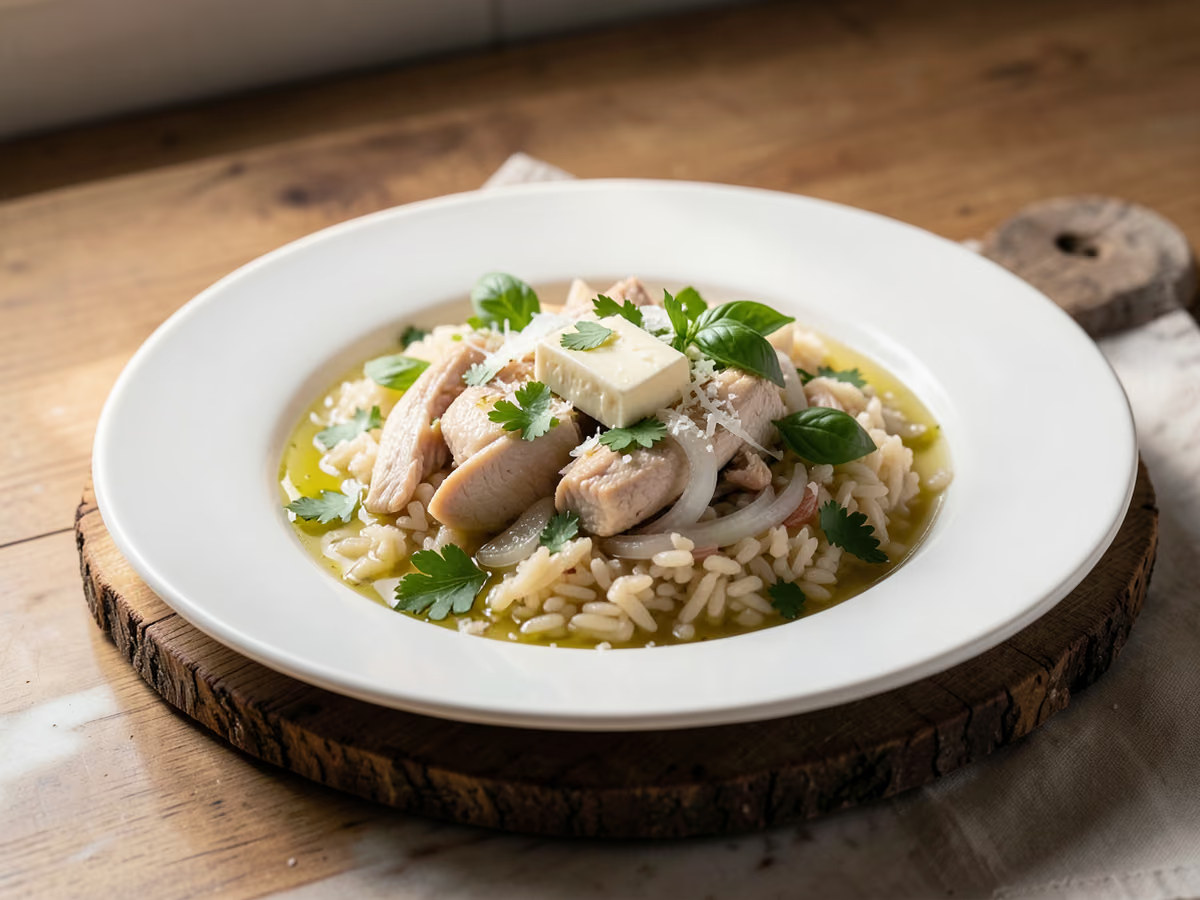
The dish should be looser than a standard risotto: add a final ladle of broth so it flows like a thick soup. Taste and adjust salt.
Off the heat, stir in the remaining 10 g unsalted butter, the grated parmesan, and the rest of the parsley. Add black pepper if using. Cover and rest 2 minutes.
Serve immediately in warm shallow bowls, spooning any extra broth over each portion.
Kitchen notes
Kitchen notes
- The most common mistake is cooking risi e bisi too dry. It should be all'onda, wavy and spoonable, so keep the final texture looser than risotto and serve in bowls.
- Use a wide heavy pot rather than a narrow saucepan; the larger surface area lets the rice cook evenly and keeps the peas bright green.
- Do not rinse the rice. Rinsing washes off surface starch, which is what gives the dish its naturally creamy body without cream.
- Grate the parmesan finely and add it off the heat. Boiling cheese can turn stringy and grainy.
- If using fresh peas, add them 5 minutes before the rice is done; frozen peas need about 8 to 10 minutes.
Substitutions
- chicken broth→vegetable broth for a vegetarian version
- carnaroli rice→vialone nano or arborio rice
- parmesan→grana padano or pecorino romano
- frozen peas→fresh shelled peas
Storage & reheating
Cool leftovers within 1 hour and store in an airtight container in the fridge for up to 2 days. The rice will absorb liquid and thicken; reheat gently in a saucepan over low heat with a splash of broth or water, stirring until loose and hot. Do not freeze, as the rice turns mushy and the peas lose their texture.
FAQ
The questions we get asked most
Why did my risi e bisi turn out dry and sticky?
You likely added too little broth or cooked it too long after the rice was al dente. Risi e bisi should be looser than risotto, so keep the broth hot and add a final ladle just before serving. Stirring often and tasting the rice from 16 minutes onward prevents overcooking.
Can I use frozen peas instead of fresh?
Yes, frozen peas work very well and are often sweeter than out-of-season fresh peas. Add them straight from the freezer about 8 to 10 minutes before the rice is done. If using fresh shelled peas, add them about 5 minutes before the end.
Can I make risi e bisi ahead of time?
It is best served immediately, but you can prepare it up to the point before the final butter and parmesan, then cool and refrigerate for up to 1 day. Reheat gently with extra broth, then finish with butter and parmesan off the heat. The texture will be softer than freshly made.
How do I know when the rice is done?
Bite a grain: it should be tender with a slight firmness at the center, al dente, not chalky and not mushy. The dish should flow slowly when you tilt the pot, like a thick soup. Start checking at 16 minutes of total rice cooking time.
Can I add pancetta or bacon to risi e bisi?
Traditional Venetian versions sometimes include a little cured pork, but this recipe keeps it halal and meat-free. For a similar savory depth without pork, add a finely chopped celery stalk with the onion or a pinch of smoked paprika. The dish is complete without it.
Why is my risi e bisi not creamy?
Creaminess comes from the rice starch and the final butter and parmesan, not from cream. Stir the rice often during cooking and do not rinse the grains before cooking. Adding the butter and parmesan off the heat and resting for 2 minutes makes the texture creamy.
Can I freeze leftover risi e bisi?
Freezing is not recommended because the rice grains break down and the peas become mushy on thawing. If you must freeze, do so for up to 1 month, thaw overnight in the fridge, and reheat gently with added broth. The result will be softer but still edible.
Ask KitchenMind about this recipe
Tell it what’s different tonight — it works within the actual recipe.