Stuffed Sweet Potatoes
Stuffed sweet potatoes make a full vegetarian dinner out of four oven-roasted sweet potatoes: split while steaming, fluffed, then loaded with a spiced black bean and sweetcorn filling and finished under melted cheddar. The sweet potatoes roast at 200°C for 45-50 minutes while the filling comes together in one frying pan, so the hands-on time stays around 15 minutes. Lime and coriander go in at the end for freshness, and the dish plates like a proper main course: creamy inside, crisp-skinned, hearty without being heavy.
- Prep
- 15 min
- Cook
- 50 min
- Total
- 65 min
- Serves
- 4
Ingredients
What you’ll need — tap to tick off as you go
- 2 tbsp
- 2 cloves
- 1 tsp
- 1 tsp
- ½ tsp
- 400 g
- 150 g
- 60 ml
- 100 g
- 15 g
- ½ tsp
- ¼ tsp
Process
Timers built in · swap anything · ask as you cook
Preheat the oven to 200°C. Scrub the sweet potatoes, prick them all over with a fork (steam has to escape or the skins split), and rub them with 1 tbsp of the olive oil and a pinch of salt. Roast on a baking tray for 45–50 minutes, until the skins feel crisp and a knife slides in with no resistance.
While the sweet potatoes roast, heat the remaining 1 tbsp olive oil in a large frying pan over medium heat. Add the diced onion and cook for 5 minutes, stirring now and then, until it is soft and translucent but not browned; that slow start is where the filling's sweetness comes from.
Add the 2 minced garlic cloves, 1 tsp ground cumin, 1 tsp smoked paprika and 0.5 tsp chilli powder, if using. Cook for 1 minute, stirring constantly, until the spices smell toasty and deepen in colour; they need the hot oil to bloom but catch and turn bitter in seconds if left alone.
Stir in the 400 g drained black beans, 150 g sweetcorn and 60 ml vegetable broth. Cook for 5 minutes, until the beans are heated through and the liquid has mostly evaporated; you want a thick, scoopable filling that mounds on a spoon, not a stew. Season with the 0.5 tsp salt and 0.25 tsp black pepper.
Take the pan off the heat and stir in half the lime juice and half the chopped coriander. Adding the acid and herbs off the heat keeps them bright and green, and leaves the other halves free to go over the finished sweet potatoes later, where they can't cook away.
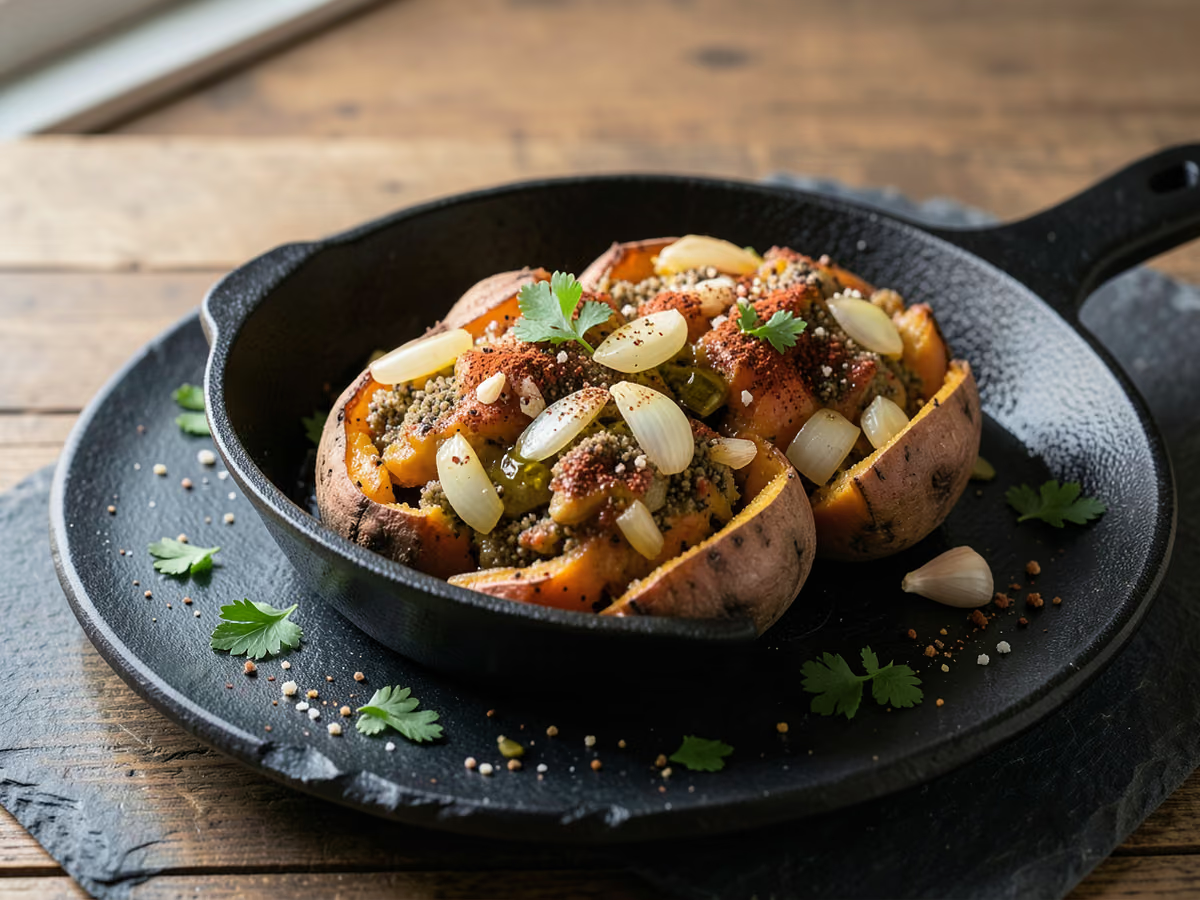
When the sweet potatoes are done, set them on plates and slit each one lengthwise along the top, without cutting all the way through. Fluff the flesh with a fork so the seasoned filling settles into the cracks, then divide the black bean mixture among the four sweet potatoes, packing it in generously.
Top each sweet potato with the 100 g grated cheddar and return them to the 200°C oven for 5 minutes, until the cheese has melted and is bubbling at the edges. Keep an eye on it: the sweet potatoes are already cooked, so this pass is only about the cheese.
Drizzle the remaining lime juice over the tops, scatter over the rest of the coriander and serve straight away. These are at their best within a few minutes of leaving the oven, while the cheddar is still molten and the skins still crisp.
Why this recipe works
Roasting whole is what keeps the flesh creamy: the skin holds in steam while the dry heat crisps the surface, and once the centre reaches a couple of degrees below boiling, the starch is fully gelatinised, so extra oven time only boils moisture away. The tuber's own enzyme is the quiet trick: between roughly 57°C and 75°C it keeps converting starch into maltose, the sugar that makes a roasted sweet potato taste sweeter than a quick bake. In the pan, the spices bloom in hot oil, the 60 ml broth simmers down to a glaze instead of a puddle, and the lime and coriander go in off the heat so their aromatics stay bright.
Equipment
- Rimmed baking sheet or shallow roasting tray
- Large frying pan, about 28 cm
- Chef's knife and cutting board
- Can opener and colander
- Box grater
- Citrus juicer or small bowl and fork
- Measuring spoons and cups
- Fork for pricking and fluffing
Kitchen notes
Kitchen notes
- Bake the sweet potatoes unwrapped: foil traps steam and creates the low-oxygen pocket that health agencies single out for foil-wrapped baked potatoes, while an open tray gives you a crisp, caramelised skin for free.
- Pick four sweet potatoes of matching size, and go for deep orange flesh over pale varieties. Matching sizes finish together, and the moist orange types roast up creamier than the drier, starchier white ones.
- Crush about a quarter of the black beans against the side of the pan as the filling simmers; their starch thickens the broth so the filling sits on top of the sweet potato instead of running into the flesh.
- Zest the lime before you juice it, then stir the zest into the filling. The oils in the peel carry most of the citrus aroma, and the gentle heat of the pan releases them better than juice alone.
- Test doneness with a thin knife rather than the tines of a fork. A fork can slip through a crisp skin while the centre is still firm; a knife through to the middle gives you a straight answer.
Common mistakes
- Dry, dense sweet potatoes: they came out before the centre was truly soft, or sat in the oven long past the cheese melting. A knife should slide to the middle with no resistance at 45-50 minutes, and the second bake should last only the 5 minutes the cheddar needs.
- A watery filling that turns the sweet potatoes soggy: the beans, the sweetcorn or both went in wet, or the broth never reduced. Drain and rinse everything well and cook until the liquid has mostly gone, so the filling mounds on a spoon instead of running off it.
- Bitter, acrid spices: the garlic and ground spices caught in oil that was too hot. Keep the pan at medium, stir for the full minute, and tip in the beans and sweetcorn as soon as the spices smell toasty.
- Canned sweet potatoes slumping into a wet mash: they are pre-cooked and packed in liquid, so they cannot hold a filling. Use fresh sweet potatoes and roast them; if you only have canned, drain them well and fold them through the beans as a casserole-style bake instead of stuffing skins.
- Burst skins or a collapsed sweet potato: skipping the pricking lets steam build until the skin splits, and cutting too deep leaves no cradle. Prick all over before roasting and slit only the top, keeping the base intact.
Serving suggestions
- Serve one stuffed sweet potato per person as a main, with lime wedges on the side for squeezing at the table.
- A crunchy cabbage slaw with lime, or a sharp tomato and onion salad, cuts through the creamy beans and cheddar.
- Sliced avocado, a spoonful of sour cream or guacamole on top adds a cool contrast; hot sauce for anyone who wants more heat.
- Keep drinks cold and simple: sparkling water with lime, iced tea or a cold citrus soda.
Variations
- Low-and-slow roast: bake the sweet potatoes at 180°C for 60-75 minutes instead of 45-50 minutes at 200°C. The centre turns even sweeter and creamier, at the cost of a slower dinner.
- Vegan version: swap the cheddar for plant-based cheese, or skip it and top with mashed avocado and extra lime for a lighter, plant-based finish.
- Tex-Mex twist: stir a spoonful of salsa or a little chipotle into the filling at the end and finish with sliced avocado.
- Boat-style: halve the roasted sweet potatoes lengthwise instead of slitting the tops, scoop a little flesh into the filling to thicken it, then refill and bake; neater portions, and the skins hold more.
Refrigerator
- RefrigeratorCool the leftovers within 2 hours of cooking, then refrigerate them in a covered container for up to 3 days.
- ReheatingReheat in a 180°C oven for 10-12 minutes, until piping hot throughout and the cheese has re-melted; microwave on high for 2-3 minutes if you are in a hurry, though the skins soften. Leftovers should reach 74°C, per USDA guidance.
- FreezingNot recommended for the assembled dish: the sweet potato flesh turns watery and grainy on thawing. The black bean filling alone freezes well for up to 2 months; thaw it overnight in the fridge and reheat it in a pan.
- Make aheadRoast the sweet potatoes and cook the filling up to 2 days ahead, storing them separately in the fridge. Reheat the sweet potatoes in a 180°C oven for 10 minutes, then fill, top with cheddar and bake for another 5 minutes.
Updated:
How this recipe was developed
- BBC Good Food, how to cook sweet potatoes (prick, rub with oil and salt, bake at 200°C/180°C fan for 45-55 minutes until the skin crisps and the flesh is tender all the way through)
- USDA FSIS, Leftovers and Food Safety (refrigerate cooked food within 2 hours; keep leftovers 3-4 days refrigerated; reheat leftovers to 74°C)
- CDC, Botulism Prevention (foil-wrapped baked potatoes are a documented botulism risk: keep them hot or refrigerate them promptly with air flow)
- ThermoWorks, The Thermal Dirt on Potatoes (sweet potatoes convert starch into maltose between 135-170°F/57-75°C; best doneness is a couple of degrees below the boiling point of water)
Editorial references are kept internally for verification. This page makes no claim of external certification or professional testing.
FAQ
The questions we get asked most
Why are my stuffed sweet potatoes dry?
The sweet potatoes were almost certainly underbaked: the centre needs to be completely soft, with a knife sliding in with no resistance, which takes 45-50 minutes at 200°C. A filling cooked down too far dries them out as well, so keep a splash of the broth back and loosen the beans if they look stiff. The final bake is only about melting the cheese: 5 minutes, not 15.
How long do I bake sweet potatoes, and how do I know when they're done?
Medium sweet potatoes take 45-50 minutes at 200°C. The surest signs are a crisp skin that gives when you squeeze the sweet potato through a tea towel, and a thin knife that slides into the centre with no resistance; a fully baked sweet potato lands close to the boiling point of water, around 96-99°C at the core. If it still feels firm, give it another 5-10 minutes.
Can I make this recipe ahead of time?
Yes, up to 2 days ahead. Roast the sweet potatoes and cook the filling, then cool and refrigerate them separately in covered containers. When you are ready to eat, reheat the sweet potatoes in a 180°C oven for 10 minutes, fill and top them, and bake 5 minutes more so the cheddar melts fresh.
Can I freeze stuffed sweet potatoes?
The assembled dish is not a good freezer candidate: the sweet potato flesh turns grainy and watery as it thaws. The black bean filling, though, freezes well for up to 2 months; freeze it flat, thaw it overnight in the fridge, and reheat it in a pan while a fresh batch of sweet potatoes roasts.
What can I use instead of black beans?
Pinto beans or kidney beans, the same drained quantity, or cooked lentils. Lentils are the softest option: reduce the broth to 2 tbsp so the filling does not turn soupy, and expect a looser, more mashed texture.
Are these stuffed sweet potatoes vegan?
Not as written. The filling is fully plant-based, but the cheddar is dairy. For a vegan version, use plant-based cheese in the same 100 g or a light dusting of nutritional yeast; the melt will be a little less stretchy, and everything else stays the same.
How do I stop the black bean filling from being watery?
Dry everything first, then reduce. Drain and rinse the beans, drain the sweetcorn and pat it dry if it was frozen, and simmer until the broth has almost fully evaporated: drag a spoon through and it should leave a clear track. If it still looks loose, give it another minute or two on the heat; the filling also thickens as it cools.
Ask KitchenMind about this recipe
Tell it what’s different tonight — it works within the actual recipe.