Tostones (Twice-Fried Plantains)
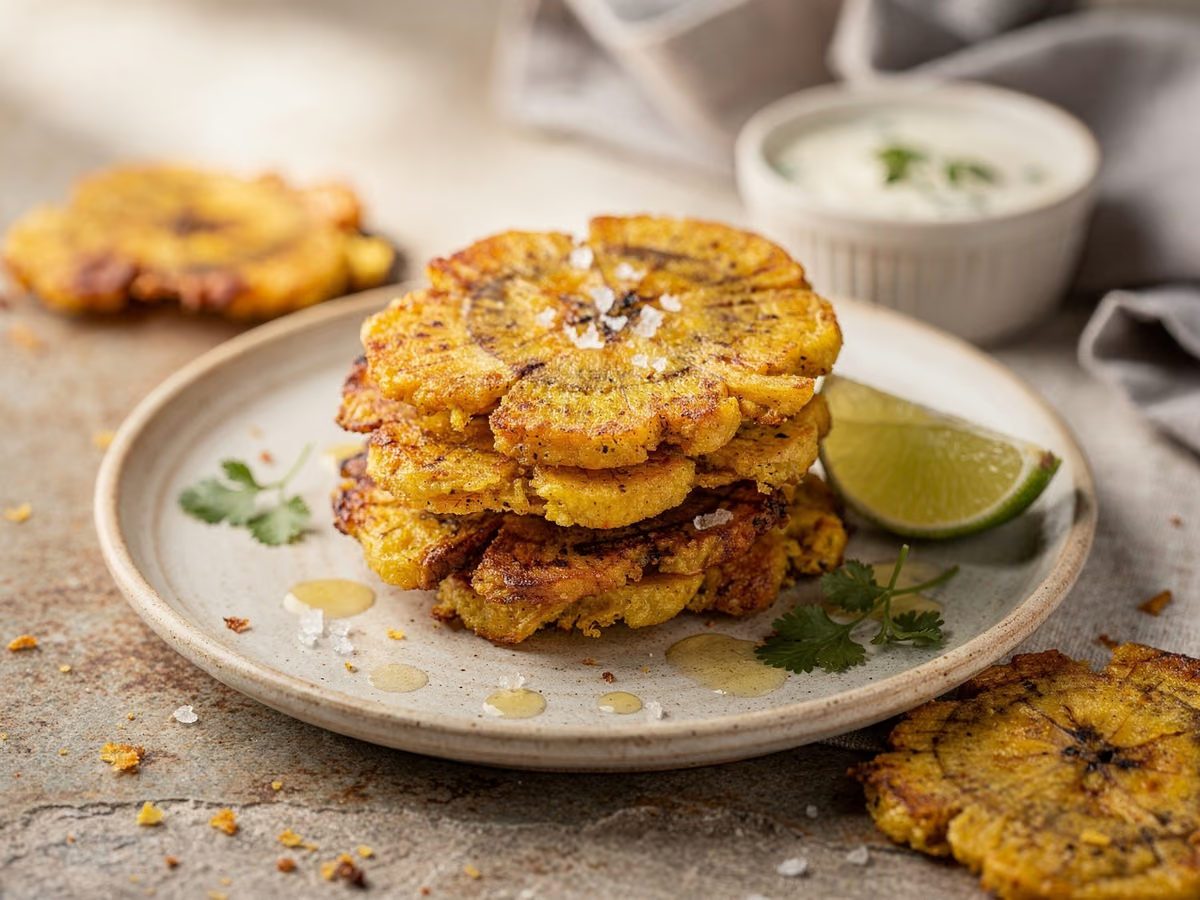
Twice-fried green plantains give you crisp edges and a tender middle. Toss them in garlic-lime mayo for a 4-serving side that's ready in 30 minutes.
- Prep
- 10 min
- Cook
- 20 min
- Total
- 30 min
- Serves
- 4
Ingredients
What you’ll need — tap to tick off as you go
- 750 ml
- 1 tsp
- 2 cloves
- 4 tbsp
- 1 tbsp
Process
Timers built in · swap anything · ask as you cook
Peel the green plantains: cut off both ends, then score the skin lengthwise through to the flesh in 2–3 lines. Pry the skin off with your thumb or a knife. Do not use a vegetable peeler; the skin is too thick.
Cut the peeled plantains into 2 cm thick rounds. Keep them in a bowl of cold water until frying to prevent browning.
Heat the neutral oil in a deep, heavy pot over medium heat until it reaches 160°C. If you do not have a thermometer, drop in a small piece of plantain; it should sizzle gently and rise to the surface without browning too fast.
Drain the plantain rounds and pat them completely dry with paper towels. Carefully lower half of them into the hot oil. Fry for 3–4 minutes per side until pale golden and slightly softened but not browned. Remove with a slotted spoon and drain on a wire rack or paper towels. Repeat with the second batch.
While the first batch is still warm, smash each round flat: place it on a cutting board and press down firmly with the bottom of a flat glass, a small skillet, or a tostonera until it is about 5 mm thick. Work gently so the edges do not tear apart.
Increase the oil temperature to 190°C. Fry the smashed plantains again in batches for 1–2 minutes per side until deeply golden, crisp, and puffed. Do not overcrowd the pot.
Remove the tostones with a slotted spoon and drain briefly on a wire rack. Immediately sprinkle with the fine sea salt while hot.
For the optional dipping sauce, stir together the mayonnaise, minced garlic, and lime juice in a small bowl. Serve the hot tostones alongside.
Kitchen notes
Kitchen notes
- The most common mistake is using plantains that are even slightly yellow or ripe. They will be sweet, soft, and will not smash properly. Use rock-hard green plantains only.
- The first fry must be at a lower temperature (160°C) to cook the inside without burning the outside. The second fry is hotter (190°C) to crisp and color the surface. Skipping the temperature change gives greasy or burnt tostones.
- Smash the plantains while they are still hot from the first fry. As they cool, they firm up and are more likely to crack or shatter instead of flattening evenly.
- Salt immediately after the second fry, while the surface oil is still hot, so the salt sticks. Waiting even a minute means the salt falls off.
Substitutions
- green plantains→unripe bananas (only if plantains are unavailable; they are smaller and sweeter, so reduce frying time)
- neutral oil→any high-smoke-point oil such as avocado oil or refined coconut oil
- mayonnaise→plain Greek yogurt for a lighter dipping sauce
Storage & reheating
Tostones are best eaten immediately while hot and crisp. If you have leftovers, store them in an airtight container in the refrigerator for up to 2 days. They will lose their crunch. To reheat, spread them in a single layer on a baking sheet and bake at 200°C for 5-7 minutes, or refry at 190°C for 1 minute per side. Do not microwave, as they will become tough and chewy. The dipping sauce keeps in a sealed jar in the refrigerator for up to 5 days.
FAQ
The questions we get asked most
Why did my tostones turn out hard and tough instead of crispy?
This usually happens when the plantains are undercooked in the first fry or when they are smashed too thin. The first fry must cook the interior until fork-tender but not browned. If the inside is still raw and starchy, the second fry will harden it further. Also, do not smash them thinner than 5 mm; they will dry out and become brittle.
Can I use yellow or ripe plantains for tostones?
No. Ripe plantains are sweet and soft, and they will not hold their shape when smashed. They also absorb more oil and turn mushy. For tostones, you need completely green, rock-hard plantains. If you only have ripe ones, make maduros (sweet fried plantains) instead.
How do I keep tostones crispy after frying?
Drain them on a wire rack, not on paper towels, so steam can escape and they do not sit in oil. Salt them immediately and serve within 10 minutes. If you must hold them, keep them in a single layer in a 100°C oven; do not cover them or they will steam and soften.
Can I make tostones ahead of time?
You can do the first fry and smash up to 4 hours ahead. Keep the smashed plantains covered at room temperature. Then do the second fry just before serving. Do not refrigerate them between fries, as the cold will make them soggy when fried again.
What is the best oil for frying tostones?
Use a neutral oil with a high smoke point, such as sunflower, canola, or avocado oil. Olive oil is not ideal because its flavor can overpower the plantains and it has a lower smoke point. You need enough oil to fully submerge the plantains for even frying.
Why are my tostones greasy?
Greasy tostones come from oil that is not hot enough. If the temperature drops below 160°C for the first fry or 190°C for the second, the plantains absorb oil instead of sealing. Fry in small batches to maintain the temperature, and always let the oil return to the correct temperature between batches.
Can I freeze tostones?
Yes, after the first fry and smash, you can freeze the flattened plantains in a single layer on a tray, then transfer to a freezer bag for up to 2 months. When ready to serve, fry them from frozen at 190°C for 2-3 minutes per side until golden and crisp. Do not thaw first, or they will become soggy.
Ask KitchenMind about this recipe
Tell it what’s different tonight — it works within the actual recipe.