Ambrosia Fruit Salad
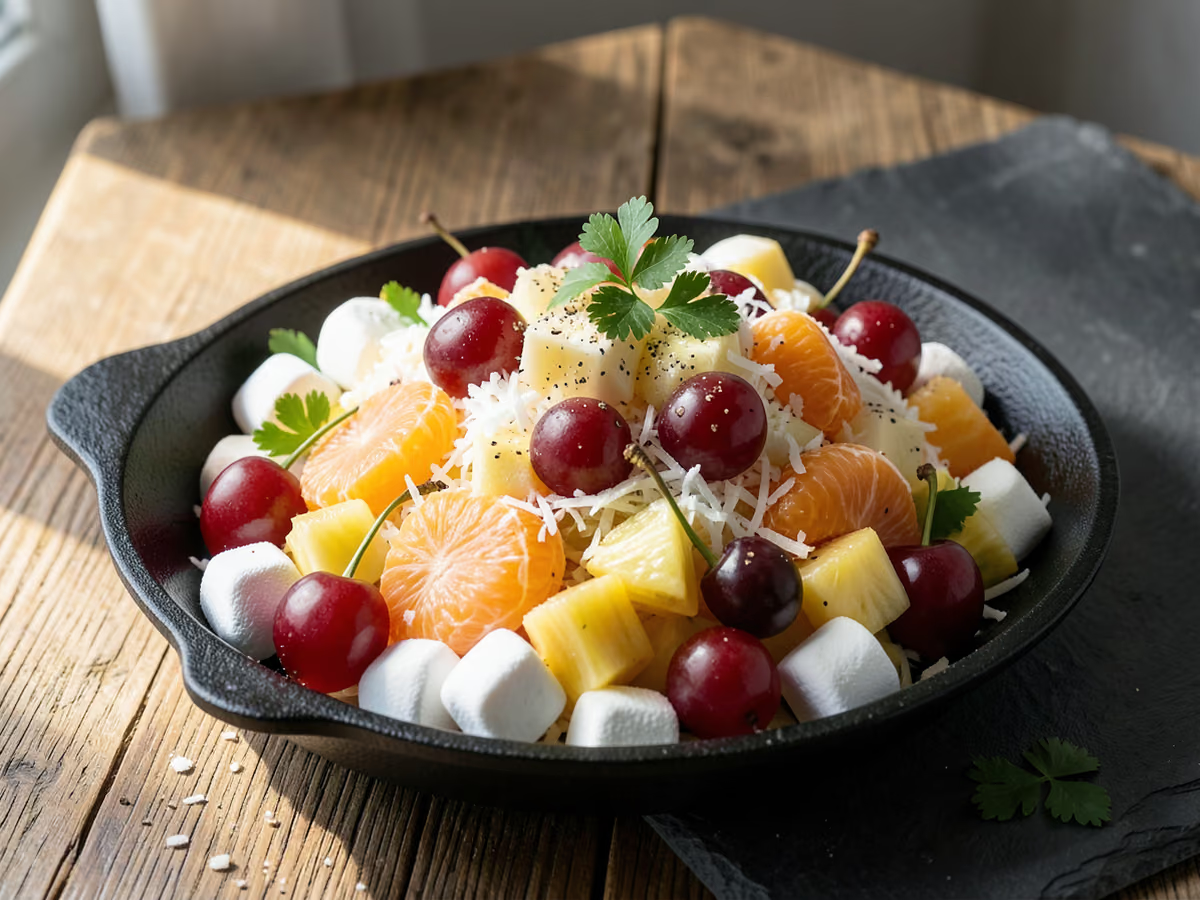
Every holiday table has one bowl that empties first, and this is usually it: canned pineapple, mandarin oranges, grapes, and cherries in a cool sour cream dressing, with mini marshmallows and coconut for contrast. Nothing here is cooked. No oven, no stove. The whole job takes about 15 minutes, and the only real skill is patience at the colander. Drain the fruit hard, pat it dry, keep every component cold, and your salad lands bright and creamy instead of sweet and soupy.
- Prep
- 15 min
- Cook
- 0 min
- Total
- 75 min
- Additional time
- 60 min
- Serves
- 8
Ingredients
What you’ll need — tap to tick off as you go
- 400 g
- 300 g
- 200 g
- 100 g
- 150 g
- 60 g
- 240 g
- 60 ml
- 2 tbsp
- 1 tsp
- 1 pinch
Process
Timers built in · swap anything · ask as you cook
Drain the 400 g of pineapple chunks and the 300 g of mandarin oranges in a colander set over a bowl, and keep 2 tbsp of the juice that collects. Pat every piece dry with paper towels (paper, not a dish towel, so no lint ends up in the bowl). A dry surface is what lets the dressing cling to your fruit instead of sliding into a puddle at the bottom.
Tip the drained pineapple and oranges into your largest bowl, then add the 200 g of grapes and the 100 g of halved cherries. Fold everything together with a spatula in a few slow strokes, lifting from the bottom so the fruit rolls over itself. Fold, do not stir. Mandarin segments bruise easily, and bruised segments let go of their juice.
In a second bowl, whisk the 240 g of sour cream with the 60 ml of cold heavy cream, 2 tbsp of sugar, 1 tsp of vanilla extract, and a pinch of salt. Pour in the reserved 2 tbsp of pineapple juice and whisk again until your dressing is glossy and pourable, with no sugar grit left at the bottom of the bowl.
Pour the dressing over the fruit and fold it in with a wide spatula, scooping down the side of the bowl and turning the mixture over on itself. Stop as soon as every piece is coated; if you still see a few thin streaks of dressing, don't worry, two more folds spread them. Stirring hard works the dressing thin and crushes the orange segments.
Fold in the 150 g of mini marshmallows and the 60 g of shredded coconut, then cover the bowl and chill it for at least 1 hour. That hour does real work: the marshmallows soften, the coconut drinks up the loose juice, and the fat in the dressing firms, so the salad sets instead of weeping.
Give your salad one turn with a spatula just before it goes to the table. The dressing settles as it chills, and that single slow stir brings it back up over the fruit without breaking anything apart. Serve it cold, straight from the refrigerator.
Why this recipe works
A creamy fruit salad lives or dies on water. Dressing clings to a dry surface; anything the fruit sheds after mixing pools at the bottom and thins the coating. The trick is to treat the fruit like salad greens. Cold sets the bowl. Sour cream supplies the fat that gives the dressing body, and the 60 ml of chilled heavy cream firms it, which is why the salad sets in the refrigerator instead of sliding off the pineapple. Sugar and a pinch of salt do quiet work too, drawing a little moisture out of the fruit and taking the sharp edge off the acid. Fold it, chill it, then stir it once.
Equipment
- Colander set inside a bowl, for draining the cans and catching the juice
- Large mixing bowl, about 4 litres
- Medium bowl and a whisk, for the dressing
- Wide flexible spatula, for folding
- Measuring cups and spoons
- Paper towels, for patting the fruit dry
- Airtight container, about 2 litres
Kitchen notes
Kitchen notes
- Chill the serving bowl while you work. Cold fat holds a thicker structure, so the dressing stays glossy from the refrigerator to the table. Every degree counts.
- Want a deeper flavor? Toast the 60 g of coconut in a dry skillet until a few shreds turn gold (2 to 3 minutes is plenty). Worth the pan: toasted coconut tastes nutty against the tang of the sour cream.
- If the bowl will sit out on a buffet, nest it inside a larger bowl of ice so the dressing stays set and the fruit stays crisp (2 hours out of the refrigerator is the limit, so keep an eye on the clock). Ice is cheap insurance.
- Serve with a slotted spoon, because the juice that collects while the bowl waits is dressing the salad no longer needs, and a spoon that drains it away keeps the pieces from sliding off the plate in a puddle.
- Weigh your sour cream if a scale is handy. A 240 g tub is rarely 240 g once a few spoonfuls have gone missing, and the thickness of the dressing depends on that ratio.
Common mistakes
- Water pooling under the salad: the fruit went in wet, or the bowl sat for days while the fruit kept shedding juice, so drain every can, pat the fruit dry, and plan to finish your bowl within 3 days. Fix the draining, not the dressing.
- Marshmallows that dissolve into the dressing: they keep absorbing liquid and turn soft within a day. If you are making the salad more than a few hours ahead, hold the 150 g back. Fold them in at the last minute.
- A dressing that tastes flat once the fruit is in: the balance was set before the pineapple arrived. Taste the dressing on a chunk of fruit, since a spoonful tastes sweeter than it will in the bowl, then add a squeeze of lemon or another pinch of salt.
- Pink streaks through the dressing: cherry syrup was still clinging to the fruit when it went in. Rinse the cherries if the color bothers you, pat them dry, and fold them in after the dressing has coated everything else, which keeps their syrup on the fruit instead of in the cream.
- A dressing thin enough to pour off the spoon: reduced-fat dairy, or more juice than the 2 tbsp the dressing was built around. Your best bet is the full 240 g of full-fat sour cream with the 60 ml of cream, plus the reserved juice added slowly.
Serving suggestions
- Serve it cold in a chilled bowl beside roast turkey, roast chicken, or a plate of barbecue.
- Leftover ambrosia spooned over plain yogurt or a slice of pound cake turns into a second dessert with almost no work.
- Portion it into small bowls, one cherry or two on top; the recipe makes 8, and small portions suit a dessert salad better than a pile. Seconds are easy.
- It is a bowl made for sharing, so put it at the end of the table where you can reach it without getting up.
Variations
- Whipped-topping version: swap the 240 g of sour cream and the 60 ml of cream for the same weight of thawed frozen whipped topping. The bowl turns sweeter and airier, and it will not hold its shape for as long.
- Fresh citrus version: use segments cut from fresh oranges instead of the canned mandarins, and stir in the 60 g of toasted pecans. Peel the oranges over a bowl to catch the juice, which you should then leave out of the dressing, because between the pineapple juice and the cream this dressing already carries as much liquid as it can hold.
- Vegetarian version: standard marshmallows are set with gelatin (an animal-derived protein). Plant-set marshmallows keep the bowl vegetarian and soften a little more slowly.
Refrigerator
- RefrigeratorAn airtight container in the refrigerator keeps the salad for up to 3 days, with the fridge running at 4°C or below (FDA guidance). By the last day the fruit has given up more juice, the dressing has loosened its grip on the pieces, and the marshmallows have gone soft, so plan to finish the bowl while everything still holds its shape. Stir it gently before each serving, and discard the salad once the dressing separates and will not come back together with a stir.
- ReheatingNone. This is a cold dish and there is no reheating it. Keep it out of the refrigerator for no more than 2 hours in total (USDA guidance for cold perishables), then put your bowl straight back.
- FreezingNot recommended. The dairy separates and turns grainy on thawing, the fruit collapses to mush, and the marshmallows come back spongy; nothing about the texture survives.
- Make aheadUp to 24 hours, assembled in two stages. Keep the drained fruit and the whisked dressing in separate containers overnight, then fold them together and add the marshmallows just before you take the bowl out. Day-old ambrosia also makes a fine breakfast over yogurt.
Updated:
How this recipe was developed
- USDA FSIS, Leftovers and Food Safety (refrigerate perishable food within 2 hours; keep cold foods at 4°C or below; use most refrigerated leftovers within 3 to 4 days)
- FDA, Are You Storing Food Safely? (keep the refrigerator at or below 4°C; ready-to-eat refrigerated foods should be eaten as soon as possible)
- Serious Eats, cream science (milk fat holds the structure of a creamy dressing, and cold cream keeps that fat firm instead of slack)
- McGill University Office for Science and Society, on the enzymes in pineapple (fresh pineapple's bromelain breaks down gelatin, which is why a dressing with no gelatin has nothing to fear from fresh fruit)
Editorial references are kept internally for verification. This page makes no claim of external certification or professional testing.
FAQ
The questions we get asked most
Why did my ambrosia salad turn watery?
Almost always because the fruit went in wet. Canned pineapple and mandarin oranges carry a surprising amount of juice, so give them 10 minutes in the colander and then pat your fruit dry with paper towels. Frozen fruit needs the same treatment once it has thawed. No need to fuss over the grapes beyond halving and draining them.
Can I make ambrosia salad ahead of time?
Yes, up to 24 hours, with one catch. The marshmallows soften and the coconut soaks up moisture as it sits. Hold the fruit and the dressing in separate containers, combine them within a few hours of serving, and fold in the 150 g of marshmallows at the end.
How long does ambrosia salad keep in the refrigerator?
Count on 3 days in an airtight container, which lines up with the 3 to 4 days the USDA allows for refrigerated leftovers. Past that, the fruit softens and the dressing starts to separate. Stir it gently before you serve it, and throw it out if it smells sharp.
Can I use fresh fruit instead of canned?
Yes. Cut the pineapple, oranges, and grapes into bite-size pieces, then drain off what they release and pat the fruit dry before the dressing goes on. Fresh fruit is juicier than the canned kind, so you may need to pour a little liquid off the bowl an hour in. Is that a problem? Not at all, since the dressing is thick enough to be spooned back over the top.
Can I freeze ambrosia salad?
Better not to. On thawing, the dairy separates into a grainy liquid, the fruit loses its shape, and the marshmallows come back spongy. This is a salad to make fresh, and it takes 15 minutes.
Is ambrosia salad gluten-free?
The fruit, the dairy, and the coconut are naturally free of gluten; the risk sits in the packaged pieces. Check that the marshmallows and the shredded coconut were made without wheat starch and processed in a gluten-free facility, and read your labels rather than assuming.
Can I swap the sour cream for something lighter?
Full-fat Greek yogurt or an unsweetened dairy-free yogurt can take its place, in the same 240 g. Both read tangier and set firm. There is no need to change the sugar at the same time; taste the dressing before it goes on the fruit and adjust from there, and if your yogurt is thinner than sour cream, cut the heavy cream back to 2 tbsp so the dressing does not turn runny.
Ask KitchenMind about this recipe
Tell it what’s different tonight — it works within the actual recipe.