Ayran Yogurt Drink
Salt in a cold drink sounds like a mistake until the first glass of ayran lands beside a plate of grilled meat. Turkey's answer to a hot afternoon takes three ingredients and five minutes: 400 g of full-fat yogurt, 400 ml of ice-cold water, and 0.5 tsp of fine salt, whisked to a pale foam. Nothing is cooked. Nothing is strained. The jug is ready before the ice in your glasses melts, and the whole method is one jug and one whisk. What separates a good glass from a thin, grainy one is the order you add things, and how hard you beat the first half of the water.
- Prep
- 5 min
- Cook
- 0 min
- Total
- 5 min
- Serves
- 4
Ingredients
What you’ll need — tap to tick off as you go
- 400 g
- 400 ml
- ½ tsp
- 1 pinch
Process
Timers built in · swap anything · ask as you cook
Leave the tub on the counter for 10 minutes first, because yogurt at room temperature loosens under the whisk instead of seizing into lumps, then spoon the 400 g into a 1 liter jug and tip off any whey pooled on the surface. Stop when the surface is smooth and glossy, with no watery ring around the edge.
Pour in 200 ml of the ice-cold water and beat hard with a balloon whisk for 30 to 45 seconds. With only half the water in the jug, the whisk shears through the gel instead of skating past lumps, which is why the water goes in two stages. (Small lumps will vanish with the next pour.) Stop when it looks like heavy cream and no white specks cling to the wires.
Add the remaining 200 ml of cold water and 0.5 tsp of fine salt, then whisk for another 30 seconds, lifting your whisk clear at the end. The second pour takes the mix from cream to a drink, and the salt has to be dissolved before you taste it, so stop when the surface is covered in fine bubbles and the liquid coats the back of your spoon lightly.
Taste it cold, the way you will drink it. Adjust in small steps. A little more salt if the yogurt tastes flat, a splash more cold water if it feels thick on your tongue. (Add water a tablespoon at a time.) Too thin? Whisk in a spoonful of yogurt rather than more salt. Then whisk for 5 seconds to bring the foam back up.
Put 6 ice cubes into 4 tall glasses (about 250 ml each), pour the ayran over them and finish each glass with a pinch of crushed dried mint. Serve at once, while the foam is still standing. The ice chills the drink and dilutes it at the same time, so start the mix a shade thicker than you want the finished glass.
Why this recipe works
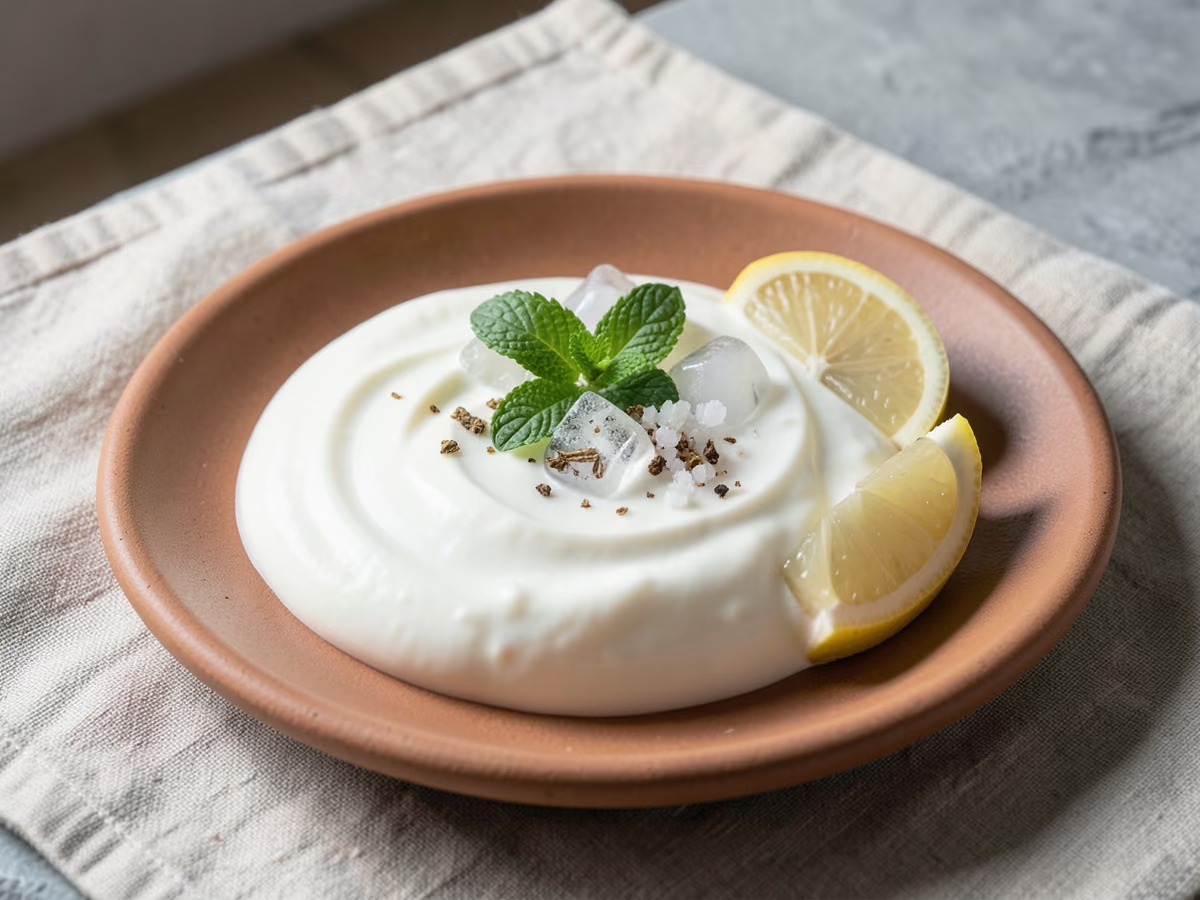
Yogurt is an acid-set gel: a weak casein network that traps whey until it is broken. Water cannot soak into that network, so the first 200 ml has to be beaten through it until the gel breaks into a smooth suspension. Why two pours? Because once the jug is thin, a lump slips past the whisk instead of being torn open. The second 200 ml thins the drink to pouring consistency, while the whisk folds air into a film of milk protein that stands as foam. Ice-cold water keeps the fat firm and slows the separation that reads as graininess. Warm water does neither. Salt is the switch that turns lactic sourness into something you want to drink. Serve it late and the foam drains. That is the only clock.
Equipment
- 1 liter jug or deep bowl with high sides
- Balloon whisk, or a fork if that is what you have
- Measuring jug, 500 ml
- Measuring spoons
- Four tall glasses, about 250 ml each
- Ice cube tray
- Small dish for the crushed mint
Kitchen notes
Kitchen notes
- Chill the glasses in the freezer for 5 minutes and leave the ice out, so you get the cold without the dilution and the foam sits higher in a frosted glass.
- Whisk in a jug with high sides, tilted about 45 degrees, because the tilt lets the whisk travel further and faster, which is what builds the foam without flinging yogurt across your counter. A fork works too, more slowly.
- Taste the ayran at serving temperature, not warm from the jug, because cold mutes both salt and sourness and a mix that tastes right on the counter will taste flat over ice. Worried about a thin glass? A spoonful of yogurt does more than another pinch of salt.
- If your yogurt is a thick set style, loosen it with 2 tbsp of the measured water before the rest goes in, because dense yogurt needs a moment longer to break down and the slurry stage is where that happens.
- A cocktail shaker does the job in 10 seconds and pours straight into the glasses, but shake the base without ice and pour it over fresh ice, or the cubes will knock the foam flat. There is no need for a blender at any point.
- Crush the dried mint in your palm rather than sprinkling it from the jar, because whole flakes sit on the foam and release almost nothing while crushed ones perfume the first sip. That is worth the extra second.
Common mistakes
- Grainy, separated ayran means cold yogurt met water that was not cold enough, or all 400 ml went in at once, so let the tub stand 10 minutes, use water straight from the fridge, and beat the first 200 ml to a slurry before the rest goes in.
- A thin drink with a watery rim: too much water for the protein to hold, which shows up as serum separating in the jug. Hold to 400 ml for 400 g of yogurt, and add any extra to your jug by the tablespoon, tasting as you go.
- A sour, flat glass: under-salting rather than bad yogurt. 0.5 tsp is the baseline for this batch, but acidity varies by brand, so dissolve half, taste, and decide on the rest at the end.
- Foam that collapses within a minute: you used a blender, or ran the whisk at full speed for too long. Big bubbles drain fast. Skip the machine and stick with a balloon whisk, stopping as soon as the surface is covered in fine bubbles.
- A briny, mouth-coating finish: all the salt went in before anyone tasted it. Over-salting is far harder to undo than under-salting, so add a splash of cold water and a spoonful of fresh yogurt and whisk again.
Serving suggestions
- Beside grilled meat, kebab or anything charred and rich. The salt and acid cut through fat better than water does.
- With warm flatbread, tomatoes and cucumber for a light lunch that needs nothing else.
- In tall glasses over ice, with the mint pinch on top and the jug left on the table for refills. The colder, the better.
- Leftover ayran, even after the foam has gone, is a ready-made marinade for chicken: the salt seasons, the acid tenderizes, and the yogurt keeps the surface from drying over a hot fire.
- Poured at the table with the foam still standing, it ends a hot meal better than dessert does. That is the version worth repeating.
Variations
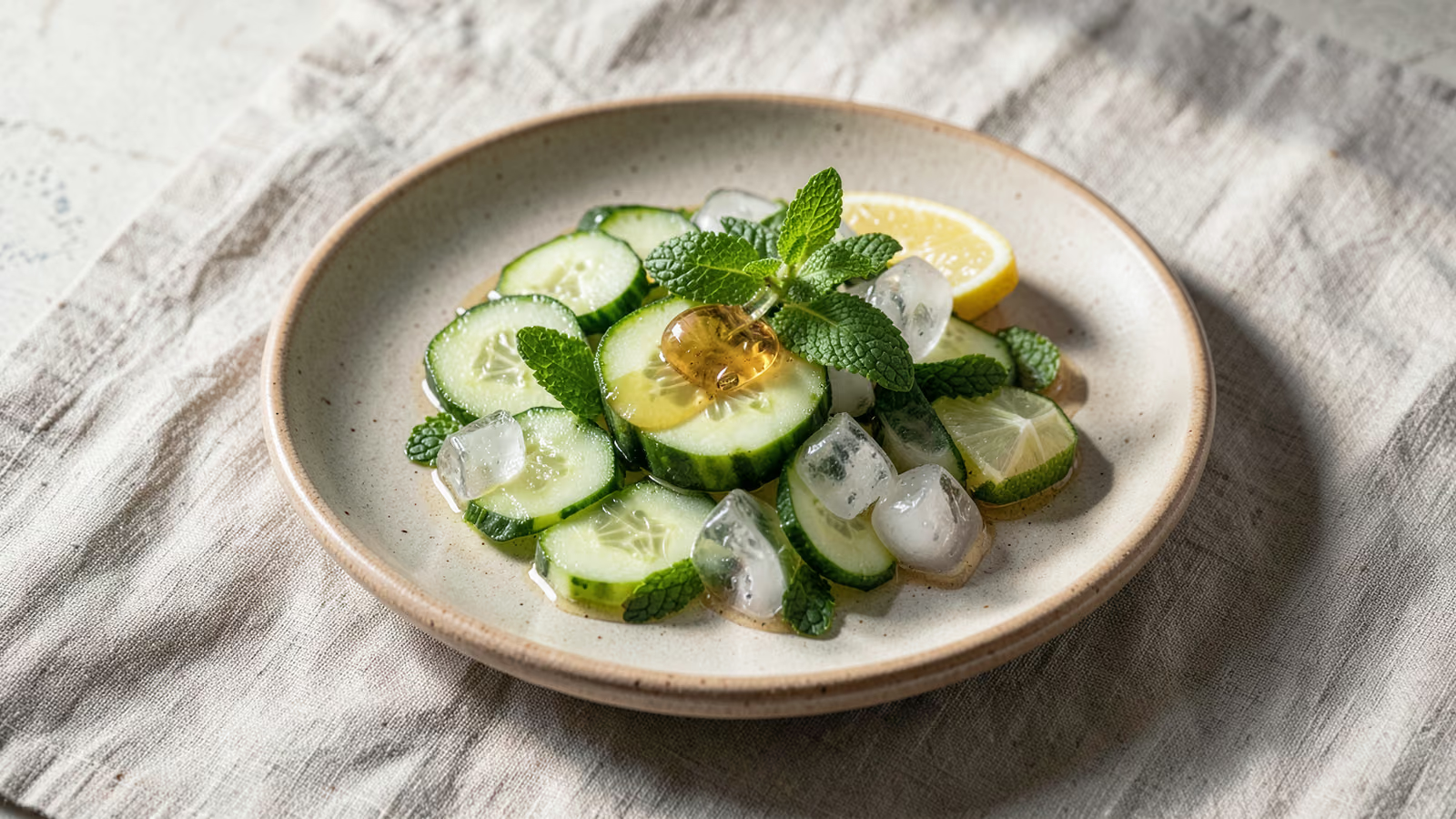
- Cucumber ayran: peel and grate half a cucumber, squeeze the water out in a clean cloth, and whisk it into the base. The drink thickens and turns green-flecked, closer to cacık than to a plain glass.
- Susurluk style: build it with a higher-fat yogurt, the kind with a visible cream line, and whisk a few seconds longer. The foam comes up thicker and holds, which is the point of that regional version.
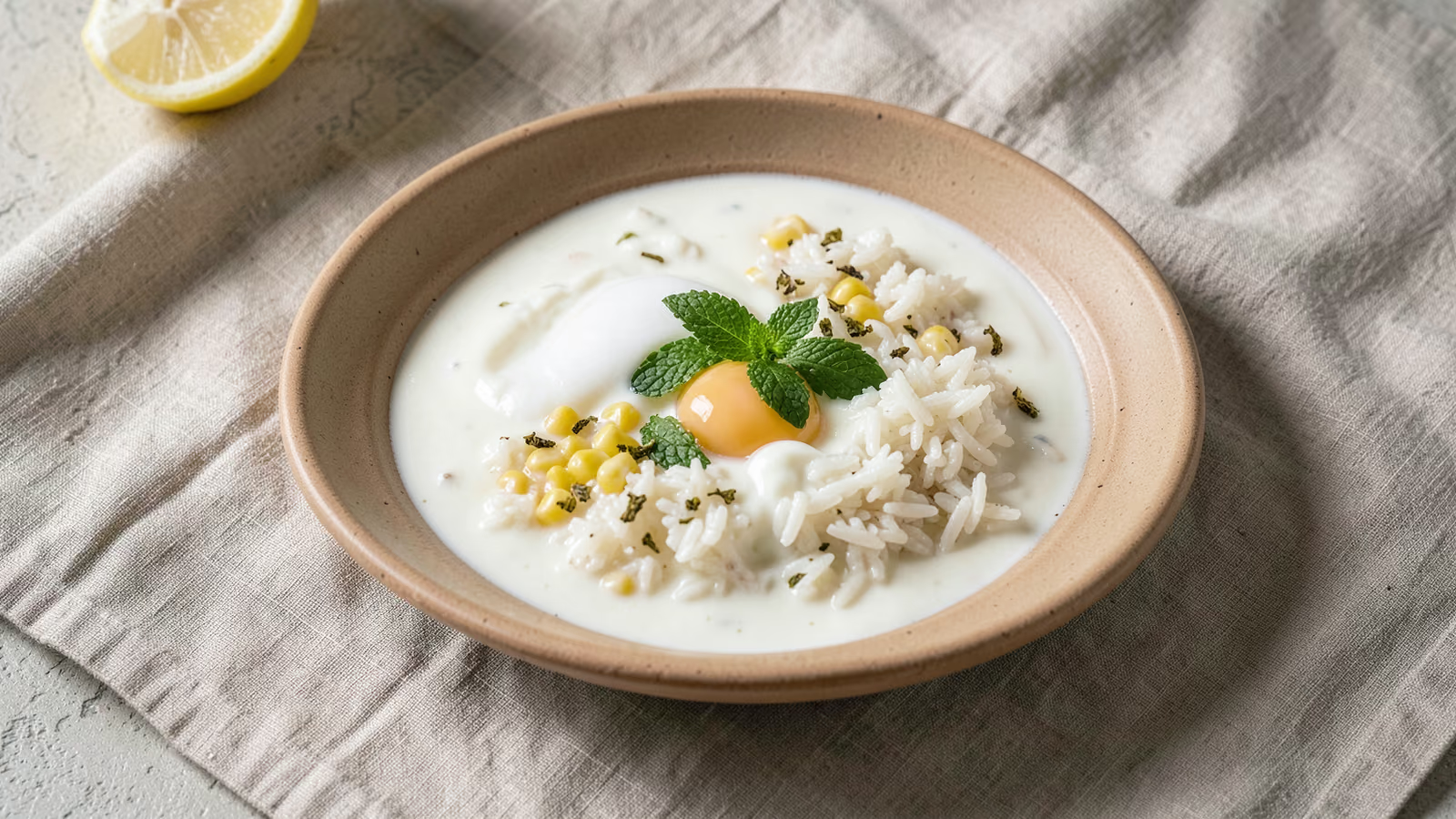
- Cold soup version: leave out 100 ml of the water, spoon the mix over ice in bowls, and top with grated cucumber, a drizzle of olive oil and the mint. Eat it with a spoon.
Refrigerator
- RefrigeratorAyran is at its best within 30 minutes of whisking, while the foam holds. Covered in the fridge at 4°C or below, it keeps for up to 24 hours; whisk or shake hard for 20 seconds before you serve it, because the solids settle and the surface goes flat.
- ReheatingNot recommended. Heat breaks the yogurt's gel and the drink splits into grainy curds and whey, which no amount of whisking repairs. Drink it cold.
- FreezingNot recommended for the drink, which separates into ice and grain on thawing. Leftover ayran can go into an ice cube tray and be dropped into a smoothie, where the texture stops mattering.
- Make aheadWhisk the base without ice up to 4 hours before serving, cover and refrigerate, then re-whisk for 20 seconds and add fresh ice at the table. Don't worry if the foam collapses in the jug, because it comes back. Past 24 hours the flavor turns sharply sour and the mint fades.
Updated:
How this recipe was developed
- FDA, Are You Storing Food Safely? (refrigerator at or below 4°C; the two-hour rule for perishables left at room temperature)
- Köksoy and Kılıç, International Dairy Journal 13 (2003), Effects of water and salt level on rheological properties of ayran (water at 30 or 50 g per 100 g and salt at 0.5 or 1 g per 100 g; more water and salt gave more serum separation during storage at 4°C)
- Azary and Nasirpour, International Journal of Dairy Technology 71 (2018), Effect of whey protein concentrate, pH and salt on colloidal stability of an acid dairy drink (salt and protein levels govern serum separation and viscosity in yogurt drinks)
- A Kitchen in Istanbul, Ayran (Turkish yoghurt drink) (yogurt, water and salt as the whole recipe; the drink's role alongside grilled and rich Turkish food)
Editorial references are kept internally for verification. This page makes no claim of external certification or professional testing.
FAQ
The questions we get asked most
Why did my ayran turn grainy and separated?
Almost always temperature and speed. Yogurt straight from the fridge, hit with water that is not cold enough, tightens into specks before your whisk can break them up. Use ice-cold water, let the yogurt stand 10 minutes, and beat the first 200 ml to a smooth slurry before the second goes in. If it has already split, whisk 1 tbsp of fresh yogurt through it.
Can I make ayran with Greek yogurt?
Yes, and it makes a thicker drink. Keep the 400 g and take the water up to about 550 ml, adding it gradually and stopping when the mix coats a spoon lightly. Greek yogurt is strained, so it carries more protein and less whey per spoon, which is why it needs more water and tastes sharper.
How salty should ayran be?
Seasoned, not briny. About 0.5 tsp of fine salt for this 800 ml batch is the starting point. Add half, whisk, taste it cold, then finish. Yogurt brands differ in acidity, so the last pinch is a judgment call rather than a measurement.
Can I make ayran ahead of time for a party?
Make the base up to 4 hours ahead, without ice, and keep it covered in the fridge. The foam will fall; 20 seconds of hard whisking brings most of it back. Add ice only at serving and keep the jug cold between pours; it stays good for 24 hours, though the tang sharpens as it sits.
Why is my ayran foamy on top but watery underneath?
That is what foam is — air held in a thin protein film on top of liquid — so if the drink below looks thin, the mix is over-diluted rather than under-whisked. Pour off some of the liquid, whisk 2 tbsp of yogurt back in, and the body returns without losing the cap. Next time, hold back the last of the water.
Can I flavor ayran with cucumber or mint?
Both work, and both are traditional. Grated cucumber, squeezed dry, thickens the drink and turns it into something closer to a soup. Dried mint stirred in at the end gives aroma without bitterness; fresh mint should be crushed and floated, not blended, because torn leaves in a cold dairy drink turn dark within minutes.
Is ayran supposed to be served ice-cold?
Yes. It is a hot-weather drink, and the chill is part of the point: cold mutes the salt and the acid so the whole glass reads as refreshing rather than sour. Keep the jug in the fridge between pours and top the glasses with fresh ice, then drink them before the ice gives up, because after 20 minutes on a warm table the whole thing tastes tired.
Ask KitchenMind about this recipe
Tell it what’s different tonight — it works within the actual recipe.