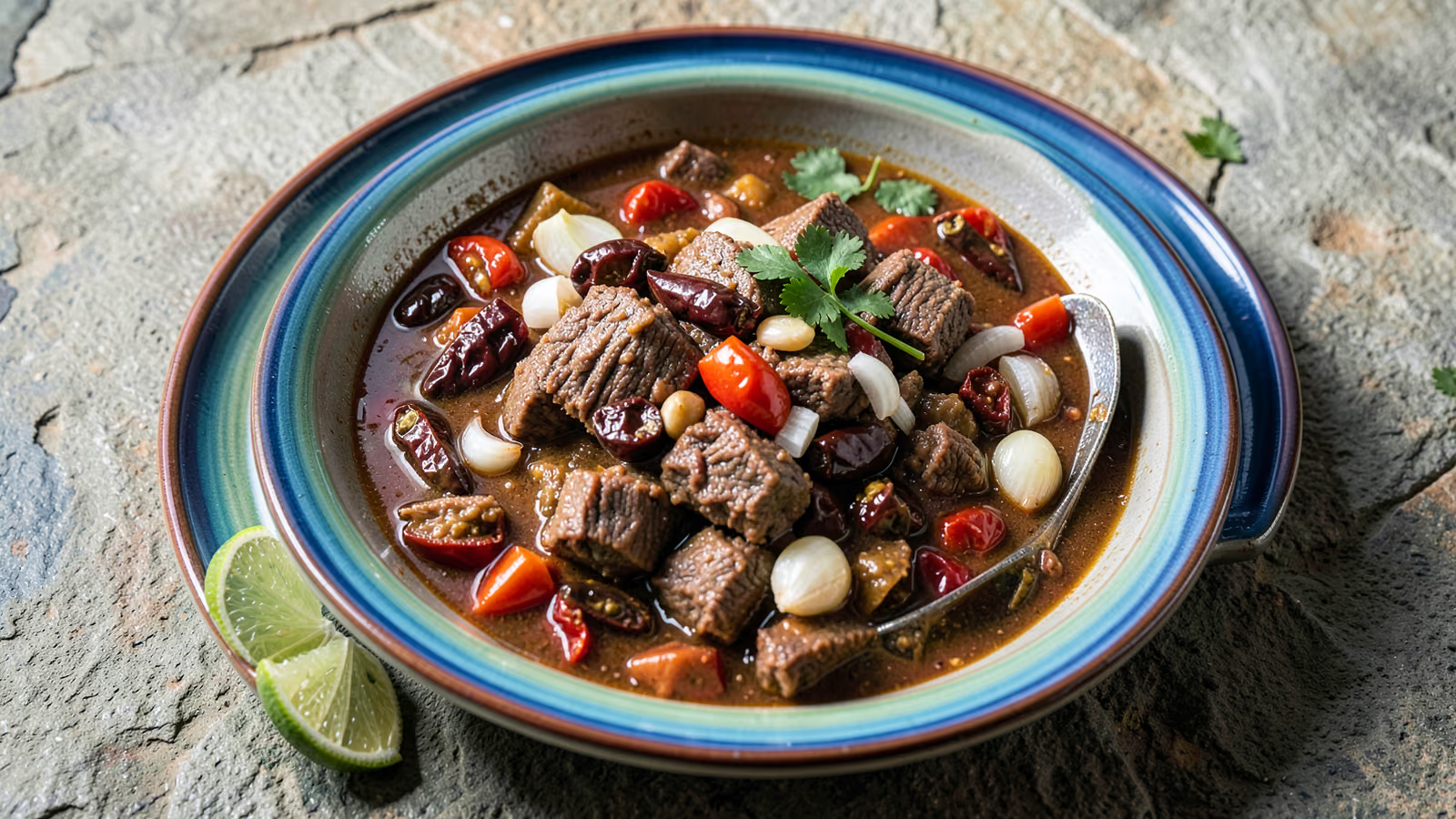
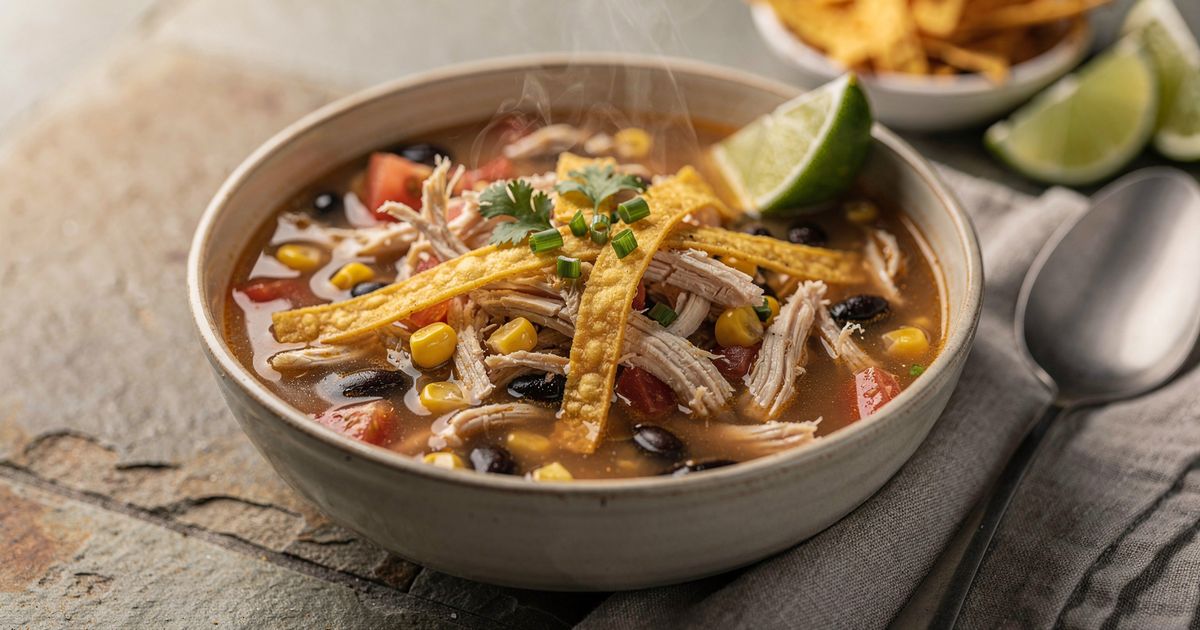
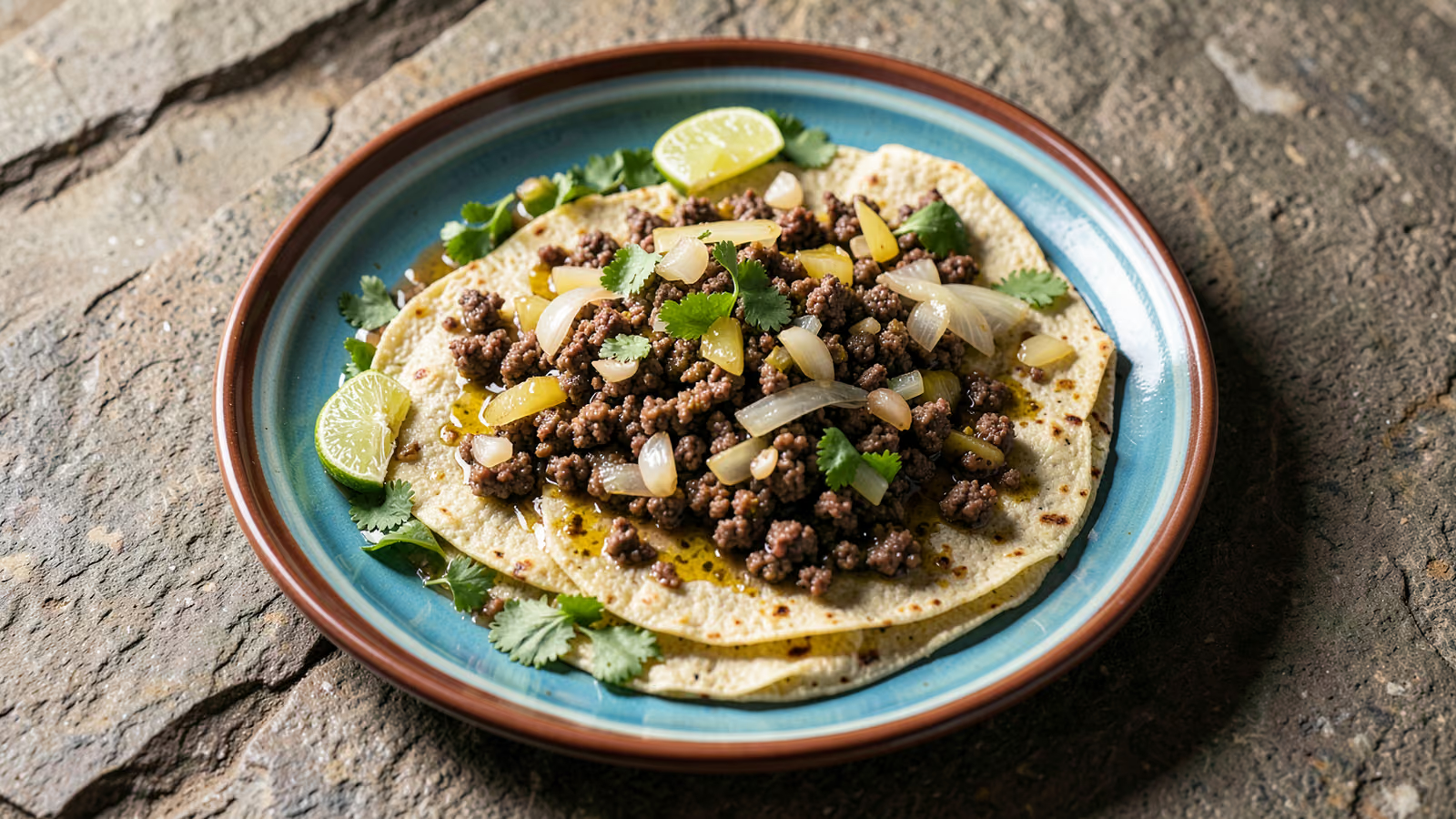
Caldo Tlalpeño
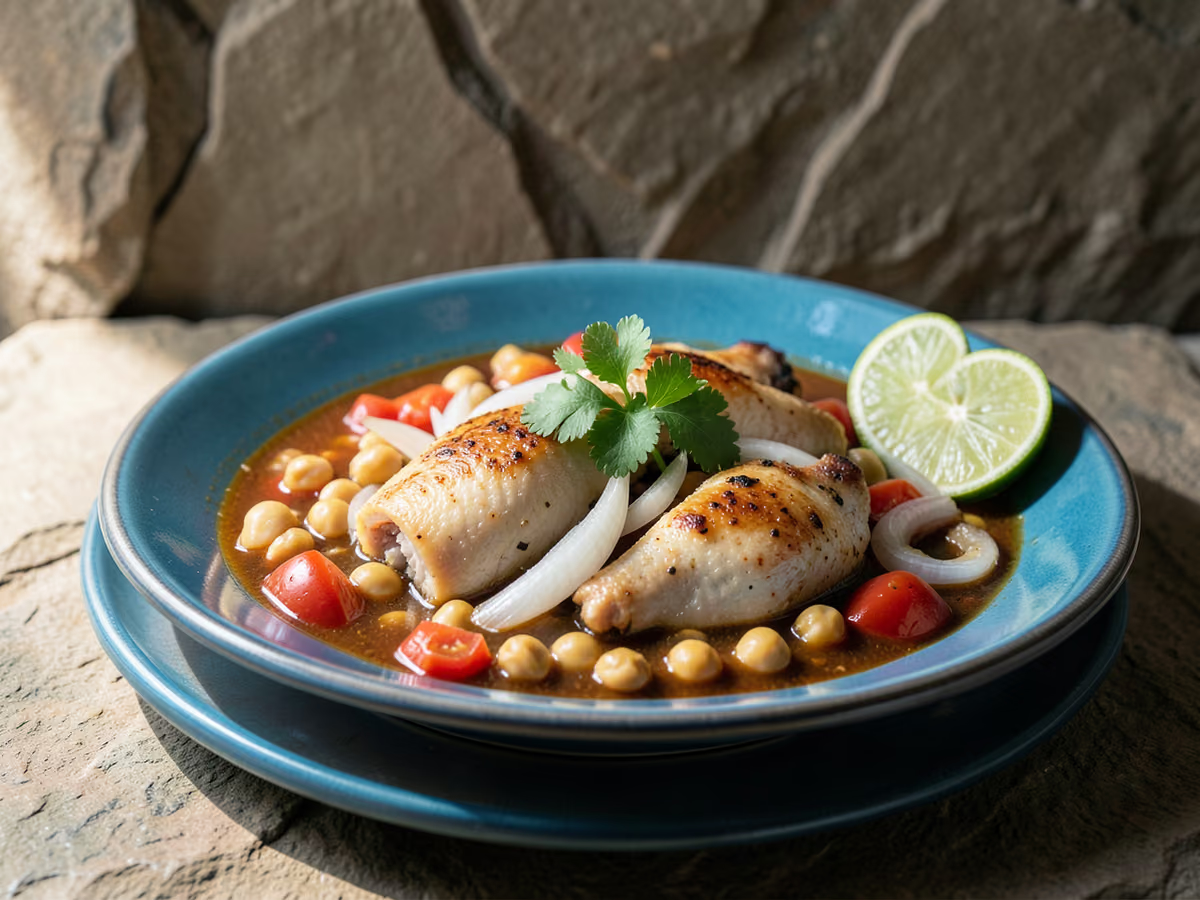
Caldo tlalpeño is Mexico City's smoky chicken soup from Tlalpan: bone-in thighs poached gently with onion and garlic, the broth strained clear, then deepened with a charred tomato and chipotle-in-adobo base fried until it darkens. Chickpeas, carrots and zucchini finish in the pot, and each bowl is topped at the table with cool avocado, panela cheese, chopped cilantro and a squeeze of lime. Prep takes 20 minutes, the simmering about 45 — mostly hands-off — for six generous bowls.
- Prep
- 20 min
- Cook
- 45 min
- Total
- 65 min
- Serves
- 6
Ingredients
What you’ll need — tap to tick off as you go
- 800 g
- 400 g
- 500 g
- 4 cloves
- 2 l
- 1 tsp
- 1 tsp
- 2 tbsp
- 150 g
- 20 g
- 1 tsp
Process
Timers built in · swap anything · ask as you cook
Combine the 800 g chicken thighs, 1 litre of the chicken broth, half of the white onion, 2 garlic cloves and the bay leaf in a large pot. Bring to a gentle simmer over medium heat — a bubble or two breaking, never a rolling boil — and cook for 20 minutes, until the chicken reaches 74°C at the thickest part. Skim the foam as it gathers; that coagulated protein is what clouds the broth.
While the chicken simmers, char the base: heat a dry skillet over medium-high heat, then add the 500 g of tomato quarters, the remaining onion half and the remaining 2 garlic cloves. Turn them as they blister and blacken in spots, about 6–8 minutes, then scrape everything into a blender with the 2 chipotles and 1 tbsp adobo sauce and blend until smooth. Those blackened spots are where the smoke begins.
Lift the chicken out to a plate and leave it to cool, and take the pot off the heat. Strain the poaching liquid through a fine-mesh sieve into a bowl, discarding the spent onion, garlic and bay leaf, then return the clear broth to the pot and add the remaining 1 litre of chicken broth. Straining now is what keeps the finished soup a clean, light broth rather than a cloudy one.
Heat the 2 tbsp vegetable oil in the same skillet over medium heat. Pour in the blended base — it will sputter, so stand back and keep stirring — and cook for 5 minutes, until the purée darkens from bright red to deep brick and thickens slightly. Stir in the 1 tsp dried oregano and 1 tsp ground cumin and cook for 1 minute more; this fry is what tames the raw edge.
Add the darkened base to the pot of broth, then stir in the 2 carrots cut into 1 cm rounds and the 400 g of drained chickpeas. Bring to a simmer and cook for 10 minutes, until the carrots are just tender but still offer a little resistance at the center. The carrots set the pace for the vegetables that follow.
Shred the cooled chicken, discarding the bones and any gristle, and add it to the pot with the 1 zucchini cut into 2 cm cubes. Simmer for 5 minutes, until the zucchini is tender but not mushy, then taste and season with the 1 tsp salt. The chickpeas and vegetables absorb salt, so judge the seasoning now, not earlier.
Ladle the caldo tlalpeño into deep bowls. Top each serving at the table with a few slices of the avocado, a scattering of panela cubes, chopped cilantro from the 20 g if you like, and a squeeze of lime from the 2 limes. The cool, creamy garnishes against the steaming broth are what makes the bowl — add them just before eating.
Why this recipe works
Bone-in thighs give the broth its backbone: a gentle poach draws collagen and fat into the liquid, so the base tastes full before the chipotle ever goes in, and simmering below a boil keeps it clean enough to strain clear. The smoky depth comes from direct heat on the vegetables: blackening tomatoes, onion and garlic in a dry skillet builds roasted, faintly bittersweet notes that raw vegetables cannot provide. Frying the blended base in oil drives off its water and lets it caramelize, softening the chipotle's raw edge. The zucchini waits for the last five minutes because brief cooking keeps its texture intact, and the cool avocado, cheese and lime balance caldo tlalpeño's warm, smoky broth.
Equipment
- Large heavy pot or Dutch oven, 4 to 5 liters, with a lid
- Large heavy skillet, ideally cast iron, for charring the vegetables and frying the base
- Blender, for the chipotle-tomato base
- Fine-mesh sieve, for straining the poaching broth clear
- Chef's knife and cutting board
- Tongs or a slotted spoon, for lifting the chicken out
- Ladle and six deep serving bowls
- Instant-read thermometer, to confirm the chicken reaches 74°C
Kitchen notes
Kitchen notes
- Treat the open can of chipotles as an asset: freeze the remaining peppers and adobo flattened in a small bag, then snap off one pepper's worth for the next pot. One pepper plus a spoonful of sauce is a ready-made smoky base.
- Char under the broiler when the stove is crowded: the same tomato quarters, onion half and garlic cloves on a sheet pan blacken in spots with no supervision — start them when the chicken goes on and pull them when they blister.
- Vent the blender: hot charred vegetables throw steam that can lift a tight lid and spray. Blend with the center cap ajar, hold a towel loosely over the top, or pulse in two batches.
- Seek out Mexican oregano: its citrusy, faintly anise-like edge reads clearly through the smoky base, where Mediterranean oregano can get lost. Rub the 1 tsp between your palms before adding to wake up the oils.
- Fry the base in a wide skillet, not a deep saucepan: more surface means faster reduction and better caramelization, which is exactly the browning the base needs to taste deep instead of watery.
Common mistakes
- Bland, one-note broth: the char was rushed and the blended base went into the pot before it darkened. Blacken the tomatoes, onion and garlic in spots, then fry the purée a full 5 minutes until it turns deep brick red before any broth joins it — that fry is the flavor.
- Cloudy broth: a hard boil after the base went in churned protein and fat back through the liquid, or the foam was never skimmed. Keep the pot at a bare simmer once the chipotle base is stirred in, skim early, and strain the poaching liquid on its way back to the pot.
- Mushy zucchini: it went in too early or the soup boiled hard. Add it with the shredded chicken for the final 5 minutes only, keep the heat gentle, and if you plan to reheat the pot, pull it while still slightly firm.
- An acrid, bitter edge: garlic scorched black in the dry skillet, or the base caught on the pan during frying. Char until blackened in spots rather than fully carbonized, and stir the purée over medium heat, scraping the bottom as it thickens.
- Dry, ragged chicken: it simmered past doneness or was shredded while scalding hot. Poach only until it registers 74°C, let it cool until it can be handled, then shred with two forks — it stays juicy and shreds cleanly.
- Brown avocado and sunken cheese: the garnishes sat in the hot soup. Slice the avocado and cube the panela only when the bowls are ready, and add them at the table so the avocado stays green and the cheese softens without melting away.
Serving suggestions
- Serve the caldo tlalpeño in deep, wide bowls so every ladle gets plenty of broth, and keep the pot on a low burner so refills arrive steaming; this soup is at its best eaten as soon as it is poured.
- Warm corn tortillas are the classic partner — mop the broth with them, or spoon rice into the bottom of the bowl first to turn the soup into a fuller meal.
- Keep the heat adjustable: set extra chipotles in adobo or sliced serrano pepper on the table so anyone can raise their own bowl without changing the pot.
- The bowl is broth-first and light — chickpeas, chicken and vegetables carry the substance while the smoke does the flavor work — so it works as a weeknight dinner on its own or a soup course before something larger.
Variations
- Pressure-cooker version: cook the chicken, half onion, garlic and bay with the 1 litre of broth at high pressure for 10 minutes, let the pot sit for 5 before releasing, then carry on with the charring, straining and simmering — a fraction of the stove time, though the broth comes out slightly less clear.
- The traditional herb: a sprig of epazote added with the carrots and fished out before serving is the classic aromatic in many homes; its resinous, faintly citrusy note is unmistakable, and chopped cilantro at the table covers similar ground if you cannot find it.
- Seared panela: some cooks cut the cheese into planks and sear them 2-3 minutes per side until golden before they go into the bowls — crisp at the edges, soft within, and a nice contrast to the cubed version.
Refrigerator
- RefrigeratorCool the soup quickly — divide it into shallow containers rather than leaving the whole pot to linger — and refrigerate within 2 hours; it keeps for 3 to 4 days. The flavor deepens overnight. Keep the avocado, cheese, cilantro and lime out until serving.
- ReheatingWarm gently on the stovetop, bringing the soup to a boil as USDA guidance for reheating soups recommends, or microwave covered portions in 1-minute bursts. Loosen with a splash of broth if it has thickened, and add fresh avocado, panela, cilantro and lime after reheating.
- FreezingFreeze the soup without the garnishes for up to 3 months in airtight containers, leaving headspace. The zucchini softens when thawed, so leave it out of the portion you freeze or add it fresh on reheating. Thaw overnight in the refrigerator.
- Make aheadA day ahead is ideal: cook it fully, cool it fast, and refrigerate — the smoky base tastes even deeper on day two. Hold back the avocado, cheese, cilantro and lime, and reheat gently so the vegetables do not collapse.
Updated:
How this recipe was developed
- USDA FSIS, Safe Minimum Internal Temperature Chart and Leftovers and Food Safety (poultry cooked to a safe minimum internal temperature of 74°C; refrigerate cooked food within 2 hours; leftovers keep 3 to 4 days in the refrigerator and 3 to 4 months in the freezer; reheat to 74°C, and bring soups to a rolling boil)
- Larousse Cocina (Alicia Gironella), Caldo tlalpeño (native Mexico City reference for the dish's identity and its classic frame: a picoso chicken caldo with tomato, chipotle, chickpeas and vegetables, served with avocado and cheese; 6 servings, about 45 minutes of cooking)
- Isabel Eats (Isabel Orozco-Moore), Caldo Tlalpeño (technique conventions: bone-in chicken simmered about 20 minutes for a flavorful broth, strained; tomatoes and chipotle blended into the base; green beans, chickpeas and epazote finished briefly; queso fresco, avocado and cilantro at the table)
- Wikipedia, Caldo tlalpeño (English and Spanish editions) (dish identity — chicken with chickpeas, carrots and green beans in a broth seasoned with epazote, cumin and chipotle, served with avocado, cheese and lime; the Tlalpan origin tradition, including the early 1900s tram-stop vendors)
Editorial references are kept internally for verification. This page makes no claim of external certification or professional testing.
FAQ
The questions we get asked most
What is caldo tlalpeño made of?
A chicken broth at heart: bone-in chicken thighs poached with onion, garlic and bay, strained clear, then colored and deepened with a charred tomato and chipotle-in-adobo base. Chickpeas, carrots, zucchini, Mexican oregano and cumin round it out, and the bowl is finished at the table with avocado, panela cheese, cilantro and lime. The classic also gets epazote and often green beans; this version follows the smoky, brothy style of Tlalpan, the Mexico City district the soup is named for — the one where, by tradition, vendors first served it to tram passengers in the early 1900s. It is gluten-free as written and serves 6.
Why is my caldo tlalpeño bland?
Usually a rushed base. The tomatoes, onion and garlic need to blacken in spots, and the blended purée needs a full 5 minutes in hot oil until it darkens — that frying step is where the deep, roasted flavor comes from. Undersalting compounds it: the soup takes its 1 tsp of salt at the end of cooking, once the chickpeas and vegetables have had a chance to absorb it, and a squeeze of lime in each bowl wakes up the smoke.
How spicy is caldo tlalpeño, and can I make it spicier?
As written it is gently warm — two chipotles in adobo across six servings give a slow, smoky heat that builds without burning, and much of the sting sits in the adobo sauce. To turn it up, blend a third chipotle with a spoonful more adobo into the base; for heat that stays personal, set extra chipotles or sliced serrano on the table. Canned chipotles vary from batch to batch, so taste the fried base before it goes into the pot.
Can I use dried chickpeas instead of canned?
Yes. Soak 150 g of dried chickpeas overnight in plenty of water, drain, and simmer them in unsalted water for 60 to 90 minutes until tender, then add them with the carrots. Canned chickpeas — the 400 g this recipe uses — are already cooked, so they only need those last 10 minutes to heat through and take on the chipotle broth. Dried beans hold a firmer bite and give the broth a little extra body.
Can I make caldo tlalpeño ahead of time or freeze it?
Both work well. The finished soup, without the garnishes, keeps 3 to 4 days in the refrigerator and tastes deeper the second day — cool it quickly in shallow containers and refrigerate within 2 hours. It also freezes for up to 3 months; thaw overnight in the refrigerator and bring it back to a boil before serving, then add fresh avocado, panela, cilantro and lime. Leave the zucchini out of the portion you freeze, or add it fresh on reheating, since it softens.
What can I use instead of panela cheese?
Queso fresco is the closest stand-in — same fresh, mild character, though it crumbles rather than holding a cube. Fresh mozzarella softens a little further in the hot broth, and feta works in a pinch, but it is noticeably saltier, so taste the soup before leaning on the salt. Whatever you choose, add it to the bowl rather than the pot: panela's job is to soften against the heat, not to melt away.
What is the difference between caldo tlalpeño and caldo de res?
They are two different soups from the same caldo family. Caldo de res is the beef one — chuck and bones simmered into a clear, savory broth with corn, carrots and potatoes. Caldo tlalpeño is the chicken soup of Tlalpan: smoky, faintly spicy, deepened with charred tomato and chipotle and filled with chickpeas and vegetables, and it is served with avocado and cheese rather than corn on the cob. If the bowl in front of you is built on beef and bone, it is caldo de res; the smoky chicken broth with chickpeas is caldo tlalpeño.
Ask KitchenMind about this recipe
Tell it what’s different tonight — it works within the actual recipe.