Char Kway Teow
Char kway teow is the hawker wok classic of Malaysia and Singapore: wide flat rice noodles tossed through a scorching wok with prawns, squid and egg until the strands darken and catch a char, then finished with garlic chives, bean sprouts and a soy-and-chilli sauce. The job is small — 20 minutes of soaking and chopping, under 10 minutes at the stove — but it is all about heat and timing. Two generous plates land on the table while the smoke is still in the air, carrying the wok hei aroma the best street stalls are famous for.
- Prep
- 20 min
- Cook
- 10 min
- Total
- 50 min
- Additional time
- 20 min
- Serves
- 2
Ingredients
What you’ll need — tap to tick off as you go
- 200 g
- 100 g
- 80 g
- 40 g
- 80 g
- 2 tbsp
- 1 tbsp
- 1 tsp
- 1 tbsp
- 2 tbsp
- 1 pinch
- 1 pinch
Process
Timers built in · swap anything · ask as you cook
If you are using dried flat rice noodles, soak the 200 g in warm water for 20 minutes until pliable and bendable, with no brittle cores, then drain well and spread them on a tray to dry. Fresh kway teow skips the soak: separate the strands gently with your hands so they do not clump, and let them sit at room temperature. Wet or cold noodles steam instead of char.
Stir the 2 tbsp light soy sauce, 1 tbsp dark soy sauce, 1 tsp sugar and the 1 tbsp chilli paste, if using, together in a small bowl until the sugar dissolves and the mixture is smooth and glossy. Taste a drop: it should be savoury with a gentle sweet edge. Keep the bowl within arm's reach of the wok.
Heat 1 tbsp of the cooking oil in a wok over high heat until it shimmers across the metal. Add the 100 g prawns and the 80 g squid rings and stir-fry for 1 to 2 minutes, until the prawns turn pink and curl into a loose C and the squid turns opaque white. Move them to a plate: they finish cooking when they come back at the end.
Add the remaining 1 tbsp oil, pour in the 2 beaten eggs and let them set for about twenty seconds without stirring, so the underside turns golden. Scramble them roughly with the spatula and push the egg to one side of the wok. Egg cooked fast in hot oil stays soft; egg stirred from the first second turns wet and spongy.
Add the drained noodles and spread them across the hot metal. Leave them undisturbed for thirty seconds so the strands touching the wok catch a little char, then toss and stir-fry for 1 minute, lifting and folding rather than jabbing, until the noodles are hot through and no longer sticking together.
Pour the sauce down the side of the wok so it sizzles on the metal, and toss constantly for 1 to 2 minutes, until every strand is evenly darkened and the smell turns smoky and caramel-edged. Keep everything moving: sauce and sugar burn in one spot if the noodles sit still. If the wok looks dry, splash in a little water.
Return the prawns and squid to the wok with the 40 g garlic chives and the 80 g bean sprouts, and stir-fry for 1 minute. The sprouts should stay crisp and the chives should just wilt against the heat; keep the toss brisk, because crowding the wok now steams them instead of frying them.
Season with the pinch of white pepper, and the pinch of salt only if the noodles taste flat after the soy. Toss once more and take the wok straight to the table: char kway teow is at its best the moment it leaves the metal, and it softens on the plate as it stands.
Why this recipe works
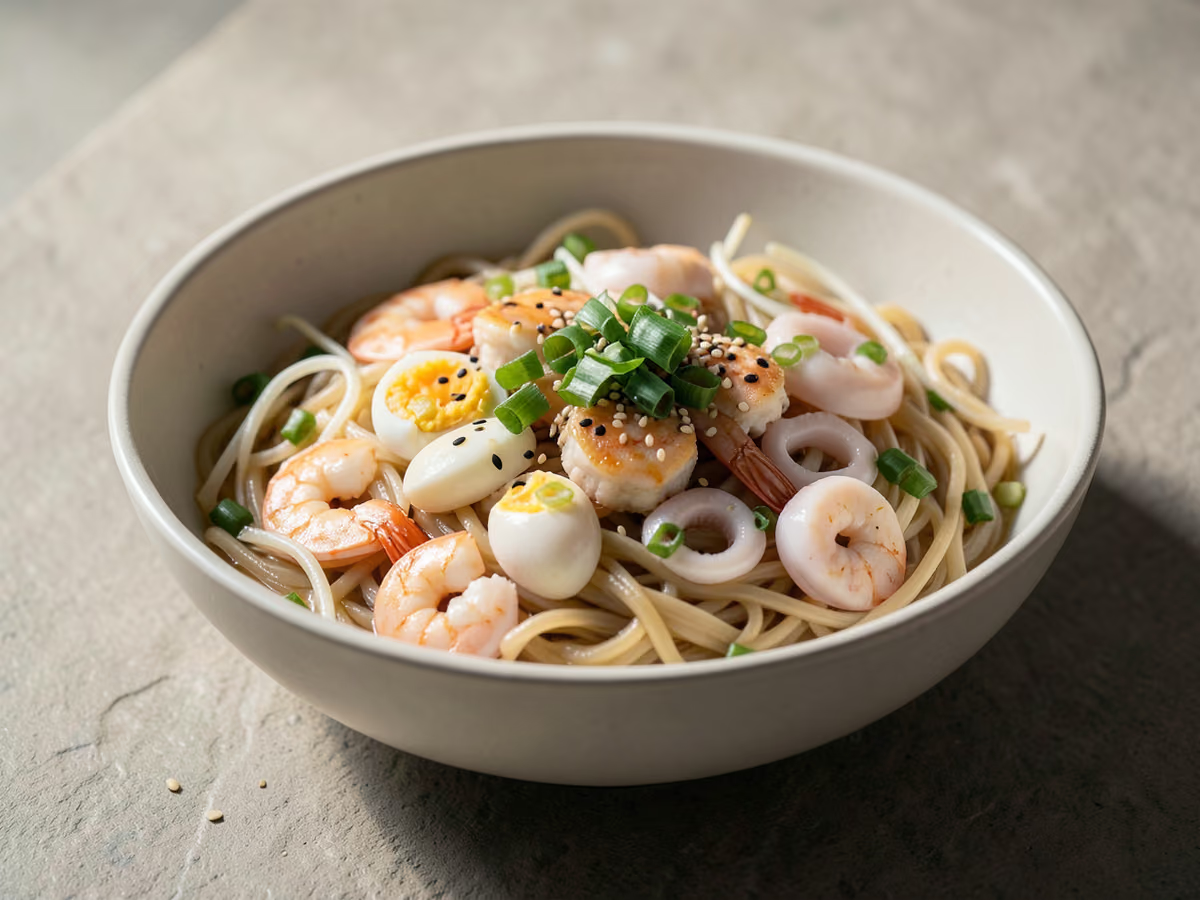
The wok does the work. At full heat, the thin film of oil on the metal meets the noodles and surface moisture flashes off as steam instead of soaking back in, so the strands sear rather than stew. That burst of steam also throws microscopic droplets of oil into the hot air above the wok, where they break down and partially char — the aroma cooks call wok hei, the breath of the wok. The sauce finishes the job: its sugars and amino acids brown on contact into a dark, caramel-edged glaze, and the thirty-second rest against the metal before the first toss is what starts the char.
Equipment
- Carbon steel wok, 30 cm or wider, or a large deep frying pan — a small wok forces you to cook in two batches
- Wide metal wok spatula or a sturdy slotted turner, for tossing without tearing the noodles
- Small bowl, for mixing the soy sauces, sugar and chilli paste into one sauce before the heat goes on
- Plate or shallow tray, for holding the seared prawns and squid while the rest of the dish cooks
- Chef's knife and cutting board, for the squid rings, chives and seafood prep
- Colander and kitchen paper, for draining and blotting the noodles so they go into the wok dry
- Measuring spoons, for the 2 tbsp light soy sauce, 1 tbsp dark soy sauce, 1 tsp sugar and 1 tbsp chilli paste
Kitchen notes
Kitchen notes
- Preheat the wok empty until it just begins to smoke, then add the oil and swirl it up the sides; the hot film of oil is what keeps the noodles from sticking and starts the char the second they land.
- Set every component out before the heat goes on — prawns, squid, egg, noodles, chives, sprouts and the sauce bowl — because the whole stir-fry runs under 10 minutes with no pause for chopping or hunting for a bottle.
- Use the 1 tbsp chilli paste as your heat dial: spread across two servings it gives a gentle, rounded warmth, so halve it for a milder plate and let anyone who wants more heat add chilli at the table.
- Taste the sauce, then taste the finished noodles: light soy sauces vary in salt, and the 1 tsp sugar should only round the edge of the soy, not sweeten the dish. Add the optional salt pinch only if the finish reads flat.
- Between batches, wipe the wok out with bunched kitchen paper and let it come back to heat rather than rinsing it; water drops the temperature instantly and the next portion will steam instead of char.
Common mistakes
- Mushy, steamed noodles instead of smoky ones: the strands went in wet, or the wok never got hot enough to flash that water off. Drain soaked noodles well, blot fresh ones dry, separate them by hand, and heat the wok until a drop of water evaporates on contact before the oil goes in.
- Noodles clumping into a stodgy block: cold fresh kway teow is sticky and goes into the wok as one lump. Bring it to room temperature and separate the strands by hand first, then keep the noodles moving with the spatula so no mass sits against the metal long enough to bind.
- Steamed instead of charred: too much food in one wok load collapses the temperature and everything releases water at once. If your wok is smaller than 30 cm, fry the batch in two, each half with its own share of oil, seafood, egg, noodles and sauce — and take the first plate to the table while the second cooks.
- Rubbery prawns and squid: they stayed in the wok while the rest of the dish caught up. Pull them out as soon as the prawns turn pink and the squid goes opaque, and return them only for the final minute; overcooked seafood tightens and loses its sweetness.
- A bitter, scorched finish: the soy and sugar sat in one spot against very hot metal. Pour the sauce around the side of the wok rather than into a pool, keep the noodles tossing, and if the pan starts to catch, splash in water and lift it off the heat for a few seconds.
Serving suggestions
- Serve straight from the wok onto warm plates — this is a dish with a five-minute window, and both the crisp edges and the wok aroma fade once it stops steaming.
- Two generous plates is a main course; for a hawker-style spread, split the same batch across four small plates and let it sit alongside grilled or steamed dishes.
- An iced milk tea or a pot of Chinese tea is the classic hawker pairing and cuts the soy-and-smoke richness; a squeeze of lime over the top sharpens everything.
- Set out pickled green chillies for a sour, crunchy counterpoint to the sweet-savoury sauce, and extra chilli paste for anyone who wants Penang-level heat.
- Keep portions honest: generic nutrition data for hawker-style plates runs around 150 kcal per 100 g, and a full restaurant plate is often rated near 600 kcal, so pair it with something light rather than a second fried dish.
Variations
- Hawker extras: a halal beef sausage sliced thin goes in at the start with the prawns so it renders and flavours the oil, and cockles go in for the last 30 seconds so they just open and stay tender — both are traditional additions rather than swaps.
- Singapore-style: mix a small handful of yellow wheat noodles in with the rice noodles before frying, for the two-texture Singapore hawker treatment. With wheat noodles in the wok the dish is no longer gluten-free.
- Lighter, vegetable-forward: keep the seafood but bulk up the bean sprouts and fold in a handful of shredded cabbage or chye sim, the Chinese flowering cabbage, and use the smaller end of the oil; the plate is drier and lighter, closer to the health-conscious hawker versions.
Refrigerator
- RefrigeratorCool the noodles quickly — spread them in a shallow container rather than leaving them in the wok — and refrigerate within 1 hour of cooking. Treat it as a next-day dish: 1 day in the fridge is the safe window, 2 days the very most — rice noodles and seafood both carry a short clock, and the char is gone by the next morning either way.
- ReheatingReheat in a very hot wok or frying pan over high heat for 2 to 3 minutes with a splash of water to loosen the strands, or covered in the microwave for 1 to 2 minutes, until steaming hot all the way through — 74°C if you check with a thermometer. Rice dishes should be reheated only once, so warm just what you will eat.
- FreezingNot recommended. The noodles turn mushy and the seafood turns rubbery as they thaw, and the delicate wok aroma — the whole point of the dish — is the first thing to go.
- Make aheadPrep-ahead, yes; cook-ahead, no. Chop the prawns, squid, chives and sprouts and mix the sauce up to 1 day ahead, keep everything cold — or on the dried-noodle path, do the 20-minute soak in this window — then stir-fry in under 10 minutes just before serving, so the noodles still reach the table smoking.
Updated:
How this recipe was developed
- USDA FSIS and FoodSafety.gov safe minimum internal temperatures (fish and shellfish 63°C; shellfish done when pearly or white and opaque) and leftovers guidance (refrigerate within 2 hours; reheat to 74°C)
- UK Food Standards Agency — Home food fact checker, rice (cool cooked rice quickly, keep in the fridge no more than 1 day, reheat until steaming hot, once only)
- MICHELIN Guide — Iconic Dishes: Breaking Down Char Koay Teow in Malaysia and in Singapore (Penang and Singapore styles; wok heat and ingredient order)
- National Heritage Board Singapore, Roots.gov.sg — Intangible Cultural Heritage: Char Kway Teow (wok hei, hawker history, halal versions)
Editorial references are kept internally for verification. This page makes no claim of external certification or professional testing.
FAQ
The questions we get asked most
What is char kway teow made of?
At its core it is wide flat rice noodles stir-fried over fierce heat with seafood and egg in a soy-based sauce. This recipe uses 200 g fresh kway teow, 100 g prawns, 80 g squid, 2 eggs, 40 g garlic chives and 80 g bean sprouts, seasoned with 2 tbsp light soy sauce, 1 tbsp dark soy sauce, 1 tsp sugar and 1 tbsp chilli paste. That template — noodles, seafood, egg, alliums, soy and chilli — is what every hawker version is built on; regional stalls add cockles, fishcake or a halal sausage.
Why are my char kway teow noodles mushy instead of smoky?
The noodles are carrying too much water, or the wok is not hot enough to drive it off. Spread soaked noodles out to dry, separate fresh ones by hand, and heat the wok until a drop of water evaporates on contact before the oil goes in. Cooking too big a batch does the same thing — the wok's temperature collapses and the noodles stew in their own steam instead of charring.
Can I use dried flat rice noodles instead of fresh kway teow?
Yes: soak the same 200 g in warm water for 20 minutes until pliable, then drain and dry them well. Dried noodles are a little less silky than fresh kway teow, so keep the wok at full heat and do not crowd it. If they turn out chalky in the middle they were soaked too briefly — start checking at 15 minutes, especially if the water was only lukewarm.
How do I know when the prawns and squid are cooked?
By colour and shape. Prawns turn pink and curl into a loose C in 1 to 2 minutes over high heat; squid rings go from translucent to opaque white and firm up slightly. Both are pulled out at that point and returned at the end, so they only need to finish, not cook through twice. Tightly curled or rubbery seafood was overcooked; the official cue for shellfish is flesh that is pearly or white and opaque, and the USDA lists 63°C as the safe minimum for fish.
Can I make char kway teow ahead of time?
Prep ahead, cook at the last minute. Chop the prawns, squid, chives and sprouts and mix the sauce up to 1 day ahead and keep everything cold; the fry itself is under 10 minutes, so start when your diners are ready. Leftovers can be refrigerated and reheated, but the char and the wok aroma do not survive, and the dish is at its best eaten the moment it leaves the wok.
Is char kway teow Malaysian or Singaporean?
Both, and the two versions are family: it comes from the Teochew and Hokkien Chinese communities of Maritime Southeast Asia, where it started as a cheap, fast meal for labourers. Penang is generally treated as its spiritual home and the benchmark style — smoky, seafood-led and light — while Singapore's version leans sweeter with dark soy and often mixes flat rice noodles with yellow wheat noodles. You will see the name spelled char kway teow, char kuey teow and char koay teow; all three mean the same stir-fried flat rice noodles.
What is the difference between char kway teow, chow fun and pad see ew?
All three start with wide flat rice noodles, but they come from different kitchens. Char kway teow is the Malaysian and Singaporean hawker dish, built on prawns and squid with an assertive soy-and-chilli sauce and the deepest wok char. Chow fun is Cantonese, classically with beef in a clean soy gloss, and pad see ew is Thai, sweeter with dark soy and egg and cooked more gently. They share a noodle; they are not variations of one dish.
Ask KitchenMind about this recipe
Tell it what’s different tonight — it works within the actual recipe.