Flautas de Pollo
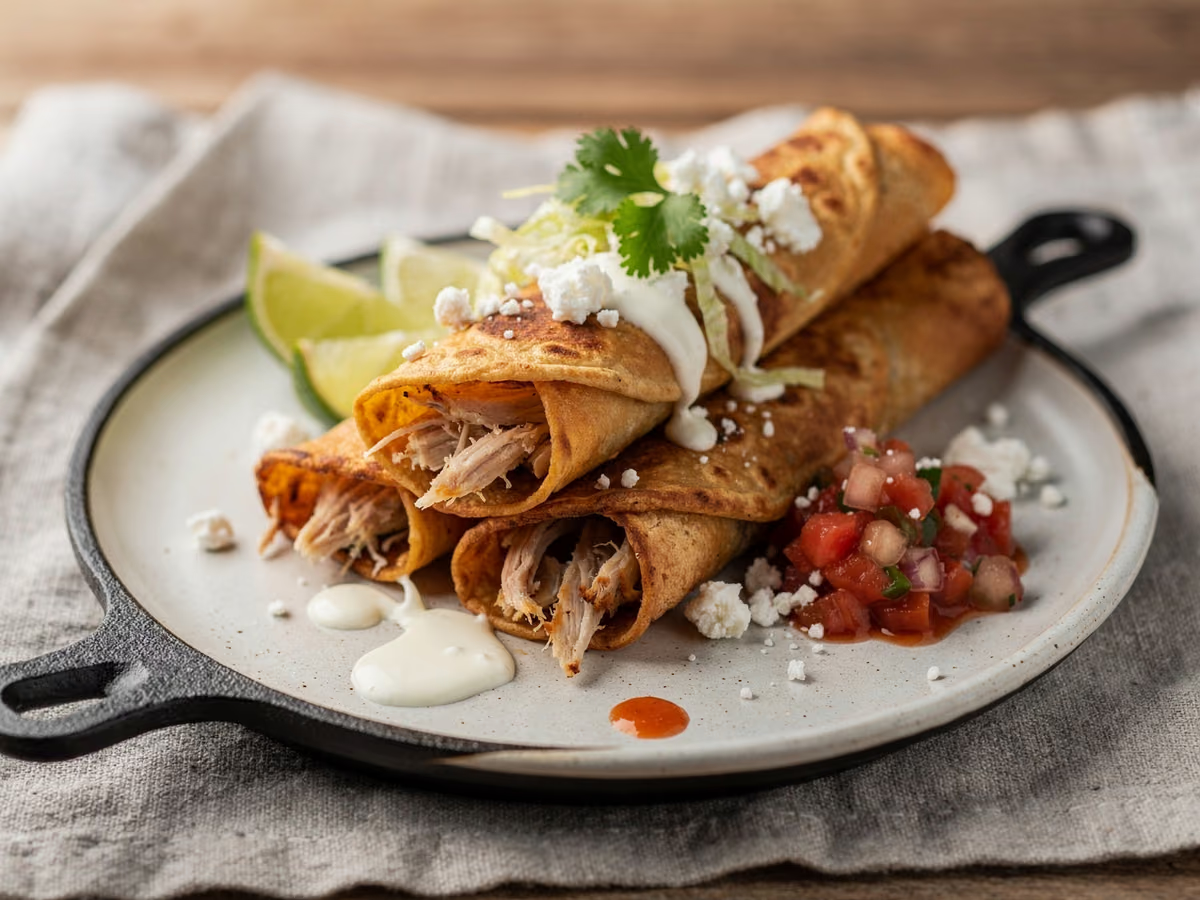
Flautas de pollo are the Mexican antojito built on contrast: corn tortillas rolled tight around shredded chicken simmered with salsa verde, then fried seam-side down until golden and rigid. The filling starts with a gently poached 500 g chicken breast, and the 250 ml of salsa verde is reduced with the reserved cooking liquid until it clings rather than drips; that reduction is what keeps the rolls crisp. Count on 30 minutes of prep, 25 minutes at the stove, four servings, and a plate that is gluten-free as written and dairy-free without the optional toppings.
- Prep
- 30 min
- Cook
- 25 min
- Total
- 55 min
- Serves
- 4
Ingredients
What you’ll need — tap to tick off as you go
- 500 g
- 250 ml
- 2 cloves
- 1 tsp
- 1 tsp
- 1 tsp
- ½ tsp
- 120 ml
- 120 ml
- 100 g
- 100 g
Process
Timers built in · swap anything · ask as you cook
Combine the 500 g chicken breast, half the chopped onion, 1 minced garlic clove, and 0.5 tsp of the salt in a medium saucepan, then add enough water to cover the chicken by 2 cm. Bring to a boil, lower the heat to a bare simmer, cover, and cook for 15–20 minutes, until the chicken registers 74°C and shreds easily with a fork. A lazy simmer keeps the meat tender.
Lift the chicken out into a bowl and shred it with two forks while it is still warm; hot meat pulls apart into finer, juicier strands than cold. Reserve 60 ml of the poaching liquid — it tastes of onion and chicken and will season the filling — and leave the rest behind.
Heat 1 tbsp of the vegetable oil in a large skillet over medium heat. Add the remaining onion and the second garlic clove, minced, and cook for 2–3 minutes, until the onion softens and turns translucent. Stir in the 1 tsp ground cumin and 1 tsp dried oregano and toast for 30 seconds, just until fragrant — spices bloom in hot oil, and a moment longer turns them bitter.
Add the shredded chicken, the 250 ml salsa verde, the reserved 60 ml cooking liquid, the remaining 0.5 tsp salt, and 0.5 tsp black pepper. Stir well and simmer over medium-low heat for 5–7 minutes, until the sauce thickens enough to coat the chicken and no loose liquid pools in the skillet. Off the heat, cool the filling until it is easy to handle.
Warm the 12 corn tortillas in a dry skillet over medium heat, about 20 seconds per side, until they are hot, soft, and pliable, with no crisp or browned patches. Stack them as they come off the pan and cover the stack with a clean kitchen towel — trapped steam keeps the tortillas supple, and a supple tortilla rolls without cracking.
Lay a warm tortilla flat and spread about 2 tbsp of the filling along the lower edge, leaving a 2 cm border. Roll it away from you, tucking the first fold over the filling and pressing gently so the cylinder stays tight and thin; a fat roll fries unevenly and splits at the seam. Secure the seam with a toothpick if it opens, rest each flauta seam-side down, and repeat, keeping the rest covered.
Heat the remaining vegetable oil in a large skillet over medium heat until it shimmers; a scrap of tortilla should bubble on contact at about 170°C. Add the flautas seam-side down, in batches of 3 or 4, and fry for 2–3 minutes per side, turning with tongs, until golden and rigid all over. The seam seals first; a crowded pan cools the oil and the shells soak it up instead of crisping.
Transfer the flautas to a plate lined with paper towels, or a wire rack over a tray, and drain for a minute or two; blot gently rather than pressing. Remove any toothpicks while the rolls are firm, and if you are frying in several batches, keep the finished flautas warm while the rest cook.
Serve the flautas hot, topped with the optional 120 ml crema, 100 g crumbled queso fresco, 100 g shredded lettuce, the 4 sliced radishes, and lime wedges on the side. The crema and the queso are the only dairy here, so leave them off to keep the plate dairy-free. Flautas wait for no one — the shells soften as they sit.
Why this recipe works
Two things have to land at once: a shell that shatters and a filling that stays juicy. A gentle poach keeps the meat tender, and shredding it warm lets the strands drink in the salsa. Simmering the salsa verde with the reserved poaching liquid until it thickens is the quiet hinge: a wet filling steams inside the tortilla and softens the shell from within. Warming the tortillas matters too: heat and moisture make the corn starch pliable, so the roll bends instead of cracking. Thin, tight cylinders cook through in the same 2-3 minutes the shell needs to brown. Frying seam-side down first seals the flap, and oil at about 170°C crisps the surface before it can soak in.
Equipment
- Medium saucepan, 2-3 liter, for poaching the chicken
- Large skillet, 28-30 cm, for cooking the chicken filling
- Deep skillet or saute pan for shallow-frying the flautas in the 120 ml of oil
- Comal or dry skillet for warming the corn tortillas
- Instant-read thermometer, for the 74°C chicken check
- Tongs and a slotted spoon, for turning and lifting the flautas
- Paper towels or a wire rack set over a tray, for draining
- Toothpicks (optional) and a clean kitchen towel for keeping the tortillas warm
Kitchen notes
Kitchen notes
- Test the oil with a scrap of tortilla: instant bubbles mean it is ready at about 170°C; a quiet scrap means the oil is cool and the shells will soak; a scrap that browns in seconds means the heat is too high — wait a minute before frying.
- Fry in small batches and hold the finished flautas on a rack in a warm oven while the rest cook; they stay crisp, and the whole table gets hot flautas at once.
- Skewer two or three flautas together with toothpicks and turn them as one unit — they fry evenly, keep their shape, and are far easier to handle with tongs.
- Make the filling up to 2 days ahead and refrigerate it, then warm it gently before rolling. Starting from leftover or rotisserie chicken skips the poaching step entirely.
- Corn tortillas are naturally gluten-free, but flavored or blended brands sometimes add wheat flour — read the label. For a dairy-free plate, leave off the crema and queso fresco; the filling and the shells already contain no dairy.
Common mistakes
- The rolls split open and spill filling into the oil — they were overfilled, rolled loose, or wrapped in cold tortillas. Measure the filling at about 2 tbsp per tortilla, roll thin and tight, warm every tortilla until it is pliable, and set each flauta seam-side down first so the seam crisps shut.
- The tortillas crack and tear as you roll — they went cold or never warmed through. Heat them about 20 seconds per side, keep the finished stack covered with a towel, roll one at a time, and re-warm any tortilla that stiffens before its turn.
- The shells taste greasy instead of crisp — the oil fell below about 170°C, or the filling was still wet. Simmer the filling until no loose liquid pools, let the oil come back up between batches, and drain the fried flautas on paper towels or a rack rather than on a solid plate.
- The flautas brown outside while the center stays cool — the oil is running too hot, or the rolls are too thick. Hold the oil around 170°C, keep the cylinders thin, and give each side its full 2-3 minutes instead of frying at a roar.
- The filling tastes flat — the salsa was not reduced enough, or it was never tasted before rolling. Simmer until it darkens and clings, then taste: salt, cumin, and a squeeze of lime are easy fixes at that stage.
- The flautas stick to the pan or to each other — the skillet was crowded. Fry 3 or 4 at a time in a single layer, keep the oil shallow and even, and nudge the rolls free with tongs rather than dragging them.
Serving suggestions
- Serve three flautas per person as a main course with rice and beans, or two per person as a starter with drinks.
- The classic plate: drizzle the 120 ml crema over the top, scatter the 100 g crumbled queso fresco, pile on the 100 g shredded lettuce with the 4 sliced radishes, and tuck lime wedges alongside.
- Offer guacamole or extra salsa verde for dipping — cool and fresh is the whole point of the topping lineup.
- A crisp cabbage slaw or a sharp tomato-and-onion salad cuts the richness; keep the rest of the table light so the flautas stay the loudest thing on it.
Variations
- Baked flautas — brush the rolled flautas all over with oil, stand them seam-side down on a lined sheet, and bake at 200°C for 15-20 minutes, turning once, until golden and crisp. Lighter and hands-off, a little less shattery.
- Air-fryer flautas — oil the rolls lightly, arrange them in a single layer without touching, and air-fry at about 195°C, turning once, until crisp. Check early the first time, since air fryers vary.
- Potato-and-cheese flautas — swap the chicken filling for well-seasoned mashed potato mixed with crumbled cheese, still about 2 tbsp per tortilla; the rolls brown the same way and make a vegetarian plate.
Refrigerator
- RefrigeratorCool the flautas completely, then refrigerate them in an airtight container for up to 3 days. The shells lose crispness with every day they sit, and a few minutes in a hot oven brings most of it back.
- ReheatingReheat on a baking sheet in a 180°C oven for 8-10 minutes, until hot through and crisp again. Skip the microwave — the steam it traps turns the shells soggy.
- FreezingFreeze the unbaked rolled flautas on a tray in a single layer until solid, then transfer them to a freezer bag for up to 2 months. Fry straight from frozen, adding 1-2 minutes to the frying time.
- Make aheadAssemble the flautas up to 24 hours ahead, lay them seam-side down on a tray, cover tightly, and refrigerate; fry them cold, adding about 1 minute to the frying time.
Updated:
How this recipe was developed
- Larousse Cocina, Diccionario enciclopedico de la Gastronomia Mexicana with its flautas de pollo recipe (rolled corn tortillas fried in hot oil until crisp, drained on absorbent paper, served with crema, queso and lettuce; the rolled-and-fried antojito framing).
- Pati Jinich, Chicken Flautas (Flautas de Pollo) — warm the tortillas about 30 seconds per side so they do not break when rolled; keep the rolls thin with 1-2 tbsp of filling; shallow-fry a few minutes per side and drain on paper towels; baked alternative brushed with oil.
- Maricruz Avalos, Flautas de Pollo — warming the tortillas prevents cracking; the filling should be nearly dry with no liquid left in the pan; fry in batches in about an inch of oil; assembled flautas freeze well before frying and can be fried straight from frozen.
- USDA FSIS and FoodSafety.gov safe temperature and leftovers guidance — all poultry cooked to 74°C; leftovers refrigerated within 2 hours, kept 3-4 days, and reheated to 74°C; freeze for best quality within 3-4 months.
Editorial references are kept internally for verification. This page makes no claim of external certification or professional testing.
FAQ
The questions we get asked most
What are flautas de pollo?
Corn tortillas rolled tight around shredded chicken and fried until the shells are golden and crisp — the rolled, fried corner of the Mexican antojito family. In this version, 500 g of gently poached chicken is simmered with 250 ml salsa verde, garlic, cumin, and oregano until the sauce clings rather than pools, then rolled into 12 six-inch tortillas and shallow-fried seam-side down. They are served dry, topped with cool garnishes rather than a poured sauce.
What is the difference between flautas and taquitos?
Mostly size, and the line is blurry: in many regions the two names are used interchangeably for the same rolled, fried tortilla. The usual convention is that flautas are rolled longer and thinner — the flute shape that gives them their name — while taquitos are the shorter, snack-size rolls, often served as finger food. Some cooks tie taquitos to corn tortillas and flautas to flour, but that rule flips from region to region. This recipe is a flauta in shape: 6-inch corn tortillas rolled into thin cylinders and fried crisp.
Why did my flautas fall apart during frying?
The usual causes are overfilling, a loose roll, and tortillas that were not warm enough to bend. Two tablespoons of filling is the ceiling; roll thin and tight so the cylinder holds itself closed, and warm each tortilla until it is hot and pliable. Then start every flauta seam-side down in the oil: the seam fuses as that side crisps, so the roll stays shut when you turn it.
How do I keep flautas from becoming soggy?
Three fixes, in order of impact: simmer the filling until no loose liquid is left in the pan; keep the frying oil at about 170°C, because cool oil soaks into the tortilla instead of crisping it; and fry in small batches so the temperature recovers between additions. Then drain on paper towels or a rack, not a solid plate, and serve right away — the shells soften as they sit.
Can I make flautas ahead of time or freeze them?
Yes to both. Assemble the flautas up to 24 hours ahead, lay them seam-side down on a tray, cover, and refrigerate; fry them cold, adding about a minute. For longer storage, freeze the unbaked rolls in a single layer until solid, move them to a freezer bag for up to 2 months, and fry straight from frozen, adding 1-2 minutes.
Can I bake flautas instead of frying?
Yes — brush the rolled flautas all over with oil, stand them seam-side down on a lined sheet, and bake at 200°C for 15-20 minutes, turning once, until golden and crisp. They come out lighter and slightly less shattery than fried. An air fryer gets closer to the real thing: oil the rolls, keep them in a single layer, and air-fry at about 195°C, checking early the first time.
How many calories are in flautas de pollo?
It varies with the tortilla, the filling, and above all how much oil the shells take on. A single fried chicken flauta of about 100 g lands near 180 calories, while restaurant plates served with rice, crema, and cheese can pass 800 — and the biggest platters exceed 1,000. Homemade versions sit between those poles; bake instead of fry and go light on the toppings to land nearer the low end.
Ask KitchenMind about this recipe
Tell it what’s different tonight — it works within the actual recipe.