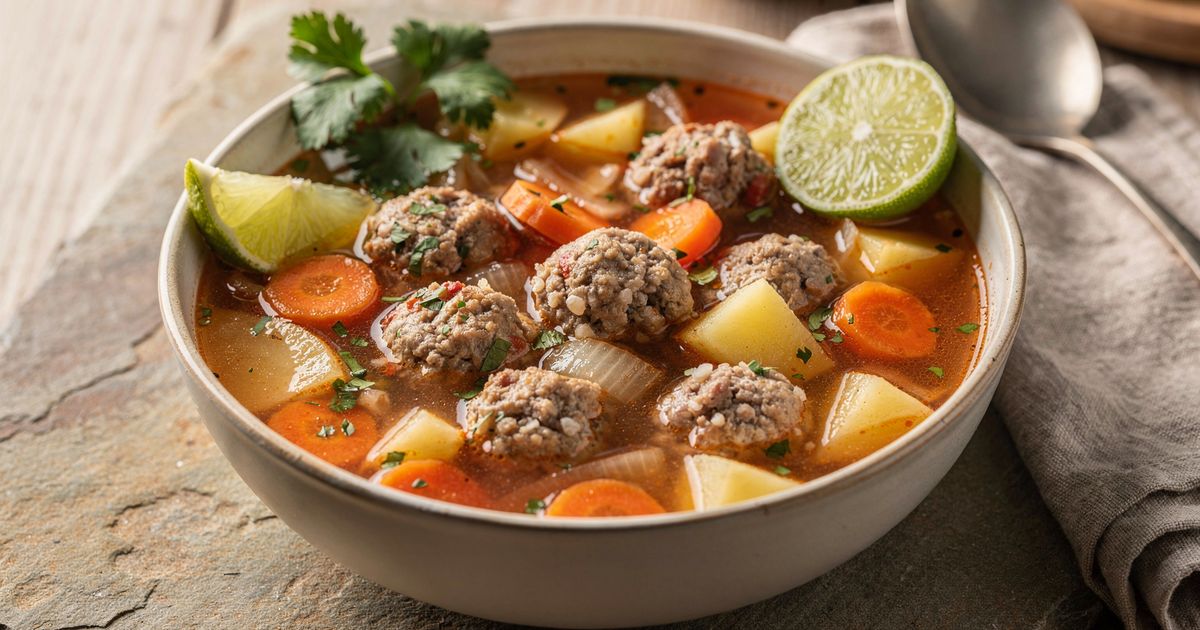
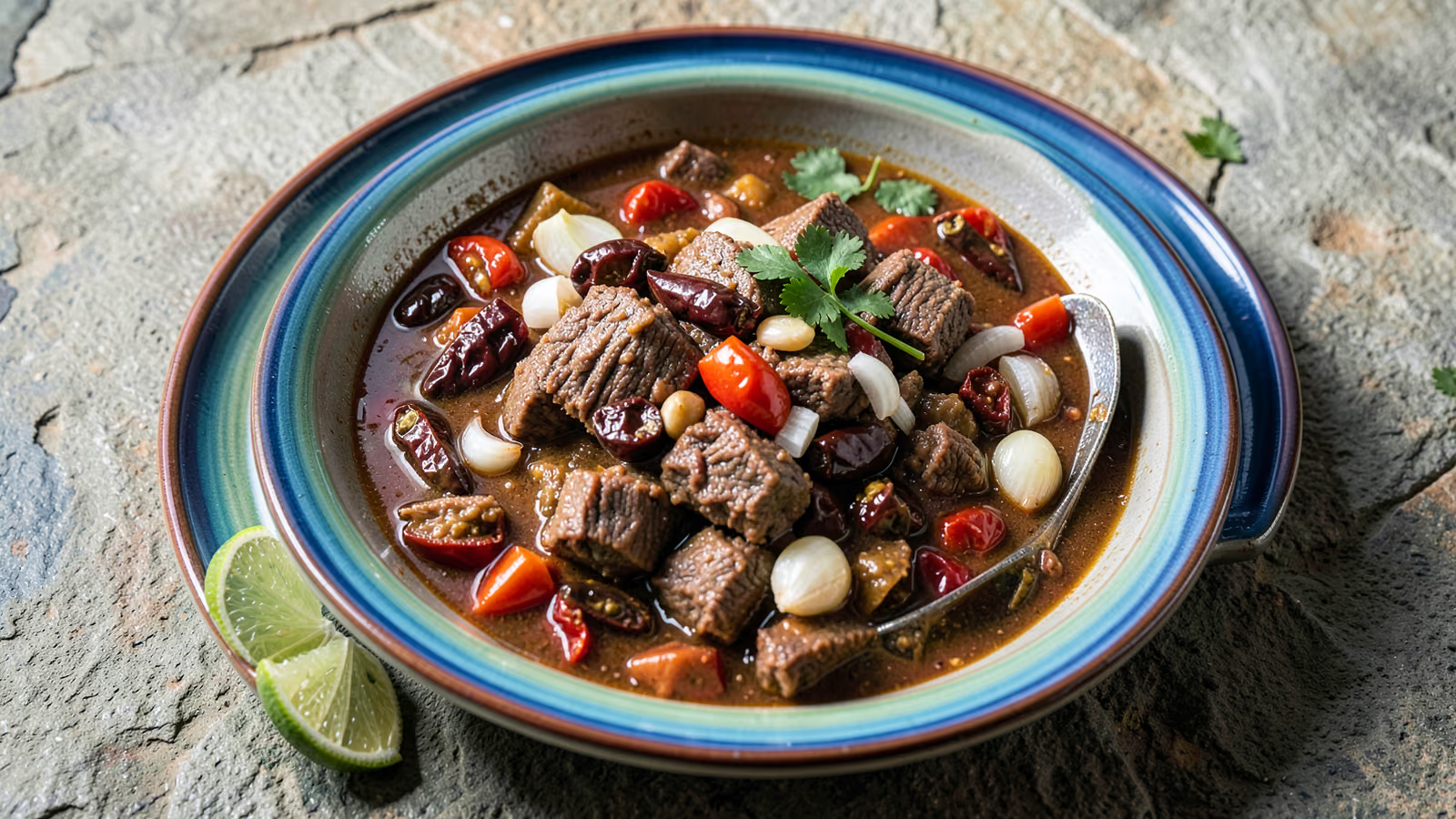
Caldo de Res
Caldo de res is Mexico's slow-simmered beef and vegetable caldo: chunks of chuck and soup bones cooked gently with onion, garlic and herbs until the broth is savory and the meat is fork-tender, then corn on the cob, carrots, potatoes and zucchini finished right in the pot. This version keeps the broth clear by skimming and holding a bare simmer, uses the full 1.5 kg of chuck and 500 g of bones, and stages the vegetables so nothing collapses. Prep takes about 20 minutes; the pot then looks after itself for roughly 2 hours and feeds 6.
- Prep
- 20 min
- Cook
- 120 min
- Total
- 140 min
- Serves
- 6
Ingredients
What you’ll need — tap to tick off as you go
- 1 ½ kg
- 500 g
- 3 l
- 6 cloves
- 1 tsp
- 1 tsp
- 2 tsp
- ½ tsp
- 150 g
- ½ cups
Process
Timers built in · swap anything · ask as you cook
Combine the 1.5 kg beef chuck, the 500 g bones if using, 3 liters of water, the quartered onion, 6 garlic cloves, 2 bay leaves, 1 tsp dried oregano, 1 tsp ground cumin, 2 tsp salt and 0.5 tsp black pepper in a heavy pot. Bring to a boil, then reduce at once to a bare simmer and skim the gray foam; it is coagulated protein, and leaving it in clouds the broth.
Reduce the heat to keep a bare simmer — small bubbles, never a rolling boil — cover partially, and cook for 1 hour 30 minutes, until a fork slides into the beef with little resistance and the meat shreds at the edges. Skim occasionally. If the liquid no longer covers the meat, top it up with hot water; boiling hard clouds the broth and tightens the meat.
Add the 3 carrots in 2 cm rounds, the 3 potatoes in 3 cm chunks and the 2 ears of corn in 3 cm rounds. Simmer for 15 minutes — this first wave of vegetables needs the longer window, and the corn sweetens the broth as it cooks. They should be almost tender but still firm before the next addition.
Stir in the 2 zucchini in 2 cm rounds and the 150 g green beans, if using. Simmer about 10 minutes, until all the vegetables are fork-tender but still holding their shape; zucchini and green beans cook fast, which is why they go in last, and overcooked they collapse into the broth.
Taste the broth and adjust the salt and pepper — it should be savory and full, not flat. Remove the 2 bay leaves and any large bones, and if you like, pull the beef into bite-size pieces and return them to the pot. Leaving the bay leaves in too long can make the broth taste bitter.
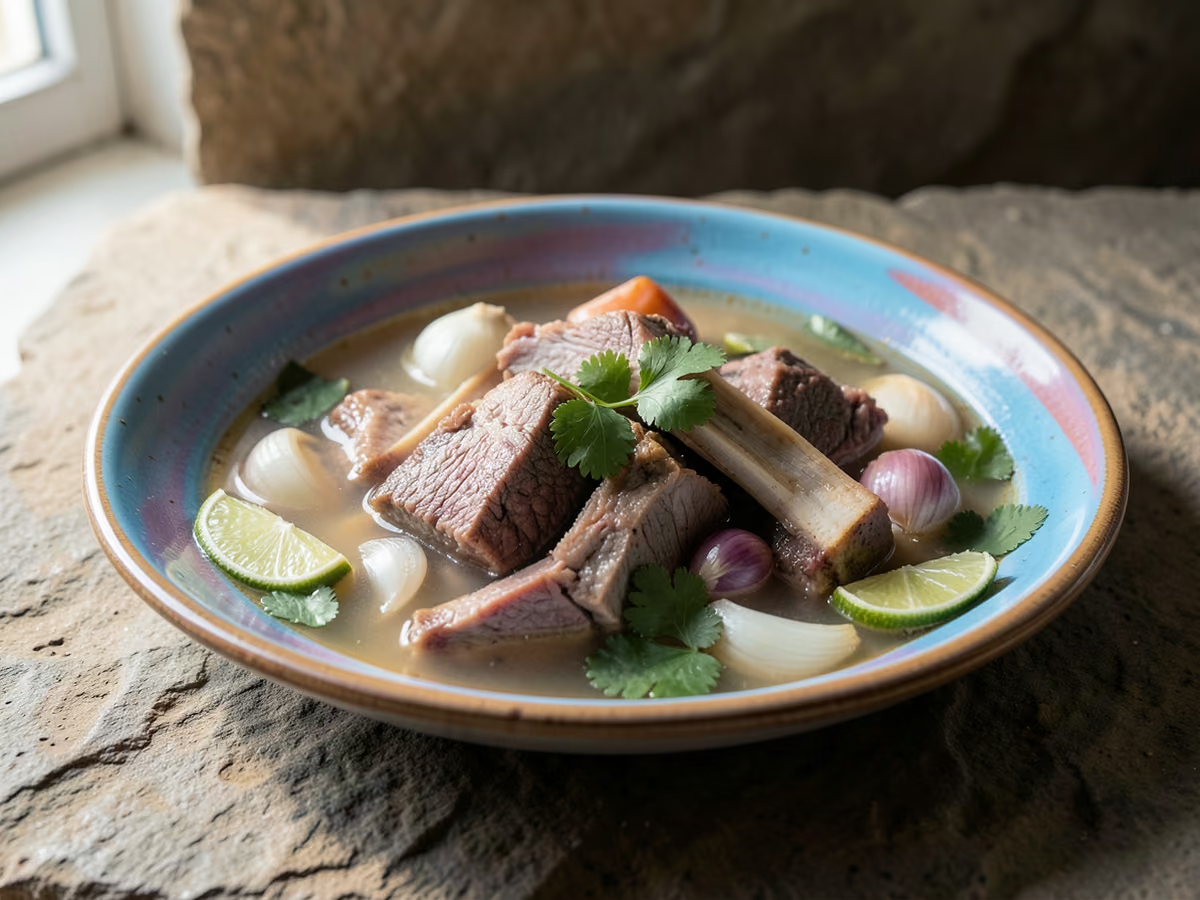
Ladle the caldo into deep bowls, making sure every serving gets beef, a piece of corn and plenty of broth. Top with the 0.5 cup chopped cilantro and serve with the 2 limes cut into wedges and the 6 warm corn tortillas on the side; a squeeze of lime at the table sharpens the rich broth.
Why this recipe works
Chuck and bones are the engine here: a long, gentle simmer melts the collagen in the meat and connective tissue into gelatin, which gives the broth body without any thickener and leaves the beef tender enough to shred with a fork. Skimming the foam and keeping the pot at a bare simmer rather than a boil is what keeps the broth clear — a hard boil churns coagulated protein and fat back through the liquid, and the broth turns cloudy. The vegetables go in two waves because carrots, potatoes and corn need about 15 minutes while zucchini and green beans need only 10, and staging them keeps every piece intact.
Equipment
- Heavy 6 to 8 liter pot or Dutch oven with a lid, big enough to hold 1.5 kg of beef, 500 g of bones and 3 liters of water with room to simmer
- Fine-mesh skimmer or large shallow spoon, for lifting the foam off the surface
- Chef's knife and cutting board, for the beef and the vegetables
- Measuring cups and spoons, for the water, herbs and seasonings
- Slotted spoon or tongs, for lifting the meat, bones and bay leaves out of the pot
- Ladle, for filling each bowl with broth, beef and vegetables evenly
- Deep serving bowls, so every portion gets plenty of broth
Kitchen notes
Kitchen notes
- Skim the gray foam as it rises, especially through the first 30 minutes — that is when there is the most to remove, and skimming is the single biggest factor in a clear, clean-tasting broth.
- Start from cold water and let the pot heat gradually: the proteins coagulate slowly enough to gather on the surface instead of breaking into the broth, which makes them easy to skim.
- Bone-in pieces earn their keep: marrow bones or short ribs release gelatin and marrow that give the broth body, and meat cooked on the bone stays juicier; fish out the bones before serving.
- The onion, garlic and bay leaves are spent by the time the beef is tender. Remove them before the vegetables go in or at the latest before serving — bay leaves left in for hours can turn the broth bitter.
- Cool the caldo overnight in the fridge if you can: the fat solidifies into a layer you can lift off in one piece, and the broth tastes deeper the next day. This is also the easiest way to skim fat.
- Squeeze the lime at the table, not into the pot: simmering dulls the juice, and fresh lime over the bowl cuts the richness of the broth and wakes up the vegetables.
Common mistakes
- Cloudy broth: a hard boil churned fat and coagulated protein back through the liquid, or the foam was never skimmed. Start with cold water, drop to a bare simmer the moment it boils, skim the foam that rises in the first 30 minutes, and avoid stirring hard.
- Tough, stringy beef: the simmer was too short or too hot. Chuck and bones need the full 1 hour 30 minutes of gentle heat for the collagen to melt; keep the pot at a bare simmer, and test the meat with a fork before you add the vegetables.
- Mushy vegetables: everything went in at once. Carrots, potatoes and corn need about 15 minutes and zucchini and green beans only 10, so add them in the two stages the recipe sets out and stop as soon as they are fork-tender.
- Greasy, heavy broth: too much fat from the meat or bones. Trim the chuck of excess fat, spoon off the fat that pools on the surface, or chill the caldo overnight and lift off the solid fat in one piece.
- Flat or over-salted broth: seasoning was judged too early. The broth reduces as it simmers, so salt lightly at the start with the 2 tsp, then taste and finish the seasoning after the vegetables are tender.
Serving suggestions
- Serve very hot in deep bowls, making sure each portion gets beef, vegetables and plenty of broth; top with the chopped cilantro and a squeeze of lime, and pass chopped onion or salsa at the table for anyone who wants more.
- Warm corn tortillas are the classic accompaniment, and a side of rice or a piece of crusty bread turns the soup into a full dinner.
- Keep hot sauce or salsa on the table rather than in the pot: caldo de res is mild by design, and the heat is meant to be adjusted bowl by bowl.
- The broth thickens as it cools, so thin leftovers with a splash of hot water or broth to bring back the brothy consistency the dish is known for.
Variations
- Slow-cooker caldo: combine the beef, bones, water, onion, garlic, herbs and seasonings and cook on low for 6 to 8 hours or on high for 4 to 5. Add the carrots, potatoes and corn during the last hour and the zucchini and green beans during the last 30 minutes; the broth comes out a touch less clear but every bit as flavorful.
- Pressure-cooker caldo: cook the beef, bones and broth under pressure for 35 to 45 minutes, then release the steam, skim the broth, and simmer the vegetables uncovered in stages — carrots, potatoes and corn about 15 minutes, zucchini and green beans 10.
- Regional vegetable version: add chayote and cabbage in place of the green beans — chayote with the carrots and potatoes, cabbage in the last 10 minutes — and stir in a blended tomato and garlic sauce with the first wave of vegetables for the lightly red central-Mexican style.
Refrigerator
- RefrigeratorCool the caldo within 2 hours of cooking, then refrigerate it in an airtight container for 3 to 4 days. The flavor deepens overnight and the fat rises and sets on top; lift it off before reheating. Keep the vegetables in the broth — they soften a little but hold.
- ReheatingWarm gently in a pot over medium-low heat until steaming hot throughout, about 10 minutes, or microwave covered portions until hot. Leftovers should reach 74°C; add a splash of water or broth if the caldo has thickened, and avoid a hard boil so the vegetables stay intact.
- FreezingFreeze the broth, beef and firm vegetables for up to 3 months in airtight containers; leave the potatoes and zucchini out, since they turn mealy when thawed. Thaw overnight in the fridge and reheat gently.
- Make aheadThe caldo is better made a day ahead: cook it fully, cool it quickly, refrigerate it, then lift off the fat and reheat gently before serving. Cook the vegetables fresh if you want them firm — or keep them in and accept a softer result.
Updated:
How this recipe was developed
- USDA FSIS, Leftovers and Food Safety (refrigerate cooked food within 2 hours; leftovers keep 3 to 4 days in the fridge and up to 3 to 4 months in the freezer; reheat to 74°C)
- Isabel Eats, Caldo de Res (bone-in beef shank broth with corn and vegetables; simmer 1 hour 30 minutes to 2 hours until tender; skim the foam; vegetables staged in two additions; slow-cooker method and storage notes)
- Mexico in My Kitchen, Caldo de Res (Mexican Beef Soup) (cocido, sopa de res and puchero as alternate names; best cuts — chambarete, marrow bones, short ribs, chuck and oxtail; vegetables cooked in stages to stay al dente; clear broth skimmed and aromatics removed)
- Bon Appétit, How to Remove the Foamy Scum on Stocks and Soups (the foam is coagulated protein; a hard boil mixes it back into the liquid; start from cold water and hold a simmer to make skimming easier)
Editorial references are kept internally for verification. This page makes no claim of external certification or professional testing.
FAQ
The questions we get asked most
What is caldo de res?
Caldo de res is a traditional Mexican soup built on beef and bones: beef simmered slowly with onion, garlic and herbs until the broth is savory and the meat is fork-tender, with corn on the cob, carrots, potatoes and zucchini cooked right in the pot. Caldo means broth, and the dish also goes by sopa de res, cocido or puchero in different parts of Mexico. Serve it hot, in deep bowls, with cilantro, lime and warm corn tortillas.
What is the difference between caldo de res and caldo tlalpeño?
They are two different soups in the same caldo family. Caldo de res is beef-based: chuck or bone-in shank simmered into a clear, savory broth with corn, carrots and potatoes. Caldo tlalpeño is a chicken soup from Tlalpan in Mexico City, made smoky with chipotle chiles and bulked up with chickpeas, and it is served with avocado and cheese. If the bowl in front of you is built on beef and bone with corn on the cob, it is caldo de res.
What cuts of beef are best for caldo de res?
Cuts with plenty of connective tissue, and ideally some bone: chuck, which this recipe uses, plus bone-in beef shank (chambarete), short ribs, brisket or oxtail. They stay juicy through the long simmer and melt collagen into the broth, which is where its body comes from; lean cuts like sirloin or round turn dry and stringy in a soup, so save them for the grill.
What vegetables go in caldo de res?
Corn on the cob, carrots and potatoes are the constants, with zucchini in most home versions; chayote, cabbage, green beans and chickpeas appear depending on the region. This recipe uses carrots, potatoes, corn on the cob and zucchini, with green beans optional, and it adds them in two stages so the quick-cooking ones stay intact. Any firm vegetable can join — delicate ones go in for the last 10 minutes.
Is caldo de res healthy?
It is a brothy, vegetable-forward soup built on simmered beef, so it fits neatly into a balanced diet, and it is naturally gluten-free and dairy-free. A bowl delivers protein from the beef and a mix of vegetables, without heavy cream or thickeners. The variables are yours to control: trim the chuck to cut fat, and season at the end so the sodium lands where you want it.
How long do you simmer caldo de res?
About 2 hours from the moment it boils for this version: 1 hour 30 minutes for the beef and broth, 15 minutes after the carrots, potatoes and corn go in, and 10 more once the zucchini and green beans are added. A stubborn cut can need up to 30 minutes longer; judge by the fork, not the clock — when the beef shreds easily, it is done.
Why is my caldo de res broth cloudy?
Usually because the pot boiled hard or the foam was left in. A rolling boil churns coagulated proteins and fat back through the liquid and the broth turns cloudy, and skimming afterward cannot undo it. Start with cold water, drop to a bare simmer as soon as it boils, and skim the gray foam as it rises; a fresh pot kept at a gentle simmer stays clear.
Ask KitchenMind about this recipe
Tell it what’s different tonight — it works within the actual recipe.