Hibiscus Tea Karkadeh
Karkadeh is Egypt's deep red hibiscus infusion, made from dried roselle calyces steeped in water and sweetened while hot. Served scalding in winter and over ice in summer, it is the drink of weddings and Ramadan iftars across Egypt and Sudan, tart and bright like cranberry with a floral edge. This version keeps the traditional 10-minute simmer, uses 60 g of sugar per litre, and asks barely five minutes of hands-on work before it cools or chills.
- Prep
- 5 min
- Cook
- 10 min
- Total
- 135 min
- Additional time
- 120 min
- Serves
- 4
Ingredients
What you’ll need — tap to tick off as you go
- 20 g
- 1000 ml
- 60 g
- 1 tbsp
Process
Timers built in · swap anything · ask as you cook
Rinse the 20 g of dried hibiscus petals briefly under cold running water and shake off the excess. The rinse clears dust from the dried calyces; do not let them soak, or the first of the colour runs down the drain.
Bring the 1000 ml of water to a rolling boil in a 2-litre saucepan. A full boil at the start is traditional, but it only needs to reach that point: the petals go in as soon as the surface is heaving.
Add the petals, stir once, then lower the heat so the liquid barely trembles, a gentle simmer around 95–100°C, and steep for 10 minutes. Taste at 8 minutes: it should be tart and clean, and by much past 15 minutes the drink turns harsh and drying.
Take the pan off the heat and stir in the 60 g of granulated sugar until it dissolves completely. The liquid is still close to boiling, which is the easiest moment to dissolve sugar; taste now and adjust before the drink cools.
Strain the infusion through a fine-mesh sieve into a heatproof pitcher, pressing gently on the petals with the back of a spoon. Pressing hard forces fine sediment through and muddies the colour; steady light pressure recovers the last of the liquid.
If you are using it, stir the 1 tbsp lemon juice into the warm liquid and taste again for sweetness. The lemon sharpens the tartness and lifts the colour, and it blends in best while the drink is still warm.
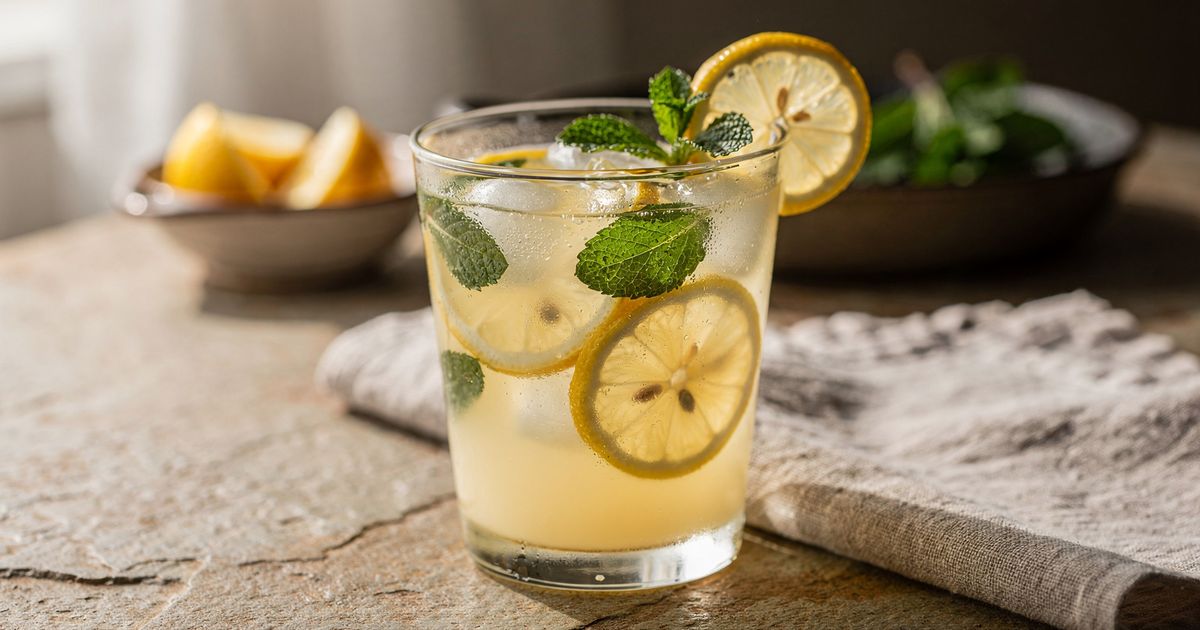
Serve hot in glasses or mugs, or chill the pitcher for at least 2 hours and pour over ice, finishing each glass with one of the 4 mint leaves. Chilling softens the acidity, and the drink rounds out further overnight in the fridge.
Why this recipe works
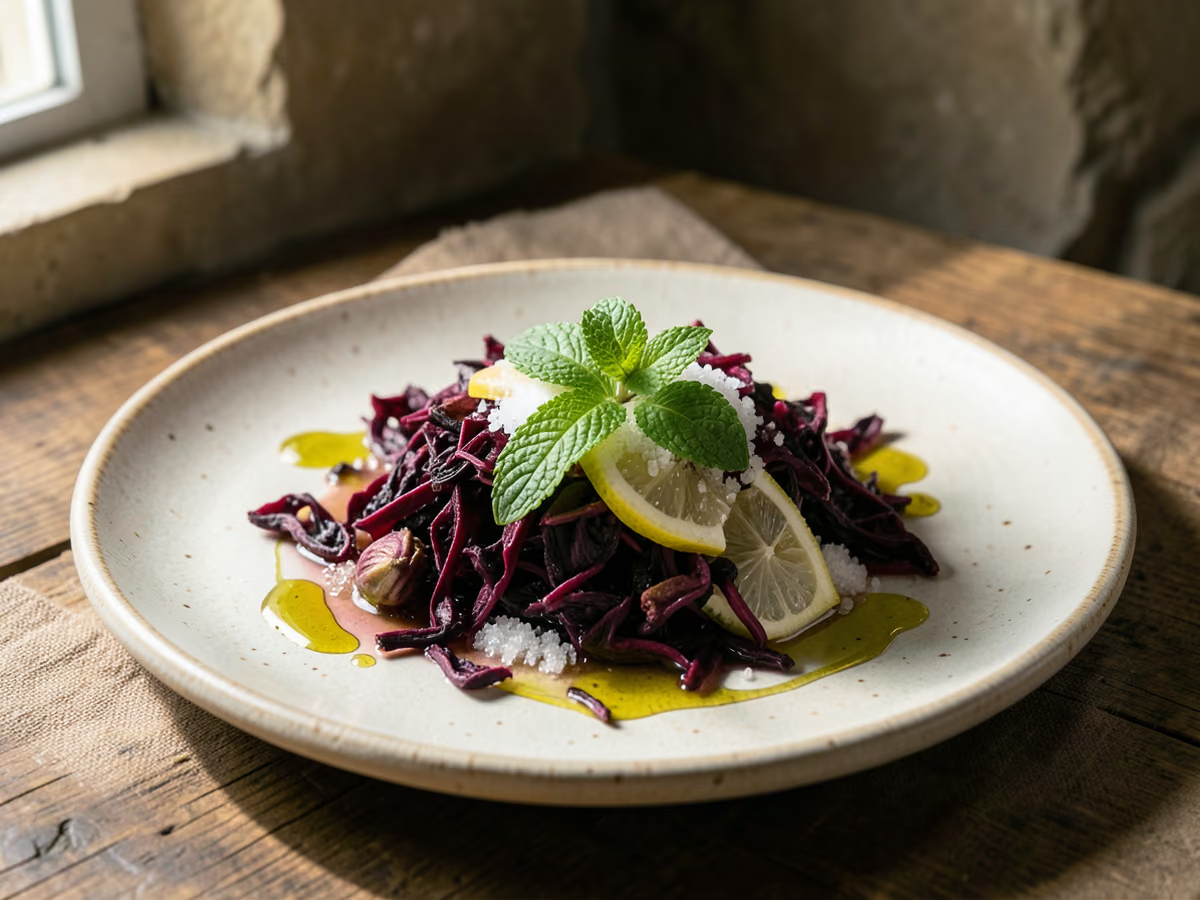
Hibiscus is an infusion rather than a true tea, so there are no leaves to scorch, but the calyces carry strong fruit acids and tannins and they give up flavour fast in hot water. A gentle simmer for 10 minutes extracts the deep red pigments and the clean tartness; a hard rolling boil, or steeping past about 15 minutes, instead pulls out harsh, drying tannins. Sugar is stirred in while the liquid is still near boiling, where it dissolves in seconds and rounds off the acidity; added later, it sits gritty at the bottom. The 2-hour chill lets the flavour settle, and the optional lemon sharpens the tartness and lifts the colour so it reads clearer over ice.
Equipment
- 2-litre saucepan with a lid
- Fine-mesh sieve
- Heatproof pitcher or glass jar, about 1.5 litres
- Kitchen scale, for the 20 g of petals
- Long-handled spoon
- Six glasses and a tray of ice, if serving chilled
Kitchen notes
Kitchen notes
- Weigh the petals rather than eyeballing them: 20 g per 1000 ml is the ratio that keeps karkadeh tart but drinkable, and it is easy to be off by half with a scoop.
- Taste at 8 minutes and again at 10; hibiscus batches vary in acidity, so your palate decides when to cut the heat better than the clock.
- For the iced version, chill the pitcher in the fridge and add ice to the glasses only; ice left in the pitcher dilutes the drink before it reaches the glass.
- Try the cold-brew method as a second batch: the same 20 g of petals in the same 1000 ml of cold water, steeped 18 to 24 hours in the fridge, gives a softer, more floral drink that needs less sugar.
- Rinse the pitcher with boiling water before the infusion goes in so the drink keeps fresh longer; a clean, sanitised jug makes a real difference for something stored three days.
Common mistakes
- A bitter, drying aftertaste: the petals were boiled hard or left to steep well past 15 minutes, and the tannins took over. Keep the liquid at a trembling simmer for 10 minutes, strain off the petals promptly, and taste at 8 minutes to catch the right point.
- A weak, washed-out red: too few petals for the water, or petals past their prime. The drink needs the full 20 g per litre, and deep maroon petals give more colour and tartness than sun-bleached ones.
- Gritty sugar at the bottom of the glass: the sugar was stirred into cooled liquid instead of hot. Add it while the infusion is still near boiling, when it dissolves in seconds.
- A murky pitcher: the petals were pressed hard against the sieve, or the drink was stirred just before serving. Press gently, let the fine sediment settle as it chills, and pour carefully, leaving the last spoonful behind.
- A flat taste even though the drink is tart: it was served at room temperature, or the lemon was left out. Karkadeh is at its best either steaming hot or properly cold after at least 2 hours in the fridge, and the lemon sharpens the fruit.
Serving suggestions
- Serve hot in small glasses in winter, or over ice in tall glasses in summer; both are traditional ways to drink it.
- Finish each glass with a mint leaf, and add a thin slice of lime if you have one; the citrus sits well against the tartness.
- It is the drink of Egyptian weddings and the Ramadan iftar table, so it suits a jug at a festive meal.
- Serve it well chilled on a hot afternoon; the colder it is, the more the tartness reads as refreshing rather than sharp.
Variations
- Cold-brew karkadeh: steep the same 20 g of petals in the 1000 ml of cold water in the fridge for 18 to 24 hours, then strain and sweeten; the result is softer and more floral, with almost no bitterness.
- Spiced version: add a cinnamon stick or a few slices of fresh ginger to the simmer and strain them out with the petals; the warmth rounds the tartness without hiding it.
- Orange and mint version: steep a handful of mint with the petals and swap the lemon for the juice of 1 orange, for a sweeter, more aromatic drink.
Refrigerator
- RefrigeratorCool the strained infusion, then keep it covered in the fridge for up to 3 days; it is brightest in the first two, after which the colour fades and the flavour flattens. Never leave it at room temperature for more than 2 hours.
- ReheatingWarm gently in a saucepan over low heat or in the microwave, 60 to 90 seconds per mug; do not let it come back to a boil, which drives off the aromatics and brings the tannins forward.
- FreezingNot needed for the drink itself, but leftover karkadeh freezes cleanly in an ice-cube tray, and the dark red cubes chill the next batch without diluting it.
- Make aheadThis is the classic make-ahead drink: it has to cool to be served iced and it tastes more rounded the next day, so cook it the evening before a gathering. Strained and refrigerated, it holds up to 3 days, and a second jug can cold-brew in the fridge overnight with no attention at all.
Updated:
How this recipe was developed
- Wikipedia, Karkadeh (traditional Egyptian and Sudanese preparation: simmer 5 to 10 minutes, served hot and cold, weddings and Ramadan, cold-brew method)
- Aramco World, John Feeney, 'The Red Tea of Egypt' (the drink is made from dried roselle calyces rather than the flower; popularity in Egypt and Sudan; described as close to cranberry juice and best served iced)
- Amazing Food and Drink, karkadeh brewing guide (water at 95-100°C to limit harsh tannin extraction; 10 to 15 minutes is the flavour sweet spot; cold brew 18 to 24 hours for a softer drink)
- CDC iced tea preparation and storage guidance via Iowa State University Extension AnswerLine, and FDA 'Are You Storing Food Safely?' (refrigerated tea consumed within 3 days; two-hour rule for leaving perishables at room temperature)
Editorial references are kept internally for verification. This page makes no claim of external certification or professional testing.
FAQ
The questions we get asked most
Why did my karkadeh turn bitter?
Bitter, drying notes come from steeping too hard or too long. A rolling boil, or leaving the petals in past about 15 minutes, extracts harsh tannins along with the fruit acids. Keep it at a gentle simmer for 10 minutes, taste at 8, and strain the petals off straight away.
How long should the petals steep?
Ten minutes at a trembling simmer is the sweet spot: long enough for full colour and tartness, short enough to stay clean. If it still tastes thin after 10 minutes, add a few more petals rather than more time, and if you want it softer entirely, cold-brew it for 18 to 24 hours instead.
How long does karkadeh keep?
Covered in the fridge, up to 3 days, and it is best within the first two. It should not sit at room temperature for more than 2 hours; if it smells sour or syrupy, or a film forms on top, discard it.
Can I make it ahead for a party?
Yes, and it is better for it. Cook it the day before, strain it into a clean pitcher, and refrigerate; the flavour rounds out overnight. To scale it, keep the ratio at 20 g of petals and 60 g of sugar per 1000 ml and work in batches if your pot is small.
Should karkadeh be served hot or cold?
Both are traditional. In Egypt it is drunk steaming in winter and iced in summer, and the same batch can go either way. If serving it cold, chill the pitcher rather than adding ice to it, and put the ice in the glasses.
Is karkadeh caffeine-free?
Yes. It is an infusion of hibiscus calyces, not leaves of the tea plant, so it contains no caffeine and makes a reasonable choice for the evening or for anyone avoiding caffeine.
Can I make it without sugar?
Yes, but expect a very tart, cranberry-sharp drink, because the 60 g of sugar is what balances the natural fruit acids. Sweeten the glass with a few drops of stevia if you want it softer, or serve it over plenty of ice, where the dilution rounds the edge.
Ask KitchenMind about this recipe
Tell it what’s different tonight — it works within the actual recipe.