- Prep
- 30 min
- Cook
- 25 min
- Total
- 55 min
- Serves
- 8
Ingredients
What you’ll need — tap to tick off as you go
- 500 g
- 300 ml
- 7 g
- 1 tbsp
- 2 tsp
- 1 tbsp
- 2 tbsp
Process
Timers built in · swap anything · ask as you cook
In a large bowl, whisk together the bread flour, instant yeast, sugar and salt until evenly combined.
Pour in the lukewarm water and mix with a wooden spoon until a shaggy dough forms.
Turn the dough out onto a lightly floured surface and knead for 8 to 10 minutes, until smooth and elastic. The dough should spring back when pressed.
Place the dough in a lightly oiled bowl, cover with a damp cloth, and let it rise at room temperature for 1 hour, until doubled in size.
Punch down the dough and divide it into 8 equal pieces, about 100 g each. Roll each piece into a smooth ball.
Press your thumb through the center of each ball to make a hole, then stretch the hole to about 4 cm wide, keeping the ring even.
Place the shaped bagels on a parchment-lined baking sheet, cover, and let them rest for 15 minutes while you preheat the oven to 220°C.
Bring a large pot of water to a boil and stir in the honey. Boil the bagels in batches for 1 minute per side, then transfer them back to the baking sheet.
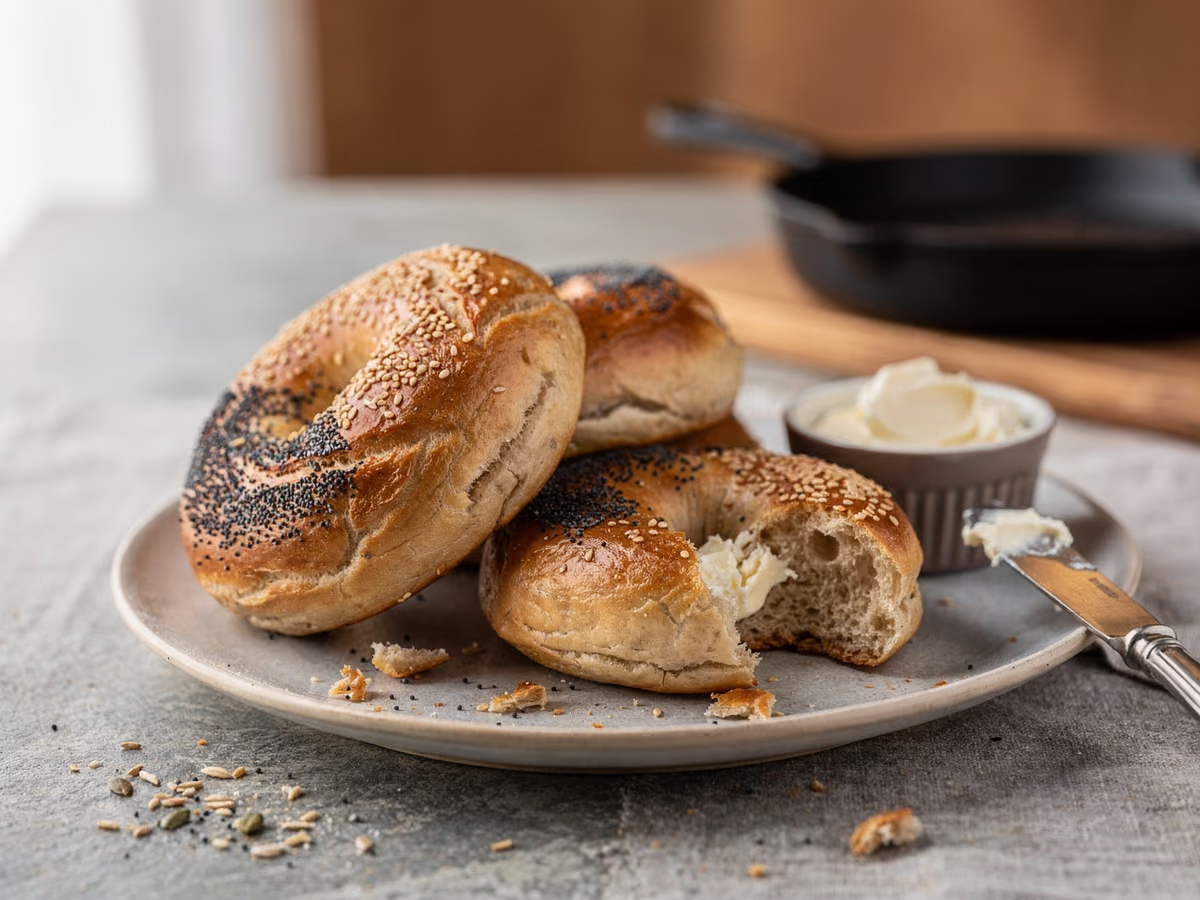
Brush the boiled bagels with the beaten egg and sprinkle with sesame seeds, if using.
Bake for 20 to 25 minutes, until deep golden brown and shiny. Cool on a wire rack for at least 15 minutes before slicing.
Kitchen notes
Kitchen notes
- The most common mistake is skipping or shortening the boil: boiling for a full minute per side sets the crust and gives the signature chew. Do not boil longer than 2 minutes total or the crust becomes tough.
- Use bread flour, not all-purpose, for the chewiest texture. If you only have all-purpose, the bagels will still work but will be slightly softer.
- The dough should be stiff but not dry. If it feels sticky after kneading, add flour 1 tablespoon at a time; if it feels crumbly, add water 1 teaspoon at a time.
- Let the boiled bagels sit for a few minutes before baking so the surface dries slightly; this helps the egg wash adhere and prevents sogginess.
Substitutions
- honey→barley malt syrup or maple syrup
- instant yeast→active dry yeast (use 8 g and proof in the water with the sugar for 5 minutes first)
- sesame seeds→poppy seeds, everything bagel seasoning, or coarse salt
Storage & reheating
Store cooled bagels in a paper bag at room temperature for up to 2 days, or in a sealed plastic bag for up to 4 days. For longer storage, slice and freeze in a zip-top bag for up to 3 months. To reheat, toast directly from frozen or thaw at room temperature, then warm in a 160°C oven for 5 to 7 minutes.
FAQ
The questions we get asked most
Why did my bagels come out flat and dense?
Flat bagels usually mean the dough was over-proofed or the boiling step was too long. Make sure the shaped bagels rest only 15 minutes before boiling, and boil for exactly 1 minute per side. Also check that your yeast is fresh and the water was not too hot, which can kill it.
Can I make the dough ahead of time?
Yes. After kneading, cover the dough and refrigerate it for up to 24 hours for a slow rise. Let it come to room temperature for 30 minutes before shaping. You can also shape the bagels, refrigerate them overnight on a parchment-lined tray, and boil them straight from the fridge the next morning.
How do I know when the bagels are fully baked?
They should be deep golden brown all over and sound hollow when tapped on the bottom. The internal temperature should read about 95°C. If they are pale, bake for another 3 to 5 minutes; if they brown too quickly, tent with foil.
Can I use all-purpose flour instead of bread flour?
Yes, but the bagels will be slightly less chewy. Bread flour has more protein, which develops more gluten and gives the classic dense texture. If using all-purpose, knead a minute or two longer to build strength.
Why did my bagels stick to the baking sheet?
The honey in the boiling water can make the dough sticky. Always use parchment paper or a silicone mat, and lightly oil the parchment if needed. Also, do not let the boiled bagels sit on the sheet for more than a few minutes before baking.
Can I freeze bagels after baking?
Yes. Cool them completely, then slice and freeze in a sealed bag for up to 3 months. Reheat from frozen in a toaster or a 160°C oven for 5 to 7 minutes. Avoid thawing at room temperature, which can make them soggy.
What can I use instead of honey in the boiling water?
Barley malt syrup is traditional, but maple syrup or even dark brown sugar works. The sweetener helps the crust brown and adds a subtle flavor. If you omit it entirely, the bagels will still boil but will be paler.
Ask KitchenMind about this recipe
Tell it what’s different tonight — it works within the actual recipe.