- Prep
- 20 min
- Cook
- 0 min
- Total
- 20 min
- Serves
- 8
Ingredients
What you’ll need — tap to tick off as you go
- 200 g
- 80 g
- 150 g
- 450 g
- 2 tsp
- 1 tbsp
- 240 ml
- 30 g
Process
Timers built in · swap anything · ask as you cook
Line the bottom of a 20 cm springform pan with parchment paper. If you want to lift the cheesecake out easily, also line the sides with a strip of parchment.
In a food processor or a zip-top bag with a rolling pin, crush the graham crackers into fine crumbs. You should have about 1 1/2 cups of crumbs.
In a medium bowl, mix the graham cracker crumbs, 50 g granulated sugar, and melted unsalted butter until the mixture looks like wet sand. Press firmly and evenly into the bottom and about 2 cm up the sides of the prepared pan. Use the flat bottom of a measuring cup to compact it. Place the crust in the freezer while you make the filling.
In a large bowl, beat the room-temperature cream cheese and 100 g granulated sugar with an electric mixer on medium speed until completely smooth, about 2 minutes. Scrape down the bowl. Beat in the vanilla extract and lemon juice.
In a separate cold bowl, combine the cold heavy cream and powdered sugar. Whip with an electric mixer on medium-high speed until stiff peaks form, about 3 to 4 minutes. The cream should hold a sharp peak when you lift the beaters.
Gently fold one-third of the whipped cream into the cream cheese mixture with a spatula to lighten it. Then fold in the remaining whipped cream in two additions, just until no white streaks remain. Do not overmix or you will deflate the cream.
Pour the filling over the chilled crust and smooth the top with an offset spatula. Tap the pan gently on the counter a few times to release air bubbles.
Cover the pan tightly with plastic wrap and refrigerate for at least 6 hours, preferably overnight, until the filling is fully set. It should feel firm to the touch and not wobble when you gently shake the pan.
To serve, run a thin knife around the inside edge of the pan, then release the springform ring. Slide the cheesecake onto a serving plate. Slice with a sharp knife dipped in hot water and wiped dry between cuts.
Kitchen notes
Kitchen notes
- The most common mistake is not letting the cream cheese come to room temperature. Cold cream cheese will stay lumpy no matter how long you beat it, giving you a grainy filling. Leave it out for at least 2 hours before starting.
- Whip the cream to stiff peaks, not soft. Soft peaks will not hold the structure, and the cheesecake will slump when sliced. When you lift the beaters, the peak should stand straight up without curling.
- Chill for a full 6 hours minimum. The filling needs time to hydrate and firm up. If you cut it too early, it will be soft and messy. Overnight is best for clean slices.
- For clean slices, dip your knife in hot water and wipe it dry between each cut. This prevents the filling from sticking and dragging.
Substitutions
- graham crackers→digestive biscuits or speculoos cookies
- heavy cream→full-fat coconut cream (chilled overnight) for a dairy-free version
- lemon juice→lime juice or 1 tsp white vinegar
- granulated sugar→caster sugar or superfine sugar
Storage & reheating
Store the cheesecake in the refrigerator, covered tightly with plastic wrap or in an airtight container, for up to 4 days. For longer storage, freeze individual slices: wrap each slice tightly in plastic wrap, then foil, and freeze for up to 2 months. To thaw, transfer a slice to the refrigerator for 4 to 6 hours or overnight. Do not thaw at room temperature, as condensation will make the crust soggy. You can also freeze the whole cheesecake in the pan, well wrapped, for up to 2 months; thaw in the fridge overnight before serving.
FAQ
The questions we get asked most
Why is my no-bake cheesecake runny?
The most likely reasons are that the cream was not whipped to stiff peaks, the cream cheese was too soft or warm, or the cheesecake did not chill long enough. Make sure your heavy cream is cold and whip it until it holds a sharp peak. Also, chill for at least 6 hours; overnight is better. If it is still runny after that, you can gently fold in 1 to 2 tablespoons of dissolved agar-agar (follow package instructions) and re-chill, but next time focus on stiff peaks and full chilling time.
Can I use low-fat or light cream cheese?
Yes, but the texture will be softer and less creamy. Low-fat cream cheese contains more water and less fat, so the filling may not set as firmly. If you use it, you may need to chill longer and consider adding an extra half teaspoon of agar-agar or a tablespoon of cornstarch to help firm it up. For best results, stick with full-fat cream cheese.
How do I know when the cheesecake is set?
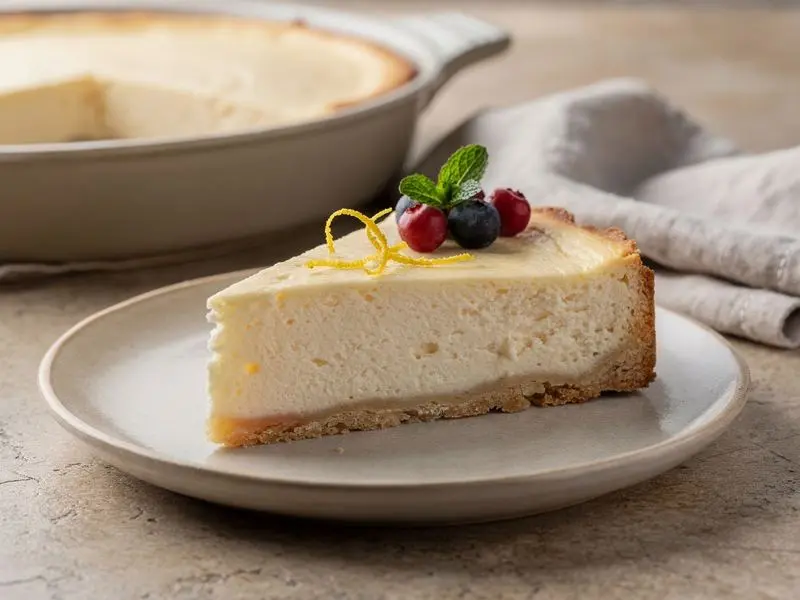
The filling should feel firm to the touch and not wobble when you gently shake the pan. It should also look matte on top, not glossy. If it still jiggles like a liquid in the center, it needs more time in the fridge. A properly set no-bake cheesecake will hold its shape when sliced.
Can I make this cheesecake ahead of time?
Yes, this is a great make-ahead dessert. You can prepare it up to 2 days in advance and keep it covered in the refrigerator. The flavor actually improves after a day as the vanilla and lemon meld. Just don't add any fresh fruit topping until serving, as it can release juices and make the top wet.
Can I freeze no-bake cheesecake?
Yes, you can freeze it whole or in slices. Wrap it tightly in plastic wrap and then aluminum foil to prevent freezer burn. Freeze for up to 2 months. Thaw in the refrigerator overnight. The texture may be slightly softer after freezing, but it will still taste delicious. Do not thaw at room temperature, as the crust will become soggy.
Why did my cheesecake crack?
No-bake cheesecakes rarely crack because they are not baked. If you see cracks, it is likely from over-whipping the filling, which incorporates too much air that later escapes and causes fissures. Mix just until combined. Also, sudden temperature changes can cause cracking, so always thaw or chill gradually.
Can I use a different crust?
Absolutely. You can substitute graham crackers with digestive biscuits, speculoos, or even crushed Oreos (scrape off the filling first). For a gluten-free version, use gluten-free graham crackers or crushed nuts. The ratio of crumbs to butter remains the same: 200 g crumbs to 80 g melted butter.
Ask KitchenMind about this recipe
Tell it what’s different tonight — it works within the actual recipe.