Tortellini in Brodo
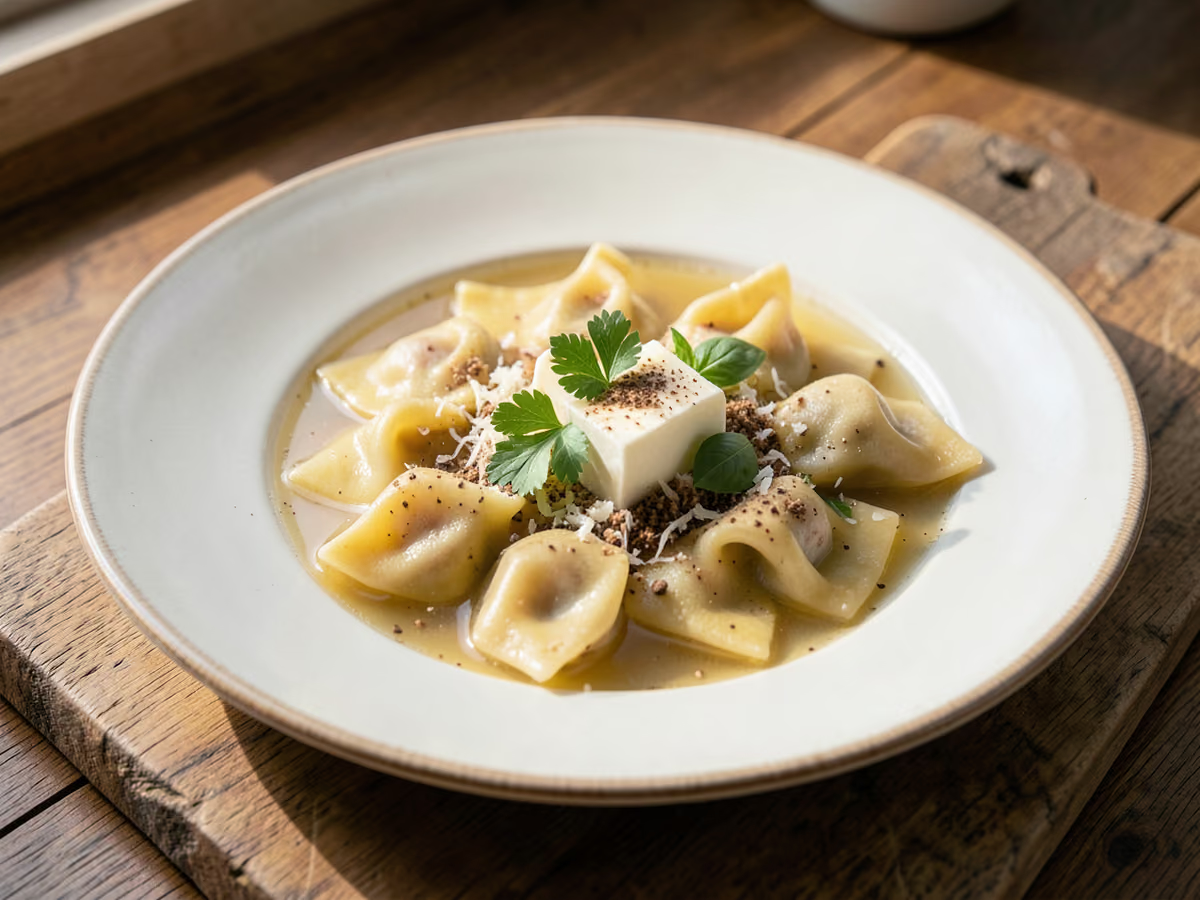
Tortellini in brodo — tortellini in broth — is Emilia-Romagna's signature bowl: small filled pasta cooked directly in a clear, golden broth and served swimming in it with grated Parmigiano on top. This version keeps the broth in charge: 1.5 liters of chicken broth, lifted with butter and a whisper of nutmeg, then 400 g of cheese tortellini that finish cooking right in the pot. Allow 10 minutes of prep and about 20 minutes at the stove once the broth is ready; patience at a bare simmer is all it asks.
- Prep
- 10 min
- Cook
- 20 min
- Total
- 30 min
- Serves
- 4
Ingredients
What you’ll need — tap to tick off as you go
- 1 ½ l
- 400 g
- 60 g
- 30 g
- ¼ tsp
- 2 tbsp
- 1 tsp
- ½ tsp
Process
Timers built in · swap anything · ask as you cook
Bring the 1.5 liters of chicken broth to a bare simmer in a wide pot over medium heat, about 5 to 10 minutes from fridge-cold. Watch the surface: it should shiver with small bubbles that barely break, never a rolling boil that drives off liquid and pushes the broth toward cloudiness before the pasta arrives.
Add the 30 g unsalted butter and the 0.25 tsp ground nutmeg and stir until the butter has melted fully into the broth. The fat carries the nutmeg through the liquid and gives it a light golden sheen; when the last slick disappears, the broth is ready for the pasta.
Slide the 400 g of cheese tortellini into the broth — frozen ones straight from the freezer, never thawed, or the dough goes sticky and the parcels tear. Stir once, gently, so they settle in a loose layer instead of a pile; after that, leave them alone, because every extra stir risks opening a seam.
Simmer uncovered, without stirring again: fresh tortellini are tender and floating within about 3 to 5 minutes, frozen ones within 8 to 10 minutes, because they start from well below zero in a broth that only shivers. Timings shift with brand and size, so taste one: the float tells you the pocket has filled with steam and the filling is nearly hot, not that the pasta is done.
Pull the pot off the heat if the broth is still bubbling hard, then stir in half of the 60 g Parmesan until it vanishes into the liquid. Add it in small handfuls — coarse cheese dropped into a hard simmer strings and clumps — then taste and season with the salt and the black pepper.
Ladle the tortellini and broth into warm bowls, giving each bowl a quarter of the pot so the parcels swim rather than pile. Scatter over the remaining Parmesan and the 2 tbsp parsley and serve immediately — from this point the pasta keeps drinking broth, and the broth keeps softening the pasta.
Why this recipe works
The reason this bowl works is restraint at every stage. Cooking the tortellini in the broth is not a shortcut — it is the dish: the pasta exchanges a little starch for flavour, giving the broth the light body a proper brodo has. A bare simmer, a shiver across the surface rather than a roll, protects delicate seams from agitation and keeps fat and starch from emulsifying into a cloudy liquid. And doneness is read, not timed: as the filling heats, expanding air and steam lift each tortellino off the bottom, so the float is the cue to taste one and check the centre.
Equipment
- Heavy-bottomed pot or Dutch oven, 4 to 5 liters, wide enough to hold 400 g of tortellini in a loose layer
- Fine grater, for the Parmesan
- Ladle
- Slotted spoon
- Chef's knife and cutting board, for the parsley
- Small saucepan or second pot, for the dried-tortellini route
- Warm bowls or shallow soup plates
Kitchen notes
Kitchen notes
- Keep back a ladleful of hot broth before the pasta goes in and top up each bowl from it at the end: the cooking broth picks up starch and goes faintly cloudy, while the reserved portion keeps every serving as clear as it should be.
- Warm the bowls before you ladle. Brodo is served piping hot and a cold bowl steals the heat fast; a swirl of hot water, or a quick pass through a low oven, makes the difference at the table.
- If your pot is narrow, cook the tortellini in two batches rather than heaping them. A loose single layer is what protects the shapes, and the second batch needs only the few minutes the first one did.
- Simmer a small piece of Parmesan rind in the broth for 5 minutes before the pasta and lift it out: it deepens the savoury base without adding extra salt, and it is the classic way to stretch a store-bought broth.
- Taste the broth with a clean spoon just before the tortellini go in, remembering the salt still coming from the cheese, both stirred through and grated on top. If it tastes fully seasoned now, it will land a shade strong.
Common mistakes
- Tortellini that split open: a hard boil or too much stirring. Keep the pot under a boil, stir a single gentle pass when the parcels go in, and leave them alone until they float — agitated pasta knocks against itself and the seams give way.
- A cloudy broth: vigorous boiling. Fat and starch emulsify into the liquid under a hard roll, and skimming will not bring the clarity back; keep the surface shivering, and reheat any leftovers gently, below a boil.
- Cheese that clumps or strings: Parmesan grated coarsely, or stirred into a pot at a hard simmer. Grate it fine, pull the pan off the heat first, and add it in small handfuls so it melts instead of seizing.
- A broth that tastes flat: it was judged too late. Balance the salt while the liquid is still on its own — once the tortellini and the cheese are in, starch, filling and the salt from the Parmesan change what you taste.
- Mushy parcels and a pot that drinks its broth: the tortellini sat after cooking. They keep absorbing liquid as they wait, so move quickly at the end — taste at the lower time, and ladle straight into bowls.
- Frozen parcels that stuck together and tore: they were thawed first, so the soft dough welded. Add them straight from the freezer, stir once as they go in, and do not stir again until they float.
Serving suggestions
- Serve as a first course in warmed deep plates, four portions from the pot, with the tortellini swimming in broth rather than heaped. In Emilia it opens the meal; keep the portion light so what follows still fits.
- Bring extra Parmesan and a grinder of black pepper to the table, and eat it with a spoon — or a spoon and fork — so every mouthful carries pasta and broth together.
- Keep the drink as light as the dish: chilled sparkling water with a slice of lemon, or a glass of iced tea, lets the broth stay the star of the bowl.
- Follow it with something simple and dry — roast chicken with greens, or grilled vegetables — or make a light supper of it with crusty bread and nothing more.
Variations
- Vegetable version: simmer finely diced carrot and celery, or a handful of spinach, in the broth for 5 minutes until barely tender, then cook the tortellini in it. Keep the pieces small and the quantity modest — the vegetables sit in the brodo without turning it into a vegetable soup.
- In brodo di gallina, the old Sunday version: replace the chicken broth with the same 1.5 liters of homemade hen or capon broth and let it carry the dish. Richer and more golden, it is what the classic Emilian recipe is built on, and the butter, nutmeg and Parmesan stay.
- Gluten-free adaptation: use gluten-free tortellini, fresh or frozen, and check that the broth is gluten-free as well. The dough is more fragile than wheat, so hold the gentlest possible simmer, taste early, and serve the moment they float.
Refrigerator
- RefrigeratorUp to 3 days, cooled quickly, tightly covered and refrigerated within 2 hours of cooking — inside the 3-to-4-day FSIS window for leftovers. Expect the tortellini to soften and the broth to thicken as the pasta keeps absorbing; when you know there will be leftovers, cool the pasta and the broth separately.
- ReheatingGently on the stovetop with a splash of water or extra broth, until piping hot — 74°C in the centre is the FSIS reheat target, and soups should reach a rolling boil for safety, so give it a brief boil if anyone vulnerable will eat it, then settle it back to a shiver. Not a microwave job: high heat toughens fresh pasta.
- FreezingNot recommended for the assembled dish — the tortellini soften, shed starch and thaw mealy. The broth alone freezes well: cool it fast, freeze it in portions for up to 3 months, and cook fresh tortellini into it when you reheat.
- Make aheadThe broth is the make-ahead part: 3 days in the fridge, or 3 months frozen, and it deepens as it sits. The tortellini are strictly cook-to-order — hold them no more than a few minutes between pot and table, so plan on the final 20 minutes at the stove, not in the fridge.
Updated:
How this recipe was developed
- GialloZafferano (Aurora Mazzucchelli), Tortellini in brodo — tortellini cooked directly in simmering broth until they float; broth split between pots so the serving broth stays clear
- La Cucina Italiana, Tortellini alla bolognese in brodo — the deposited classic recipe: thin fresh pasta and a broth of beef and hen, served in brodo
- USDA FSIS leftovers and food safety guidance — refrigerate within 2 hours; 3 to 4 days in the fridge; 3 to 4 months frozen; reheat to 74°C, soups to a rolling boil
- Harold McGee, On Food and Cooking — agitation and emulsification: why a rolling boil clouds a broth, and how pasta takes up cooking liquid
Editorial references are kept internally for verification. This page makes no claim of external certification or professional testing.
FAQ
The questions we get asked most
Why did my tortellini fall apart in the broth?
Almost always a hard boil or too much stirring. Tortellini are delicate — a rolling boil throws them against each other and the seams open. Keep the broth at a bare simmer, stir once gently when you add them and never again, and take them out as soon as they are tender. If the parcels were thawed before cooking, that is the other culprit: frozen tortellini go into the broth straight from the freezer, because soft dough tears and sticks.
Can I use dried tortellini instead of fresh or frozen?
You can, with two adjustments. Dried parcels take much longer — about 10 to 12 minutes — and they release more starch, which clouds the broth you have been keeping clear. The elegant move is to boil them separately in salted water, then drain them and set them in warmed bowls with the hot broth ladled over. Never leave dried tortellini soaking in the pot: they keep drinking liquid and turn gummy.
How do I know when the tortellini are cooked?
The float is your first cue, not your last: as the filling heats, air and steam expand inside each pocket until it rises to the surface. Fresh tortellini usually float within 3 to 5 minutes, frozen ones within 8 to 10, but brands and sizes differ, so give them 30 to 60 seconds more after the float, fish one out and bite it — the pasta should be tender with no raw or chalky bite, and the filling hot at the centre.
Can I make tortellini in brodo ahead of time?
Half of it, yes: the broth is better made ahead — up to 3 days in the fridge, where the flavours settle, or 3 months in the freezer. The tortellini are the opposite; they are cooked to order and served straight away. Reheating an assembled pot gives you soft, swollen parcels, so keep the broth hot, cook the pasta in it at the last minute, and carry the bowls to the table.
Why is my broth bland?
Usually the broth went in under-seasoned and was tasted too late. Taste it before the tortellini arrive — while it is still just broth — and add salt then; the butter and the small hit of nutmeg round it out, and a piece of Parmesan rind simmered for 5 minutes adds real depth. Keep in mind that the Parmesan stirred through and grated over each bowl will add salt of its own.
Is tortellini in brodo gluten-free?
Not as written: tortellini are made from wheat flour, and some broths and bouillon powders can carry gluten too. The dish adapts well — gluten-free tortellini exist fresh and frozen — but the dough is more fragile, so simmer gently and serve right away, and check every label, including the broth.
What is the difference between tortellini in brodo and tortellini soup?
It is the direction of the dish. Tortellini in brodo is an Emilia-Romagna first course where the broth is the point: clear, golden, simmered properly, with the tortellini — and nothing else — in the bowl, finished with Parmigiano. Tortellini soup describes a heartier, often American style built on tomato, cream or a crowd of vegetables, with the pasta as one component among many. This version is firmly the former: broth first, pasta second.
Ask KitchenMind about this recipe
Tell it what’s different tonight — it works within the actual recipe.