Vegan Buddha Bowl
A vegan Buddha bowl is a build-your-own plant-based meal in one bowl: a grain base, several vegetables, a protein and a creamy sauce, each kept in its own patch rather than mixed. This version roasts chickpeas, sweet potato and broccoli on one tray while quinoa simmers, then finishes the bowls with raw cabbage, carrot and avocado and a tahini-lemon dressing. Fifteen minutes of prep and about half an hour in the oven get four meal-prep-friendly bowls on the table.
- Prep
- 15 min
- Cook
- 30 min
- Total
- 45 min
- Serves
- 4
Ingredients
What you’ll need — tap to tick off as you go
- 200 g
- 400 g
- 150 g
- 60 g
- 2 tbsp
- 1 tbsp
- 1 clove
- 2 tbsp
- 1 tsp
- 1 tsp
- ½ tsp
- ¼ tsp
- 3 tbsp
Process
Timers built in · swap anything · ask as you cook
Heat the oven to 200°C and line a large baking sheet with parchment paper. A fully preheated oven roasts the chickpeas and vegetables evenly, and parchment keeps the pieces from sticking so their crisp edges stay intact when you stir them halfway.
In a small bowl, whisk 1 tbsp of the olive oil with 1 tsp ground cumin, 1 tsp smoked paprika, 0.5 tsp salt and 0.25 tsp black pepper into a loose, fragrant paste. Mixing the spices with oil first, rather than dusting them on dry, makes them cling to every piece, so the seasoning is even and nothing burns in bare patches.
In a large bowl, combine the 400 g chickpeas, the sweet potato cubes and the broccoli florets. Drizzle over the spiced oil and toss with your hands until every piece is glossy; a thin, even film of oil is what carries the spices and helps the surfaces brown rather than dry out.
Spread everything in a single layer on the prepared sheet, giving the pieces room rather than piling them up. Roast for 25 to 30 minutes, stirring halfway with a spatula, until the sweet potato is tender and the chickpeas are golden and slightly crisp; crowding steams the vegetables and keeps the chickpeas soft.
While the tray roasts, combine the rinsed 200 g quinoa and 400 ml water in a medium saucepan and bring to a boil. Reduce the heat to low, cover, and simmer for 15 minutes until the water is absorbed; then take the pan off the heat and let it stand covered for 5 minutes before fluffing with a fork, so the grains finish evenly instead of turning gummy.
Make the dressing: whisk 60 g tahini with 2 tbsp lemon juice, 1 tbsp maple syrup, the minced garlic clove and the remaining 1 tbsp olive oil. It will tighten at first, then loosen as you whisk in the 3 tbsp water one spoon at a time, until it is smooth and pourable; season with a pinch of salt.
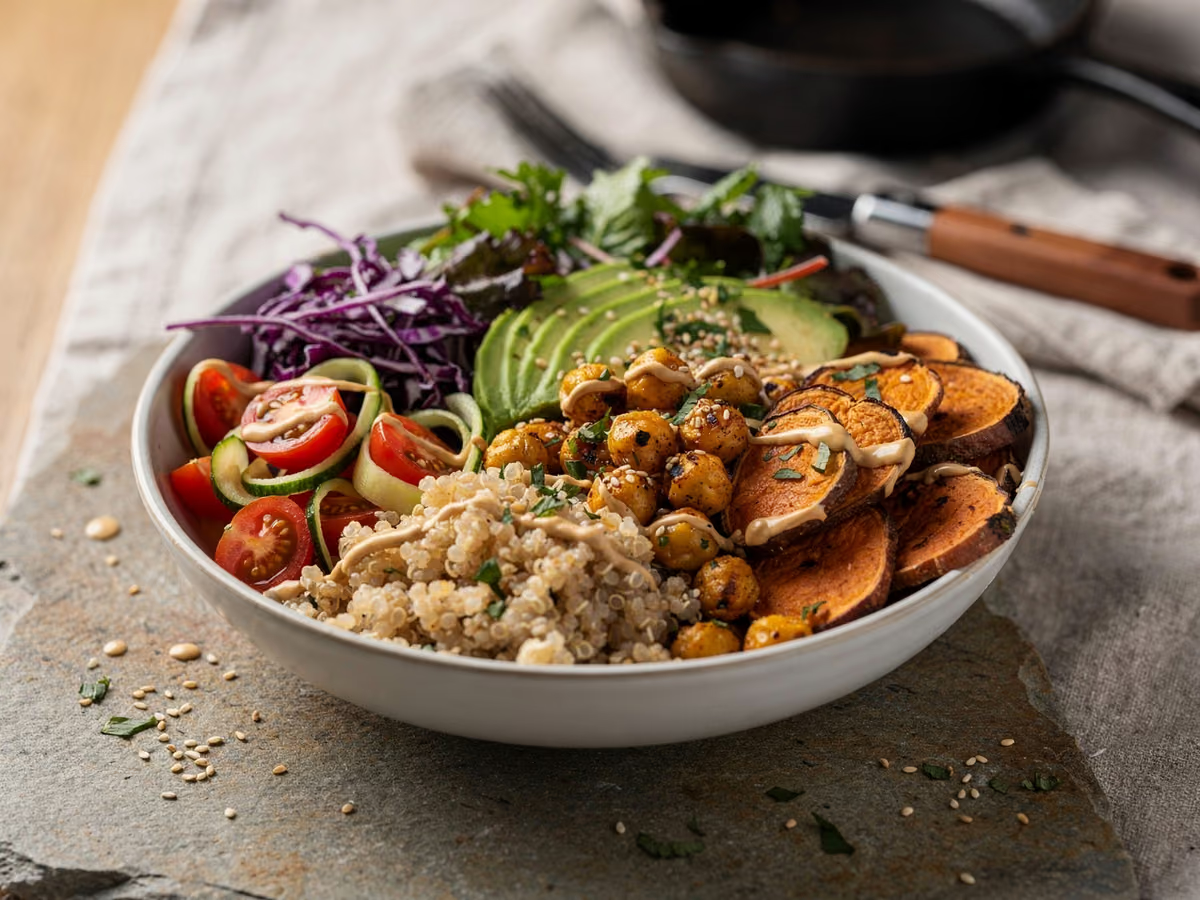
Assemble the bowls: divide the quinoa among four wide bowls and arrange the roasted chickpeas, sweet potato and broccoli on top, with the shredded red cabbage, grated carrot and sliced avocado. Keep the components in separate patches rather than stirring them together, so each bowl keeps its contrast of crisp, creamy and tender.
Drizzle the dressing over each bowl just before eating and serve while the roasted pieces are still warm. Add it at the table rather than ahead of time: the cabbage and carrot stay crunchy, and any dressing left in the bowl can be loosened later with a spoonful of warm water.
Why this recipe works
Roasting is where the flavor comes from: 200°C of dry heat caramelizes the sweet potato and broccoli edges, and a single layer on the tray lets moisture escape so the chickpeas crisp instead of steaming. Every piece is cut to a similar 2 cm so nothing overcooks while something else is still firm. The quinoa simmers in a measured ratio, then rests off the heat so the grains finish absorbing and stay separate. The dressing is an emulsion; sesame paste tightens when the lemon hits it, then loosens to a creamy, pourable sauce as water is whisked in, and the maple syrup rounds off the acid.
Equipment
- Large rimmed baking sheet, about 40 x 30 cm, lined with parchment paper
- Large mixing bowl, for tossing the chickpeas and vegetables
- Small bowl and whisk, for the spiced oil and the tahini dressing
- Medium saucepan with a lid, for the quinoa
- Fine-mesh sieve, for rinsing the quinoa
- Chef's knife and cutting board, for the 2 cm cubes and the cabbage
- Box grater, for the carrot
- Four wide serving bowls or meal-prep containers
Kitchen notes
Kitchen notes
- Stir the whole jar of tahini before you measure: the oil separates and floats, so the 60 g scooped from the top makes a thinner dressing than the dense paste at the bottom.
- Give the tray a confident shake or a quick stir with a spatula at the halfway mark; browning only happens where the pieces touch the hot sheet, so new contact points mean more crisp edges on the chickpeas.
- Cut the sweet potato into even 2 cm cubes and keep the broccoli florets a similar size; when the pieces are uniform, the 25 to 30 minute window works for all of them at once.
- Brighten the raw layer: toss the shredded red cabbage and grated carrot with a squeeze of the lemon juice while the tray roasts; the acid keeps the cabbage crisp and its color vivid against the roasted pieces.
- Pack the dressing in a small jar alongside the components: cold tahini dressing sets thick in the fridge, so stir in a spoonful of warm water at lunch to bring it back to a drizzle.
Common mistakes
- Steamed, soggy vegetables: the tray was overcrowded, so the pieces released moisture faster than it could escape. Spread everything in a single layer with space between the pieces, or roast in two batches; browning needs dry, hot air around each piece.
- Soft chickpeas instead of crisp: they went in wet, or the layer was too deep. Pat them thoroughly dry after draining, toss them in the oil so every one is coated, and keep them in one layer with the vegetables rather than heaped in the middle.
- Bitter, gummy quinoa: the grains were not rinsed, or the pot was stirred while it simmered. Rinse under cold running water for about a minute to strip the saponin coating, keep the 200 g to 400 ml ratio, and leave the grains alone until the rest and the fork fluff.
- A dressing that seizes into a paste: lemon juice hit fridge-cold tahini with no water to follow. Whisk the water in one tablespoon at a time, because the paste first tightens, then turns silky, and let the tahini come to room temperature before you start.
- Brown avocado and limp cabbage in leftover bowls: everything was dressed hours ahead. Keep the dressing separate and add the avocado and dressing only when you eat; a squeeze of lemon slows the avocado from browning.
Serving suggestions
- Serve the bowls as soon as they are dressed, while the roasted chickpeas and sweet potato are still warm against the cool cabbage, carrot and avocado; that contrast is the point of the assembly.
- Set the table with lemon wedges and a jar of the dressing on the side so each person can loosen or sharpen their own bowl; a scatter of toasted sesame seeds adds a little extra crunch.
- For lunches, pack quinoa, the roasted tray and the raw vegetables in separate containers, with the dressing in a small jar; assemble at work and the bowl arrives as crisp as it left the kitchen.
- The components also eat well cold: chilled leftovers make a sturdy desk lunch, and a fresh squeeze of lemon wakes up the flavors if the bowl has been sitting overnight.
Variations
- Lunch-box variation: pack the four components in separate containers or small jars and build the bowl at the table; this keeps the textures intact and travels better than a dressed bowl.
- Peanut-lime dressing variation: swap the tahini for the same 60 g of peanut butter and the lemon for lime juice, adding water until it pours; the bowl shifts toward a Southeast Asian flavor profile while keeping the roasted chickpea base and the raw vegetables.
- Seasonal roast variation: keep the chickpeas and dressing as written and swap the sweet potato and broccoli for other firm vegetables cut to a similar size, such as cauliflower, butternut squash or parsnip, which roast in the same window.
Refrigerator
- RefrigeratorCool the components, then store them separately in airtight containers in the fridge: quinoa, the roasted tray and the raw vegetables keep up to 4 days, and the dressing up to 4 days in its own jar. Keep the avocado out until serving, and add the dressing only to the portion you are eating so the cabbage stays crisp.
- ReheatingReheat the roasted vegetables and chickpeas on a tray at 180°C for 8 to 10 minutes, or microwave a covered portion for 1 to 2 minutes; warm the quinoa with a splash of water. Leave the raw vegetables and avocado cold and add them after the warm components.
- FreezingNot recommended for the assembled bowl: avocado and raw cabbage turn soft and watery on thawing. The cooked quinoa and the roasted tray freeze well separately for up to 2 months; thaw overnight in the fridge and reheat before serving.
- Make aheadMeal prep is where this bowl earns its keep: cook the quinoa, roast the tray and whisk the dressing up to 3 days ahead, store each in its own container, and assemble just before eating. The dressing thickens in the fridge, so loosen it with warm water a spoonful at a time.
Updated:
How this recipe was developed
- USDA FSIS, Leftovers and Food Safety, with the foodsafety.gov Cold Food Storage Chart (refrigerate cooked food within 2 hours; leftovers keep 3 to 4 days in the fridge and 3 to 4 months in the freezer; reheat to 74°C)
- Wikipedia, Buddha bowl (the competing explanations for the name, balance, the Buddha's alms bowl, and the rounded bowl resembling Budai; the grain-plus-plant-protein-plus-vegetables structure)
- Bon Appétit, Why Do We Keep Calling It a Buddha Bowl? (the term is modern; an early print reference appears in a 2013 vegetarian cookbook)
- Cookie and Kate, Crispy Roasted Chickpeas, and Maureen Abood, Tahini Dressing (pat chickpeas dry and roast in a single layer, shaking the pan; tahini first tightens, then loosens to a pourable sauce as water is whisked in)
Editorial references are kept internally for verification. This page makes no claim of external certification or professional testing.
FAQ
The questions we get asked most
What is a Buddha bowl, and why is it called that?
A Buddha bowl is a single-bowl meal built from several foods kept in their own sections: typically a whole grain, a plant protein, vegetables and a sauce, arranged rather than mixed. This version follows that idea with quinoa, roasted chickpeas, sweet potato and broccoli, raw cabbage, carrot and avocado, and a tahini dressing. The name is modern rather than traditional, with early print examples tracing only to the 2010s, and the explanations are loose: a balanced bowl ties to the Buddhist idea of balance, and the rounded shape is often linked to the alms bowl of Buddhist monks.
What goes in a vegan Buddha bowl?
There is no fixed formula, but the pattern is a grain base, a plant protein and a mix of cooked and raw vegetables, finished with a sauce. This vegan Buddha bowl uses 200 g quinoa as the base; roasted chickpeas, sweet potato and broccoli; raw shredded red cabbage, grated carrot and sliced avocado; and a creamy tahini-lemon dressing loosened with water. Once you know the pattern, swapping components is easy, as long as you keep one creamy sauce and a contrast of textures.
What is the difference between a Buddha bowl and a grain bowl?
The terms overlap, and many recipes could carry either label. A grain bowl is the broader description: any bowl built on a grain with toppings. A Buddha bowl usually means the plant-based version of that idea, with several small portions arranged separately rather than tossed together, a creamy dressing and a mostly vegetable-and-legume build. This recipe sits firmly on the Buddha bowl side: vegan components, separate patches in the bowl, and tahini dressing over quinoa.
Are Buddha bowls healthy, and how many calories are in one?
A bowl like this one is a whole-food meal: quinoa and chickpeas bring plant protein and fiber, the vegetables add volume and color, and the tahini and olive oil bring fats that help you absorb the vegetables' fat-soluble vitamins. Estimated from the quantities here, one of the four servings lands at roughly 650 calories; the tahini, olive oil and avocado carry much of that, so a lighter dressing or less avocado trims it down. The bowl is naturally vegan, gluten-free and dairy-free as written.
Is a Buddha bowl gluten-free?
This one is, as written: quinoa is naturally gluten-free, and none of the components, including the chickpeas, vegetables, tahini, lemon, maple syrup, olive oil and spices, contain wheat. Check labels on the canned chickpeas and the tahini anyway, since some brands add thickeners or flavorings that carry gluten; and if you swap the quinoa for couscous, the bowl stops being gluten-free.
How do I get the roasted chickpeas crispy?
Dryness and space. Drain and rinse the 400 g of chickpeas, then pat them thoroughly dry on a clean towel, because surface moisture steams them instead of crisping them. Toss them in the spiced oil, spread them in a single layer with the vegetables rather than heaped together, and stir once at the halfway point of the 25 to 30 minute roast. They crisp further as they cool, and they soften again in the fridge, so reheat them on a tray rather than in a wet bowl.
Can I meal prep Buddha bowls, and how long do they last?
Yes, this bowl is designed for it. Cook the quinoa, roast the chickpeas and vegetables, and whisk the dressing up to 3 days ahead; store quinoa, the roasted tray, raw vegetables and dressing in separate airtight containers in the fridge, where everything keeps up to 4 days. Assemble just before eating and dress only the portion in front of you, because sliced avocado and dressed cabbage do not sit well. The dressing thickens when cold, so stir in warm water a spoonful at a time to bring it back to a drizzle.
Ask KitchenMind about this recipe
Tell it what’s different tonight — it works within the actual recipe.