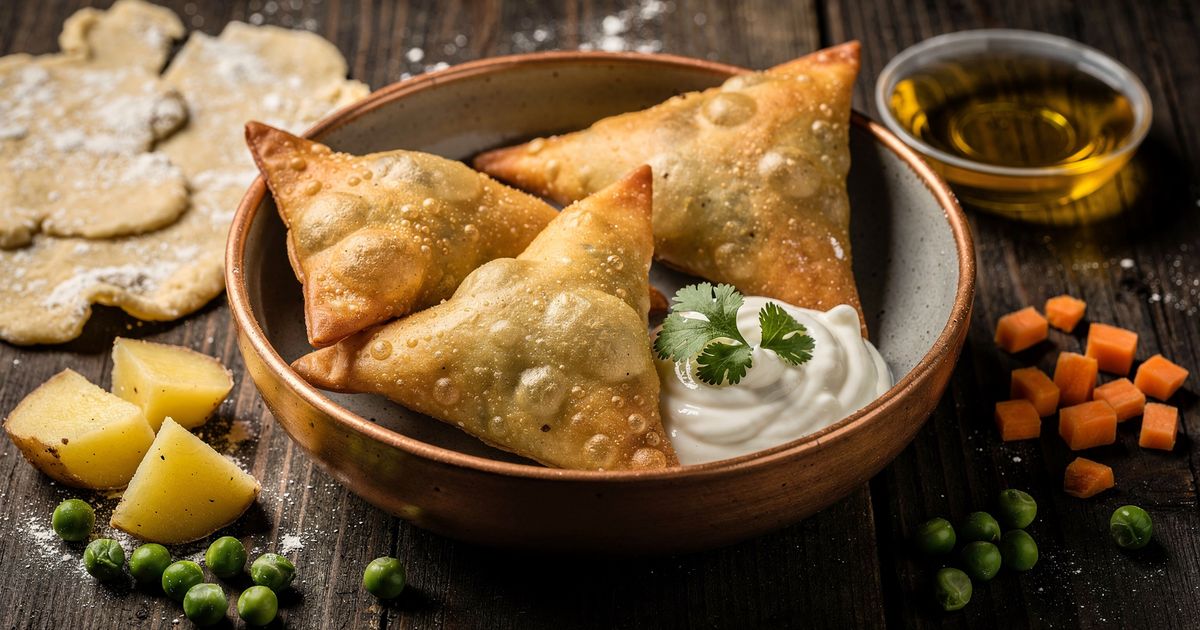
- Prep
- 40 min
- Cook
- 30 min
- Total
- 70 min
- Serves
- 4
Ingredients
What you’ll need — tap to tick off as you go
- 200 g
- 50 g
- 3 tbsp
- 120 ml
- 400 g
- 100 g
- 1 tbsp
- 2 cloves
- 1 tsp
- 1 tsp
- 1 tsp
- ½ tsp
- ¼ tsp
- 1 tsp
- 100 ml
Process
Timers built in · swap anything · ask as you cook
In a large bowl, mix 200 g all-purpose flour, 50 g whole wheat flour and 1 tsp salt. Add 3 tbsp vegetable oil and rub into the flour with your fingertips until it resembles breadcrumbs.
Gradually add 120 ml lukewarm water and knead for 5–7 minutes until you have a smooth, firm dough. Cover with a damp cloth and rest for 30 minutes.
While the dough rests, boil the 400 g cubed potatoes in salted water for 8–10 minutes until tender but not mushy. Drain and set aside.
Heat 1 tbsp vegetable oil in a large pan over medium heat. Add the chopped onion and cook for 4–5 minutes until soft and translucent.
Add the grated ginger and minced garlic to the pan and cook for 1 minute until fragrant. Stir in 1 tsp ground cumin, 1 tsp ground coriander, 1 tsp garam masala, 0.5 tsp turmeric and 0.25 tsp cayenne pepper. Cook for 30 seconds.
Add the diced carrot and 100 g green peas. Cook for 3–4 minutes until the carrot softens slightly. Gently fold in the boiled potatoes and 1 tsp salt. Mash lightly with the back of a spoon so the filling holds together. Remove from heat and let cool completely.
Preheat the oven to 200°C. Line a baking tray with parchment paper and lightly brush with vegetable oil.
Divide the dough into 8 equal balls. On a lightly floured surface, roll each ball into a thin oval about 15 cm long and 10 cm wide. Cut each oval in half to create two semicircles.
Take one semicircle and form a cone by bringing the two straight edges together, overlapping slightly. Press to seal. Fill the cone with about 2 tbsp of the potato mixture, leaving a 1 cm border. Moisten the top edge with water and press firmly to seal. Repeat with remaining dough and filling.
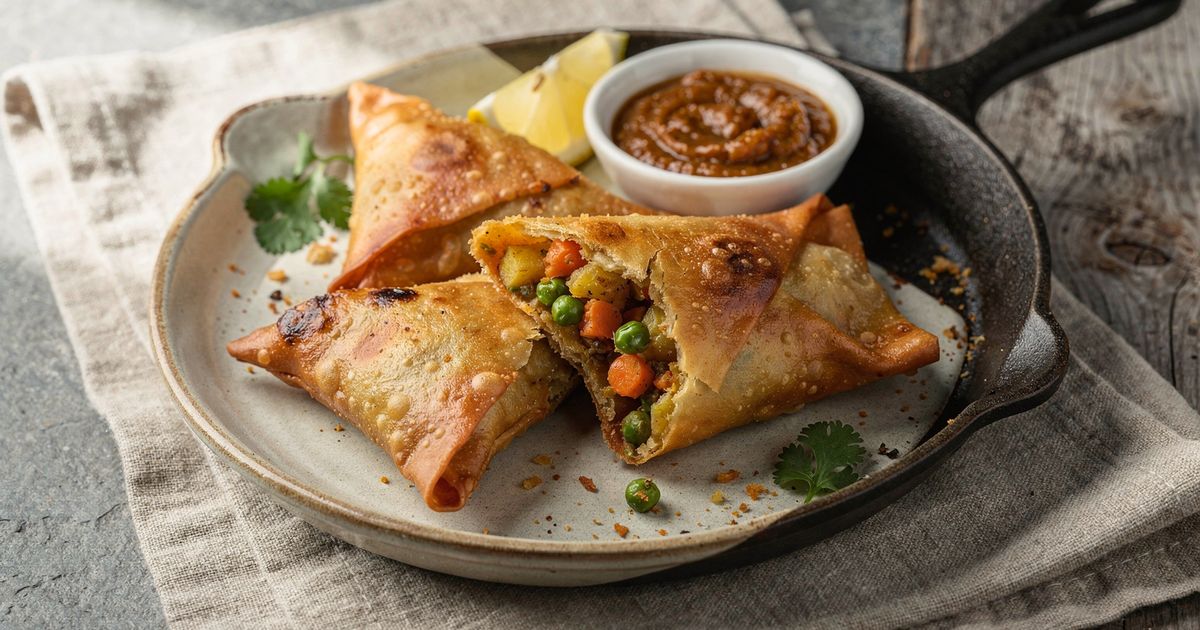
Place the samosas on the prepared tray, brush lightly with vegetable oil and bake for 25–30 minutes, turning halfway, until golden brown and crisp.
Serve hot with tamarind chutney on the side.
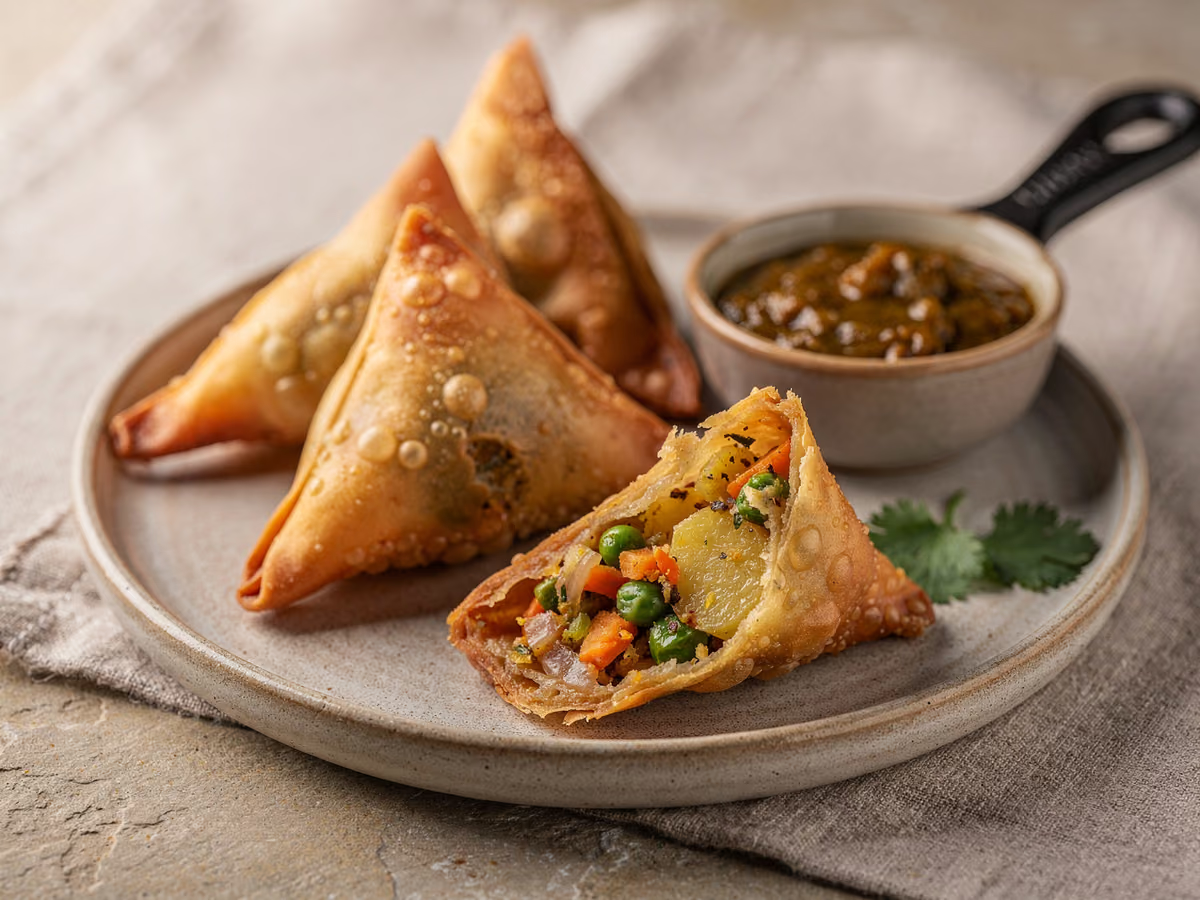
Kitchen notes
Kitchen notes
- The most common mistake is a wet filling, which makes the samosas soggy. Make sure the potato mixture is completely cool and dry before filling; if it looks moist, mash it a bit more and let it steam off.
- Do not overwork the dough or add too much water; a firm dough gives the crispiest shell. If it feels sticky, dust with a little flour.
- Seal the edges well with water and press with a fork to prevent them from opening during baking. A tight seal is the key to a neat samosa.
- For extra crispness, brush the samosas with oil twice: once before baking and once halfway through.
Substitutions
- all-purpose flour→gluten-free all-purpose flour blend (for gluten-free version)
- green peas→sweet corn kernels
- tamarind chutney→mint yogurt chutney or ketchup
Storage & reheating
Store cooled samosas in an airtight container in the refrigerator for up to 3 days. To reheat, place on a baking tray and warm in a 180°C oven for 8-10 minutes until crisp. For freezing, arrange unbaked samosas in a single layer on a tray, freeze until solid, then transfer to a freezer bag; bake from frozen at 200°C for 35-40 minutes. Baked samosas can also be frozen for up to 2 months and reheated directly in the oven.
Gallery
FAQ
The questions we get asked most
Why did my samosas turn out soggy?
Sogginess usually comes from a wet filling or insufficient sealing. Make sure the potato mixture is fully cooled and not watery; if needed, mash it and let excess moisture evaporate. Also, seal the edges tightly with water and press well so steam cannot escape and soften the crust.
Can I make the samosa filling ahead of time?
Yes, the filling can be made up to 2 days in advance and stored in an airtight container in the refrigerator. Bring it to room temperature before filling to make wrapping easier. The dough can also be made ahead and rested overnight in the fridge; just let it come to room temperature before rolling.
Can I fry these samosas instead of baking?
Yes, you can deep-fry them in vegetable oil heated to 175°C. Fry in batches for 3-4 minutes per side until golden brown. However, baking is a lighter option and still gives a crispy result if you brush them with oil.
How do I know when the samosas are done baking?
They are ready when the crust is golden brown and feels firm and crisp to the touch. The edges should look dry and slightly flaky. If they are pale, bake for another 3-5 minutes, but watch closely to avoid burning.
Can I use sweet potatoes instead of regular potatoes?
Yes, sweet potatoes work well and add a natural sweetness. Boil them until just tender, then proceed with the recipe. Keep in mind they may be softer, so mash them lightly and avoid overmixing to prevent a mushy filling.
Why did my samosas burst open in the oven?
Bursting happens when the filling is too moist or the seams are not sealed properly. Ensure the filling is dry and cool, and press the edges firmly with a fork. Also, do not overfill; leave a 1 cm border for sealing.
Can I freeze the samosas before baking?
Yes, freeze unbaked samosas in a single layer on a tray, then transfer to a freezer bag. Bake from frozen at 200°C for 35-40 minutes, brushing with oil before baking. No need to thaw; they will crisp up nicely.
Ask KitchenMind about this recipe
Tell it what’s different tonight — it works within the actual recipe.