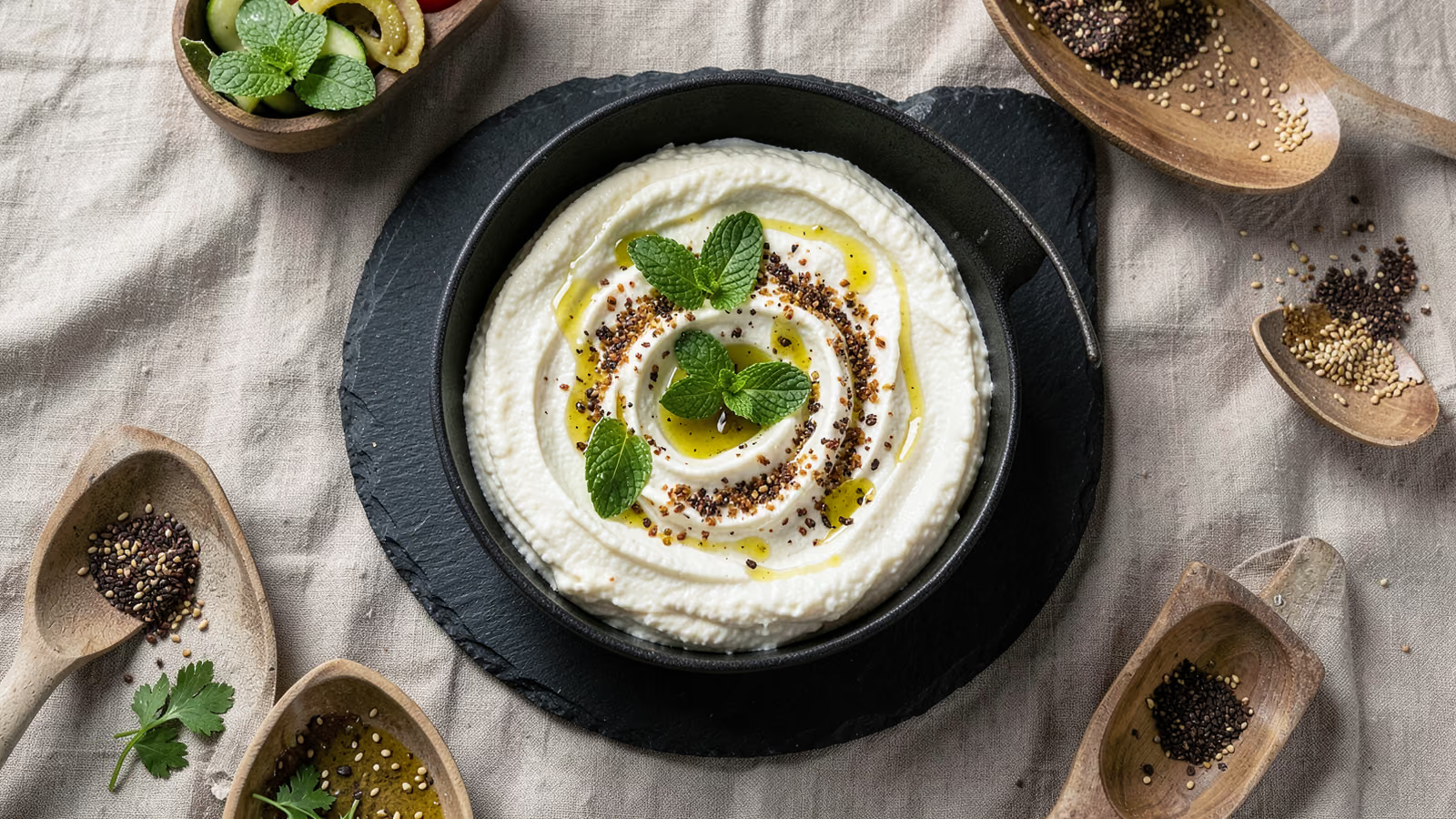
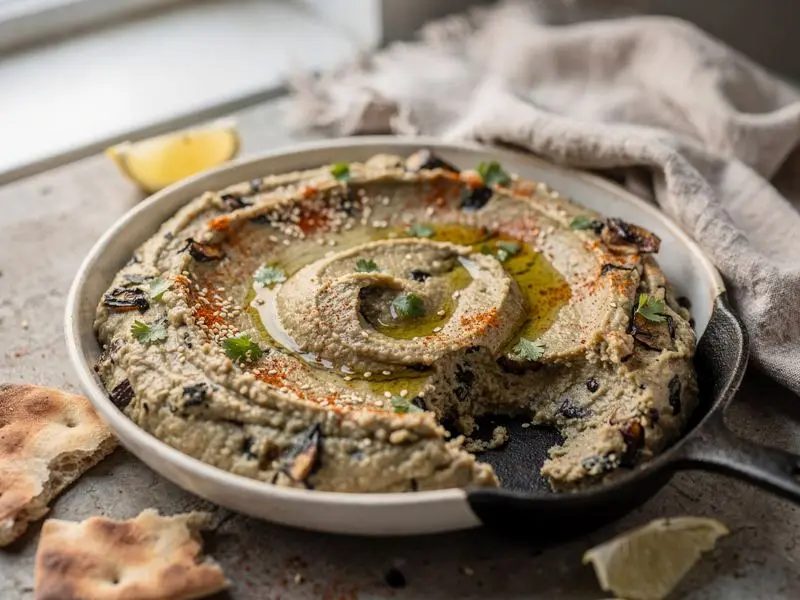
Whipped Labneh with Za'atar
Six servings, ten minutes, no cooking: whisk full-fat yogurt with salt until thick, then spoon onto pita and finish with olive oil, za'atar and fresh mint leaves.
- Prep
- 10 min
- Cook
- 0 min
- Total
- 10 min
- Serves
- 6
Ingredients
What you’ll need — tap to tick off as you go
- 1000 g
- 3 g
- 60 ml
- 2 tbsp
- 10 g
Process
Timers built in · swap anything · ask as you cook
Line a fine-mesh sieve with a double layer of cheesecloth or a clean muslin cloth and set it over a deep bowl. In a separate bowl, mix the plain full-fat yogurt with the salt until well combined.
Spoon the salted yogurt into the lined sieve, then gather the cloth edges and twist gently to form a pouch. Place the bowl in the fridge and let it drain for at least 8 hours, ideally 12–24 hours, until the yogurt is thick, creamy and holds its shape on a spoon and the whey has fully drained. You should have about 300–400 ml of whey in the bowl; reserve it for another use.
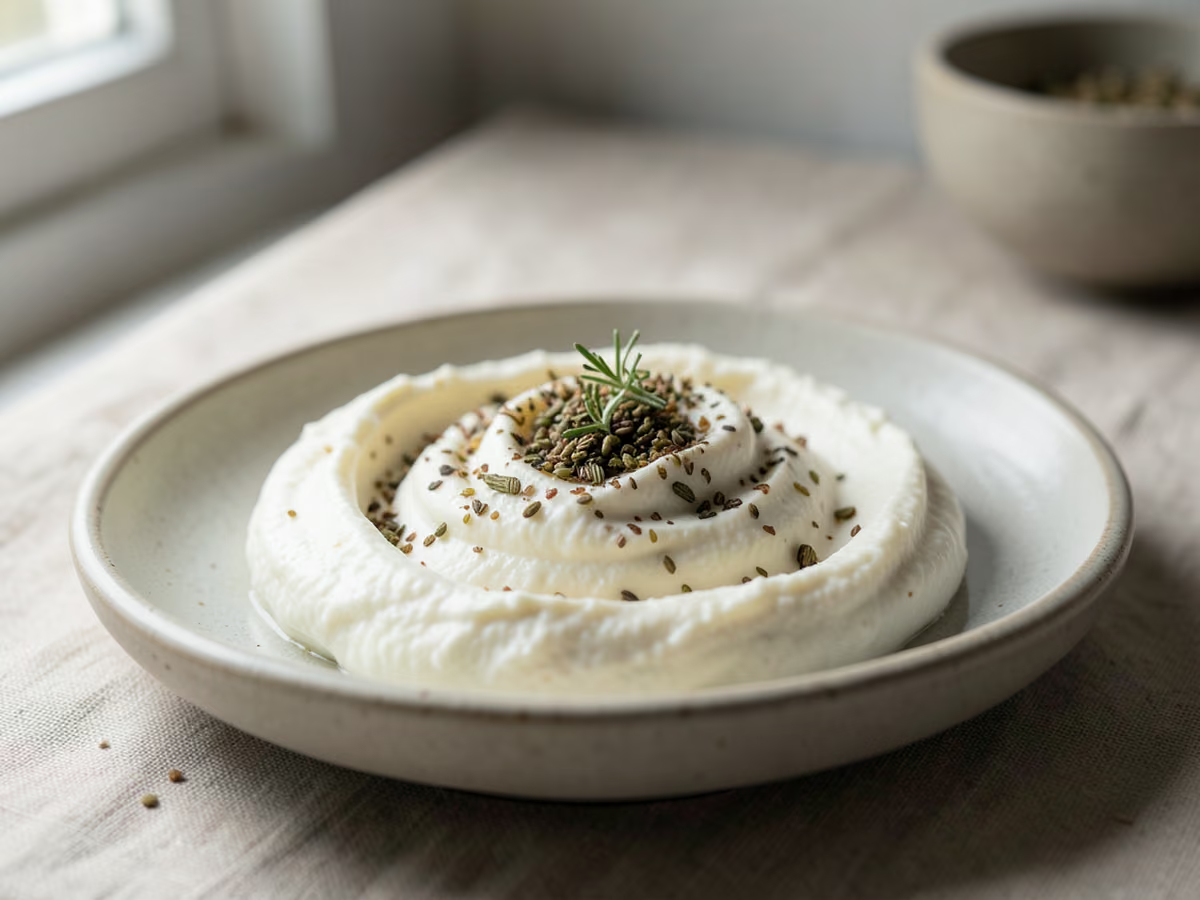
Transfer the drained labneh to a bowl. Using a hand whisk or a wooden spoon, whip the labneh vigorously for 1–2 minutes until it becomes smooth, creamy and slightly fluffy. If it feels too thick, whisk in 1–2 tbsp of the reserved whey until it reaches a soft, spreadable consistency.
Spoon the whipped labneh onto a serving plate and use the back of a spoon to create a shallow well in the centre. Drizzle the olive oil into the well and let it pool.
Sprinkle the za'atar generously over the labneh and olive oil. Scatter the torn fresh mint leaves on top. Serve immediately with pita bread wedges for dipping.
Kitchen notes
Kitchen notes
- The most common mistake is using low-fat or Greek yogurt: low-fat won't thicken properly and Greek yogurt is already strained, so it becomes too dry. Use regular full-fat set yogurt for the best result.
- Don't discard the whey! It's rich in protein and adds a tangy flavour to soups, smoothies, or when cooking grains like rice or bulgur. It keeps in the fridge for up to 5 days.
- If your labneh turns out thicker than you like, whisk in a little reserved whey, 1 tablespoon at a time, until it reaches a soft, spreadable consistency. Conversely, if it's too thin after draining, let it drain longer.
- For the best flavour, let the whipped labneh sit at room temperature for 10 minutes before serving; it spreads more easily and the olive oil pools better.
- To make ahead, prepare the labneh up to 3 days in advance and store it in an airtight container in the fridge. Whip it again just before serving and add the toppings.
Substitutions
- plain full-fat yogurt→Greek yogurt mixed with 2 tbsp milk to loosen it slightly
- za'atar→a mix of sesame seeds, dried thyme and sumac
- fresh mint→fresh parsley or coriander
- pita bread→cucumber slices or gluten-free crackers
Storage & reheating
Store leftover whipped labneh in an airtight container in the fridge for up to 5 days. Keep the olive oil and za'atar toppings separate if possible; they can be added fresh before serving. To reheat, there's no need—serve it cold or at room temperature. If it thickens too much in the fridge, stir in a splash of milk or reserved whey to loosen. Freezing is not recommended as it becomes grainy and watery upon thawing.
FAQ
The questions we get asked most
Why is my labneh still runny after draining overnight?
The most likely reasons are that you used low-fat yogurt or didn't drain it long enough. Full-fat yogurt is essential for a thick result. Also, make sure the whey can drip freely—if the cloth is too tightly twisted, the whey can't escape. Let it drain for up to 24 hours; you can also place a weight on top to speed things up.
Can I use Greek yogurt instead of regular yogurt?
Yes, but Greek yogurt is already strained, so it will be much thicker and may become too dry. To use Greek yogurt, mix it with 2-3 tablespoons of milk or water to loosen it before draining, and reduce the draining time to 4-6 hours. Check the consistency after 4 hours.
How do I know when the labneh is done?
The labneh is ready when it's thick, creamy and holds its shape on a spoon—similar to cream cheese or thick hummus. There should be no more whey dripping from the cloth; the bowl underneath will have collected 300-400 ml of whey. If you tilt the sieve and no liquid runs out, it's done.
Can I make this recipe ahead of time?
Yes, you can prepare the labneh up to 3 days in advance. Store it in an airtight container in the fridge. Before serving, let it come to room temperature for 10 minutes, then whip it again to restore its creamy texture. Add the olive oil, za'atar and mint just before serving for the best presentation.
What can I do with the leftover whey?
Don't throw it away! Whey is nutritious and adds a tangy flavour. Use it to cook rice, bulgur or quinoa instead of water; add it to soups, stews or smoothies; or use it as a marinade for chicken or fish. It keeps in the fridge for up to 5 days or can be frozen in ice cube trays for up to 3 months.
Can I freeze whipped labneh?
Freezing is not recommended because the texture becomes grainy and watery upon thawing. The labneh will lose its creamy, spreadable consistency. It's best to make only as much as you'll eat within 5 days. If you must freeze, do so before whipping, and use it in cooked dishes like pasta or dips after thawing.
Is this dish gluten-free?
The labneh itself is gluten-free, but the pita bread for serving contains gluten. To make it gluten-free, serve with gluten-free crackers, cucumber slices or gluten-free pita. Always check the labels of your za'atar and other ingredients to ensure no gluten-containing additives.
Ask KitchenMind about this recipe
Tell it what’s different tonight — it works within the actual recipe.