Agedashi Tofu
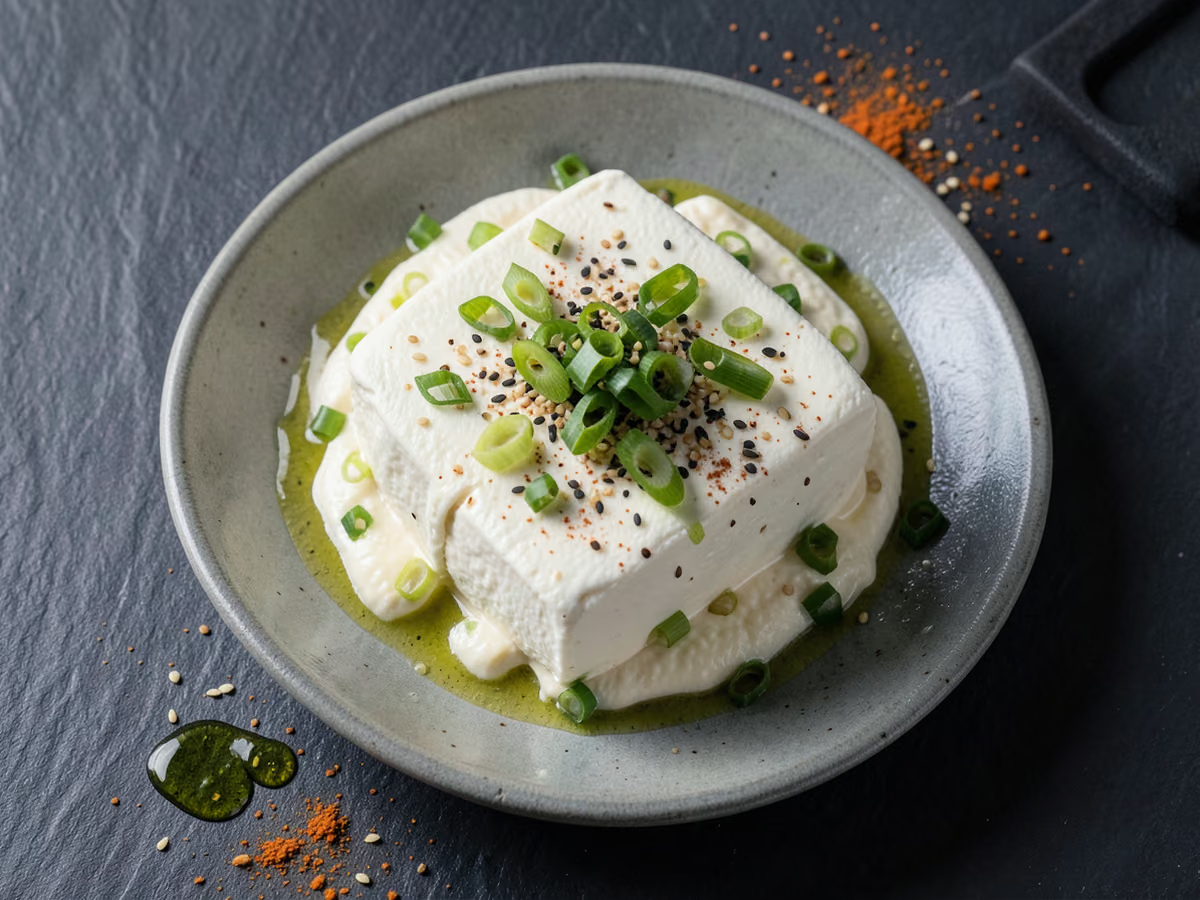
Hot broth, cold-crisp shell, custard center. That contrast is the whole point of agedashi tofu, and your own pan can deliver it. Silken tofu gives the softest middle, and a thin dusting of potato starch fries into a glassy shell that stays light on the plate instead of turning doughy under the broth. The broth itself stays lean: dashi, soy sauce, and 1 tsp of sugar. Ladle it around the tofu, never over the top, and the coating survives the trip to the table. Set aside 35 minutes for the whole dish, most of it quiet draining time.
- Prep
- 20 min
- Cook
- 15 min
- Total
- 35 min
- Serves
- 4
Ingredients
What you’ll need — tap to tick off as you go
- 600 g
- 60 g
- 300 ml
- 2 tbsp
- 1 tsp
- 80 g
- 500 ml
- 5 g
- 10 g
- 5 g
Process
Timers built in · swap anything · ask as you cook
If you are building the dashi yourself, combine 5 g kombu with 300 ml cold water in a small saucepan and warm it over medium heat, because boiling the kombu turns the broth bitter and faintly slick. Pull the kombu at that moment. Add 10 g bonito flakes, kill the heat, and let them steep for 5 minutes; strain through a fine-mesh sieve. Using instant dashi instead? Mix 300 ml to the packet directions.
Warm the broth in a small pan: 300 ml dashi, 2 tbsp soy sauce, 1 tsp sugar. Stir over low heat for about 3 minutes, until the sugar melts into the liquid, and stop short of a boil, because a hard boil cooks the broth down into something salty. Keep it hot and steaming while you fry, and taste it once more before you start.
Wrap the 600 g block in paper towels, set it on a plate, and leave it alone for 10 minutes; the towels should come away damp and heavy when you unwrap. Never press or weight it. Silken tofu cracks under a load, and a cracked cube weeps water straight into your oil. Cut the block into 8 even cubes with a gentle sawing motion, and blot each face dry once more.
Tip 60 g potato starch into a shallow dish. Roll each cube through it, pressing lightly so every face picks up a thin, even film, then shake off the loose powder. Stand the cubes on a tray for 5 minutes, no longer, because starch resting on a damp surface turns gluey and slides off in the oil. Coat and fry as one motion.
Pour 500 ml neutral oil into a deep, heavy saucepan; it should stand about 5 cm deep. Warm it over medium-high heat until your thermometer reads 180°C. No thermometer in the drawer? Drop in a pinch of potato starch, and it should sizzle and rise at once. If it browns instantly, the oil is too hot, so lift the pan off the heat and give it a minute to settle.
Lower 4 cubes into the 180°C oil and leave them untouched for 2 minutes, because the shell sets on that first contact with the heat. Resist the urge to nudge them. Turn each piece once and fry for another 2–3 minutes, until the coating is pale gold, dry, and rigid, and the cubes drift free on the surface instead of clinging to the pot. Crowding the pan drops the oil temperature, and cool oil soaks in instead of sealing the crust.
Move the fried cubes to a wire rack over a tray, or to a plate lined with paper towels. A rack lets the undersides breathe and stay crisp (steam is the enemy here); towels trap it and soften the crust in minutes. Hold the batches warm. Let the oil climb back to 180°C.
Divide the hot cubes among 4 small warmed bowls. Ladle the broth around the base of the tofu, never over the top, so the crust keeps its crackle for the first bite. Crown each bowl with the 80 g grated daikon, the sliced scallions, and the optional 5 g ginger. Serve without delay. The shell softens within about a minute.
Why this recipe works
Draining is the whole game. Tofu is water-heavy, and any surface moisture turns the starch into paste instead of a shell. Potato starch dropped into 180°C oil gelatinizes within seconds into a thin, glassy coat that shatters against your teeth, and that rigid layer traps steam and keeps the oil out, which is why the cubes stay custardy instead of greasy. Keep the fry short. The longer the tofu sits in the oil, the more water it loses through the coating and the less custard-like the middle becomes, which is the difference between silken and spongy. Sugar rounds the soy without sweetening the bowl, and pouring the broth around the tofu softens the base in the pool while the top stays crackling.
Equipment
- Small saucepan for warming the broth
- Deep, heavy saucepan or wok for frying, about 20 cm across
- Frying thermometer or instant-read thermometer
- Wire rack set over a rimmed tray
- Slotted spoon or long frying chopsticks
- Shallow dish for the potato starch
- Fine-mesh sieve for straining the dashi
- Cutting board and a thin, sharp knife
Kitchen notes
Kitchen notes
- Grate the daikon onto a small sieve and let it drip while your oil heats; a dry pile stays crisp, and a soaked one waters down the broth.
- Worried your first batch looks pale? Pale is correct. The crust deepens a shade in the bowl, and a dark brown shell tastes bitter.
- Japanese soy sauce is the better fit for this broth, because it seasons without blackening your liquid.
- A wire rack is worth the counter space. Cubes parked on paper towels steam underneath and go soft in no time.
- Steady beats hot every time. Stick with 180°C for the fry (a frying thermometer is the simple way there), because a hotter pan browns the shell before the middle has a chance to warm through.
Common mistakes
- Soggy crust minutes after frying: the cubes were still damp, or the coating sat too long before the oil. Blot every face again. Roll and fry without a pause, and hold your oil at a steady 180°C.
- The starch slides off in the pan. What went wrong? Too much powder, or a wet surface underneath. Shake off the loose dust. Press lightly; a thin film fries crisper than a thick jacket.
- Greasy, heavy cubes: the oil fell below 180°C because the pan was crowded. Fry 4 pieces at a time. Give the oil a minute between batches so the heat can climb back.
- Broth tastes flat or harsh: weak dashi, or too long over high heat. Steep the bonito gently, hold the broth at a bare simmer, and taste it before you serve.
- The cubes slump apart in the bowl: you pressed the tofu, cut it small, or flooded the tops with broth. Handle silken tofu gently. Keep the count at 8 pieces and ladle around the base.
Serving suggestions
- Two cubes per person as a starter, or three alongside rice and a quick cucumber pickle for a light supper.
- Serve in warmed bowls, ladle the broth in at the table, and dig in while the shell still crackles.
- Cold barley tea or sparkling water alongside; the dashi is delicate and needs no heavy drink beside it.
- Leftover broth, strained and chilled, turns into a fast noodle soup with scallions the next day.
Variations
- Air-fryer version: oil the coated cubes lightly and cook at 190°C, turning once, for a lighter crust that still crackles. Serve straight away.
- Shallow-fry version: keep the oil shallow, turn the cubes twice, and spoon hot oil over the tops while they fry, trading the all-over crunch for a softer shell.
- Firm-tofu version: press and fry firm tofu for clean-edged cubes that hold up in the broth, though the middle turns sturdy rather than soft.
- Vegan version: build the broth with kombu and shiitake instead of bonito, and the whole bowl is plant-based; garnish exactly as written.
Refrigerator
- RefrigeratorStore the broth up to 3 days and any fried cubes 1 day at most, both cooled first and kept in separate airtight containers so the crust does not sit in liquid.
- ReheatingWarm the broth to 74°C (the USDA marker for reheated leftovers), and bring your crust back in a 200°C oven for 5-7 minutes or in an air fryer at 190°C for 4-5 minutes. Skip the microwave. It steams the crust into paste.
- FreezingNot recommended for the fried tofu, which goes limp and spongy. Freeze the broth, not the cubes. It keeps well for up to 3 months, the USDA FSIS window.
- Make aheadCook the broth up to 3 days ahead and refrigerate it. You can also coat the cubes and hold them up to 2 hours in the refrigerator, then fry just before serving.
Updated:
How this recipe was developed
- USDA FSIS, Leftovers and Food Safety (reheat leftovers to 74°C; refrigerate leftovers promptly; freeze 3 to 4 months)
- Just One Cookbook, Agedashi Tofu (draining the tofu briefly; potato starch versus cornstarch; frying in small batches; sauce poured around the tofu)
- Food in Japan, Agedashi Tofu: Recipe, Sauce and Tofu Guide (thin, even coating applied just before frying; kombu pulled before the boil; broth kept warm, never reduced)
- Sudachi Recipes, Agedashi Tofu (potato starch gelatinization in hot oil; the steam barrier that resists oil uptake; broth served warm around the tofu)
Editorial references are kept internally for verification. This page makes no claim of external certification or professional testing.
FAQ
The questions we get asked most
Why did my agedashi tofu turn out soggy instead of crispy?
Wet tofu and cool oil are the usual culprits. Blot every face of the cubes until the paper comes away dry, coat them just before they meet the oil, and hold the pan at a steady 180°C, because the shell sets in the first seconds of contact. Ladle the broth around the base and carry the bowls to the table straight away.
Can I use firm tofu instead of silken tofu?
Yes, with one trade: the middle turns firm rather than custardy. Press firm tofu for 15 minutes to drive out excess water, cut it into cubes, and give it 1-2 minutes more per side in the oil so the center heats through.
Can I make agedashi tofu ahead of time?
The broth can be cooked 3 days ahead and refrigerated. Fry at the last minute. You can coat the cubes and hold them up to 2 hours in the refrigerator, then fry and serve.
How do I make this dish vegetarian or vegan?
Swap the bonito for 3 dried shiitake mushrooms: steep them with a 5 cm piece of kombu in 300 ml water for 10 minutes, then strain. The broth lands earthy rather than oceanic, and nothing else in the dish comes from an animal.
What is the best oil for deep-frying agedashi tofu?
A neutral, high-smoke-point oil; vegetable, canola, and peanut all work. Olive and toasted sesame oils smoke early and push their own flavor into the delicate dashi, so the better choice is to leave them in the cupboard.
How do I know when the tofu is done frying?
The cubes float and the coating turns pale gold and rigid, usually after 2-3 minutes per side, and a skewer should slide through the center with almost no resistance, the way it would through a soft custard. Pull them while they are still pale, and lift one early to look at the underside; a deep brown shell tastes bitter and means the center has gone grainy.
Can I use cornstarch instead of potato starch?
Yes, at the same 60 g. Cornstarch fries a shade crunchier, but it softens faster once the broth hits, so serve the bowls within a minute or two of ladling.
Ask KitchenMind about this recipe
Tell it what’s different tonight — it works within the actual recipe.