Dak Gangjeong Korean Fried Chicken
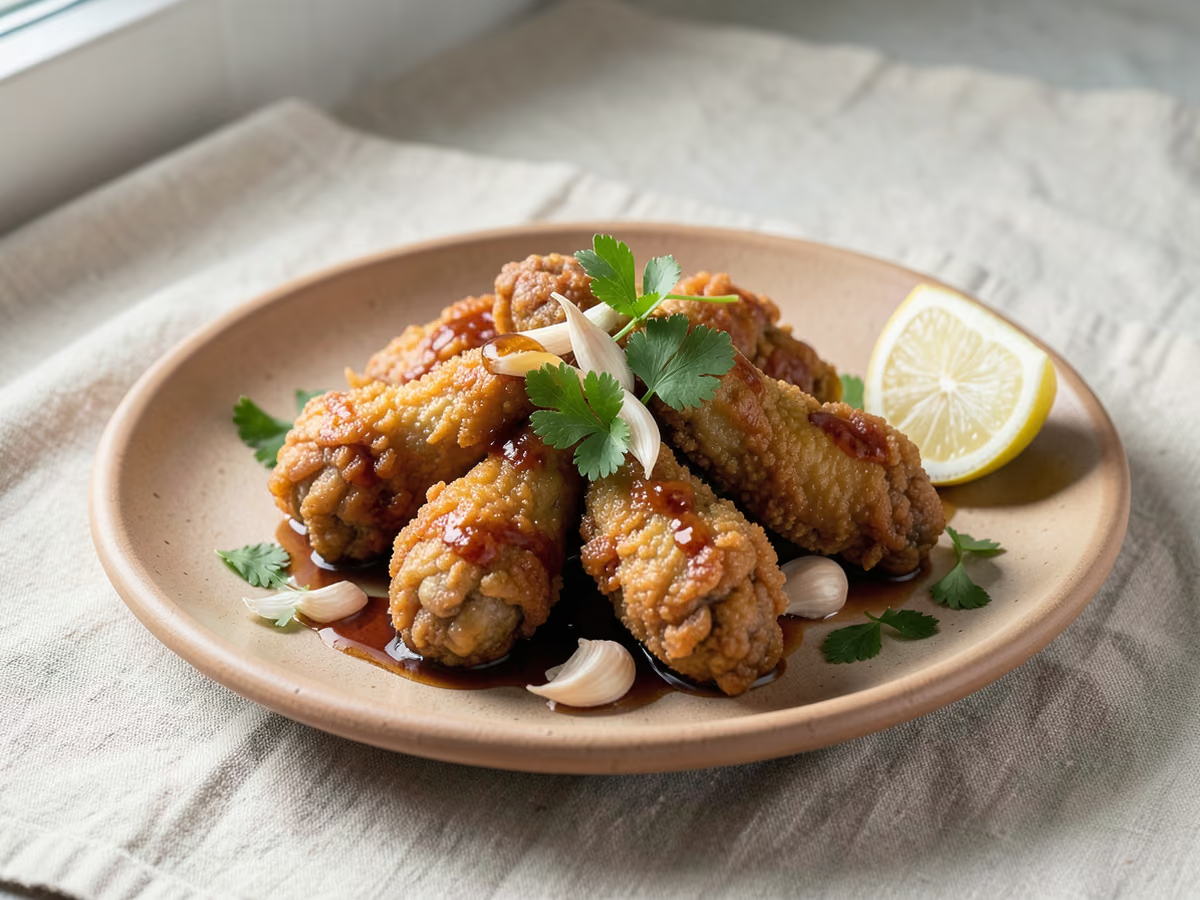
Dak gangjeong is Korea's sticky, shatter-crisp fried chicken: 1000 g of wings double-fried until the coating crackles, then tossed in a glossy glaze of gochujang, soy sauce, honey and brown sugar. The double fry is the whole trick. The first pass at 160°C cooks the meat through, the second at 190°C dries and hardens the crust so it stays crisp under the sauce, and prep plus a short seasoning rest runs about 20 minutes before the 25 minutes of frying.
- Prep
- 20 min
- Cook
- 25 min
- Total
- 60 min
- Additional time
- 15 min
- Serves
- 4
Ingredients
What you’ll need — tap to tick off as you go
- 1000 g
- 15 g
- 4 cloves
- 2 tbsp
- 2 tbsp
- 2 tbsp
- 1 tbsp
- 1 tbsp
- 1 tsp
- 120 g
- 60 g
- 1 tsp
- ½ tsp
- 1500 ml
- 1 tbsp
Process
Timers built in · swap anything · ask as you cook
Pat the 1000 g of chicken wings completely dry with paper towels, then toss them in a large bowl with the 15 g grated ginger, 4 grated garlic cloves, 1 tsp fine salt and 0.5 tsp black pepper until evenly coated. Leave them at room temperature for 15 minutes; the salt seasons the meat and the ginger and garlic begin to perfume it.
Whisk the 2 tbsp soy sauce, 2 tbsp gochujang, 2 tbsp honey, 1 tbsp brown sugar, 1 tbsp rice vinegar and 1 tsp toasted sesame oil in a small bowl until completely smooth, then set it next to the stove. A lumpy glaze will not coat the wings evenly when they come out of the oil.
In a shallow dish, combine the 120 g cornstarch and 60 g all-purpose flour. Press each wing into the mixture so it grips all over, shake off the excess, and set the coated wings on a wire rack in a single layer. The coat should be dry and even rather than thick and clumpy.
Heat the 1500 ml neutral oil in a deep, heavy pot to 160°C, using a thermometer and leaving the oil no more than half way up the sides of the pot. A pinch of the coating dropped in should sink, then rise and bubble steadily; if it browns in seconds, the oil is too hot.
Fry the wings in batches of 6 to 8 for 8 minutes, turning once, until pale golden and cooked through, then drain them on the rack. Let the oil come back to 160°C between batches: a crowded pot drops below temperature and the coating soaks up oil instead of crisping.
Raise the oil to 190°C and fry the wings a second time, in batches, for 2 to 3 minutes, until they are deep golden and very crisp. Drain on the rack, not on paper towels, so the underside of the crust does not steam and soften while the tops stay crunchy.
Pour the reserved glaze into a large skillet or wok and bring it to a simmer over medium heat, then cook for 1 to 2 minutes, until it is slightly thickened and glossy. It is ready when a spoon dragged through the pan leaves a clean line that closes slowly.
Add the hot wings to the skillet and toss quickly for 30 to 45 seconds, until every wing is coated and no syrup is left pooling in the pan. Take the pan off the heat the moment they are covered: the sugar in the glaze burns within a minute, and longer tossing steams the crust soft.
Move the glazed wings to a serving platter and scatter over the 1 tbsp toasted sesame seeds and the 2 thinly sliced scallions. Serve straight away; the first few minutes out of the pan are when the coating is at its loudest and the glaze is still glassy.
Why this recipe works
The coating is starch-dominant, 120 g of cornstarch against 60 g of flour, because starch sets into a hard, glassy shell that shatters, while pure starch alone browns poorly and flour alone fries up leathery. Frying twice, 8 minutes at 160°C then 2 to 3 minutes at 190°C, first cooks the meat gently and then drives off surface moisture, so the crust stays crisp after it meets the glaze. That glaze is a sugar syrup: honey and brown sugar simmered with gochujang and vinegar thicken until they cling in a thin, glossy shell, and tossing for just 30 to 45 seconds keeps steam from softening the crust.
Equipment
- Deep heavy pot or wok, at least 4 litres, for 1500 ml of oil
- Deep-fry thermometer or instant-read thermometer
- Wire cooling rack set over a rimmed baking sheet
- Shallow dish for the coating
- Large skillet or wok for the glaze
- Tongs or a spider strainer
- Small bowl and whisk
- Paper towels, for drying the wings
Kitchen notes
Kitchen notes
- Grate the ginger and garlic on a fine grater so they melt into the seasoning rub instead of sitting in chunks that burn against the crust.
- If you have 30 minutes, leave the coated wings uncovered in the fridge before frying; a drier surface grips the hot oil better and crisps more evenly.
- Fry in a deep, narrow pot so the 1500 ml of oil sits deep enough to cover the wings; a wide pan needs far more oil to reach the same depth.
- Toast the 1 tbsp sesame seeds in a dry pan over medium heat for a minute or two if they are not already toasted; the garnish should smell nutty, not raw.
- Serve on a warmed platter and never stack the wings; stacked, the trapped steam softens the underside of the crust within minutes.
Common mistakes
- Soggy coating: the second fry was skipped, or the wings sat in the glaze too long. Fry first at 160°C and then at 190°C as written, and toss for no more than 30 to 45 seconds, off the heat, right before serving.
- Coating slides off and the oil spits: the wings still had surface moisture. Dry every wing thoroughly, press the starch coating on firmly so it grips, and knock off the excess so it cannot fall away into the pot.
- Burnt, bitter glaze: honey and brown sugar scorch when they are held over high heat. Simmer the glaze only until it thickens, 1 to 2 minutes, then toss the wings off the heat and get them onto a platter.
- Greasy, pale wings: overcrowding dropped the oil temperature. Keep batches to 6 to 8 wings, wait for the oil to return to 160°C for the first fry and 190°C for the second, and drain on a rack rather than paper towels.
- Dry meat under a heavy crust: the first fry ran past 8 minutes, or the oil cooked hotter than 160°C. Time the first fry, check for 74°C near the bone, and let the second fry handle the colour and crunch.
Serving suggestions
- Serve immediately as a main for 4 with steamed rice, or plate smaller portions as a party snack with plenty of napkins.
- A cold barley tea or a glass of iced sujeonggwa (Korean cinnamon punch) does the job of cutting the glaze; a dry sparkling apple soda works just as well.
- Quick-pickled radish, kimchi or a cool cucumber salad between bites keeps the sticky-sweet sauce from taking over.
- A scatter of extra scallions or crushed peanuts on top adds freshness and crunch, the way Korean street stalls finish the dish.
Variations
- Soy-garlic version: keep the double-fried wings and build the glaze without gochujang, using the 2 tbsp soy sauce, the honey and brown sugar, the rice vinegar and the garlic and ginger for the other classic Seoul-style finish.
- Boneless version: cut 1000 g of boneless chicken thigh into bite-size pieces and fry for 6 minutes at 160°C, then 2 minutes at 190°C; it cooks faster and makes a tidier party snack.
- Extra-hot version: simmer a little gochugaru (Korean chili flakes) or a few whole dried chilies into the glaze before it thickens, tasting as you go, for the spicier yangnyeom-style finish.
Refrigerator
- RefrigeratorLeftover glazed wings keep in an airtight container in the fridge for up to 3 days, though the coating softens. Reheat on a rack over a baking sheet in a 200°C oven for 8 to 10 minutes, until hot and crisp again; never microwave them, which leaves the crust soggy. Reheated wings should reach 74°C.
- ReheatingSpread the wings in a single layer on a wire rack over a baking sheet and warm them at 200°C for 8 to 10 minutes, until the coating crisps and the meat is hot through. A skillet over medium-high heat works for a few at a time; a microwave does not.
- FreezingFreeze unglazed double-fried wings on a tray in a single layer until solid, then transfer them to a freezer bag for up to 2 months. Reheat from frozen on a rack at 200°C for 15 to 18 minutes, then toss with a fresh batch of glaze. Never freeze already-glazed wings: the sauce weeps and the coating goes mushy.
- Make aheadThe glaze can be made up to 3 days ahead and refrigerated. For a party, double-fry the wings up to 4 hours ahead, keep them on a rack at room temperature, then re-crisp them in a 200°C oven for 6 to 8 minutes and toss with warmed glaze the moment before serving.
Updated:
How this recipe was developed
- Maangchi — dakgangjeong (double frying; flour-and-starch coating; sweet soy glaze boiled until it coats a spoon; keeping the pieces separate so they stay crisp)
- Hyosun Ro, Korean Bapsang, published via The Korea Herald — dakgangjeong (double fry; gochujang, soy, vinegar, honey and brown sugar sauce simmered until thickened; ketchup as the milder substitute)
- J. Kenji López-Alt, Serious Eats — Korean fried chicken coating science (starch-dominant coatings for brittle crunch, flour for browning; air-drying before frying)
- USDA FSIS safe minimum internal temperatures and leftovers guidance (all poultry and reheated leftovers 74°C; refrigerate within 2 hours; keep 3 to 4 days)
Editorial references are kept internally for verification. This page makes no claim of external certification or professional testing.
FAQ
The questions we get asked most
Why did my Korean fried chicken turn out soggy instead of crispy?
The usual cause is skipping the second fry, or glazing too early and tossing too long. The wings need both passes, 8 minutes at 160°C to cook through and 2 to 3 minutes at 190°C to crisp, and they should meet the glaze for only 30 to 45 seconds, off the heat. Wings that were not dried properly also steam the crust from the inside.
How do I know when the chicken wings are fully cooked?
After the first fry they are pale golden, and the thickest drumette should read at least 74°C near the bone on an instant-read thermometer, the USDA minimum for poultry. The second fry at 190°C finishes the outside without overcooking the meat, so go by the temperature rather than colour alone.
Can I make dak gangjeong ahead of time for a party?
Yes, up to a point: get the double-frying done up to 4 hours ahead and hold the wings on a rack at room temperature, then give them a quick refresh in a hot 200°C oven before tossing them with warmed glaze at the last moment. The glaze itself can be made up to 3 days in advance and kept in the fridge.
Can I use an air fryer instead of deep frying?
Yes, though the crust is a little less shattering. Coat the wings as written, arrange them in a single layer in the basket, and cook at 190°C for 12 minutes, shaking halfway, then raise the heat to 200°C for 4 to 5 minutes until deeply golden. Toss with the glaze the moment they come out.
My glaze is too thick, or too runny. What should I do?
Simmer time is the dial, and remember that the glaze thickens further as it cools on the wings. If it is too thick, whisk in warm water a teaspoon at a time; if it is too thin, keep it at a gentle simmer for another minute and check the consistency again.
Do I have to double fry, or can I fry the wings just once?
Once-fried wings are cooked and safe, but they lose the shatter and soften quickly under the sauce. The second, hotter fry drives off surface moisture and hardens the starch shell, so the glaze sits on a crust instead of soaking into it, which is what makes the dish work.
Is dak gangjeong very spicy, and what if I do not have gochujang?
It is mild to gently warm rather than fiery: gochujang is fermented and tastes more savoury than hot. Without it, use 2 tbsp doenjang with 1 tsp Korean chili flakes, or the Korean shortcut of ketchup for a sweeter, milder sauce, and always taste the glaze before the wings go in.
Ask KitchenMind about this recipe
Tell it what’s different tonight — it works within the actual recipe.