Baked Kibbeh
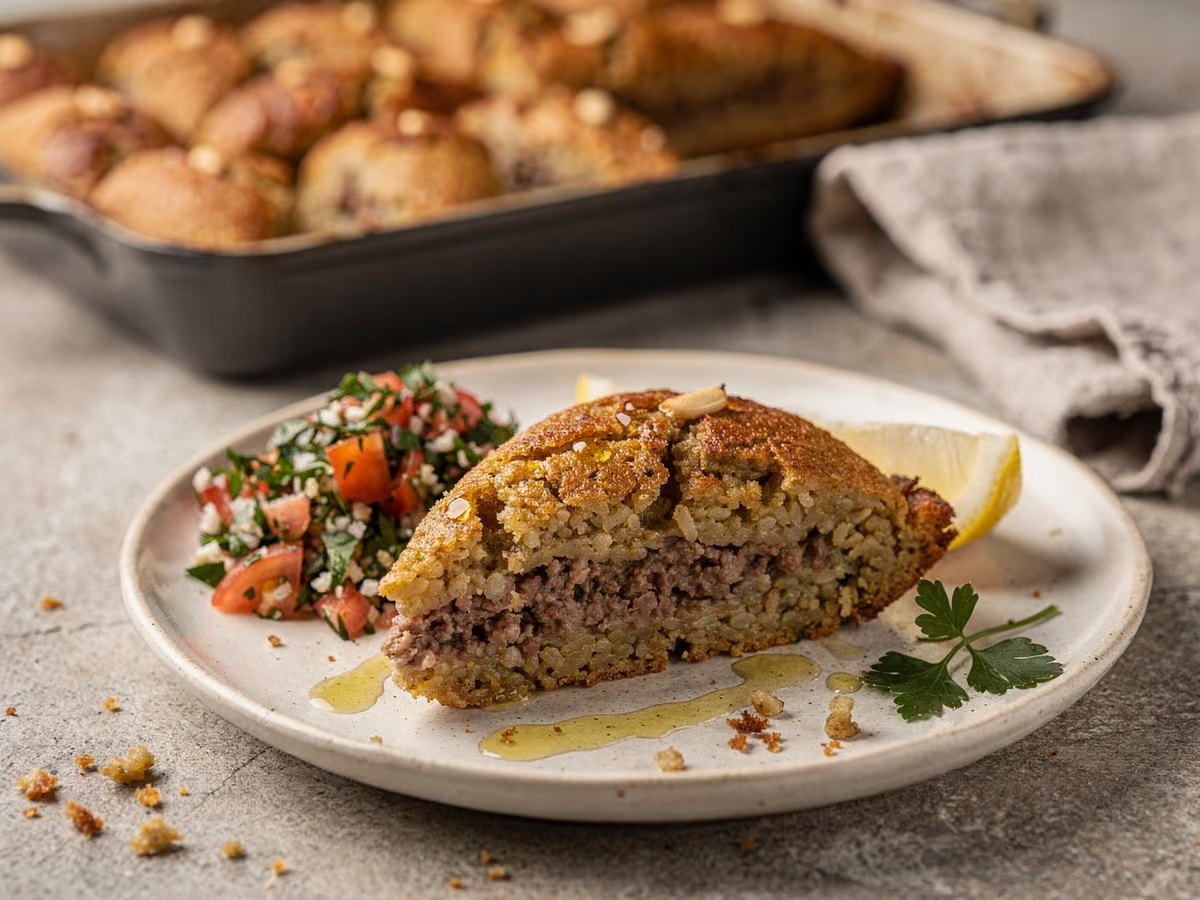
Kibbeh bil sanieh is the tray-baked member of the kibbeh family: a fine-bulgur and beef crust kneaded to a paste, pressed top and bottom around a spiced minced-beef filling with toasted pine nuts, scored into diamonds, drizzled with butter, and baked to a deep golden top. The layered build gives every slice a crisp edge and a juicy middle without hand-shaping a single piece. Budget about 40 minutes of hands-on work, 45 minutes in a 200°C oven, and eight generous portions.
- Prep
- 40 min
- Cook
- 45 min
- Total
- 100 min
- Additional time
- 15 min
- Serves
- 8
Ingredients
What you’ll need — tap to tick off as you go
- 300 g
- 900 g
- 60 g
- 1 tsp
- 1 tsp
- 1 tsp
- 2 tsp
- 1 tsp
- 2 tbsp
- 50 g
- 120 ml
Process
Timers built in · swap anything · ask as you cook
Put the 300 g of fine bulgur in a large bowl, cover it with the ice water and let it soak for 15 minutes, until the grains plump and soften. Drain it in a fine sieve or a clean towel and squeeze it properly dry: water left in the grains steams the crust soggy inside and stops it firming up in the oven.
In a large bowl, combine the soaked bulgur, 500 g of the ground beef, the grated onion, 1 tsp of the salt and half of the black pepper. Knead firmly for 5–7 minutes, until the mixture turns sticky and paste-like and holds together when you press a handful. If it crumbles instead, work in 1–2 tbsp more ice water and knead again.
For the filling, warm the olive oil in a wide skillet over medium heat. Add the 2 finely chopped onions and cook for 6–8 minutes, until soft and translucent, stirring so they sweeten without browning. Soft onions melt into the beef; undercooked pieces stay crunchy and push the layers apart when you cut.
Add the 400 g of ground beef, breaking it up with a spoon, and cook for 6–8 minutes until no pink remains. Stir in the ground cinnamon, allspice and cumin with the remaining 1 tsp of salt and the rest of the black pepper, cook 2 minutes more, then fold in half of the toasted pine nuts and set the filling aside to cool slightly.
Heat the oven to 200°C and grease a 23 x 33 cm baking dish with a little olive oil. Give the oven time to reach full temperature: the tray bakes for a short 35–45 minutes, and an oven that is still climbing can leave the middle underdone while the top dries and cracks.
Divide the crust mixture in half. Press one half evenly across the bottom of the greased dish, wetting your hands so the paste does not stick, and level it into a flat layer. Spread the cooled filling over it, leaving a 1 cm border around the edge so the two crusts can seal.
Press the remaining crust mixture flat between wet palms into thin patties and lay them over the filling until it is completely covered. Seal the edges by pressing the top layer onto the bottom one, then smooth the surface with wet hands so no seams or dips remain.
Score the top into diamonds with a sharp knife, cutting about 2 cm deep so the lines reach the filling without piercing the base. Drizzle the melted butter over the surface and scatter the remaining toasted pine nuts on top; the cuts hold the butter and mark where the slices will open.
Bake at 200°C for 35–45 minutes, until the top is deep golden brown and firm to the touch and the edges pull slightly from the sides of the dish. If the top is browning faster than the middle is cooking, lay a sheet of foil loosely over it after 25 minutes.
Rest the tray for 10 minutes before cutting along the scored lines. That short rest lets the juices and melted butter settle back into the layers, so the diamonds lift out whole instead of slumping or weeping onto the plate.
Why this recipe works
Fine #1 bulgur is the structural key: soaked briefly and squeezed dry, it hydrates into the lean beef as you knead, and the two become an emulsified paste that holds its shape far better than either would alone. Working that paste cold, with ice water in the mix and on your hands, keeps the beef fat from smearing, which is what lets the layers press thin without tearing. The fat already in the meat and the butter drizzled over the top baste the crust inside and out; scoring opens channels so the butter reaches the filling, and the ten-minute rest lets the proteins set so the diamonds cut cleanly.
Equipment
- Large mixing bowl, roomy enough to knead the bulgur and beef into a paste
- Fine-mesh sieve or a clean kitchen towel, for draining and squeezing the soaked bulgur
- Box grater, for the onion that goes into the crust
- Wide skillet, so the filling cooks in one even layer
- 23 x 33 cm baking dish, about 5 cm deep
- Chef's knife, for scoring the diamond pattern
- Pastry brush or spoon, for drizzling the melted butter evenly
- Instant-read thermometer, to check the centre reaches 71°C
Kitchen notes
Kitchen notes
- A food processor can stand in for hand kneading: pulse the soaked bulgur, beef and grated onion in short bursts until the mixture just turns paste-like, then finish it by hand. Blending past that point warms the meat and turns the crust gluey rather than tender.
- Keep a bowl of iced water beside you and dip your hands often. Cold palms stop the beef fat smearing, and wet hands press the paste thinner and smoother than dry ones: the difference between a flat top and a torn one.
- Cook a small patty of the crust mixture in a dry skillet and taste it for salt before the tray is assembled. Once the layers are pressed there is no way back in, and the raw mixture tastes milder than the baked crust.
- Toast the pine nuts yourself in a dry pan over low heat, moving them constantly; they burn in seconds. Half goes into the filling, half over the top, where the oven gives them a second, deeper toast.
- Score with a knife dipped in cold water, cutting straight down. A wet blade glides through the sticky top layer without dragging it, and the pattern lines stay open through the bake.
Common mistakes
- The top cracks in the oven: a dry or under-kneaded crust tears as it expands and the surface sets before the middle is done, so it splits along the weakest lines. Knead to a sticky paste, loosen a crumbly mix with a splash more ice water, smooth the top with wet hands, and tent it with foil if it browns early.
- Soggy, gummy slices: water left in the bulgur or a wet filling steams the layers apart. Squeeze the drained bulgur properly dry, and cook the beef until no pink remains and the pan looks dry rather than glossy before the filling goes in.
- The layers separate when you cut: filling spread right to the rim keeps the crust edges from meeting and sealing. Hold the filling back by 1 cm, then press the top crust firmly onto the border so the two layers close.
- A pale, soft top after the full bake: the oven never came up to 200°C, or foil went on too early and trapped steam. Wait for full heat, leave the top uncovered unless it is genuinely darkening, and if the middle is set but the colour is shy, run it under the broiler for two minutes.
- Scorched pine nuts: they are already toasted and sit directly under the oven heat for the whole bake. Press them lightly into the buttered surface so they sit half-buried, and if they darken early, tent the tray until the middle is cooked through.
Serving suggestions
- Serve warm, cut along the scored diamonds, with plain yogurt and a tomato and cucumber salad; the cool dairy and sharp salad balance the rich beef and butter.
- Set the tray in the middle of a mezze table with warm flatbread, hummus and a lemony herb salad, and add a squeeze of lemon over each portion to brighten the top.
- It also holds beautifully at room temperature for a buffet; the slices firm as they cool and cut even more cleanly on a second pass.
- Pickled turnips or a few olives alongside add a sharp bite that resets the palate between mouthfuls.
Variations
- Seven-spice version: replace the cinnamon, allspice and cumin with 3 tsp of a Lebanese seven-spice or kamouneh-style blend; the filling tastes rounder and a touch sweeter, and the crust bakes up the same.
- Sweet-sour filling: stir a spoonful of pomegranate molasses into the beef with the spices, then taste and correct the salt; the tang cuts the richness and the filling darkens to a deeper red-brown.
- Round tray: build the same layers in a 30-35 cm round dish, the shape most kitchens use; the wedges around a slightly deeper centre may need a few extra minutes, so check for the deep golden top and a firm press.
Refrigerator
- RefrigeratorCool the tray, then refrigerate the slices in an airtight container for up to 4 days, getting them into the fridge within 2 hours of baking; the topping softens a little as it chills, so rewarm briefly to bring it back.
- ReheatingReheat covered with foil in a 180°C oven for 15-20 minutes, until steaming hot through the middle; leftovers should reach 74°C. Short bursts in the microwave work, but the crust softens faster than in the oven.
- FreezingWrap baked slices or the whole tray tightly and freeze for up to 2 months. An assembled, unbaked tray also freezes well for up to 1 month: bake it from frozen at 200°C for about 60 minutes, until the top is deep golden and the middle is hot through.
- Make aheadAssemble the whole tray up to 24 hours ahead, cover it and refrigerate; bake it straight from the fridge, adding 5-10 minutes to the time, or let it stand while the oven heats so the chill comes off the dish.
Updated:
How this recipe was developed
- USDA FSIS, Leftovers and Food Safety and Safe Temperature guidance (ground meats cooked to 71°C; leftovers refrigerated within 2 hours, kept 3 to 4 days, and reheated to 74°C)
- Maureen Abood, Lebanese Baked Kibbeh (kibbeh bil sanieh as the layered tray form; ice water keeps the mixture workable and the hands wet; thin pressed layers; scoring to the centre; butter finish; rest before cutting)
- Hungry Paprikas, Kibbeh Bil Sanieh (fine #1 bulgur is essential and coarse grades fail; lean beef so the crust binds; the top layer pressed as flattened patties and joined with wet hands; freezing the assembled tray)
- Wikipedia, Kibbeh (family overview: raw nayyeh, fried ovals, and kibbeh bil siniyeh, the baked form with the stuffing sandwiched between two layers of kibbeh dough; a national dish of Lebanon and Syria)
Editorial references are kept internally for verification. This page makes no claim of external certification or professional testing.
FAQ
The questions we get asked most
What is kibbeh bil sanieh?
It translates as kibbeh in a tray, and that is exactly what it is: the baked, layered member of the kibbeh family, also written kibbeh bi saniyeh and spelled kibbie in some English kitchens. The fine-bulgur and beef crust is pressed into a 23 x 33 cm dish around a spiced beef filling, scored into diamonds and baked. It is a main dish rather than a mezze bite, and the tray wording is what separates it from the raw and fried versions of the family.
What is baked kibbeh made of?
A fine-bulgur and lean-beef crust around a spiced beef-and-pine-nut filling. The crust is 300 g of #1 bulgur with 500 g of the ground beef, grated onion, salt and pepper, brought together with ice water; the filling is 400 g of beef cooked with two more onions, cinnamon, allspice, cumin and half of the 60 g of toasted pine nuts. It is a substantial bake, its richness coming from the meat, nuts and the 50 g of butter drizzled on top, so serve it with salad and yogurt rather than on its own.
Why did my baked kibbeh crust fall apart?
The crust comes apart when the paste is too loose: bulgur that was drained but not squeezed dry, or a mixture that was not kneaded long enough to bind. Squeeze the soaked bulgur hard, knead the bulgur and beef for the full 5-7 minutes until it turns sticky, and add ice water in small splashes only if it crumbles rather than holds. Wet hands and sealed edges keep the layers joined once they are in the dish.
Why is my baked kibbeh dry?
Overbaking is the usual cause: the filling is already cooked before it goes in, so the tray only needs to set the crust and heat everything through. Drizzle the full 50 g of melted butter over the scored top, start checking at 35 minutes, and pull it as soon as the surface is deep golden and firm. The 10-minute rest after baking also pulls the juices back into the layers instead of leaving them in the base of the dish.
How do I know when baked kibbeh is fully cooked?
The top should be deep golden brown and firm under a light press, with the edges pulling away from the sides of the dish, and a knife slipped into the centre should come out very hot. For a number, an instant-read thermometer should read 71°C in the middle, the minimum internal temperature for ground beef.
Can I make baked kibbeh ahead of time or freeze it?
Both. Assemble the tray up to 24 hours ahead, cover and refrigerate, then bake straight from the fridge with 5-10 extra minutes. To freeze, wrap baked portions tightly for up to 2 months, or freeze the assembled tray unbaked for up to 1 month and bake it from frozen at 200°C for about 60 minutes.
Can I use ground lamb or another meat for baked kibbeh?
Yes. Ground lamb is the richer and more traditional choice, and it works in both layers with the same quantities: 900 g in total, with 500 g kneaded into the crust and the remaining 400 g cooked for the filling. Ground turkey or chicken also works, but both are leaner and drier, so add a spoonful of olive oil to the filling and check the tray a little earlier. Whatever you choose, keep the crust meat lean so the paste still binds.
Ask KitchenMind about this recipe
Tell it what’s different tonight — it works within the actual recipe.