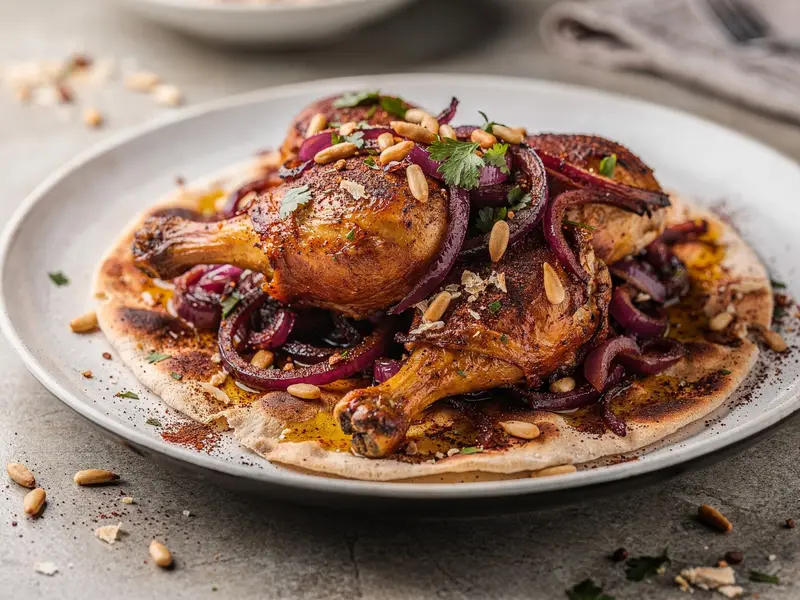
Musakhan Sumac Chicken
Cook onions with sumac, allspice, cumin and cinnamon until soft, then spoon over chicken thighs with pine nuts and lemon juice on flatbread. Serves 4.
- Prep
- 25 min
- Cook
- 70 min
- Total
- 95 min
- Serves
- 4
Ingredients
What you’ll need — tap to tick off as you go
- 1 ¼ kg
- 3 tbsp
- 120 ml
- 1 tsp
- 1 tsp
- ½ tsp
- 2 tsp
- 1 tsp
- 3 tbsp
- 40 g
- 15 g
Process
Timers built in · swap anything · ask as you cook
Pat the chicken thighs dry with paper towels. In a small bowl, mix 2 tbsp of the sumac, the cumin, allspice, cinnamon, 1.5 tsp of the salt and the black pepper.
Rub the spice mixture all over the chicken, including under the skin. Drizzle with 2 tbsp of the olive oil and the lemon juice, then set aside at room temperature for 20 minutes while you start the onions.
Heat 60 ml of the olive oil in a wide heavy pan over medium heat. Add the sliced onions with the remaining 0.5 tsp salt and cook, stirring often, for 20 to 25 minutes until soft, deeply golden and jammy. If they start to catch, lower the heat and add a splash of water.
Stir the remaining 1 tbsp sumac into the onions and cook for 1 minute more, then take the pan off the heat.
Heat the oven to 200°C. Arrange the chicken skin-side up on a rack in a roasting tray and roast for 35 to 40 minutes, until the skin is crisp and the juices at the thickest part run clear (75°C on a thermometer).
While the chicken roasts, brush the flatbreads on both sides with the last of the olive oil and warm them in the oven for the final 5 minutes of roasting, until pliable and lightly crisp at the edges.
Toast the pine nuts in a dry pan over medium heat for 2 to 3 minutes, tossing constantly, until golden. Tip onto a plate immediately so they do not burn.
Spread the sumac onions over the warm flatbreads. Set the roasted chicken on top, spoon over the pan juices, and finish with the toasted pine nuts, chopped parsley and a final pinch of sumac. Serve immediately, tearing the bread at the table.
Kitchen notes
Kitchen notes
- The most common mistake is undercooking the onions. They need a full 20 to 25 minutes to turn sweet and jammy; pale onions leave the dish sharp and watery.
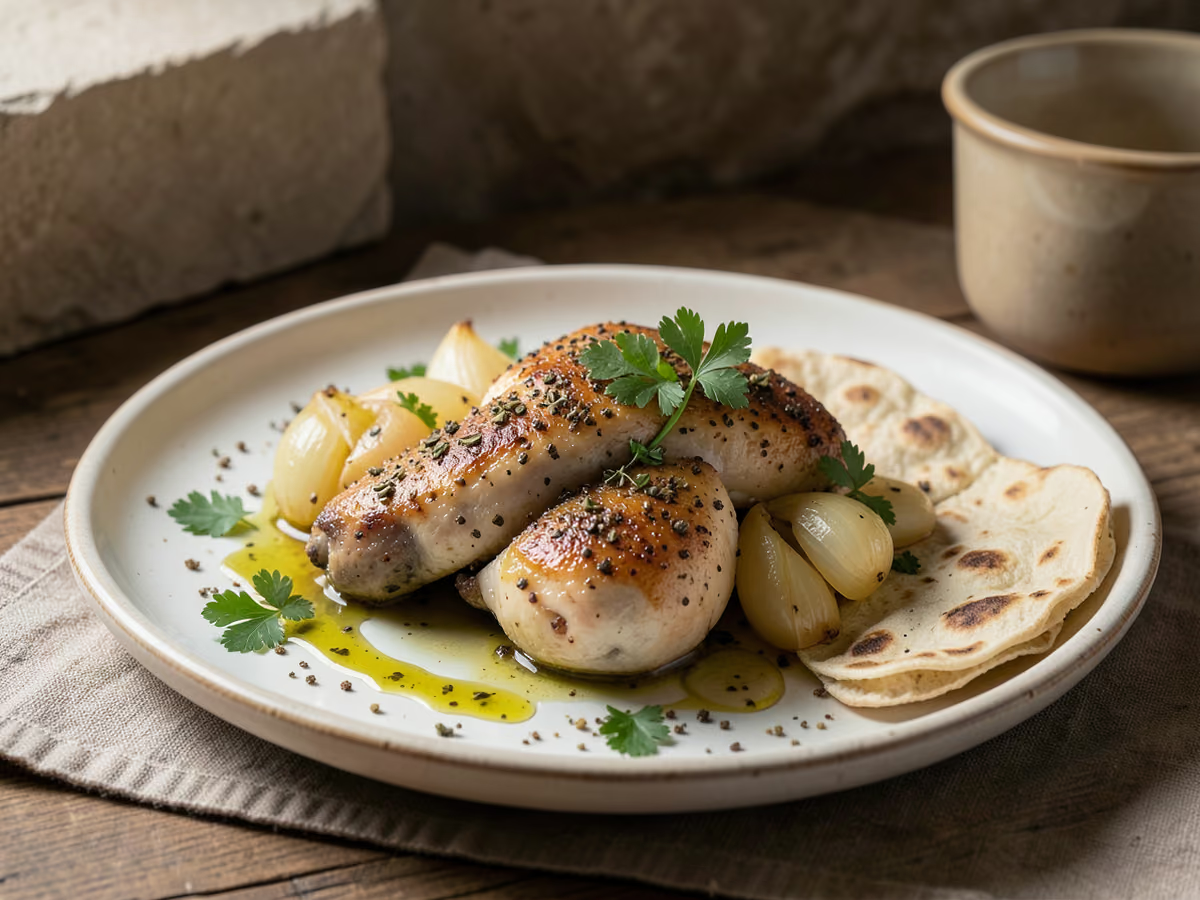
- Dry the chicken skin thoroughly and roast it on a rack so the fat drips away. Skin that sits in its own juices steams instead of crisping.
- Sumac loses its tang when cooked hard, so reserve 1 tsp to sprinkle at the end. The finishing dusting is what makes the dish taste properly musakhan.
- Warm the flatbread before assembling. Cold bread turns leathery under the hot chicken and onions instead of soaking up the juices.
Substitutions
- chicken thighs→bone-in, skin-on chicken drumsticks (same weight, add 5 minutes roasting time)
- flatbread→thick naan or any sturdy flatbread that can hold the toppings
- pine nuts→toasted slivered almonds or extra chopped parsley for a nut-free version
- yellow onions→red onions (slightly sharper but they caramelize well)
Storage & reheating
Keep leftovers in an airtight container in the fridge for up to 3 days; store the chicken, onions and bread separately so the bread does not go soggy. Reheat the chicken and onions covered in a 180°C oven for 10 to 12 minutes, or in a covered pan over medium heat with a splash of water. Warm the bread separately in the oven for 3 to 4 minutes. The dish is best eaten fresh, but the onions alone freeze well for up to 2 months; thaw overnight in the fridge before reheating.
FAQ
The questions we get asked most
Why did my musakhan onions turn out pale and sharp instead of sweet?
The onions were not cooked long enough. They need 20 to 25 minutes over medium heat with frequent stirring until they collapse and turn deep golden brown. Salting them at the start draws out moisture and speeds up caramelization. If they look dry before they color, add a splash of water rather than more oil.
Can I use chicken breast instead of thighs?
Yes, but use bone-in, skin-on breasts and start checking at 25 minutes, as they dry out faster than thighs. Thighs are traditional because their fat keeps the meat juicy under the sumac crust. If you only have boneless breast, roast it at 200°C for 18 to 22 minutes and watch it closely.
How do I know when the chicken is fully cooked?
The juices at the thickest part should run completely clear, and a thermometer inserted into the thickest part away from the bone should read 75°C. The skin should be deep golden and crisp. If the skin is browned but the meat is not ready, tent the tray with foil and continue roasting.
Can I make musakhan ahead of time?
You can caramelize the onions up to 3 days ahead and refrigerate them, and you can marinate the chicken in the spice rub overnight. Roast the chicken and warm the bread just before serving, since the dish is at its best hot from the oven. Reheat the onions gently in a pan with a spoonful of water.
What can I use if I cannot find sumac?
Sumac is the defining flavor, so it is worth seeking out, but a mix of 1 tbsp lemon zest plus 1 tsp ground dried thyme and a pinch of salt approximates its tang. Do not substitute lemon juice in the rub, as it makes the chicken wet and prevents crisping. A little extra lemon squeezed at the table helps.
Why is my flatbread soggy under the chicken?
The bread absorbed too much fat and juice, usually because it was not warmed and lightly crisped first. Brush it with olive oil and warm it in the oven for 5 minutes so it forms a slight barrier. Assembling just before serving, rather than letting it sit, also keeps the base from turning to mush.
Can I cook musakhan on the stovetop instead of the oven?
Yes. Brown the marinated chicken skin-side down in a heavy pan over medium-high heat for 6 to 8 minutes, flip, cover and cook over medium-low for 20 to 25 minutes until cooked through. The skin will be less crisp than oven-roasted, so finish it under a hot grill for 2 to 3 minutes if you can.
Ask KitchenMind about this recipe
Tell it what’s different tonight — it works within the actual recipe.