Crockpot Mac and Cheese
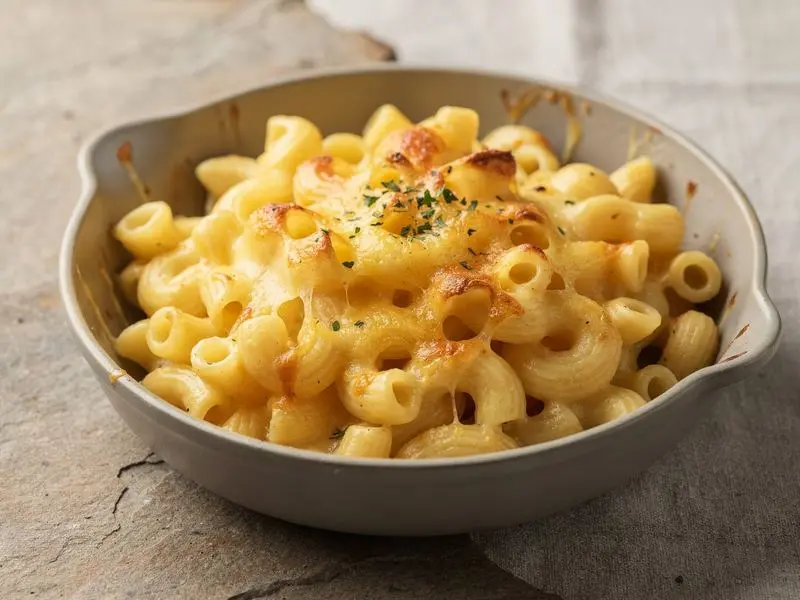
Crockpot mac and cheese is the set-and-forget version of the American comfort classic: 450 g of dry elbow macaroni goes into a 6-quart slow cooker with evaporated milk, whole milk, melted butter and a trio of savory powders, then sharp cheddar and cream cheese melt down through it over 2 hours 30 minutes on low. There is no pot of boiling water, no draining, and almost nothing to watch — about 10 minutes of assembly, one stir at the halfway mark, and a buttery toasted panko topping at the end. It serves 6.
- Prep
- 10 min
- Cook
- 150 min
- Total
- 160 min
- Serves
- 6
Ingredients
What you’ll need — tap to tick off as you go
- 450 g
- 354 ml
- 360 ml
- 400 g
- 60 g
- 115 g
- 1 tsp
- ½ tsp
- ½ tsp
- ½ tsp
- 1 tsp
- ½ tsp
- 40 g
Process
Timers built in · swap anything · ask as you cook
Rub the inside of a 6-quart slow cooker generously with butter, coating the base and working a thin film up the walls. Bare ceramic lets the thickening sauce grab and scorch at the edges, and the film keeps the settling pasta from sticking to the bottom. Set the crock into its base and have the lid within reach.
Add the 450 g dry elbow macaroni, 354 ml evaporated milk, 360 ml whole milk, 60 g melted butter, 1 tsp Dijon mustard, 0.5 tsp garlic powder, 0.5 tsp onion powder, 0.5 tsp smoked paprika, 1 tsp salt and 0.5 tsp black pepper. Stir so every elbow is coated and mostly submerged — liquid all around the pasta is what cooks it evenly.
Scatter 300 g of the shredded sharp cheddar and all 115 g of the cubed cream cheese evenly over the top. Do not stir this layer in. Left alone, the cheese melts down through the pasta as the pot heats, and the sauce comes together without the hard working that pushes dairy toward a grainy break.
Cover and cook on low for 2 hours 30 minutes, stirring once at the 1 hour 15 minute mark. At that stir, scrape the bottom and corners with a silicone spatula, where the pasta settles and wants to stick, then put the lid straight back so the trapped steam keeps doing the cooking.
At 2 hours 30 minutes, bite a piece of pasta: it should be tender with no chalky center, and the sauce should coat the back of a spoon without pooling. If the elbows are still firm, cook in 15-minute increments on low, stirring each time — the last stretch is when the pot firms up from milky to saucy.
Stir in the remaining 100 g cheddar until it is fully melted and the sauce turns glossy. If the sauce looks loose, leave the lid off for 10 minutes on low; if it looks thick, stir in a splash of the reserved whole milk. Pull the pot from the heat while still a shade loose — it sets as it cools.
For the topping, melt a knob of the extra butter in a small skillet over medium heat, add the 40 g panko and toss for 2 to 3 minutes until golden. Scatter over the pot and serve straight from the crock. Toasting the crumbs in the pan, not under the lid, is what keeps them crunchy.
Why this recipe works
Three things keep the sauce smooth through a two-and-a-half-hour cook. The dry pasta sheds starch into the milk as it hydrates, and that starch helps the cheese emulsify rather than separate. Evaporated milk is concentrated in milk proteins that act as emulsifiers, so it holds fat and water together far longer than regular milk would under steady low heat. Low heat is the other safeguard: cheese sauce turns grainy when its proteins tighten and squeeze out fat, which is exactly what aggressive heat and constant stirring cause. So most of the cheddar waits on top, only the last 100 g is stirred in at the end, and the finished pot gets pulled while it still looks a shade loose.
Equipment
- 6-quart (5.7 L) slow cooker with a tight-fitting lid
- Box grater, for shredding the 400 g block of cheddar yourself
- Silicone spatula, for scraping the bottom and corners at the halfway stir
- Small skillet, for toasting the panko topping
- Wooden spoon or long-handled spoon for the initial stir
- Liquid measuring jug and measuring spoons
- Small knife and cutting board, for cubing the cream cheese
Kitchen notes
Kitchen notes
- Shred the whole block cold and leave the pile on the counter while you measure everything else; cheddar that has lost its chill melts into the sauce instead of clumping in it.
- Never switch to high to save time. Low holds the pot below a boil, the margin that keeps milk proteins from tightening, and it gives the elbows hours to hydrate evenly instead of scorching at the edges.
- The final 100 g of cheddar is the gloss step. Added after the pasta is tender, those proteins never endure the long cook, so the sauce finishes smooth rather than oily.
- Sharp cheddar carries the flavor but is also the most break-prone cheese, so for insurance make part of the 400 g a younger Jack or mozzarella; keep the total and the sauce turns stretchier and milder.
- Keep the lid down. Trapped steam is what cooks the pasta, and every peek releases heat the pot has to rebuild; the single halfway stir is your only real reason to open it.
- On buffet duty, hold the finished pot on warm and add the toasted panko in small fresh scatters as you serve; stir a splash of milk through whenever the sauce tightens, and return anything pulled for serving to the heat or the fridge within two hours.
Common mistakes
- Boiled pasta first: pre-cooked elbows cannot take the 2.5 hours and break down into a pasty mush. This pot is built on raw macaroni, so skip the boiling water entirely and let the milk hydrate the pasta.
- Chalky, underdone elbows at the end of the timer: slow cookers run hot and cool, and pasta is done when it bites tender, not when the clock says so. Finish it in 15-minute increments on low, stirring each time, instead of turning the heat up.
- Grainy or curdled sauce: starch-dusted bagged cheese or a rise in heat breaks the emulsion into fat and tight protein clumps. Shred a block of cheddar yourself and keep the pot on low for the whole cook.
- Dry pasta stuck to the sides: bare ceramic plus a missed stir leaves scorched edges. Butter the base and walls before anything goes in, and scrape the bottom and corners well at the halfway stir.
- The cheese sauce tightening too far: the pasta keeps drinking liquid even after the heat is off, so the pot thickens as it stands. Cut the heat while it still looks slightly loose, and loosen portions with a splash of milk.
Serving suggestions
- Serve it hot and glossy straight from the crock, scattering the toasted panko on at the table so the earliest servings get maximum crunch.
- Classic side pairings: roast chicken, a seared steak, or a crisp slaw and steamed green beans to cut the richness.
- As a meatless main, portion the pot into six bowls with a sharp green salad alongside — it is one of the rare comfort classics that needs no meat to feel like dinner.
- For a gathering, hold it on warm and keep a small jug of whole milk at the pot; stir a splash into portions as they sit so every scoop stays glossy instead of tightening.
Variations
- Cheese-blend variation: keep the 400 g total but make part of it a younger, meltier Jack or mozzarella for a stretchier, milder pot that is also less prone to breaking.
- Classic variation: leave out the smoked paprika and the dish leans purely on cheddar with the garlic and onion powders, the version most people picture.
- Two-crock party variation: cook a double batch as two separate 6-quart pots instead of one crowded one, so both keep the even, low simmer this method depends on.
- Green variation: fold steamed broccoli or cauliflower florets through at the end to turn the pot into a one-dish dinner, or keep it plain and let the panko do the talking.
Refrigerator
- RefrigeratorCool the pot within two hours of the lid coming off — sooner if the kitchen is warm — then refrigerate in shallow, covered containers for up to 4 days. The pasta keeps absorbing sauce, so expect a tighter dish by the second day.
- ReheatingMicrowave single portions in a covered bowl with 1 to 2 tbsp whole milk, in 30-second bursts, stirring between, until steaming hot. For the whole batch, move it to a buttered dish, add 60 ml whole milk, cover with foil and reheat at 160°C for 20 to 25 minutes, uncovering for the last 5. Reheat only until hot — 74°C is the food-safety target for leftovers, and more heat only tightens the sauce.
- FreezingNot recommended. The sauce is a dairy emulsion, and freezing lets ice crystals push the fat and water apart, so thawed portions turn grainy and weepy. If you freeze it anyway, reheat gently with extra milk stirred through and expect a looser, less silky sauce.
- Make aheadAssemble the dry pasta, both milks, melted butter and seasonings in the crock insert the night before, cover and refrigerate; scatter the cheddar and cream cheese over the top just before the pot goes on. A fully cooked pot also keeps and reheats well within its 4-day window.
Updated:
How this recipe was developed
- USDA FSIS, Slow Cookers and Food Safety and Leftovers and Food Safety (keep the lid in place except to stir or check; refrigerate leftovers within 2 hours; keep 3 to 4 days; reheat to 74°C; hold hot food for serving at 60°C or above).
- Serious Eats, on grainy cheese sauces and evaporated milk in mac and cheese (heat splits the emulsion by tightening proteins and releasing fat; aged cheddar is most break-prone; starch from the pasta and the concentrated proteins in evaporated milk act as emulsifiers).
- The Kitchn, how to make mac and cheese in the slow cooker (dry pasta cooked in milk; the pot looks milky and unset until the final stretch, then firms up rapidly; overcooking curdles the sauce; start checking from the 2-hour mark; elbow macaroni cooks most consistently).
- PBS SoCal, pre-shredded versus freshly grated cheese (bagged shreds are coated with potato starch and cellulose that resist melting together, which is why fresh block cheese gives a smoother sauce).
Editorial references are kept internally for verification. This page makes no claim of external certification or professional testing.
FAQ
The questions we get asked most
Can I put raw pasta in a crockpot for mac and cheese?
Yes, and this method depends on it. The 450 g of dry elbows hydrate in the milk as the pot heats, and their starch is what thickens the sauce. Boiling them first would backfire: pre-cooked pasta cannot survive the 2.5-hour cook and turns to mush.
Why is my crockpot mac and cheese grainy or curdled?
Graininess is a broken cheese sauce — its proteins have tightened and released the fat they were holding. The usual causes are starch-dusted pre-shredded cheese, a switch to high heat, or working the dairy too hard too early. Shred your own block, keep the setting on low, and let the cheddar melt down from the top instead of stirring it in at the start.
How do I know when crockpot mac and cheese is done?
Bite an elbow: it should be tender and plump with no chalky center. The sauce tells you too — it should coat the back of a spoon without leaving a watery pool at the base. Between the 2-hour and 2.5-hour marks the pot tightens quickly, so start checking a little early if your cooker runs hot.
How long does crockpot mac and cheese take on low?
Budget 2 hours 30 minutes on low, with one stir at the halfway point. Slow cookers vary — some finish closer to 2 hours, others want an extra 15 to 30 minutes — so judge by the pasta rather than the clock, and if the elbows are still firm, keep going in 15-minute increments instead of raising the heat.
Can I double this recipe in the same crockpot?
Only in an 8-quart or larger cooker. Doubling in a 6-quart fills the crock past the level where it heats evenly: the pasta at the bottom overcooks while the top stays firm. For a crowd, cook two batches in two 6-quart crocks.
What do I do if my mac and cheese is too runny?
Leave the lid off with the pot still on low for 10 to 15 minutes, stirring occasionally, so extra moisture escapes and the sauce reduces. If it is still loose, stir in a little more cheddar — about 30 g — or a teaspoon of cornstarch slurried with milk, and give it five more minutes.
Can I make crockpot mac and cheese ahead of time?
Yes. Assemble the pasta, milks, butter and seasonings in the insert the night before, refrigerate, and add the cheeses just before cooking. Or cook the dish completely, cool it within two hours, and refrigerate it for up to 4 days; reheat portions with a splash of milk so the sauce comes back glossy.
Ask KitchenMind about this recipe
Tell it what’s different tonight — it works within the actual recipe.