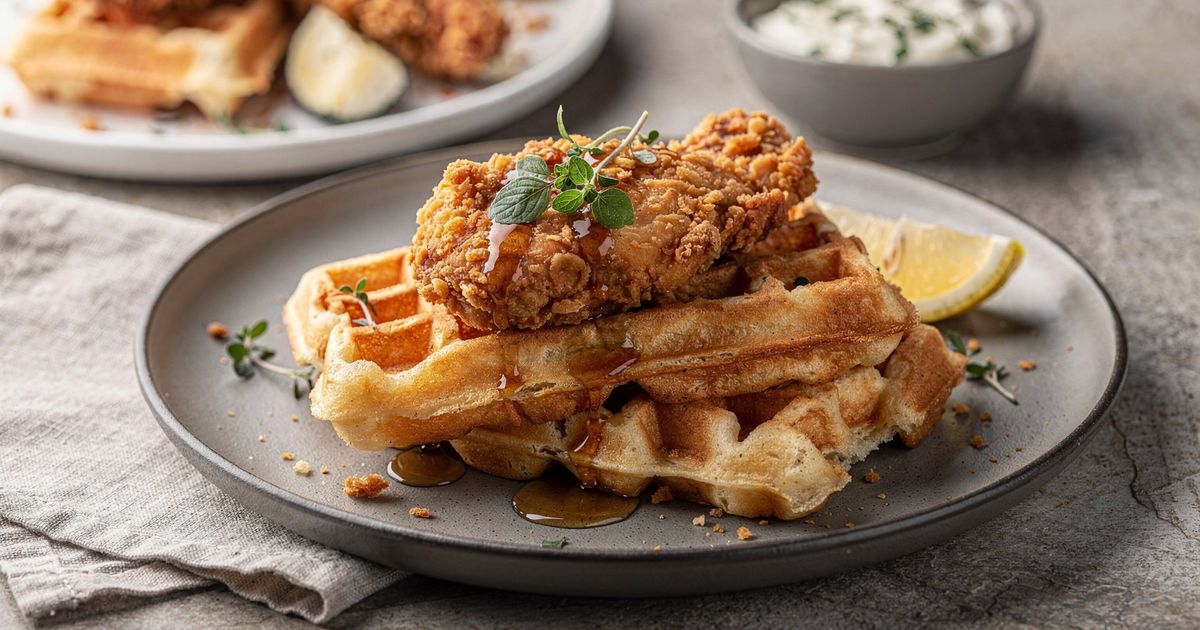
- Prep
- 20 min
- Cook
- 25 min
- Total
- 45 min
- Serves
- 4
Ingredients
What you’ll need — tap to tick off as you go
- 200 g
- 2 tsp
- 2 tsp
- 1 tsp
- 1 tsp
- 1 tsp
- 240 ml
- 30 g
- 360 ml
- 240 ml
- 1 tsp
Process
Timers built in · swap anything · ask as you cook
Pat the beef cube steaks dry with paper towels. Season both sides with 1 tsp salt and 1 tsp black pepper.
Set up three shallow dishes: one with 200 g all-purpose flour mixed with paprika, garlic powder, onion powder, remaining 1 tsp salt, and remaining 1 tsp black pepper; one with the 2 beaten eggs; one empty for the coated steaks.
Dredge each steak in the seasoned flour, shake off excess, dip into the beaten eggs, then press firmly into the flour again to coat completely. Let the coated steaks rest on a wire rack for 10 minutes so the coating adheres.
Heat 240 ml vegetable oil in a large heavy skillet over medium-high heat until it reaches 175°C. Fry the steaks in batches, 2 at a time, for 3–4 minutes per side until deep golden brown and cooked through. Transfer to a paper towel-lined plate and keep warm.
Carefully pour off all but 2 tbsp of the frying oil from the skillet, leaving the browned bits. Reduce heat to medium. Add 30 g unsalted butter and whisk in 2 tbsp of the leftover seasoned flour. Cook, whisking constantly, for 1–2 minutes until the mixture is smooth and lightly browned.
Slowly whisk in 360 ml whole milk and 240 ml beef broth. Bring to a simmer, scraping up the browned bits. Cook for 5–7 minutes, whisking often, until the gravy thickens enough to coat the back of a spoon. Stir in 1 tsp hot sauce if using. Taste and adjust salt and pepper.
Return the fried steaks to the skillet, spoon gravy over the top, and simmer for 2 minutes to heat through. Serve immediately with extra gravy on the side.
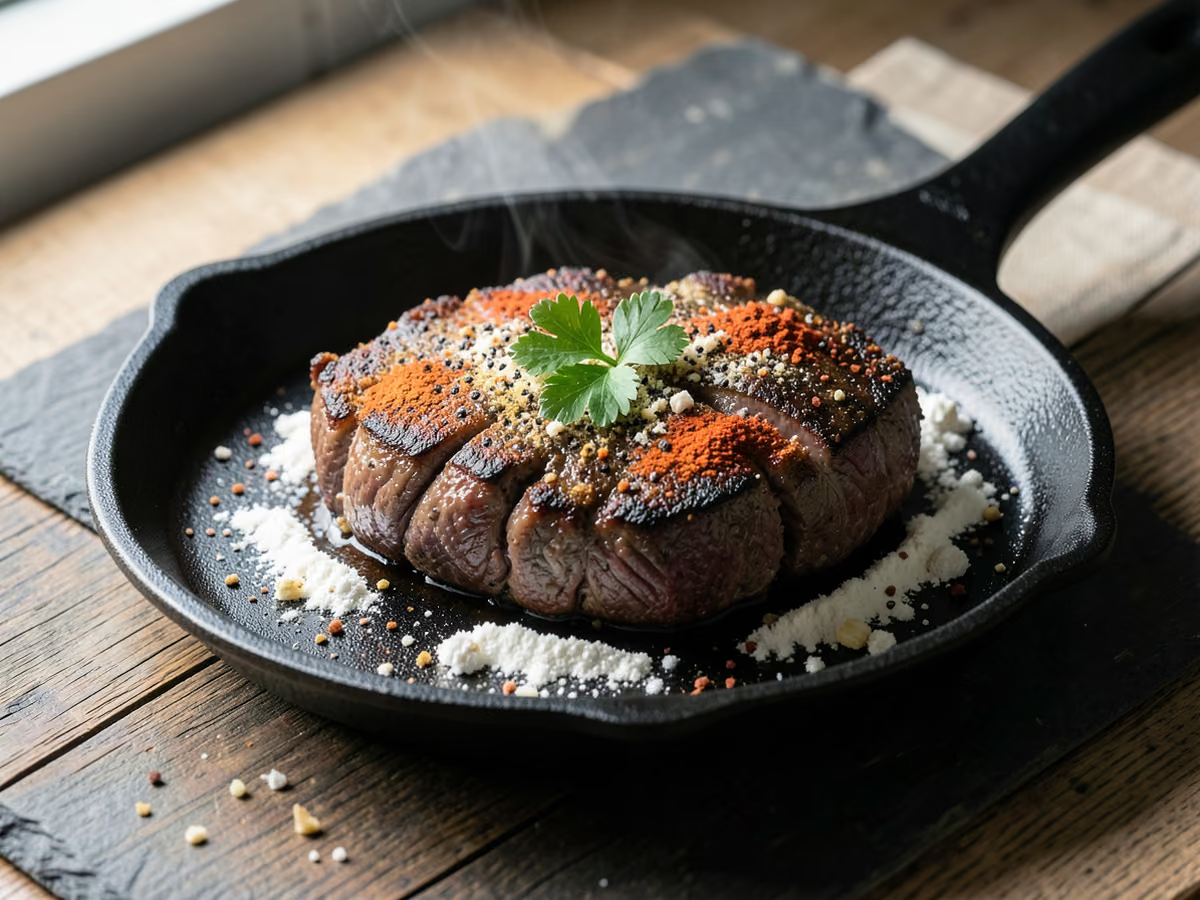
Kitchen notes
Kitchen notes
- The most common mistake is not letting the breaded steaks rest before frying; a 10-minute rest helps the coating set and prevents it from sliding off in the oil.
- Maintain the oil at 175°C; if it is too hot the crust burns before the beef cooks, and if too cool the coating absorbs oil and turns soggy. Use a thermometer or test with a flour pinch that should sizzle immediately.
- For a smooth gravy, whisk constantly when adding the milk and broth and scrape the browned bits from the pan; lumps form if liquid is added all at once without whisking.
- Cube steaks are already tenderized; do not pound them further or they may fall apart during frying.
Substitutions
- beef cube steaks→thinly sliced beef round or sirloin, pounded to 1 cm thickness
- whole milk→evaporated milk or unsweetened oat milk for dairy-free
- unsalted butter→additional vegetable oil or dairy-free margarine
- beef broth→vegetable broth for a lighter gravy
Storage & reheating
Store leftover country fried steak and gravy in an airtight container in the refrigerator for up to 3 days. To reheat, place in a skillet over medium-low heat with a splash of broth or milk, cover, and cook for 5-7 minutes until heated through; alternatively, microwave covered at 70% power for 2-3 minutes. For longer storage, freeze the steaks and gravy separately for up to 2 months; thaw overnight in the refrigerator before reheating.
FAQ
The questions we get asked most
Why did my coating fall off the steak?
The coating likely did not adhere properly because the steak was too wet or was not rested after breading. Pat the meat dry, use the flour-egg-flour sequence, and let the coated steaks rest for 10 minutes before frying. Also, do not flip the steaks too early; wait until the crust is set and golden before turning.
Can I use a different cut of beef?
Yes, you can use thinly sliced beef round, sirloin, or even venison. Pound the meat to an even 1 cm thickness so it cooks quickly and evenly. Cube steaks are convenient because they are already tenderized, but any lean, thin cut works.
How do I know when the steak is fully cooked?
The steak is done when the coating is deep golden brown and the internal temperature reaches 63°C for medium-rare or 71°C for medium. Since the meat is thin, it usually cooks through in 3-4 minutes per side. Cut into one steak to check for any pinkness if unsure.
Can I make the gravy without milk?
Yes, substitute the whole milk with unsweetened oat milk, almond milk, or evaporated milk for a dairy-free version. The gravy will be slightly less rich but still creamy. If using a thin plant milk, you may need to simmer a bit longer to thicken.
Why is my gravy lumpy?
Lumps form when the flour is not cooked into the fat properly or when the liquid is added too quickly. After adding the flour to the pan drippings, whisk constantly for 1-2 minutes to cook out the raw flour taste. Then add the milk and broth in a slow, steady stream while whisking vigorously.
Can I prepare this dish ahead of time?
You can bread the steaks up to 4 hours in advance and keep them refrigerated on a wire rack. Fry them just before serving for the crispiest texture. The gravy can be made up to 2 days ahead and reheated gently with a splash of milk or broth to loosen it.
What do I serve with country fried steak?
Classic sides include mashed potatoes, green beans, corn on the cob, or biscuits. The gravy is also delicious spooned over the potatoes. A simple side salad with a tangy vinaigrette helps cut through the richness.
Ask KitchenMind about this recipe
Tell it what’s different tonight — it works within the actual recipe.