Galaktoboureko
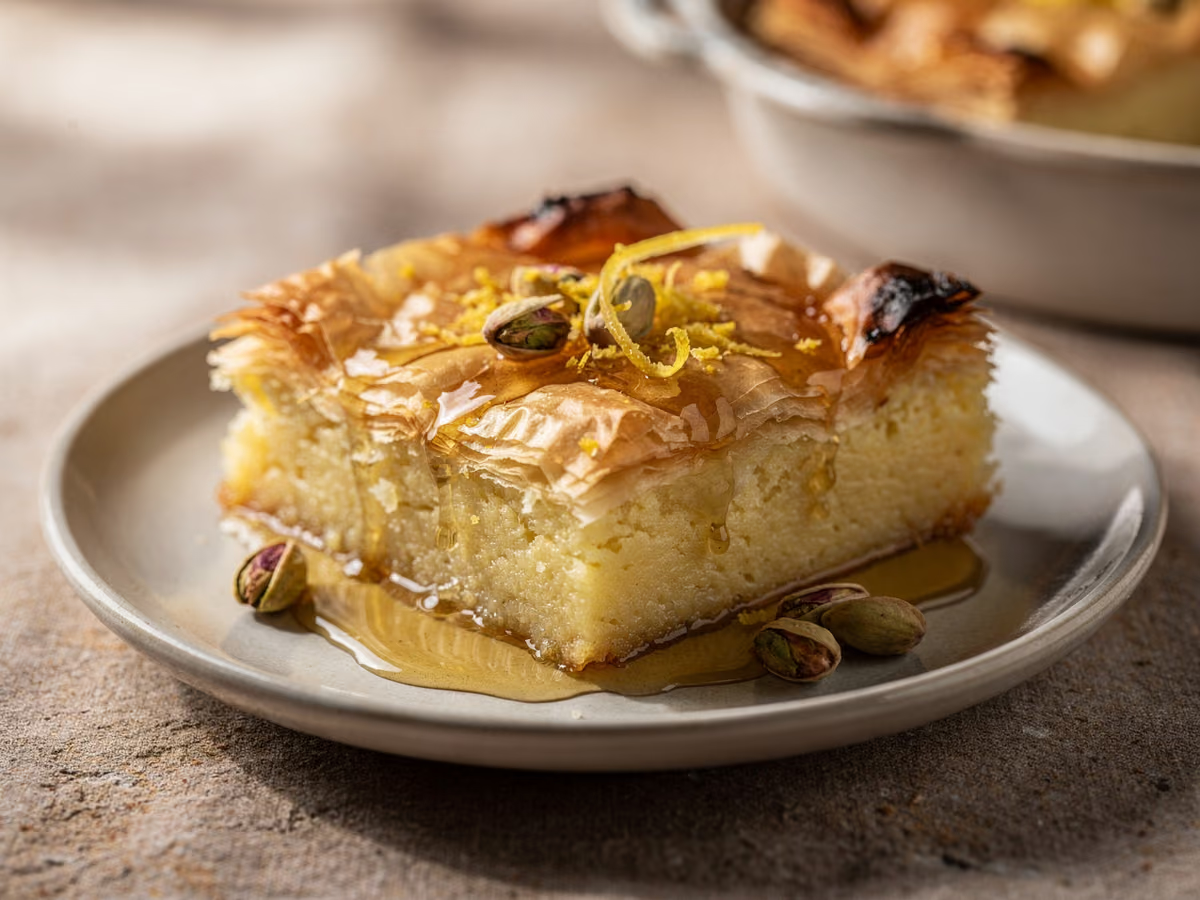
Layers of phyllo and semolina custard, baked until the edges crisp and the center barely sets, then soaked in honey syrup. A 12-serving dessert worth the 35 minutes of prep.
- Prep
- 35 min
- Cook
- 60 min
- Total
- 95 min
- Serves
- 12
Ingredients
What you’ll need — tap to tick off as you go
- 375 g
- 200 g
- 1000 ml
- 150 g
- 450 g
- 2 tsp
- 1 pinch
- 200 ml
- 2 tbsp
Process
Timers built in · swap anything · ask as you cook
Thaw the phyllo dough in the fridge overnight and bring it to room temperature for 1 hour before starting. Melt the unsalted butter and keep it warm. Preheat the oven to 180°C.
Make the syrup first: combine the 250 g granulated sugar, water, honey, lemon zest strips and lemon juice in a small saucepan. Bring to a boil over medium heat, simmer for 5 minutes until slightly thickened, then remove from heat and set aside to cool completely.
For the custard, heat 750 ml of the whole milk in a heavy saucepan over medium heat with the fine semolina, 200 g granulated sugar and a pinch of fine salt. Whisk constantly for 6 to 8 minutes until the mixture thickens to a smooth porridge that coats the whisk.
In a bowl, whisk the 4 eggs with the remaining 250 ml whole milk and the vanilla extract. Slowly ladle the hot semolina mixture into the egg mixture while whisking, then return everything to the saucepan.
Cook the custard over low heat, whisking constantly, for 3 to 4 minutes until it is thick, glossy and holds a trail behind the whisk. Do not let it boil hard or it will curdle. Remove from heat and cover the surface with a piece of parchment to stop a skin forming.
Brush a 23x33 cm baking dish with melted butter. Lay 8 phyllo sheets in the dish one at a time, brushing each sheet generously with melted butter and letting the edges hang over the sides of the dish.
Pour the warm custard over the phyllo base and spread it level with a spatula. Fold the overhanging phyllo edges back over the custard and brush them with butter.
Top with the remaining 12 phyllo sheets, brushing each with melted butter. Trim any overhang, then tuck the edges down inside the dish. Score the top layers only into 12 diamonds or squares with a sharp knife.
Bake at 180°C for 45 to 50 minutes until the top is deep golden brown and crisp. If the top browns too fast, cover loosely with foil.
Remove from the oven and immediately ladle the cooled syrup evenly over the hot galaktoboureko, especially along the scored lines. Let it stand at room temperature for at least 4 hours, ideally 6, so the syrup soaks in and the custard sets before slicing.
Kitchen notes
Kitchen notes
- The most common mistake is pouring hot syrup over hot pastry: the phyllo turns soggy instead of staying crisp. Always cool the syrup completely while the pie comes straight from the oven.
- The custard is ready when a whisk drawn through it leaves a clear trail that closes slowly, and it should mound softly on the whisk. If it is still runny, keep whisking over low heat for another minute.
- Keep the phyllo under a damp clean towel while you work; dry sheets crack and tear. Brush butter all the way to the edges of every sheet so the layers separate and crisp.
- Score the top phyllo before baking, not after, so the syrup penetrates the cuts and the portions release cleanly without shattering the crust.
Substitutions
- fine semolina→cornstarch (use 120 g) for a gluten-free custard
- honey→date syrup or maple syrup
- whole milk→full-fat oat milk for a dairy-free version, plus plant butter for the phyllo
- lemon→1 small orange for zest and juice
Storage & reheating
Store covered in the refrigerator for up to 4 days; the phyllo softens over time but the flavor deepens. For the crispest texture, keep it at cool room temperature for 1 day only. To serve from the fridge, let portions sit at room temperature for 30 minutes, or warm individual slices in a 150°C oven for 8 to 10 minutes. Freezing is not recommended because the custard weeps and the phyllo loses its snap.
FAQ
The questions we get asked most
Why is my galaktoboureko soggy instead of crisp?
The syrup was poured while it was still hot, or the pie was covered before it cooled. The syrup must be completely cool when it hits the hot pastry, and the dish should stay uncovered for at least 4 hours so steam escapes and the phyllo stays flaky.
Why did my custard turn watery or curdle?
The eggs were added to a boiling semolina mixture too quickly, or the custard was cooked over high heat after the eggs went in. Temper the eggs by whisking in hot semolina gradually, then keep the heat low and stir constantly until the custard coats the whisk.
Can I make galaktoboureko ahead of time?
Yes. Bake it, syrup it and let it set, then refrigerate covered for up to 1 day. Bring it to room temperature for 30 minutes before serving, or warm slices at 150°C for 8 to 10 minutes to soften the phyllo.
How long does galaktoboureko keep in the fridge?
It keeps covered in the refrigerator for up to 4 days. The phyllo will soften after the first day, which many people prefer, but the flavor stays good. Do not leave it at room temperature for more than 2 hours.
Can I use cornstarch instead of semolina?
Yes, use 120 g cornstarch in place of the 150 g fine semolina, and cook the custard the same way until it thickens. Cornstarch makes the filling slightly glossier and softer, and it also makes the dessert gluten-free if your phyllo is gluten-free.
How do I know when the custard is fully set?
The custard should hold a clean trail behind a whisk and mound softly, and after baking and syruping it should slice without flowing. If a cut slice slumps, chill the whole dish for 2 hours before serving; the cold sets the custard firmly.
Can I freeze galaktoboureko?
Freezing is not recommended. The custard releases water as it thaws, which makes the phyllo wet and gluey, and the texture never fully recovers. If you must, freeze unbaked and bake from frozen at 170°C, adding 15 minutes, but the result is noticeably softer.
Ask KitchenMind about this recipe
Tell it what’s different tonight — it works within the actual recipe.