- Prep
- 25 min
- Cook
- 20 min
- Total
- 45 min
- Serves
- 12
Ingredients
What you’ll need — tap to tick off as you go
- 320 g
- 80 g
- 150 ml
- 100 ml
- 1 tsp
Process
Timers built in · swap anything · ask as you cook
Preheat the oven to 200°C and place a rack in the lower-middle position. Lightly grease a 12-hole standard muffin tin or line it with paper cases.
In a heatproof jug, stir the caster sugar into the hot water until completely dissolved, then leave to cool for 5 minutes.
In a separate bowl, whisk the eggs, evaporated milk and vanilla extract just until combined, then pour in the cooled sugar water and whisk gently.
Strain the custard through a fine sieve into a jug, then skim off any foam with a spoon. Let it rest while you shape the pastry.
Roll the puff pastry on a lightly floured surface to about 3 mm thick, then cut out 12 rounds with a 9 cm cutter.
Press each pastry round into a muffin hole, easing it up the sides so the rim sits just above the edge. Chill the lined tin for 10 minutes.
Pour the custard into the pastry shells, filling each about three-quarters full, no higher.
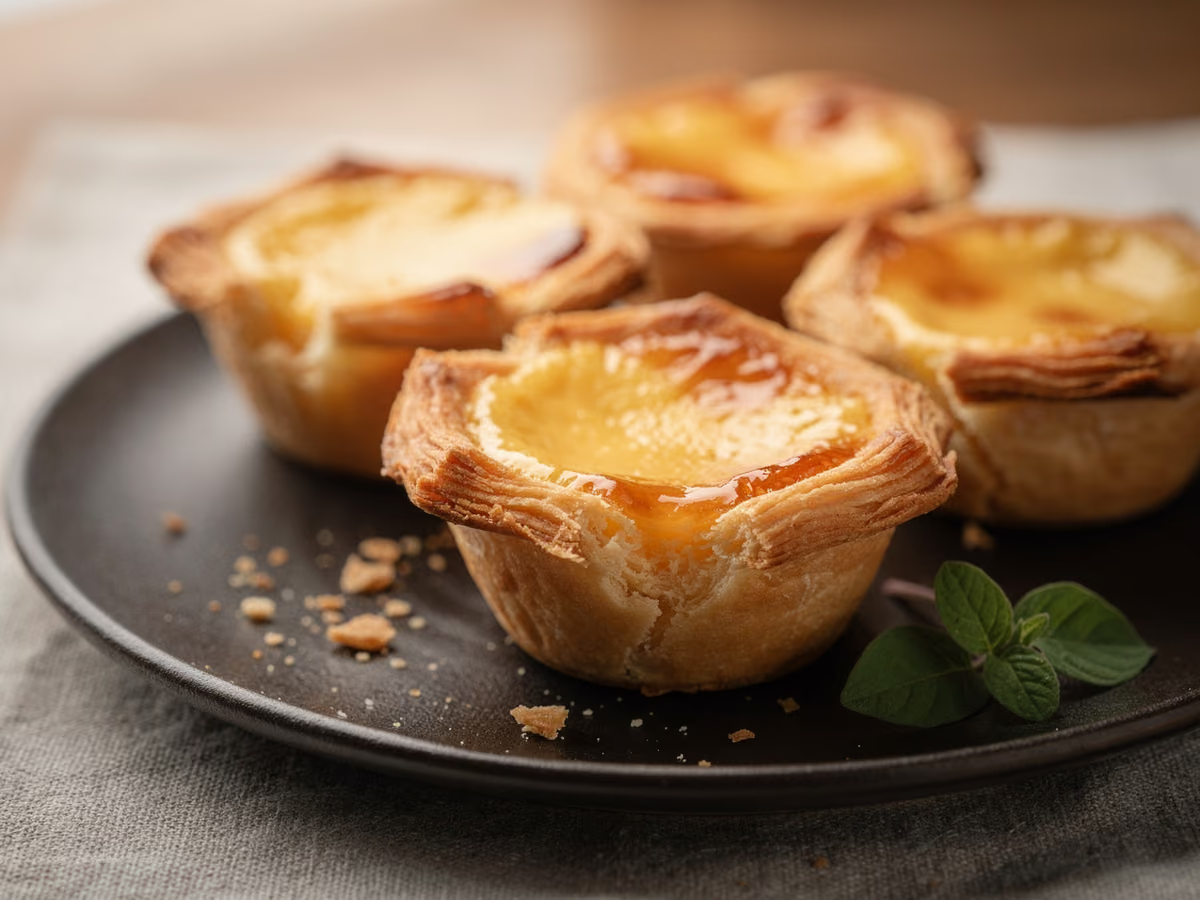
Bake for 18 to 20 minutes, until the pastry is puffed and golden and the custard is set at the edges but still wobbles slightly in the center.
Cool in the tin for 5 minutes, then lift the tarts onto a wire rack. Serve warm or at room temperature.
Kitchen notes
Kitchen notes
- The most common mistake is overbaking: the custard should still jiggle like set jelly in the middle when you pull the tin out, because it keeps cooking in the hot pastry.
- Straining the custard and skimming the foam is what gives the tarts their glassy, smooth top; skipping this leaves bubbles and a scrambled texture.
- Chilling the pastry-lined tin for 10 minutes before filling stops the shells from slumping and keeps the layers distinct.
- If your oven runs hot, bake at 190°C and check at 16 minutes; a custard that puffs and cracks has gone too far.
Substitutions
- evaporated milk→whole milk plus 1 tbsp milk powder for a slightly lighter custard
- caster sugar→granulated sugar blitzed briefly in a blender
- puff pastry→shortcrust pastry for a crisper, more cookie-like shell
Storage & reheating
Cool the tarts completely, then store in an airtight container in the fridge for up to 3 days; the pastry softens over time, so they are best within 24 hours. To reheat, place on a baking tray in a 160°C oven for 5 to 6 minutes, or until the pastry re-crisps and the custard is just warm. Do not microwave, as the pastry turns rubbery. For longer storage, freeze baked tarts in a single layer for up to 1 month and reheat from frozen at 170°C for 10 to 12 minutes.
FAQ
The questions we get asked most
Why did my egg tart custard turn out rubbery or watery?
Rubbery custard comes from overbaking or from whisking too much air into the eggs. Watery custard usually means the eggs were undercooked or the custard was not strained. Bake until the edges are set and the center still wobbles, and always strain the mixture before filling.
Can I use condensed milk instead of evaporated milk?
Condensed milk is much sweeter and thicker, so it will change both the texture and the sweetness. If you only have condensed milk, use 60 ml and reduce the caster sugar to 40 g, then top up with 40 ml whole milk. The custard will be slightly denser but still work.
How do I know when the egg tarts are done?
The pastry should be puffed and golden brown, and the custard should look set around the rim but still jiggle gently in the center when you nudge the tin. A knife inserted 1 cm from the edge should come out clean. They firm up as they cool, so pull them out while the middle is still soft.
Can I make Hong Kong egg tarts ahead of time?
You can prepare the custard and chill it for up to 24 hours, and you can line the muffin tin with pastry and chill it overnight. Bake them fresh for the best result. Baked tarts can be made a day ahead and reheated at 160°C for 5 to 6 minutes.
Why is my puff pastry soggy on the bottom?
Sogginess happens when the custard is poured into cold pastry and baked too low, or when the pastry is not chilled before filling. Chill the lined tin for 10 minutes, preheat the oven fully to 200°C, and bake on a lower rack so the base gets direct heat. A metal muffin tin conducts heat better than a silicone one.
Can I freeze Hong Kong egg tarts?
Yes, baked tarts freeze well for up to 1 month. Cool them completely, freeze in a single layer, then transfer to a freezer bag. Reheat from frozen at 170°C for 10 to 12 minutes. The custard may weep slightly after thawing, so reheat rather than thaw at room temperature.
Can I use a different pastry for the shells?
Puff pastry gives the classic flaky, layered shell, but shortcrust pastry works if you prefer a crisper, more biscuit-like base. If using shortcrust, blind-bake the empty shells for 8 minutes at 190°C before adding the custard, then bake for a further 12 to 14 minutes.
Ask KitchenMind about this recipe
Tell it what’s different tonight — it works within the actual recipe.