- Prep
- 15 min
- Cook
- 75 min
- Total
- 90 min
- Serves
- 8
Ingredients
What you’ll need — tap to tick off as you go
- 300 g
- 180 g
- 300 ml
- 1 tbsp
- 1 tsp
Process
Timers built in · swap anything · ask as you cook
Grease a 20 cm round cake tin or heatproof bowl with 1 tsp of the neutral oil and line the base with baking paper.
Put the brown sugar and water in a small saucepan over medium heat and stir until the sugar has fully dissolved, about 3 minutes. Do not let it boil hard. Set aside to cool for 10 minutes.
Put the glutinous rice flour in a large bowl. Pour in the warm sugar water in three additions, whisking after each until you have a smooth, thick batter with no dry pockets.
Strain the batter through a fine sieve into the greased tin to remove any lumps, then smooth the top with a spatula.
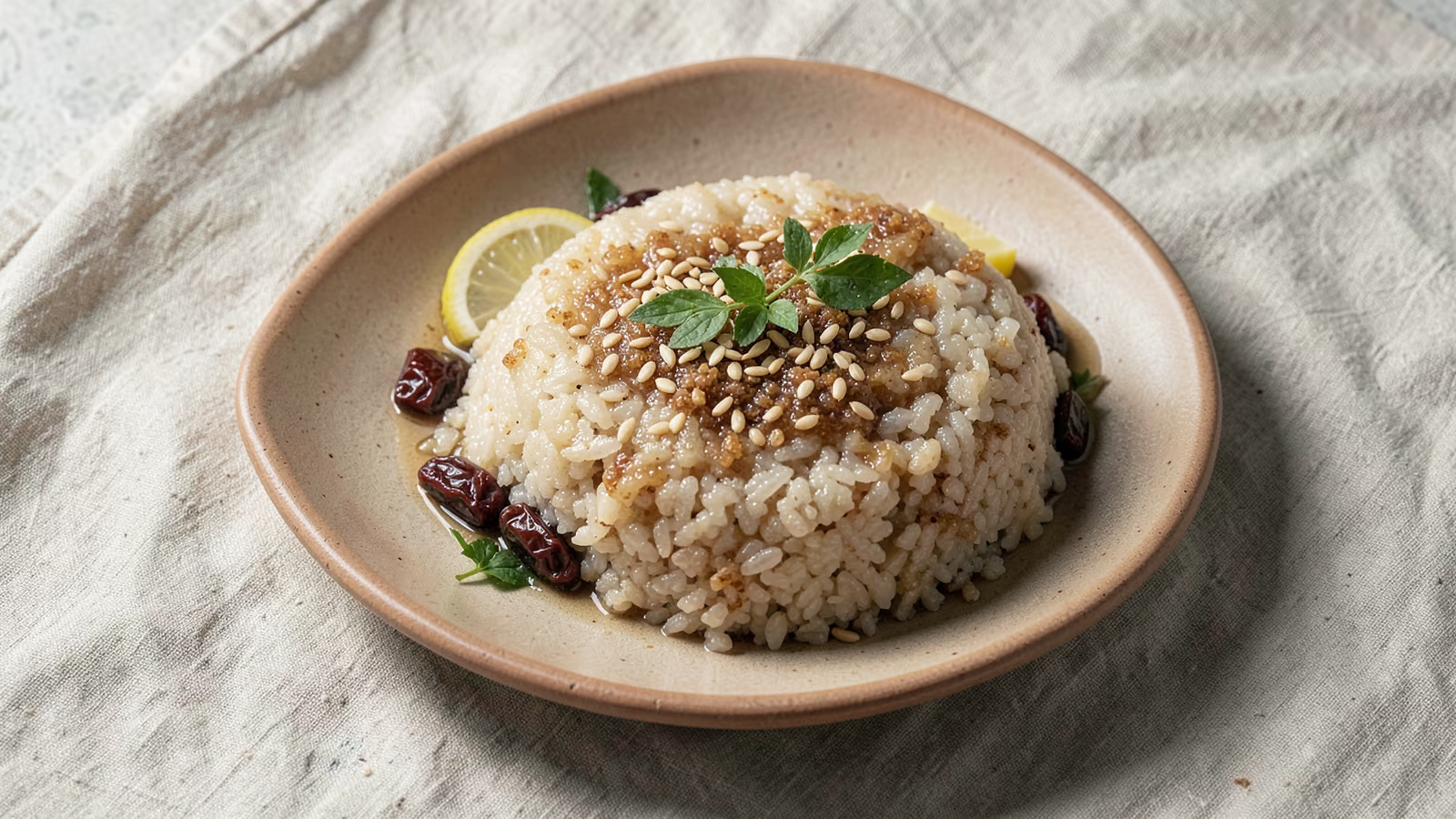
Scatter the toasted sesame seeds and press the red dates gently into the surface if using.
Set the tin in a steamer over simmering water, cover with a lid, and steam over medium heat for 60 to 70 minutes. Top up the steamer with hot water if it runs low.
The nian gao is done when the surface is glossy, slightly domed, and a skewer inserted in the centre comes out clean with no wet batter clinging to it.
Cool completely in the tin at room temperature for at least 4 hours or overnight until firm enough to slice.
To serve, cut into 1 cm slices and fry in the remaining oil in a non-stick pan over medium heat for 2 minutes per side until golden and crisp at the edges.
Kitchen notes
Kitchen notes
- The most common mistake is under-steaming: a skewer must come out clean, and the top should look translucent and glossy rather than chalky white.
- Cool the cake completely before slicing. Warm nian gao is far too sticky to cut and will tear instead of holding a clean edge.
- Straining the batter is worth the extra minute; it removes flour lumps that otherwise stay dense and raw-tasting inside the finished cake.
- Keep the steamer water at a steady simmer, not a rolling boil, so condensation does not drip onto the surface and leave pockmarks.
Substitutions
- brown sugar→palm sugar or dark muscovado for a caramel note
- water→coconut milk for a richer, creamier version
- red dates→dried goji berries or candied winter melon
Storage & reheating
Wrap the cooled nian gao tightly in cling film or keep it in an airtight container in the fridge for up to 2 weeks; it also freezes well for up to 3 months, sliced and separated with baking paper. To reheat, pan-fry slices straight from the fridge in a lightly oiled non-stick pan over medium heat for 2 minutes per side, or steam whole pieces for 10 minutes until soft and sticky again.
FAQ
The questions we get asked most
Why is my nian gao still soft and gooey in the middle after steaming?
It was under-steamed or the steamer was not hot enough. Return it to a simmering steamer for another 15 to 20 minutes and test again with a skewer; it should come out clean with no wet batter. A wider, shallower tin also steams through faster than a deep bowl.
Can I use regular rice flour instead of glutinous rice flour?
No. Regular rice flour contains no sticky starch, so the cake will set hard and crumbly instead of chewy. Glutinous rice flour, also labelled sticky rice flour, is the only flour that gives nian gao its characteristic stretch.
How do I stop nian gao from sticking to the tin?
Grease the tin generously with neutral oil and line the base with baking paper. If you use a bamboo steamer basket, line it with greased banana leaf or parchment. Once cooled, run a thin flexible spatula around the edge before turning the cake out.
Can I make nian gao ahead of time?
Yes, it is best made a day ahead. Steam it, cool it completely, then refrigerate overnight; the firmer texture makes slicing much easier. It keeps for up to 2 weeks in the fridge, so you can steam it well before you plan to serve it.
Why did my nian gao crack on top?
Cracking usually means the batter was too dry or the heat was too high. Use the full 300 ml of water, keep the steamer at a steady simmer rather than a rolling boil, and cover the tin loosely with foil if the surface starts to dry out.
Can I fry nian gao without it sticking to the pan?
Use a non-stick pan with a thin film of oil over medium heat, and do not crowd the slices. Let each slice sit undisturbed for 2 minutes before flipping so a crust forms. If the slices are very sticky, dip them lightly in beaten egg or cornstarch first.
Is nian gao supposed to be eaten warm or cold?
It is eaten warm, either freshly steamed and soft or sliced and pan-fried until crisp. Straight from the fridge it is firm and chewy, which is fine for slicing but not ideal for eating, so always reheat before serving.
Ask KitchenMind about this recipe
Tell it what’s different tonight — it works within the actual recipe.