Lamb Osh Plov
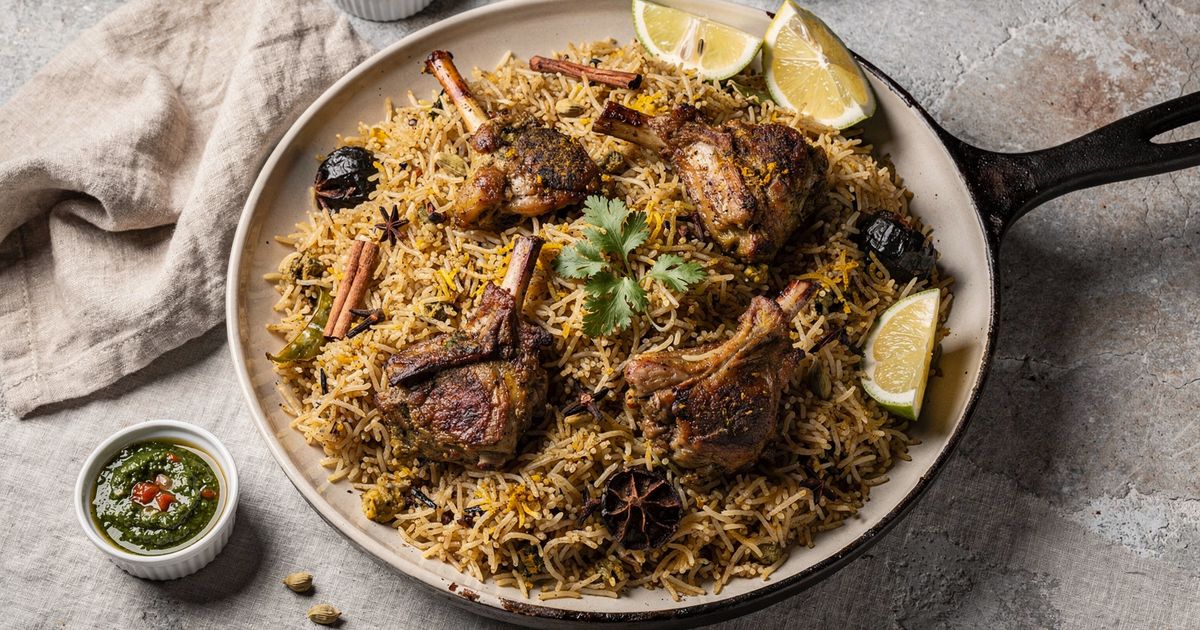
Lamb osh plov is Uzbekistan's national one-pot rice dish: 800 g of lamb shoulder and 500 g of rice layered with matchsticks of carrot, whole garlic, cumin, and the optional sweetness of raisins. Nothing is stirred once the rice goes in; the grains steam above the seasoned broth and finish light and separate instead of sticky. The hands-on work is roughly 30 minutes of browning and measuring, then a 45-minute simmer and a covered finish do the rest. It is a dish built for a table full of people, and it serves 6.
- Prep
- 30 min
- Cook
- 90 min
- Total
- 150 min
- Additional time
- 30 min
- Serves
- 6
Ingredients
What you’ll need — tap to tick off as you go
- 800 g
- 500 g
- 500 g
- 2 cloves
- 120 ml
- 1 tbsp
- 1 tsp
- 1 tsp
- 2 tsp
- ½ tsp
- 1 l
- 50 g
Process
Timers built in · swap anything · ask as you cook
Rinse the 500 g of rice under cold water, swishing the grains with your fingers, until the water runs clear instead of milky. Cover it with fresh cold water and soak for 30 minutes, then drain it thoroughly in a sieve. Rinsing off the surface starch keeps the finished grains separate, and a well-drained soak means you bring no extra water into the pot.
Heat the 120 ml of vegetable oil in a heavy 5 liter pot over medium-high heat. Add the 2 thinly sliced onions and cook for about 5 minutes, stirring now and then, until they are golden at the edges and soft in the middle. Do not rush this: the onions set the sweetness and color the whole pot will take.
Add the 800 g of lamb cubes and sear for about 8 minutes, turning until every side is browned and crusted; work in two batches if the pot looks crowded. Stir in 1 tbsp ground cumin, 1 tsp ground coriander, 1 tsp sweet paprika, 2 tsp salt, and 0.5 tsp black pepper, then cook for 1 minute, until the spices smell toasted and darken the oil.
Pour in 1 liter of water and bring it to a boil, scraping the browned bits off the bottom of the pot. Reduce the heat to low, cover, and simmer gently for 45 minutes, until a cube of lamb gives way with almost no resistance to a fork. Keep the surface only trembling; a hard boil tightens the meat instead of softening it.
Add the 500 g of carrot matchsticks, the 2 whole garlic cloves, and the 50 g of raisins if using, and spread them into the liquid. Simmer uncovered for 10 minutes, until the carrots bend without snapping. This is your last chance to taste: the broth should be a little saltier than you want the finished plov.
Spread the drained 500 g of rice over the top in one even layer and do not stir it into the pot, however tempting. Cook over medium heat for about 15 minutes, until the visible liquid is gone and small steam holes open across the surface; to check the bottom, push a spoon handle through it and look for steam, not water.
Reduce the heat to the lowest setting, cover the pot tightly, and leave it alone for 20 minutes. Turn off the heat and let the pot stand, still covered, for 10 minutes more. During this quiet stage the steam finishes the centers of the grains; lifting the lid early lets that steam escape and leaves the middle underdone.
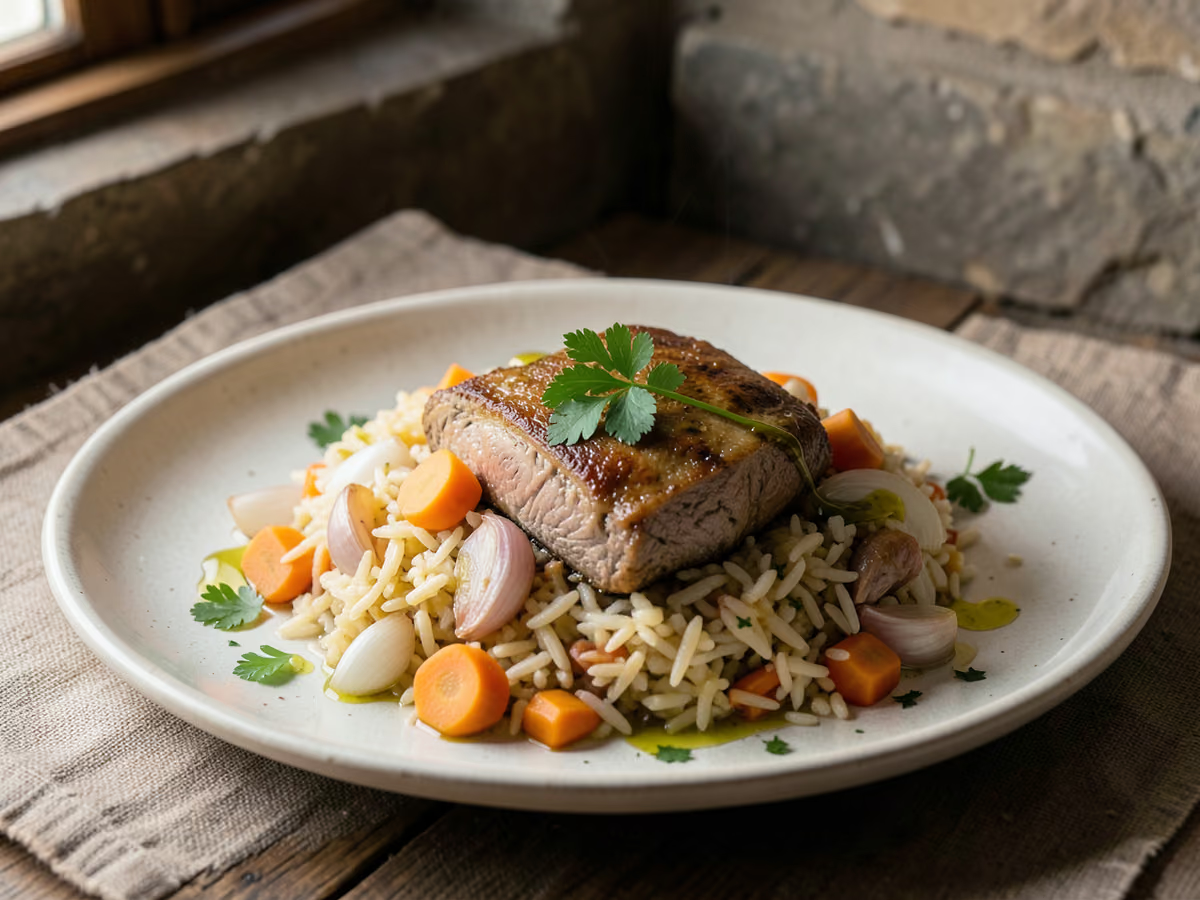
Fluff the rice with a fork and fold it gently from the bottom up together with the lamb, carrots, and garlic, lifting rather than stirring so the grains stay whole. Pile everything onto a warm platter and serve hot, with the garlic cloves on top for anyone who wants to mash one into their rice.
Why this recipe works
Plov works because it is built in layers rather than stirred. The onions and lamb cook down first into the zirvak, the seasoned base; once the carrots soften in it, the drained rice goes on top as one level layer and stays untouched while the liquid below absorbs into it and the rest steams under the lid, so the grains never knock against each other. Rinsing the rice until the water runs clear washes off the loose surface starch that would glue the grains, and the 120 ml of oil leaves them slick enough to slip apart. The covered 20-minute finish and the 10-minute rest even out the moisture, so the top is as tender as the bottom.
Equipment
- 5 liter heavy-bottomed pot or Dutch oven with a tight-fitting lid
- Wooden spoon and a flat spatula
- Fine-mesh sieve or colander for rinsing and draining the rice
- Chef's knife and cutting board
- Measuring jug for the 1 liter of water, and measuring spoons
- Clean kitchen towel, for the loose-lid trick
- Large warm serving platter
- Instant-read thermometer (optional, for the 74°C reheat check)
Kitchen notes
Kitchen notes
- A full 30-minute soak lets the grains soften to the core so the covered stage finishes them evenly; rice that sat for only a few minutes stays chalky in the middle and forces you to keep the lid on longer than the pot wants.
- If your pot's lid does not sit tight, lay a clean kitchen towel over the rim and press the lid down on it; the cloth catches the condensation so drops never fall back onto the rice and wet the top layer.
- Once you find a rice that works, stay with it: devzira, basmati, and other long grains each drink the 1 liter differently, and the same pot and setting can turn out separate grains with one bag and a sticky mass with another.
- Before you cover the pot for the final steam, push a wooden spoon handle through the rice to the bottom in a few places; the little channels let steam move evenly and keep the base from trapping wet pockets.
- Cut the lamb and the carrots to the sizes the recipe gives, 3 cm cubes and thick matchsticks, so every piece cooks at the same rate; smaller pieces collapse into the rice, and oversized ones are still firm when the rice is ready.
Common mistakes
- Sticky, mushy plov: the rice was stirred after it went in, or too much liquid stayed in the pot and the grains boiled instead of steaming. Spread the rice in one level layer, never stir it again, and add no water during the covered stage; if the grains are swollen but still firm, the trapped steam is what finishes them, not more liquid.
- Bland, pale plov: the broth was under-salted before the rice went in, or the spices never hit hot oil. Taste the zirvak after the carrots and let it be a little too salty, since the rice takes salt with the liquid; bloom the cumin, coriander, and paprika for the full 1 minute so they fry in the oil rather than steam.
- A scorched bottom: too much heat under the tightly covered pot, or a thin pan that concentrates it. Use the lowest setting for the covered 20 minutes, with a heavy-bottomed pot and the towel under the lid; if a scorched smell appears, lift the pot off the heat and let it finish resting on a cold burner.
- Tough, dry lamb: the cubes were cut too small or a lean cut was used, and the simmer was cut short before the meat tenderized. Keep the 800 g of shoulder in 3 cm cubes, give it the full 45 minutes, and only then add the carrots; if a cube still resists a knife, simmer 10 minutes more.
- Sweet, collapsing carrots: they were diced or grated, or they stayed in beyond the 10 minutes. Cut thick matchsticks, keep them on the chunky side, and let them finish in the covered steam with the rice instead of boiling soft in the broth.
Serving suggestions
- Pile the plov onto one large warm platter the way it is served in Uzbekistan, lamb over the rice and garlic cloves on top, and let everyone help themselves from the middle.
- Green tea is the traditional drink with plov, served before, during, and after the meal; its clean bitterness cuts the richness of the lamb fat.
- A tomato and onion salad, the Uzbek achichuk, dressed with vinegar or lemon juice, or simply sliced cucumber and red onion, adds the fresh crunch the dish needs.
- Offer flatbread alongside to mop up the juices, and put the soft garlic and a pinch of extra cumin on the table for anyone who wants more.
Variations
- Bukharan direction: fold a handful of cooked chickpeas and an extra 50 g of mixed raisins and dried apricots in with the carrots for a sweeter, more festive plov; it is a different regional style, richer than the Tashkent version this recipe follows.
- Weeknight chicken version: use 800 g of boneless chicken thighs instead of lamb, brown them the same way, and move on to the carrots once they are just cooked through; lighter and quicker, and honest about being an adaptation.
- Chilli heat: tuck 1 or 2 whole dried chillies into the rice before the covered steam, as many cooks in Uzbekistan do, and fish them out before serving; they perfume the plov rather than making it hot.
Refrigerator
- RefrigeratorCool the plov quickly, spreading it into shallow containers so it is refrigerated within 1 hour, then keep it covered for up to 3 days. Rice is the cautious ingredient here: guidance for cooked rice is to eat it within 24 hours and never reheat it more than once, so treat the first day as the ideal and 3 days as the outside limit.
- ReheatingReheat only the portion you need, covered, with a splash of water, on the stove over low heat or in the microwave, until steaming hot all the way through; 74°C on a thermometer is the USDA figure for reheated leftovers. Do not reheat it more than once.
- FreezingThis freezes well: portion it into shallow containers, freeze for up to 3 months, then thaw in the fridge overnight and reheat once until steaming hot. The carrots soften slightly on thawing, while the lamb and rice come back close to fresh.
- Make aheadPlov is at its best fresh, but it reheats well, so you can cook it earlier the same day, cool it within the hour and refrigerate, then bring it back gently with a splash of water. Many cooks find it tastes even deeper the next day, once the spices and lamb fat have had time to settle.
Updated:
How this recipe was developed
- USDA FSIS safe minimum internal temperatures and leftovers guidance (lamb 63°C with a 3-minute rest; leftovers reheated to 74°C; refrigerate within 2 hours, eat within 3 to 4 days)
- NHS food safety guidance for storing and reheating rice (cool within 1 hour; refrigerated rice eaten within 24 hours; reheat only once, until steaming hot)
- BBC Good Food — Uzbek plov (zirvak layering, matchstick carrots, salted boiling stage, rice steamed undisturbed)
- GlobeNosh — Tashkent-style plov and Silk Road Chef plov troubleshooting (steam channels and towel under the lid; water-to-rice control against sticky plov)
Editorial references are kept internally for verification. This page makes no claim of external certification or professional testing.
FAQ
The questions we get asked most
Why did my osh plov turn out mushy?
Mushy plov almost always comes from too much water and too much movement: the grains were stirred after the rice went on, or extra water was added when the top looked dry. Keep the 1 liter, drain the soaked rice well, spread it level, and let the covered pot finish the job; as long as the grains have swollen and the surface looks dry, the steam inside is doing what it should, and adding more water is what turns plov into porridge.
Why is my plov bland?
It is almost always the broth, not the rice. The zirvak has to be seasoned before the rice goes in: taste it after the carrots and let it read a little too salty, because the rice pulls salt out of it as it drinks. Bloom the cumin, coriander, and paprika in the hot oil for 1 minute, and add the full 2 tsp of salt, with more to taste if the broth needs it.
How do I know when the lamb is tender?
Go by the fork, not the clock: after the 45-minute simmer, a 3 cm cube of shoulder should give way with almost no resistance when you press a fork into it, and cut without sawing. If it still feels tight, simmer it 10 minutes longer before the carrots go in; the covered rice stage that follows keeps it moist, so there is no risk in giving it that time.
Do I need a kazan to make plov?
No. A heavy-bottomed 5 liter pot or Dutch oven with a tight lid gives the same steady heat, and a clean towel under a loose lid makes up for the seal a kazan has. What does not work is a thin, light pan: it scorches the bottom of the rice before the center has steamed through.
Can I use brown rice instead of long-grain rice?
It works, but treat it as a different dish. Brown rice drinks far more water, so start with about 250 ml extra, and it needs roughly 20 minutes more covered time; the grains stay chewy and nutty rather than light and separate. The classic plov texture depends on a firm white long-grain or devzira.
What if I don't have yellow carrots?
Use ordinary orange carrots, the same 500 g cut into thick matchsticks; they are a little sweeter and the color shifts, but the dish is otherwise unchanged. Skip baby carrots, which collapse too fast, and do not grate or dice the carrots, because the matchstick cut is what keeps the zirvak and the rice in balance.
Can I make osh plov ahead of time?
Yes, and it may taste even better: cook it fully, cool it quickly and refrigerate, then reheat gently with a splash of water. The spices and lamb fat meld as it settles, and a covered reheat brings it back to steaming without drying the rice; just do not reheat it more than once.
Ask KitchenMind about this recipe
Tell it what’s different tonight — it works within the actual recipe.