Manakish Za'atar Flatbread
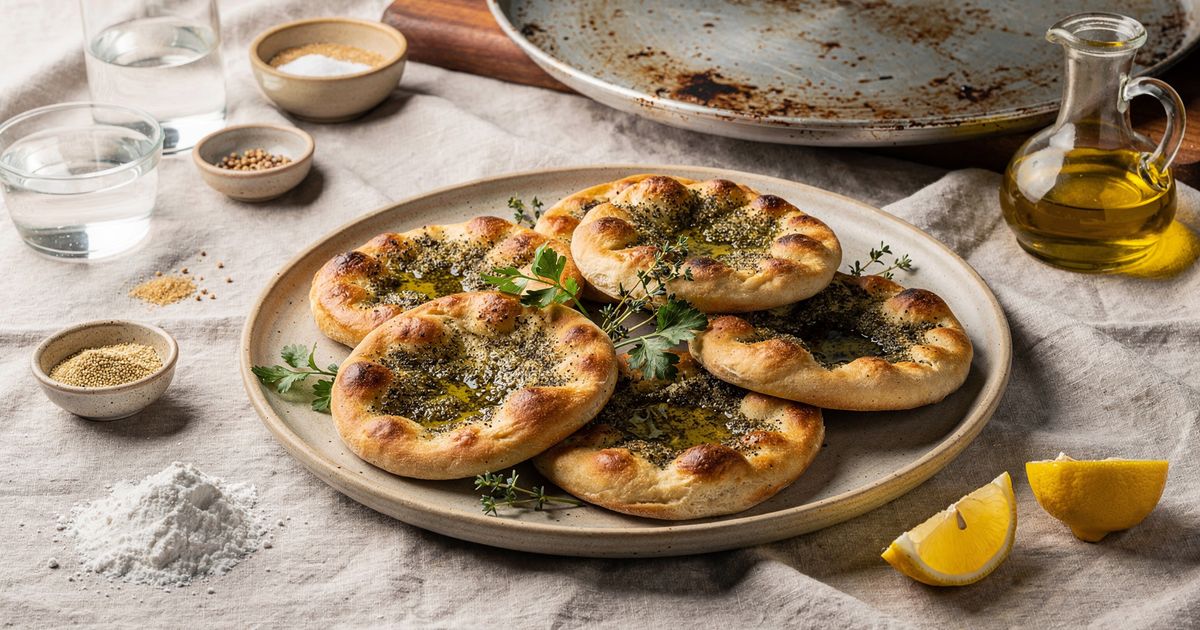
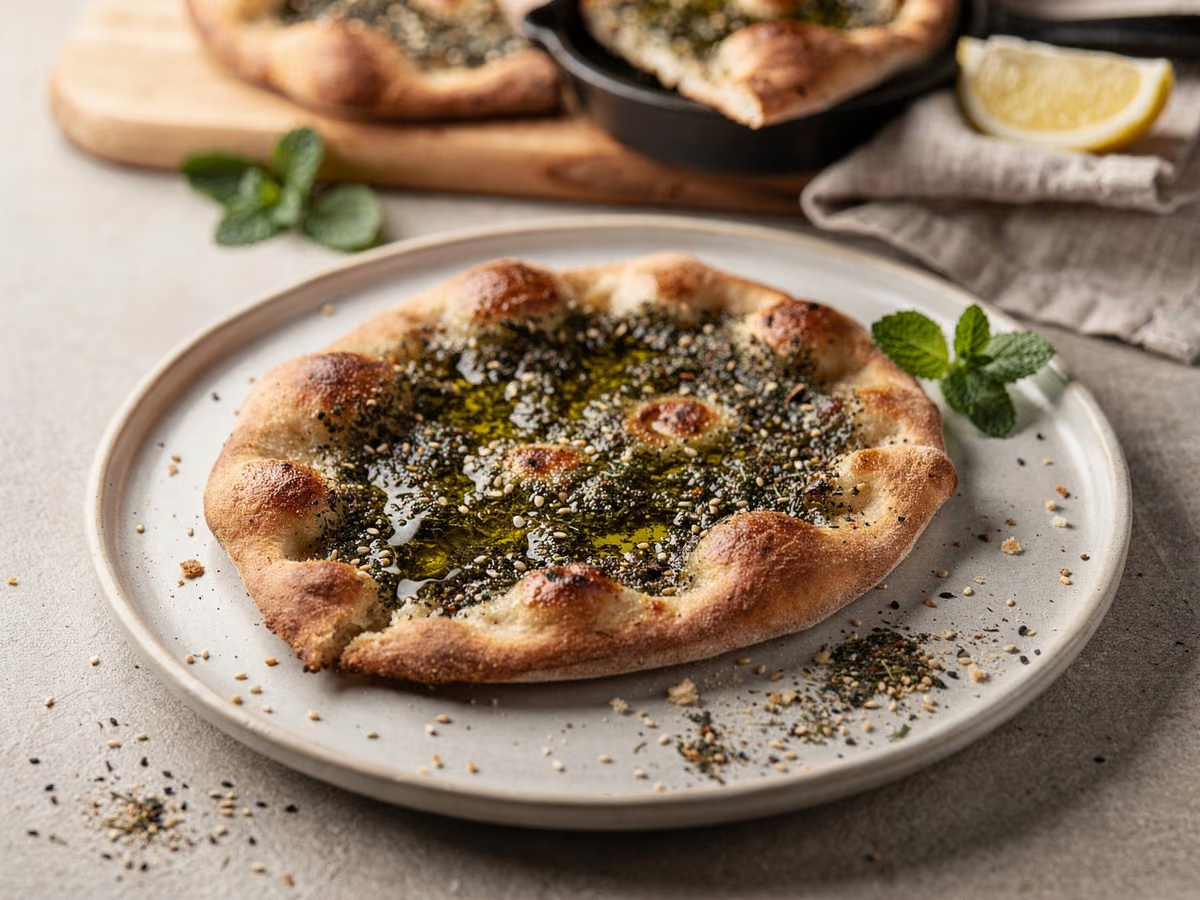
Manakish are the Levantine flatbreads a whole region eats for breakfast: soft rounds of yeasted dough, pressed with the fingertips and spread with za'atar loosened in olive oil, baked hard and fast until the edges puff and the topping sets. There is no filling and no complicated shaping — the dough mixes in minutes, rises for about an hour on its own, and each flatbread bakes in 5 to 7 minutes at 240°C. Prep is about 20 minutes, most of it hands-off.
- Prep
- 20 min
- Cook
- 15 min
- Total
- 95 min
- Additional time
- 60 min
- Serves
- 4
Ingredients
What you’ll need — tap to tick off as you go
- 300 g
- 1 tsp
- 1 tsp
- 1 tsp
- 180 ml
- 3 tbsp
- 3 tbsp
Process
Timers built in · swap anything · ask as you cook
In a large bowl, mix the 300 g flour, 1 tsp instant yeast, 1 tsp sugar and 1/2 tsp of the salt. Add the 180 ml warm water, about 40°C, and 1 tbsp of the olive oil, and stir with a wooden spoon until a shaggy dough forms and no dry flour is left at the bottom of the bowl. The water is ready when it feels comfortably warm on your wrist.
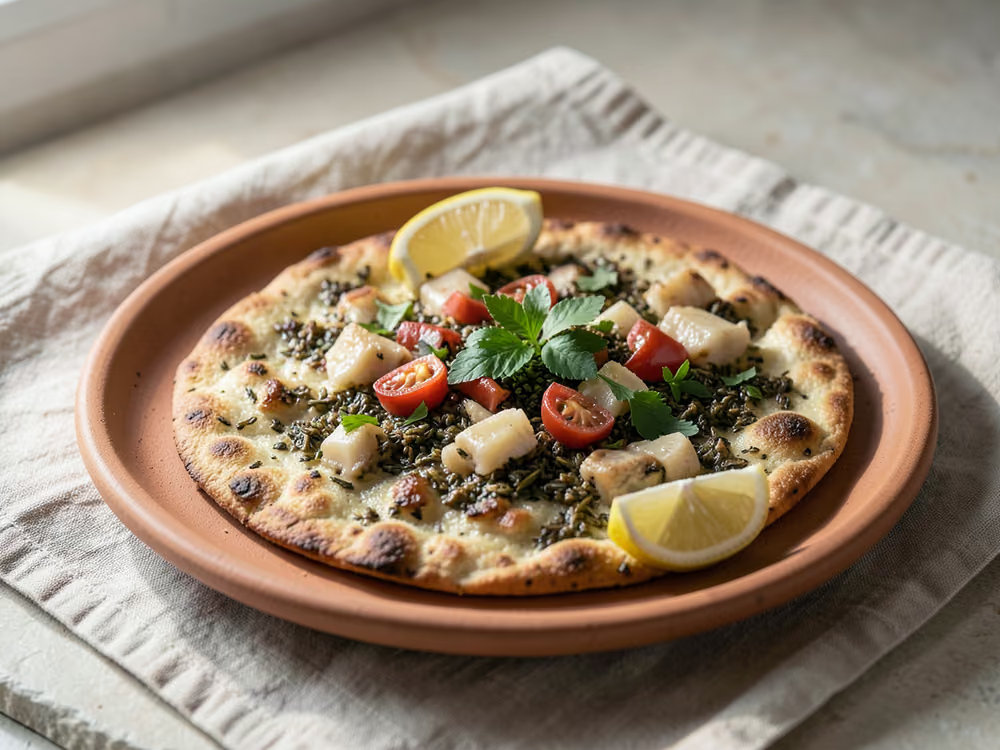
Turn the dough out onto a lightly floured surface and knead for about 8 minutes, until it is smooth and elastic. Add flour a teaspoon at a time only if it sticks badly, and if it feels dry and fights back, wet your hands rather than pouring water in. A soft, slightly tacky dough bakes into bread; a stiff one turns into a cracker.
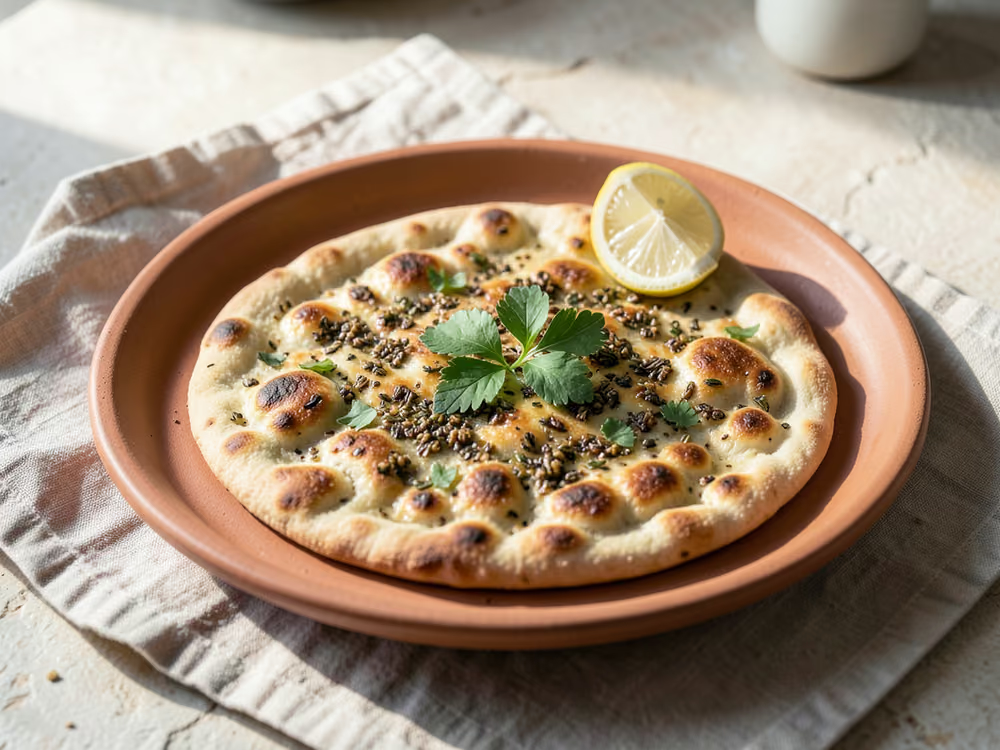
Lightly grease a clean bowl with olive oil, turn the dough in it to coat, cover with a damp cloth and leave it in a warm spot — 24 to 26°C is ideal — for about 1 hour, until doubled in size. Judge the dough rather than the clock: if it has not doubled, give it 15 more minutes.
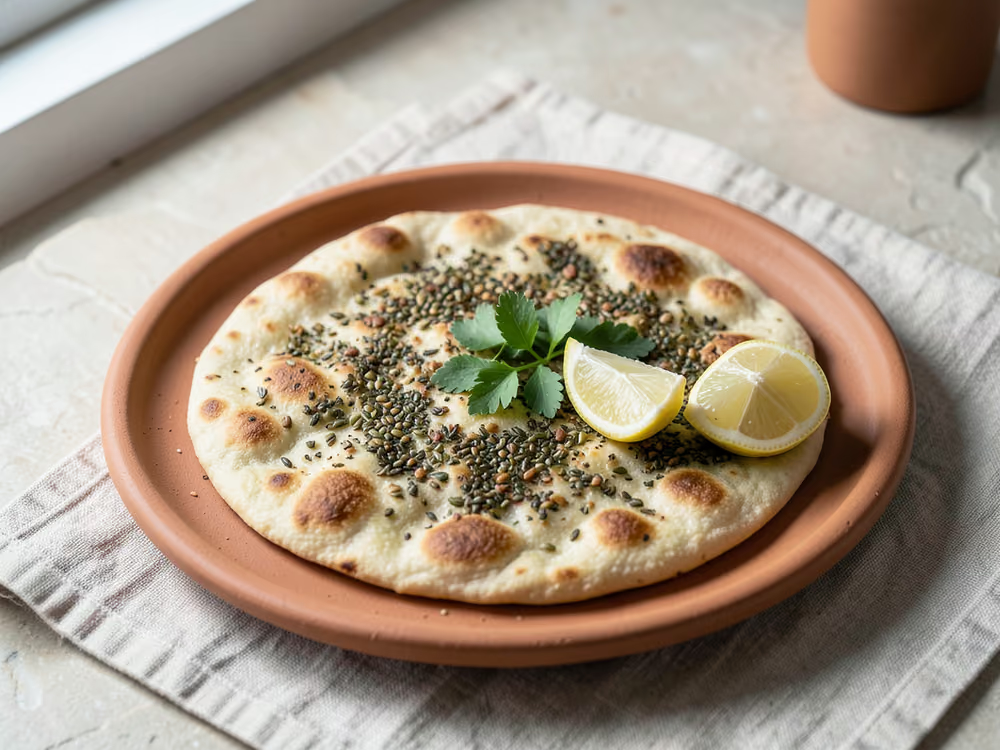
Put a baking sheet or pizza stone on a rack in the oven and preheat to 240°C. Let the surface heat through for at least 15 minutes, longer if you can: the moment the dough lands on a properly hot tray, its base sets, the edges puff and the bottom crisps. A lukewarm tray bakes pale, soft-bottomed flatbread.
In a small bowl, mix the 3 tbsp za'atar with the remaining 2 tbsp olive oil and the remaining 1/2 tsp salt to a spreadable paste. It should look like wet sand and hold a soft ridge when you draw the spoon through it; if it is dry and crumbly, add a few drops more oil, and if it sloshes, stir in a pinch more za'atar.
Punch down the risen dough and divide it into 4 equal pieces. On a lightly floured surface, roll each piece into a circle about 1/2 cm thick, turning the dough a quarter turn between strokes so the rounds stay even. Keep the pressure light: tearing the dough or pressing too hard knocks the air out of the crumb.
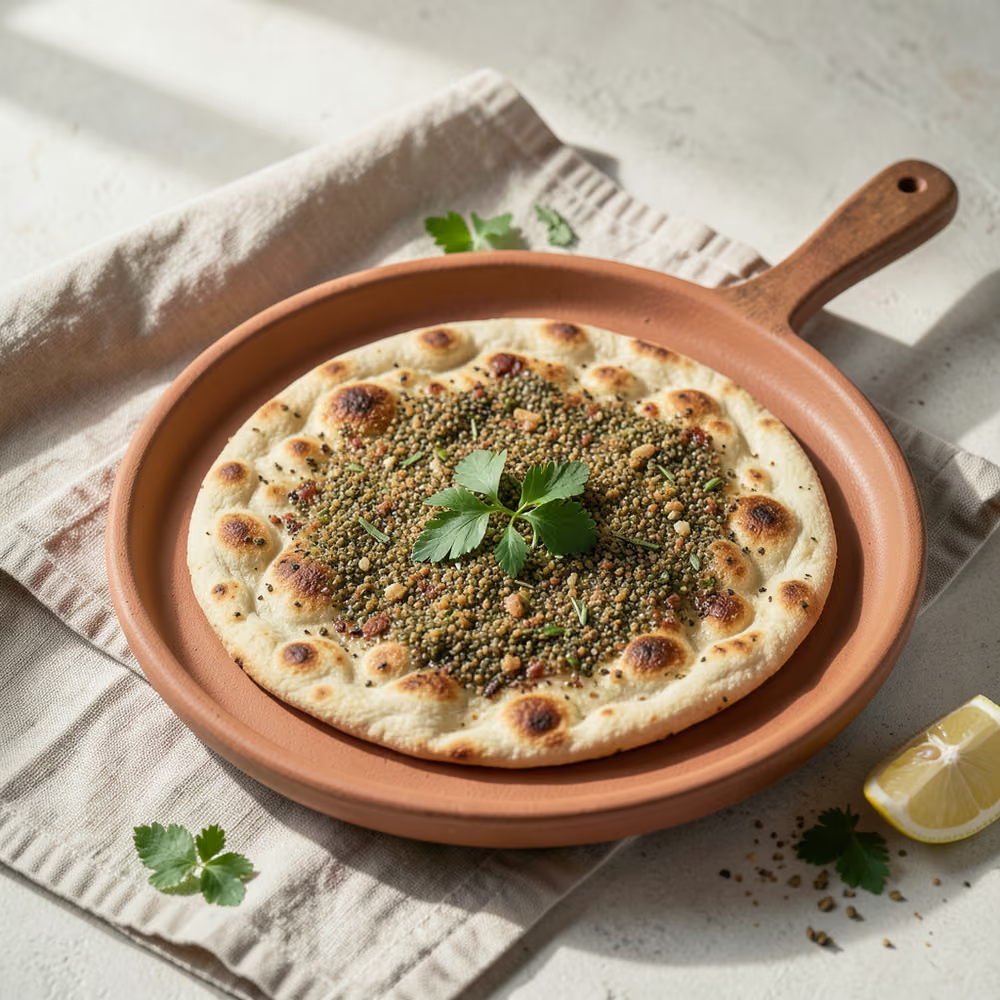
Spread a quarter of the za'atar mixture evenly over each dough circle, leaving a small border of bare dough around the edge. Keep the layer thin and even — that is what lets the bread bake through and the topping set, where a thick blanket traps steam and leaves the middle pale and soft.
Slide the flatbreads onto the hot baking sheet or stone and bake for 5 to 7 minutes, until the edges are golden and the bottoms are crisp. Bake one or two at a time if your surface is small, and watch closely after 5 minutes: at 240°C the thin dough goes from golden to burnt in under a minute.
Take the flatbreads out and serve them warm, either on their own or with fresh vegetables and olives. Manakish are at their best within about 10 minutes of the oven, while the bottom is still crisp and the za'atar smells of thyme and sesame; cool any extras on a rack so the steam escapes and the bases stay firm.
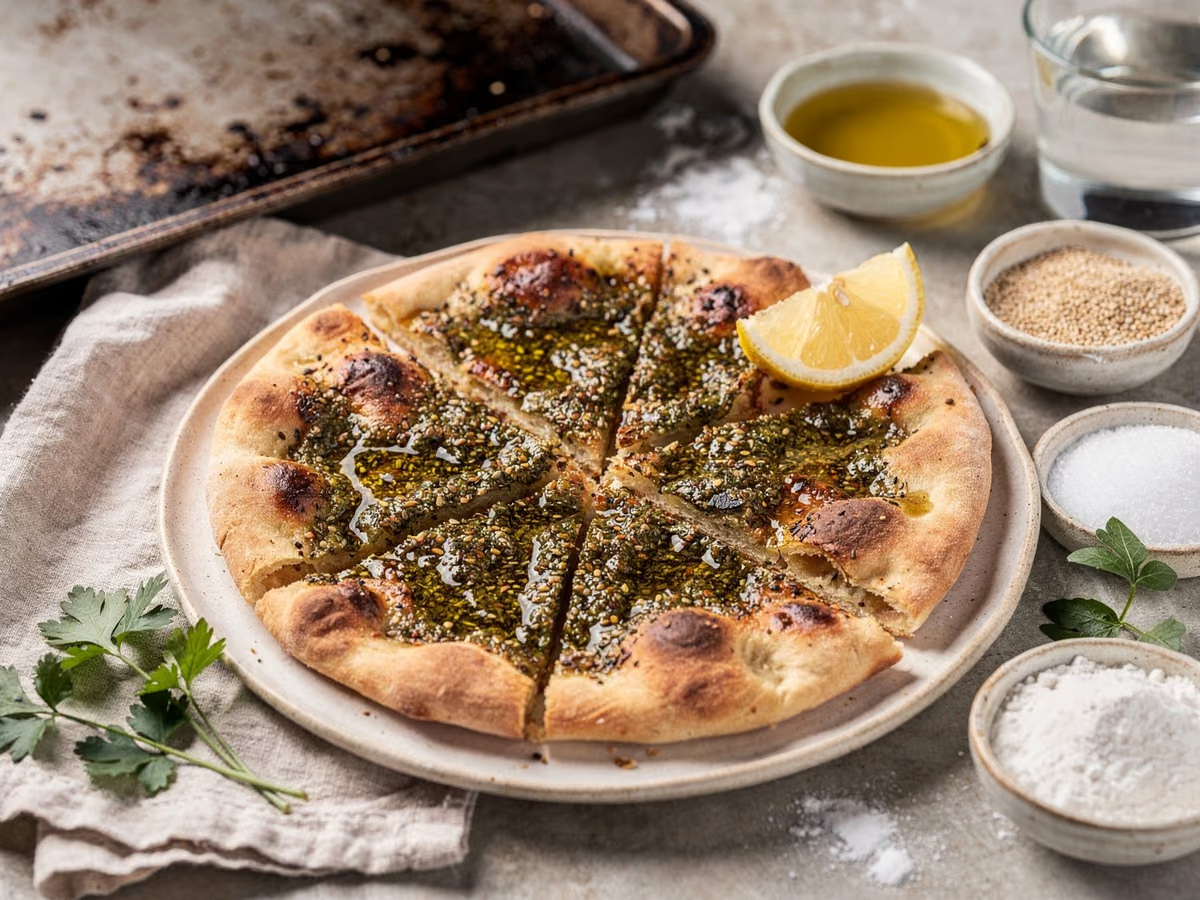
Why this recipe works
The method is built on two ideas. The first is the hot surface: a baking sheet or stone preheated to 240°C hits the dough with a burst of heat from below, so the base sets and crisps before the interior loses its moisture — bake on a cool tray and the flatbread dries towards a cracker instead. The second is the paste. Za'atar is a blend of dried thyme, sumac and toasted sesame, and its flavours need carrying: mixed with olive oil into a thin, spreadable layer, the topping works into the surface and bakes into a set, fragrant crust, while a thick blanket of paste traps steam under the oil and scorches the sesame before the centre cooks.
Equipment
- Large mixing bowl
- Wooden spoon
- Rolling pin
- Clean damp cloth
- Pizza stone or heavy baking sheet
- Parchment paper
- Wire rack
Kitchen notes
Kitchen notes
- Mix the za'atar paste while the oven heats: the few minutes it sits lets the sesame and sumac bleed into the oil, and the topping tastes rounder for it.
- Real manakish are dimpled, not smooth: press the rounds all over with your fingertips before topping. The shallow dips catch the oil and keep it from running off the edge.
- Stay near the oven for the last 2 minutes. The 5 to 7 minute window is real; if your oven runs hot, take them at 5, and if it runs cool, give the tray its full preheat and add a minute.
- Cool on a rack, never a plate: trapped steam softens a crisp base within minutes, and stacked warm flatbreads are the difference between crisp and floppy.
- Weigh the flour if you can. This is a small enough dough that a heavy hand with the measuring cup turns soft bread dense and tough.
Common mistakes
- Dry, hard flatbread: too much flour went in during kneading, or the breads baked past 7 minutes. Keep the dough soft and slightly tacky, roll to 1/2 cm, and pull the flatbreads as soon as the edges turn golden.
- Soggy or steaming centre: the za'atar paste was spread too thickly, or the oven surface was not hot enough. Use a thin, even layer and preheat the tray or stone for at least 15 minutes at 240°C.
- A pale, soft bottom: the flatbreads landed on a cold or barely warm tray, often because it was pulled out to load them. Slide them on quickly, or use a peel or the back of a second tray, so the hot surface never cools.
- Burnt topping over a doughy middle: the tray sat too close to the top element, or the bake ran long. Bake on the middle rack, check at 5 minutes, and remember that burnt sesame turns the whole bread bitter — pull it a fraction early rather than late.
- Flat, dense rounds that never puff: the dough did not truly double, the yeast was old, or the shaped pieces were knocked back too hard. Wait for a proper rise at 24 to 26°C and roll with a light hand.
- Tough, chewy bread: a stiff dough. The 180 ml of water to 300 g of flour gives a soft, rollable dough — add extra flour only teaspoon by teaspoon if it really sticks, and never pour it in freehand.
Serving suggestions
- Serve warm and fold: the classic way is folded in half with sliced tomato, cucumber, mint and a few olives alongside.
- They are breakfast, not a side dish: in the Levant manakish are the morning bread, eaten within minutes of the oven with strong tea or a glass of iced mint water.
- For a mezze table, cut each flatbread into wedges and serve beside hummus, baba ghanoush and pickles.
- Plan one flatbread per person as written; they are best fresh, but extras reheat beautifully in a dry skillet or a hot oven, so a double batch is rarely wasted.
Variations
- Cheese manakish, a different topping: swap the za'atar for crumbled akkawi or shredded low-moisture mozzarella, drained and patted dry, and bake as written; the cheese should melt and blush, not swim in whey.
- Half whole wheat, a nuttier crumb: replace half the all-purpose flour with whole wheat and add a splash more water; the bread turns denser and earthier, which stands up well to a heavy hand with the za'atar.
- Skillet manakish, no oven: cook in a dry, heavy skillet over medium-high heat for 2 to 3 minutes per side, covering for the first minute so the topping warms through. The base crisps nicely, though the top stays a little softer than oven-baked.
Refrigerator
- RefrigeratorCool completely on a rack, then keep in an airtight container or zip-top bag at room temperature for up to 2 days, with a piece of parchment between layers to stop sticking. In the fridge they keep up to 4 days; beyond that they stale quickly.
- ReheatingReheat in a 180°C oven for 4 to 5 minutes directly on the rack, or in a dry skillet over medium heat for 1 to 2 minutes per side. Both restore the crisp bottom far better than a microwave, which gives a soft, chewy bread.
- FreezingWrap each flatbread tightly in foil and freeze for up to 2 months; thaw at room temperature for 30 minutes, then refresh in the oven as above. The topping survives freezing well, and reheating brings the texture closest to fresh.
- Make aheadThe dough can be made up to 24 hours ahead: after the first rise, punch it down, cover the bowl and refrigerate. Let it sit at room temperature for 30 minutes before shaping, since cold dough tears and shrinks back. Or bake the flatbreads early and reheat them just before serving.
Updated:
How this recipe was developed
- The Mediterranean Dish za'atar manaqish (fingertip dimples hold the topping, the baking sheet heats with the oven, the topping firms as it settles out of the oven, served warm with vegetables and olives)
- Feel Good Foodie zaatar manakeesh (za'atar mixed with olive oil to a pesto-like spread — too much oil leaks while too much spice tastes overpowering — mixed while the dough rises and spread to a small border)
- King Arthur Baking on yeast and dough temperature (ideal wheat dough temperature 75 to 78°F / 24 to 26°C; water at 49°C / 120°F or above begins to kill the yeast)
Editorial references are kept internally for verification. This page makes no claim of external certification or professional testing.
Gallery
FAQ
The questions we get asked most
Why did my manakish turn out dry and hard?
Usually too much flour went into the dough during kneading, or the flatbreads baked past 7 minutes. Add water a teaspoon at a time only until the dough is soft and slightly tacky, pull the breads as soon as the edges are golden, and cool them under a clean towel so they do not dry out on the rack.
Can I make the dough ahead of time?
Yes. After the first rise, punch the dough down, cover the bowl and refrigerate it for up to 24 hours. Let it sit at room temperature for 30 minutes before dividing and rolling, because cold dough tears and shrinks back as you shape it.
How do I know when the flatbread is fully baked?
Look for golden-brown edges, a crisp, firm bottom that sounds hollow when tapped, and a topping that looks set rather than glossy and wet. At 240°C that takes 5 to 7 minutes; if the top is still pale while the bottom browns, move the tray to a higher rack for the last minute.
Why is my flatbread soggy in the middle?
Either the za'atar paste was too oily or the oven and baking surface were not hot enough. Use the full 2 tbsp of olive oil but spread it as a thin, even layer, preheat the sheet or stone for at least 15 minutes, and keep the circles at 1/2 cm thick — thicker dough traps moisture.
Can I cook manakish without an oven?
Yes. Cook it in a dry cast-iron or heavy skillet over medium-high heat for 2 to 3 minutes per side, pressing gently with a spatula. Cover the pan for the first minute so the topping warms through, then uncover to crisp the bottom; the result is softer than oven-baked but still good.
How do I stop the topping sliding off the flatbread?
Spread a thin, even layer and press it lightly into the surface, leaving only a small border of bare dough. The paste sets as the bread bakes, and it firms further in the minute or two the flatbread rests after coming out of the oven, so give it that moment before folding or cutting.
Is manakish vegan?
As written, yes. The dough is flour, yeast, sugar, salt, warm water and olive oil, and the topping is za'atar mixed with olive oil — no dairy and no eggs anywhere. Only the cheese-topped variations and any yogurt-based sides stop it being vegan.
Ask KitchenMind about this recipe
Tell it what’s different tonight — it works within the actual recipe.