Homemade Pita Bread
Pita bread, made with flour, warm water, instant yeast, sugar, salt and olive oil. Eight rounds, 20 minutes to prep, 10 minutes to cook.
- Prep
- 20 min
- Cook
- 10 min
- Total
- 30 min
- Serves
- 8
Ingredients
What you’ll need — tap to tick off as you go
- 500 g
- 300 ml
- 7 g
- 1 tsp
- 1 ½ tsp
- 2 tbsp
Process
Timers built in · swap anything · ask as you cook
In a small bowl, combine warm water (about 38°C), instant yeast, and sugar. Stir gently and let sit for 5–10 minutes until foamy. If it does not foam, the yeast is dead; start over with fresh yeast.
In a large mixing bowl, whisk together all-purpose flour and salt. Make a well in the center and pour in the yeast mixture and olive oil.
Mix with a wooden spoon until a shaggy dough forms. Turn out onto a lightly floured surface and knead for 8–10 minutes until smooth and elastic. The dough should be soft but not sticky; add a tablespoon of flour at a time if needed.
Place the dough in a lightly oiled bowl, cover with a damp cloth or plastic wrap, and let rise in a warm place for 1 to 1.5 hours, until doubled in size.
Punch down the dough and divide into 8 equal pieces (about 100g each). Shape each into a ball, cover, and let rest for 10 minutes to relax the gluten.
Preheat oven to 250°C with a baking stone or an inverted baking sheet inside for at least 30 minutes. If you don't have a stone, use a heavy baking sheet.
On a lightly floured surface, roll each ball into a circle about 15–18 cm in diameter and 5 mm thick. Do not roll too thin or they won't puff. Let the rolled circles rest for 5 minutes before baking.
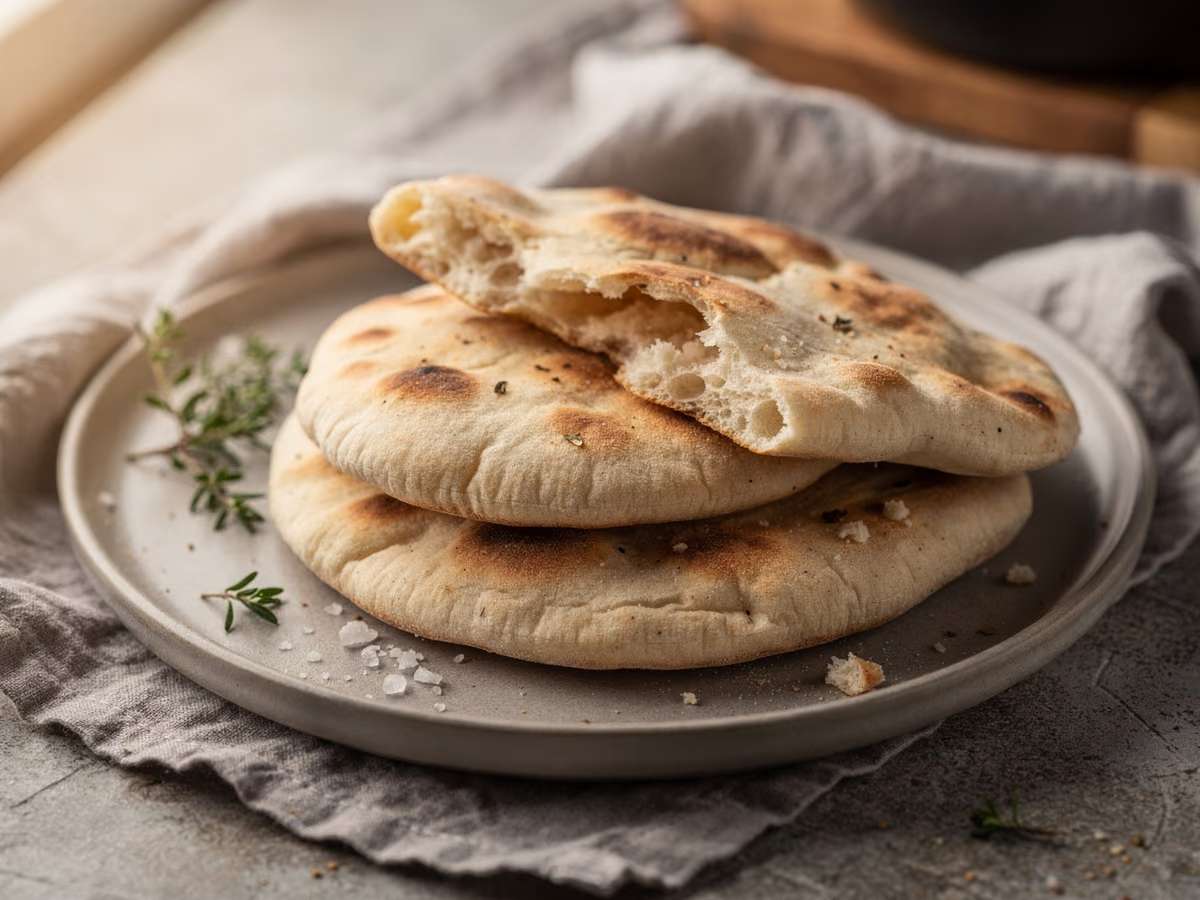
Carefully place 2–3 pita circles onto the preheated stone or baking sheet. Bake for 2–3 minutes until they puff up completely and the tops are lightly golden. Do not open the oven during the first 2 minutes.
Remove from oven and immediately wrap in a clean kitchen towel to keep them soft. Repeat with remaining dough.
Kitchen notes
Kitchen notes
- The most common mistake is rolling the dough too thin; aim for 5 mm thickness so steam can create the pocket.
- A very hot oven (250°C) and a preheated baking surface are essential for puffing. If your oven maxes out lower, preheat a cast-iron skillet on the stovetop over high heat and cook each pita for 1-2 minutes per side until puffed.
- Do not over-flour the dough when shaping; too much flour makes the pita dry and prevents puffing. Use just enough to prevent sticking.
- If the pita doesn't puff, it's usually because the dough was rolled too thin, the oven wasn't hot enough, or the dough was over-proofed. Adjust accordingly.
Substitutions
- all-purpose flour→bread flour for a chewier texture, or whole wheat flour for a nuttier flavor (replace up to 50% of the all-purpose flour)
- instant yeast→active dry yeast (use 8 g and proof in the warm water first)
- olive oil→any neutral oil like sunflower or canola
- sugar→honey or maple syrup (same amount)
Storage & reheating
Store cooled pita bread in a resealable plastic bag or airtight container at room temperature for up to 2 days. For longer storage, wrap tightly in foil and freeze for up to 2 months. To reheat, sprinkle with a little water, wrap in foil, and warm in a 180°C oven for 5-7 minutes, or microwave for 20-30 seconds until soft and pliable.
FAQ
The questions we get asked most
Why didn't my pita bread puff up?
The most common reasons are rolling the dough too thin, not preheating the oven and baking surface long enough, or the dough being over-proofed. Make sure your oven is at 250°C and the baking stone or sheet is scorching hot before placing the pita. Also, roll to about 5 mm thickness and handle gently.
Can I use whole wheat flour instead of all-purpose?
Yes, but replace only up to half of the all-purpose flour with whole wheat to avoid a dense texture. Whole wheat absorbs more water, so you may need to add an extra 1-2 tablespoons of warm water. The pita may not puff as dramatically but will still be delicious.
How do I know when the pita is done?
The pita is done when it has fully puffed into a balloon and the surface has light golden spots, about 2-3 minutes in a 250°C oven. If it hasn't puffed after 2 minutes, it likely won't; remove it to avoid drying out. It should still be soft and flexible when pressed.
Can I make the dough ahead of time?
Yes, you can prepare the dough and let it rise in the refrigerator overnight for a slow fermentation. Bring it to room temperature for 30 minutes before shaping and baking. This develops more flavor and makes the dough easier to handle.
How long does homemade pita bread keep?
At room temperature in an airtight container, it keeps for up to 2 days. For longer storage, freeze the baked pita in a freezer bag for up to 2 months. Reheat from frozen in a 180°C oven for 5-7 minutes or until soft.
Why is my pita bread dry and hard?
Over-baking or using too much flour during shaping can make pita dry. Bake just until puffed and lightly golden, and wrap the baked pita in a clean towel immediately to trap steam and keep them soft. Also, measure flour accurately; too much flour leads to a dry dough.
Can I cook pita bread on the stovetop?
Yes, heat a cast-iron skillet over high heat until very hot. Cook each pita for 1-2 minutes per side, pressing gently with a spatula, until puffed and charred in spots. This method works well if your oven doesn't reach 250°C.
Ask KitchenMind about this recipe
Tell it what’s different tonight — it works within the actual recipe.