Mapo Eggplant
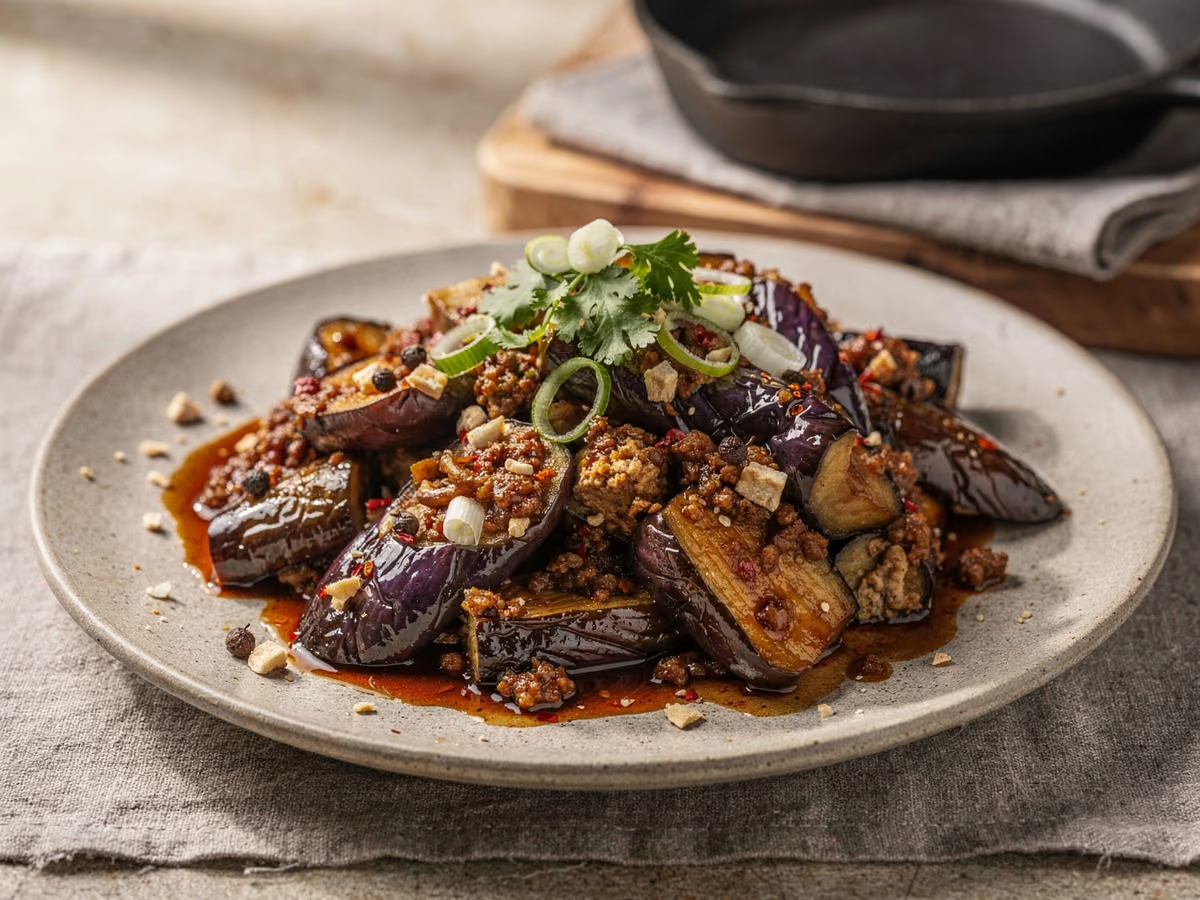
Mapo eggplant roasts 700 g of cubed eggplant until the edges caramelize, then braises it in the numbing, chili-hot mala sauce of fermented broad bean paste, garlic, ginger, and ground Sichuan peppercorns, finished with a cornstarch slurry and toasted sesame oil. Roasting in a hot oven instead of deep-frying keeps the flesh creamy rather than greasy, and the whole dish comes together in about 45 minutes, with the oven doing most of the work while you build the sauce. Spoon it over steamed rice for a vegan Sichuan dinner with real numbing heat.
- Prep
- 15 min
- Cook
- 30 min
- Total
- 45 min
- Serves
- 4
Ingredients
What you’ll need — tap to tick off as you go
- 700 g
- 2 tbsp
- 2 tbsp
- 1 tbsp
- 120 ml
- 1 tsp
- 1 tsp
- 3 cloves
- 1 tbsp
- 1 tbsp
- 1 tsp
- 4 cups
Process
Timers built in · swap anything · ask as you cook
Heat the oven to 200°C. Toss the 700 g eggplant cubes with the 2 tbsp vegetable oil in a large bowl until every face is coated, then spread them on a lined baking sheet in a single layer. Roast for 20–25 minutes, flipping halfway with a spatula, until the cubes are golden at the edges and a fork slides in with little resistance. Crowding the pan steams the eggplant instead of roasting it.
While the eggplant roasts, stir the sauce together in a small bowl: 2 tbsp doubanjiang, 1 tbsp soy sauce, 120 ml vegetable broth, 1 tsp sugar, and 1 tsp ground Sichuan peppercorns. Chop the doubanjiang first if it looks chunky so it disperses evenly. Mixing it ahead keeps the fast stir-fry that follows under control, and the sugar gets a head start dissolving.
Heat a wok or large skillet over medium heat and add up to 1 tbsp vegetable oil if the pan looks dry; a well-seasoned or nonstick pan may still carry enough from the eggplant tray. Add the 3 minced garlic cloves, the 1 tbsp minced ginger, and the white parts of the 3 scallions, and stir-fry for 30 seconds until fragrant and glossy. Garlic goes bitter the moment it browns, so move on.
Pour in the sauce mixture and bring it to a simmer, stirring and scraping up anything stuck to the pan. Cook for 2 minutes: the sauce darkens a shade and smells rounded instead of sharp as the fermented paste mellows and the sugar finishes dissolving.
Add the roasted eggplant and fold it through the sauce with a spatula, turning the pieces so every side gets coated. Simmer for 3–4 minutes, stirring gently once or twice, until the cubes drink in the sauce and slump without falling apart. Treat the eggplant as fragile here; hard stirring turns the batch into a paste.
Stir the cornstarch slurry again, because it settles fast, then drizzle it into the pan in a thin stream while stirring gently. Cook for 1 minute, until the sauce thickens enough to coat the eggplant and the spoon, with no watery pool left at the bottom of the pan.
Turn off the heat, drizzle over the 1 tsp toasted sesame oil, and fold in the green parts of the scallions. Serve hot over the steamed rice. Added off the heat, the sesame oil keeps its aroma, and the scallion greens stay bright and crisp against the soft eggplant.
Why this recipe works
Eggplant is a sponge of air pockets held open by water, which is why frying it can taste heavy: steam escaping the cells leaves room for oil to rush in behind. Roasting in a single layer at 200°C lets that water escape into the dry oven air, while the 2 tbsp of oil browns the surfaces and the cubes collapse into creamy flesh rather than greasy. The sauce is built to cling: doubanjiang and the aromatics simmer briefly so the fermented edge mellows, then the cornstarch slurry thickens the reduced liquid into a gloss that coats every cube. Ground Sichuan peppercorn adds the finishing tingle: a touch sensation, not a chili burn.
Equipment
- Chef's knife and cutting board
- Large bowl for tossing the eggplant with oil
- Rimmed baking sheet large enough for the cubes in a single layer, lined with parchment
- Small bowl and fork for mixing the sauce
- Small cup for the cornstarch slurry
- Wok or large skillet, about 30 cm wide, with a flat spatula
- Rice cooker or medium saucepan for the steamed rice
Kitchen notes
Kitchen notes
- Bitterness comes from variety and age, not from skipping the traditional salting: choose eggplant that feels rock-hard and heavy for its size, and leave the salt in the cupboard, because salting mainly helps fried eggplant, not roasted.
- Mince the garlic and ginger to a fine paste with a knife rather than chopping them coarse; a paste melts into the sauce, while coarser bits leave sharp pockets between the eggplant cubes.
- Cut even cubes and the roast sorts itself out: halve each eggplant lengthwise, lie the halves flat, and cut 2.5 cm planks, then stack a few planks and cut across into cubes. Flat surfaces make steady pieces, and steady pieces turn golden together.
- No wok, no problem: the widest skillet you own gives the eggplant room in the braise, and a flat spatula folds the pieces without crushing them. Surface area and gentle turns matter more here than high-heat tossing.
- Have the rice ready and the table set before the slurry goes in: the sauce is at its glossiest right after it thickens, and the eggplant keeps drinking it as the dish waits.
Common mistakes
- Mushy, watery eggplant: the cubes were crowded on the tray, carried surface water into the oven, or simmered too long in the sauce. Spread them in a single layer with space between, pat them dry if they were just washed, and stop the simmer once the pieces slump but still hold their shape.
- A greasy sauce: more oil than the 2 tbsp went in, usually because eggplant seems to beg for it. Roasting needs only enough oil to coat each cube, and the braise, not the pan, is what makes the dish silky, so resist topping up unless the skillet is genuinely dry.
- A sauce that tastes too salty: doubanjiang and soy sauce are both heavy on salt, and paste brands range widely. Taste after the 2-minute simmer before adding anything else, and correct an oversalted batch with a pinch of sugar and a splash of broth or water.
- Thin sauce with lumps: the slurry went in without being stirred again, or it hit a pan that was not simmering. Stir the slurry until it is cloudy and uniform, pour it in while the sauce bubbles, stir gently, and give it the full minute to thicken.
- Squeaky, underdone eggplant: the cubes left the oven firm, and the braise cannot finish cooking them without turning them to mush. Roast until a fork slides in easily and the edges are golden; a few extra minutes in the oven beats extra time in the sauce.
Serving suggestions
- Spoon it over the 4 cups of steamed rice while both are hot; rice is the traditional catch for the sauce and softens the numbing heat.
- Boiled noodles are a fair swap for the rice, especially thick wheat noodles that the sauce can cling to.
- Serve a cooling side alongside: sliced cucumber or quick-pickled vegetables reset the palate between bites.
- Keep the drinks cool and low-key: iced tea, barley tea, or sparkling water with a wedge of lime settles the tingle better than anything sweet.
Variations
- Protein add-in: fold in 200 g of firm tofu, pressed and pan-fried, right before the slurry for a still-vegan dish with more substance, or stir browned ground chicken or turkey into the sauce before the eggplant for a meat version that is no longer vegetarian.
- Mushroom version: brown finely chopped mushrooms with the aromatics before the sauce goes in; their savoriness stands in for the meaty depth others get from ground meat and keeps everything plant-based.
- Extra-heat version: add a teaspoon of chili oil or a spoonful of chopped fresh chilies with the sauce so the heat cooks through, and pass ground Sichuan peppercorn at the table for a stronger buzz.
Refrigerator
- RefrigeratorCool it within 2 hours of cooking, then store in an airtight container in the fridge for up to 3 days. The eggplant softens and the sauce thickens as it sits, and the numbing tingle fades first, so it never tastes quite as bright as day one.
- ReheatingReheat gently in a skillet over medium-low heat with a splash of water or broth, until steaming; leftovers should reach 74°C, the USDA FSIS reheat target. Microwaving works in a pinch but can leave the eggplant edges rubbery, so a pan is kinder.
- FreezingNot recommended. Freezing bursts the eggplant's water-filled cells, so it thaws watery and mealy, and no amount of reheating brings back the silky texture.
- Make aheadRoast the eggplant and cook the sauce up to 2 days ahead, cool and refrigerate them separately, then reheat the sauce, fold in the eggplant, and finish with the slurry and sesame oil on the day. Fully assembled, it still eats well the next day, just softer.
Updated:
How this recipe was developed
- USDA FSIS Leftovers and Food Safety (refrigerate within 2 hours; keep 3-4 days refrigerated; reheat leftovers to 74°C)
- Serious Eats, J. Kenji López-Alt on cooking eggplant (the airy structure that drinks oil; steam escaping as the driver of oil absorption; roasting and blotting for creamy, not greasy, results)
- Omnivore's Cookbook mapo eggplant by Maggie Zhu, with China Sichuan Food and Wikipedia on doubanjiang (Pixian broad bean paste as the fermented base of Sichuan chili-bean sauces; brands vary in salt and heat; vegan adaptations)
- Los Angeles Times and The New York Times eggplant guides (bitterness tracks variety and age, not salting; salting matters for frying, not roasting; roast times by variety) and Smithsonian reporting on sanshool (the tingle is tactile, not chili heat)
Editorial references are kept internally for verification. This page makes no claim of external certification or professional testing.
FAQ
The questions we get asked most
Can I use a different type of eggplant?
Yes. This recipe means globe or Italian eggplant when it says about 2 medium, and those roast in the full 20-25 minutes. Chinese or Japanese eggplant works too, but it is thinner and sweeter, so shorten the roast by about 5 minutes and start checking early. Whatever you buy, cut even 2.5 cm cubes; uneven pieces roast unevenly and the small ones collapse first.
How spicy is mapo eggplant?
Moderately hot, and more tingly than burning. The heat rides on the 2 tbsp of doubanjiang, so it tracks the brand: some jars are gentle, others properly fiery. The 1 tsp of sugar rounds the edge; for a milder dish cut the doubanjiang back by half, and for more heat add a teaspoon of chili oil. The Sichuan peppercorns are a separate sensation: they do not burn, they buzz.
Can I make mapo eggplant ahead of time?
Yes, and staging it is best. Roast the eggplant and cook the sauce up to 2 days ahead and refrigerate them separately; finish by reheating the sauce, folding in the eggplant, and adding the slurry and sesame oil just before serving. Stored fully assembled it keeps 3 days, though the eggplant softens a little more each day.
Why did my mapo eggplant sauce turn out too salty?
Because two salty ingredients worked at once and brand strength is hard to judge blind. Doubanjiang is a fermented paste that is very salty, and the 1 tbsp of soy sauce doubles down; this recipe adds no salt of its own. Use low-sodium soy sauce so there is headroom, taste the sauce after its 2-minute simmer, and if it still lands salty, dilute with a small splash of broth and let a little sugar round the edge rather than adding more soy.
What can I use instead of doubanjiang?
The closest stand-in is 2 tbsp of miso paste mixed with 1 tsp chili flakes; it keeps the fermented depth but loses the red color and some funk, so add a little more chili if the sauce tastes flat. Gochujang or a chili bean sauce will also work, though both read sweeter and thinner than doubanjiang. Whichever you use, the sauce becomes a different one, so taste before seasoning further.
How do I know when the eggplant is done roasting?
The cubes should be golden at the edges, visibly shrunken, and completely soft at the center, with a fork sliding in without resistance. Start checking at 20 minutes and give them 3-5 more if the middles still feel firm; the flesh should be creamy, not squeaky. Over-roasted eggplant goes mushy rather than burnt, so lean on the fork test, not the timer.
Is mapo eggplant vegan?
As written, yes: it is vegan, vegetarian, and dairy-free. The sauce is built on fermented broad bean paste, soy sauce, vegetable broth, and aromatics, finished with cornstarch and sesame oil, and served over plain steamed rice, so there are no animal products anywhere. Check the doubanjiang label if you are cooking for someone strict, because ingredients vary by brand, and none of the optional protein add-ins are needed to make it a meal.
Ask KitchenMind about this recipe
Tell it what’s different tonight — it works within the actual recipe.