Nikujaga
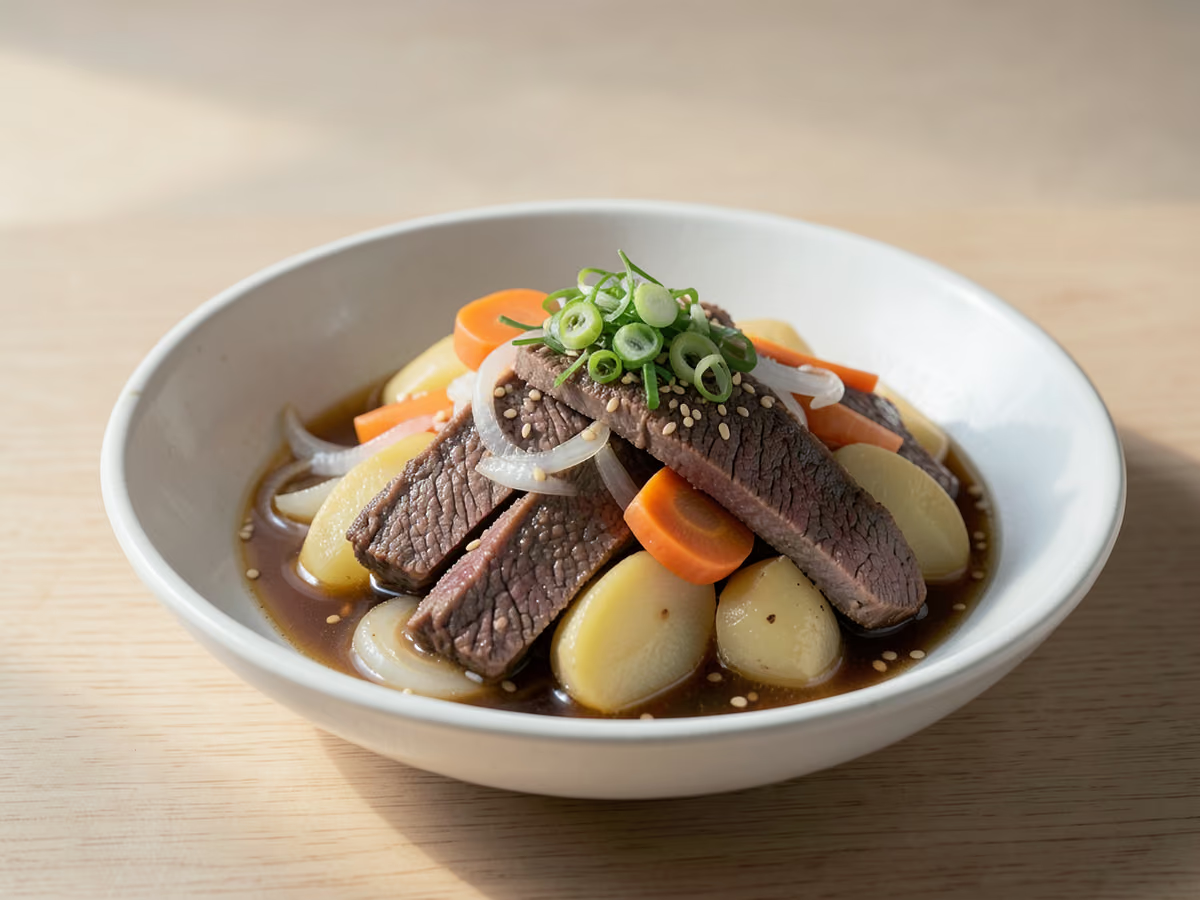
Nikujaga is Japan's quintessential home-cooked stew: thinly sliced beef and generous potato chunks simmered in a sweet-savory bath of dashi, soy sauce and sugar, with onion and carrot sharing the pot. This version keeps the traditional two-stage method, where the potatoes soften in near-plain stock first and the seasoning arrives for the final stretch, which is what keeps the pieces whole and the broth balanced. Plan on about 15 minutes of prep, 30 minutes at the stove, and a hands-off rest of up to half an hour. It serves four, and it is famously even better the next day.
- Prep
- 15 min
- Cook
- 30 min
- Total
- 75 min
- Additional time
- 30 min
- Serves
- 4
Ingredients
What you’ll need — tap to tick off as you go
- 300 g
- 400 ml
- 4 tbsp
- 2 tbsp
- 1 tbsp
- 100 g
Process
Timers built in · swap anything · ask as you cook
Heat the 1 tbsp neutral oil in a large pot or Dutch oven over medium heat. Add the 300 g sirloin, sliced paper-thin and cut into 5 cm pieces, and cook for 3–4 minutes, turning once, until no pink remains and the edges just begin to brown. Move the beef to a plate; it finishes cooking in the broth later, and leaving it in now would dry out these thin slices.
Drop in the 1 onion, cut into thick wedges, and the 1 carrot, cut into 2 cm rounds. Cook for 2–3 minutes, stirring once or twice, until the onion turns translucent at the edges and the carrot brightens, with nothing taking on color. This short sweat coaxes sweetness into the oil without burning the browned bits the beef left behind.
Return the beef, then add the 4 potatoes, peeled, cut into 4 cm chunks and with the sharp edges shaved off, and pour in the 400 ml dashi. The liquid should come up to just below the top of the ingredients. Bring to a boil, skim the gray foam, lay a drop lid (otoshibuta) or a parchment round cut to fit directly on the pieces, and simmer gently for 10 minutes.
Stir in the 4 tbsp soy sauce and 2 tbsp sugar, then swirl the pot gently rather than stirring hard, so the potatoes hold their place. Keep it at a lazy simmer, around 90–95°C, for 10–15 minutes more, until a skewer slides easily into the largest potato and the liquid has reduced to a glossy layer. Never let it boil hard.
If you are using the 100 g green beans, blanch them in a small pot of boiling water for 2 minutes, then drain and set aside. Two minutes keeps them bright green and crisp; any longer and they soften and dull. Holding the beans out of the stew preserves their snap and color for the garnish.
Taste the broth and adjust the seasoning if it needs it. If time allows, rest the pot off the heat for 30 minutes before serving: the potatoes reabsorb seasoning as they cool, and the flavors settle. Ladle into bowls, scatter over the blanched green beans, and serve warm.
Why this recipe works
Three details keep the potatoes intact, and each one is deliberate. Variety first: waxy potatoes are lower in starch, and their cells cling together through a long simmer, while floury types swell, burst and shed starch that clouds the broth. Mechanics second: chunky pieces with beveled edges, a lazy simmer, and a drop lid that pins everything in place mean nothing gets jostled hard enough to shatter. Timing third: the first 10 minutes in near-plain dashi softens the potatoes before the soy and sugar go in, so the seasoning stays bright and concentrates only in the final stretch. During the rest, the cooling pot draws that seasoning deep into each piece.
Equipment
- Large pot or Dutch oven, 4-5 l, heavy-bottomed
- Drop lid (otoshibuta), wooden or silicone, sized just inside the pot
- Parchment paper, for making a drop lid if you don't own one
- Chef's knife and cutting board
- Vegetable peeler, for beveling the potato edges
- Skewer or chopstick, for testing the potatoes
- Measuring jug and measuring spoons
- Small pot, for blanching the green beans
Kitchen notes
Kitchen notes
- Bevel the potato edges before they go in, the Japanese technique called mentori, and soak the chunks in cold water for 10 minutes, then drain well. Smooth corners cannot catch on their neighbors, and the soak rinses off surface starch that would otherwise glue pieces together and haze the broth.
- Skim the gray foam that gathers as the pot comes to a boil. It is coagulated protein and loose starch; left in, it settles back over the ingredients and tastes muddy. Thirty seconds with a spoon keeps the broth clean and the flavors defined.
- Keep the pot wide so the pieces sit in roughly one layer. Ingredients stacked deep cook unevenly, with the top pieces steaming while the bottom ones glaze; a 4-5 l pot gives this quantity room to simmer evenly.
- For true paper-thin beef, buy it pre-sliced at a Japanese or Korean grocer, ask a butcher to shave it, or freeze your sirloin for 30 minutes until firm and slice across the grain as thin as you can.
- Judge the seasoning on a potato, not just in the spoon. The chunks keep drawing salt and sugar from the broth as they sit, so taste a piece after the rest: a splash of hot dashi rescues a strong pot, while a few drops of soy sharpen one that reads flat.
Common mistakes
- Potatoes break apart and the broth turns cloudy: starchy potatoes, a rolling boil, or a spoon moved through the pot. Use waxy potatoes, keep the simmer lazy, and let the drop lid circulate the broth instead of stirring.
- The stew reads too salty or too sweet at the last minute: the liquid keeps concentrating as it reduces, so the 4 tbsp soy and 2 tbsp sugar taste stronger at minute 20 than at minute 10. Taste in the final five minutes, judge with a potato, and loosen an over-seasoned pot with a splash of hot dashi or water rather than more sugar.
- Beef comes out dry and stringy: cubed stewing beef was used in place of slices, or the slices spent the last simmer at a hard boil. Keep to paper-thin slices and a bare simmer; they need minutes here, not hours.
- Potatoes still firm at the center: the pieces were cut unevenly, or the dashi did not come up far enough and the top layer steamed instead of simmered. Cut uniform 4 cm chunks, keep the liquid near-covering, and test the largest piece with a skewer.
- The green beans lose their color and crunch: blanched past 2 minutes, or left waiting in the hot pot. Boil them exactly 2 minutes, drain straight away, and add them only at serving.
Serving suggestions
- The classic setup is plain steamed rice, a bowl of miso soup and a few pickles; the rice carries the broth, and that is how the dish is eaten at home in Japan.
- Serve it warm rather than blazing hot, with a generous spoonful of broth over each portion, because the potatoes taste best dragged through the liquid.
- A cold, unsweetened drink balances the glaze: chilled barley tea, green tea, or sparkling water with a lemon wedge.
- Leftovers are a gift: reheat gently the next day and eat it over fresh rice, as many cooks think day-two nikujaga is the best version of all.
Variations
- Chicken version, a real household standard: use 300 g of boneless thigh cut into thin strips in place of the beef, brown it briefly, and treat the pot exactly as written. The broth comes out lighter and slightly sweeter, and thigh is very hard to overcook in a simmer.
- Vegetarian version (honestly, a different dish): kombu-and-shiitake stock for the dashi, and pressed firm tofu, thick seitan pieces or meaty mushrooms such as king oyster in place of the beef. Add tofu for the last 10 minutes so it holds together; the sweet-savory potatoes still carry the pot.
- Shirataki edition: about 200 g of drained shirataki (konnyaku) noodles is the classic add-in; rinse, blanch for 1 minute, snip into shorter strands, and simmer with the potatoes. They add a springy bite and stretch the pot without changing the seasoning.
- Spring new-potato edition: use small waxy new potatoes, halved with skins on, and finish with a handful of snow peas or sugar snaps instead of green beans, which is lighter and fresher and a fine use of the season's sweetest potatoes.
Refrigerator
- RefrigeratorCool the pot within 2 hours of cooking, dividing it into shallow containers so it chills quickly, then refrigerate in an airtight container. Eat within 3 days: the flavor deepens overnight and the potatoes keep softening, so day two or three is widely considered the peak.
- ReheatingReheat gently on the stovetop or, covered, in the microwave until steaming hot all the way through: 74°C (165°F) on a food thermometer. Keep it below a hard boil and handle it lightly so the potatoes stay whole, adding a splash of dashi or water if the broth has tightened.
- FreezingFreeze for up to 3 months: cool it completely, portion it with a little headspace, and thaw overnight in the refrigerator. The potatoes turn soft and slightly grainy after freezing, so finish it within about a month if texture matters to you.
- Make aheadMade ahead is this dish's natural state: cook it fully, cool it fast, and refrigerate for up to 3 days. The potatoes soak up the seasoned broth overnight, and a gentle reheat brings it back without breaking anything. Add the green beans fresh at serving.
Updated:
How this recipe was developed
- USDA FSIS 'Leftovers and Food Safety' (cool within 2 hours; refrigerate 3-4 days; freeze 3-4 months; reheat to 74°C/165°F)
- USDA FSIS 'Safe Minimum Internal Temperature Chart' (whole cuts of beef: 63°C/145°F with a 3-minute rest)
- Just One Cookbook, Nikujaga recipe and technique notes (otoshibuta drop lid holds pieces in place; waxy potatoes keep their shape; mentori bevel and starch soak; skewer-tender doneness cue; a 30-60 minute rest deepens flavor)
- Harold McGee, On Food and Cooking (potato starch and cell structure: waxy varieties hold together, floury types disintegrate; gentle simmering reduces mechanical damage to fragile pieces)
Editorial references are kept internally for verification. This page makes no claim of external certification or professional testing.
FAQ
The questions we get asked most
What is nikujaga?
It is Japan's home-cooking classic, and the name says it plainly: 'niku' means meat, 'jaga' comes from 'jagaimo', potatoes. Thinly sliced beef and chunky potatoes simmer with onion and carrot in a sweet-savory broth of dashi, soy sauce and sugar. The taste is savory first with a gentle sweetness folded through, creamy potatoes and tender beef, made to be eaten with plain rice. It is the kind of dish Japanese families call 'mother's taste', and every household adjusts the balance slightly.
What cut of beef is best for nikujaga?
Sirloin, as used here: 300 g sliced paper-thin into 5 cm pieces. Light marbling is the thing to look for, because the fat bastes the slices as they simmer. Ribeye is richer and chuck is deeper, but all of them must be shaved thin. Avoid pre-cut stewing cubes: a thick cube needs a long braise and comes out stringy in this quick, gentle simmer.
Can I make nikujaga with chicken instead of beef?
Yes, it is a common swap in Japanese kitchens. Use the same 300 g of boneless thigh, cut into thin strips; thigh stays juicy where breast can dry out. Brown it as in step 1 and follow the rest of the method, checking the potatoes at 20 minutes as usual. The broth tastes lighter and a touch sweeter against chicken, so some cooks ease the sugar down slightly.
Which potatoes are best for nikujaga?
Waxy ones: Yukon Gold or new potatoes in most stores, May Queen in Japan. Their cells hold together through the 20-25 minute simmer, so the chunks stay whole and the broth stays clear. Floury types such as Russets crumble and cloud the pot; they absorb flavor beautifully, but the dish loses its clean look. Whatever you buy, cut chunky 4 cm pieces.
Why is my nikujaga too sweet or too salty?
Usually it is the reduction: as the 400 ml dashi evaporates, the 4 tbsp soy and 2 tbsp sugar concentrate, so a pot that tasted right early reads strong at the end. Judge it last, with a potato; fix too-salty with a splash of hot dashi or water, and fix too-sweet with a dash more soy. The ratio is a dial: the same recipe with less sugar leans savory, with more leans sweet.
Can I make nikujaga ahead of time?
Yes, and it may be better that way. The dish deepens as the potatoes keep soaking the seasoned broth; cook it, cool it within 2 hours, refrigerate for up to 3 days, and reheat gently with a splash of dashi. Add the green beans fresh at serving. It also freezes for up to 3 months, though the potatoes soften a little after thawing.
How do I make nikujaga vegetarian?
Two swaps. For the stock, standard dashi is built on dried fish, so use kombu-and-shiitake stock or a vegan dashi powder, the same 400 ml. For the meat, use pressed firm tofu cubed and added for the last 10 minutes, thick seitan, or large mushrooms such as king oyster. Keep the soy and sugar as written; the result is lighter but still sweet-savory with creamy potatoes.
Ask KitchenMind about this recipe
Tell it what’s different tonight — it works within the actual recipe.