- Prep
- 30 min
- Cook
- 20 min
- Total
- 50 min
- Serves
- 4
Ingredients
What you’ll need — tap to tick off as you go
- 300 g
- 1 tsp
- 180 ml
- 2 tbsp
- 4 tbsp
Process
Timers built in · swap anything · ask as you cook
In a large bowl, mix 300 g whole wheat flour and 1 tsp fine salt. Add 2 tbsp vegetable oil and rub it into the flour with your fingertips until it looks like fine crumbs.
Pour in 180 ml lukewarm water a little at a time, mixing with your hand, until a shaggy dough forms. You may not need all the water; stop when the dough comes together.
Knead the dough on a clean surface for 8 to 10 minutes until smooth, soft and slightly elastic. If it sticks, dust with a little whole wheat flour.
Cover the dough with a damp cloth and rest for 20 minutes. This makes rolling easier and gives softer parathas.
Divide the dough into 4 equal balls. Keep them covered while you work. On a lightly floured surface, roll one ball into a thin circle about 20 cm wide.
Brush the circle with about 1 tsp melted ghee. Sprinkle a pinch of whole wheat flour over it. Roll it up tightly into a long log, then coil the log into a spiral. Press the spiral flat with your palm.
Roll the spiral gently into a circle about 18 cm wide and 3 mm thick. Do not press too hard or the layers will seal and the paratha will not flake.
Heat a heavy frying pan or tawa over medium heat. Place the rolled paratha on the dry pan and cook for 1 to 2 minutes until small bubbles appear and the bottom is lightly golden.
Flip the paratha. Brush the cooked top with about 1 tsp melted ghee. Cook for 1 to 2 minutes, then flip again, brush the other side with another 1 tsp ghee, and press gently with a spatula.
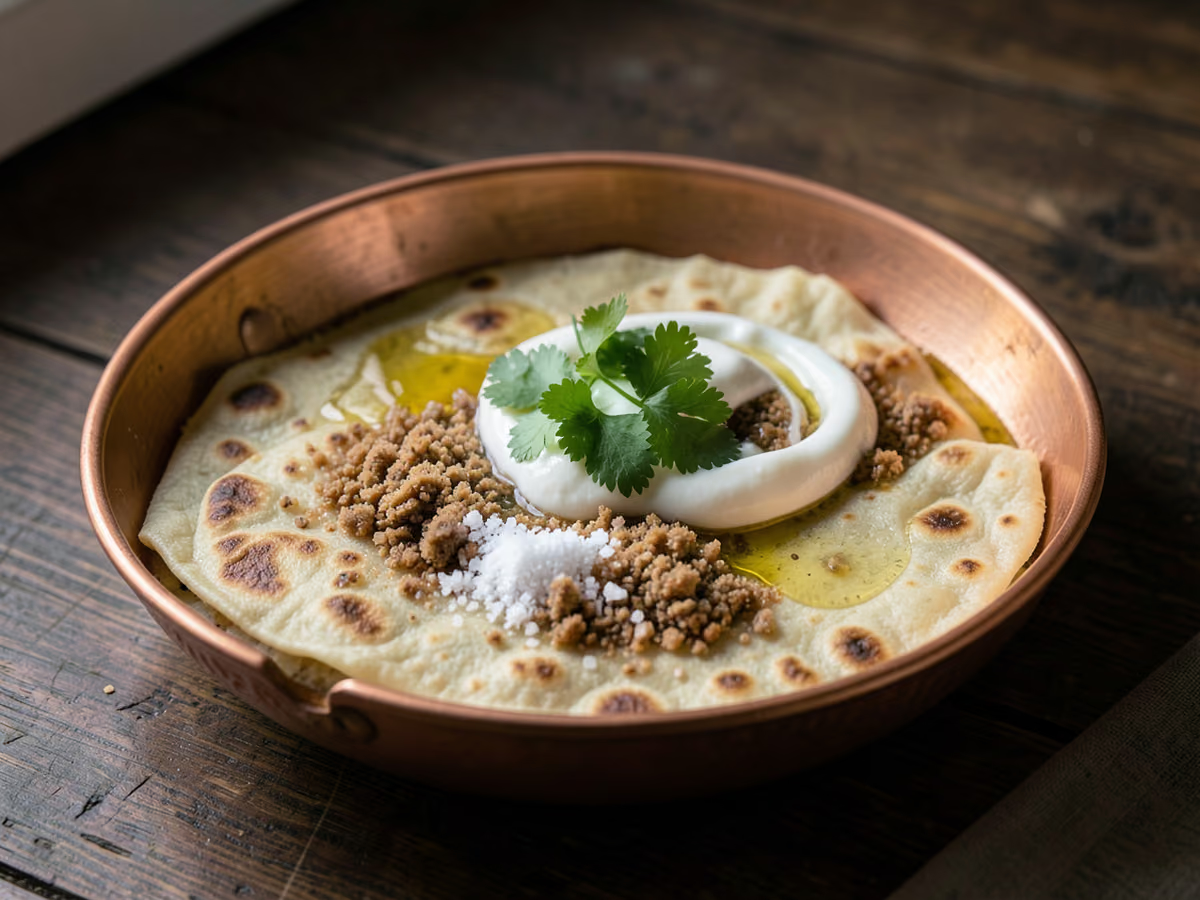
Cook until both sides are golden brown with darker flaky spots, about 1 minute more per side. Repeat with the remaining dough balls and ghee.
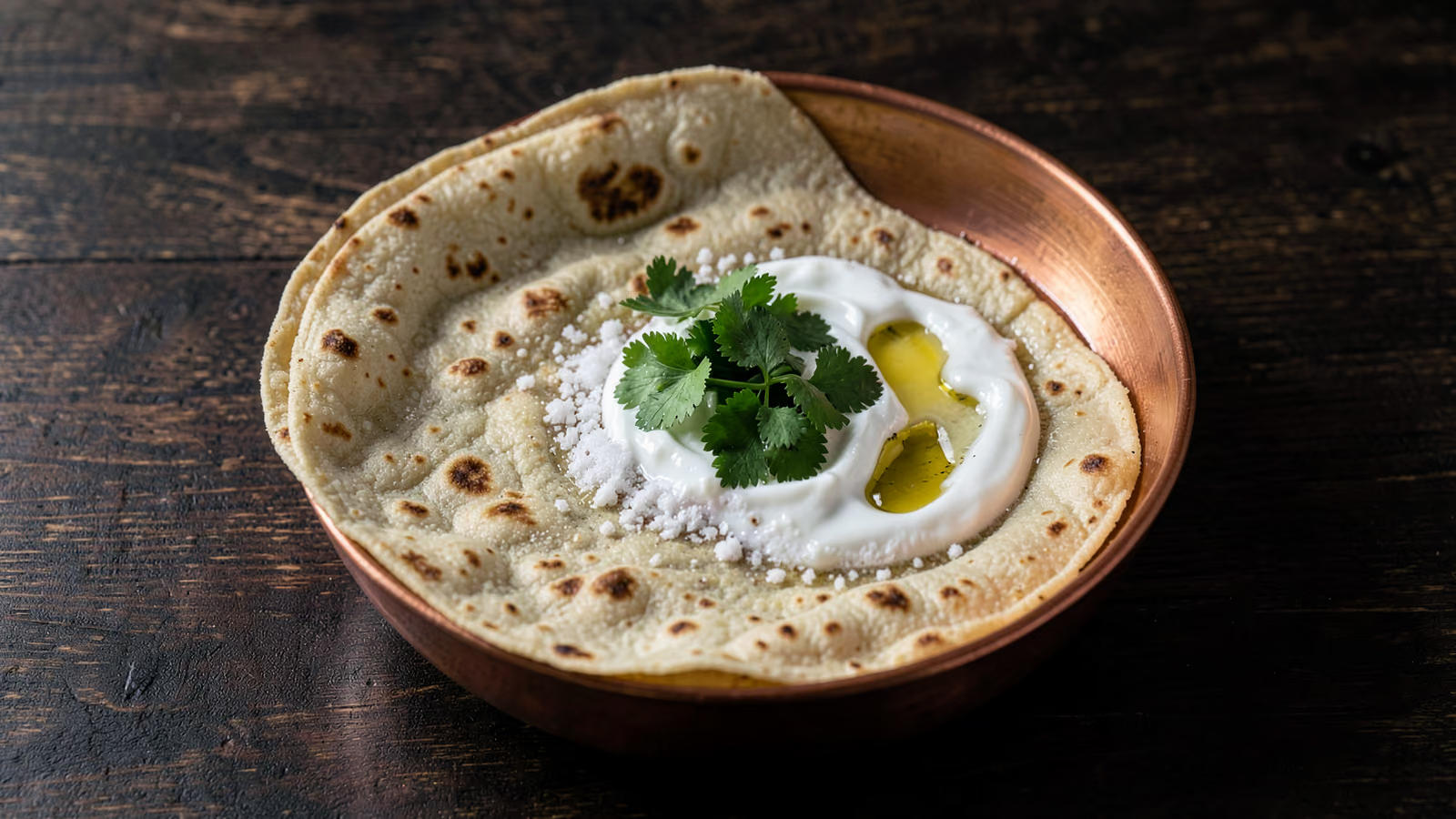
Stack the cooked parathas on a plate and cover with a clean cloth to keep them soft. Serve warm.
Kitchen notes
Kitchen notes
- The most common mistake is rolling the coiled dough too hard: press gently so the ghee layers stay separate. That is what makes paratha flaky instead of dense.
- Resting the dough for 20 minutes is not optional if you want soft parathas. Without it, the dough springs back and tears when rolled.
- Use medium heat, not high. High heat browns the outside before the inside cooks, leaving raw patches. The paratha is done when both sides are golden with darker spots and it puffs slightly.
- If the paratha sticks to the pan, the pan is not hot enough. Let it heat for 2 minutes before adding the first one.
- For extra flakiness, brush the rolled circle with ghee and dust with flour before coiling. This creates steam pockets that separate the layers.
Substitutions
- whole wheat flour→50% whole wheat flour + 50% all-purpose flour for a softer, less nutty paratha
- ghee→vegetable oil or melted coconut oil for a dairy-free version
- vegetable oil→any neutral oil such as sunflower or canola
Storage & reheating
Cool leftover parathas completely, then stack them with a piece of parchment or clean cloth between each one. Store in an airtight container in the fridge for up to 3 days or in the freezer for up to 2 months. To reheat, warm on a dry frying pan over medium heat for 1 to 2 minutes per side, or wrap in a damp paper towel and microwave for 20 to 30 seconds. For frozen parathas, reheat directly from frozen in a pan over medium heat for 3 to 4 minutes per side.
FAQ
The questions we get asked most
Why did my paratha turn out hard and not flaky?
Hard parathas usually come from rolling the coiled dough too firmly or skipping the rest. Press the spiral gently and roll with light pressure so the ghee layers stay separate. Also make sure the dough rested for at least 20 minutes before rolling.
Can I make paratha dough ahead of time?
Yes. Knead the dough, cover it tightly and refrigerate for up to 24 hours. Let it come to room temperature for 30 minutes before rolling, otherwise it will be stiff and tear.
Can I freeze cooked parathas?
Yes. Cool them completely, stack with parchment between each paratha, and freeze in a zip-top bag for up to 2 months. Reheat from frozen in a dry pan over medium heat for 3 to 4 minutes per side.
How do I know when a paratha is fully cooked?
It is done when both sides are golden brown with darker flaky spots and the surface looks dry, not doughy. It may puff slightly. If you see white raw patches, cook for another 30 to 60 seconds per side.
Can I use all-purpose flour instead of whole wheat flour?
Yes, but the texture will be softer and less nutty. Use the same weight, 300 g, and reduce the water slightly to about 160 ml because all-purpose flour absorbs less. The rolling and frying steps stay the same.
Why is my paratha dry and brittle?
Dry parathas come from too much flour during rolling or overcooking on high heat. Dust only lightly and shake off excess flour. Cook on medium heat and brush with ghee as soon as you flip so the surface stays moist.
Can I make paratha without ghee?
Yes. Use vegetable oil or melted coconut oil for brushing and frying. The flavor will be slightly different but the layers will still form. For a dairy-free version, use oil throughout.
Ask KitchenMind about this recipe
Tell it what’s different tonight — it works within the actual recipe.