Philly Cheesesteak
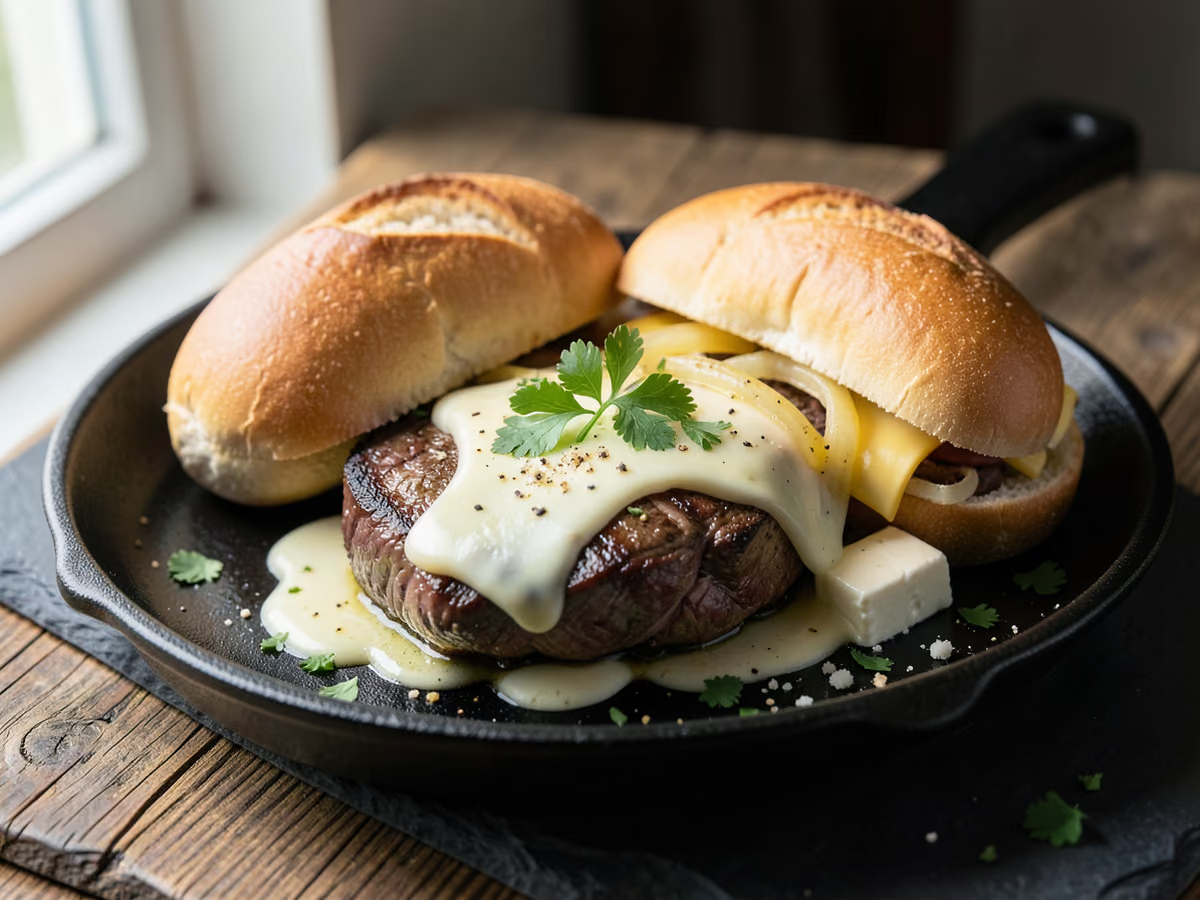
A South Philadelphia original in three parts: paper-thin ribeye, sweet caramelized onions and molten provolone in a soft toasted roll. The hard part at home is shaving the beef, and a 30-minute par-freeze solves it — firm steak slices cleanly into 3 mm strips that sear in seconds. Two smoking-hot batches keep the slices browning instead of steaming, and the cheese melts under a lid rather than a broiler. Forty-five minutes end to end, four loaded sandwiches, pickled banana peppers on the side.
- Prep
- 20 min
- Cook
- 25 min
- Total
- 75 min
- Additional time
- 30 min
- Serves
- 4
Ingredients
What you’ll need — tap to tick off as you go
- 700 g
- 200 g
- 2 tbsp
- 2 tbsp
- 1 tsp
- ½ tsp
- ½ tsp
- 60 g
Process
Timers built in · swap anything · ask as you cook
Freeze the 700 g ribeye for 30 minutes so it firms without freezing solid, then shave it against the grain into 3 mm strips using long, single draws of a sharp knife. Pat the slices dry, season with the 1 tsp salt, 0.5 tsp black pepper and 0.5 tsp garlic powder if using, and let them sit at room temperature while you set up the rest.
Heat 1 tbsp vegetable oil in a large skillet over medium heat. Add the 2 sliced yellow onions and cook for 12 to 15 minutes, stirring occasionally, until soft, deeply golden and sweet — jammy, not blackened. Scoop them into a bowl and wipe the pan clean.
Split the 4 hoagie rolls and spread the 2 tbsp butter across the cut faces. Toast them cut-side down in the same pan over medium heat for 1 to 2 minutes, until lightly golden and crisp. Set the rolls aside — that toasted layer is what keeps the juices from turning the crumb soggy.
Raise the heat to high and add the remaining 1 tbsp oil. Sear the steak in two batches so the pan stays ripping hot: lay the slices in a single layer, leave them untouched for 45 seconds, then flip and sear for 30 seconds more. The edges should be browned, with no pink left and the slices still juicy. Move batch one to a plate and repeat.
Return all the seared steak and the caramelized onions to the pan over medium heat and toss for 30 seconds to combine, then push the mixture into 4 even piles, spaced out enough that each can take its cheese.
Lay 50 g of sliced provolone over each pile. Cover the pan with a lid, over low or residual heat, for 1 to 2 minutes, until the cheese is fully melted and drapes over the meat. No lid? Crimp foil over the skillet for the same steam trap.
Slide a spatula under each cheesy pile and fold it into a toasted roll, pressing gently so the filling settles. Top with the 60 g of sliced pickled banana peppers if using and serve immediately, while the roll is still crisp and the cheese still stretches.
Why this recipe works
The par-freeze is the quiet hero: 30 minutes in the freezer firms muscle and fat just enough for a sharp knife to shave clean 3 mm slices instead of ragged slabs — and thin slices cook through in seconds, which is where the tenderness comes from. Searing in a single layer over high heat keeps the pan hot enough that surface moisture flashes off; crowd the slices or stir too early and the pan cools, so they steam instead of brown. Cutting against the grain shortens the tough fibers, and toasting the rolls in butter builds a crisp, fatty barrier that keeps the juices in the filling, not the crumb.
Equipment
- 30 cm (12-inch) cast-iron skillet or a flat griddle — the wide, heavy base holds the heat that a two-batch sear demands
- Long, thin carving knife and a cutting board — par-frozen ribeye needs a sharp edge and a long draw to shave 3 mm slices
- Wide metal spatula and tongs — for folding and moving the loaded piles without losing the filling
- Lid that fits the skillet, or a sheet of foil — traps the steam that melts the cheese without a broiler
- Two plates or trays lined with paper towels — one to dry the raw slices, one to park the first seared batch
- Medium bowl for the caramelized onions, plus small prep bowls for the seasonings
- Measuring spoons — the sear moves fast, so everything gets measured before the pan goes on
Kitchen notes
Kitchen notes
- Preheat the empty skillet over medium-high heat for 5 minutes before the oil goes in — stored heat in the cast iron is what makes a 45-second sear produce a real crust.
- Shave the par-frozen ribeye in one long draw at a low angle, sliding the knife forward rather than pressing down; sawing tears the fibers into ragged slabs that cook unevenly.
- Salt pulls moisture to the surface, so the seasoned slices will bead while they wait — blot them one last time right before they hit the pan; browning can only start once the surface is dry.
- If half the steak cannot sit in a single layer, sear in three batches rather than two — stacking or crowding turns a sear into a steam, and steamed slices never brown the same way.
- Turn off the burner before the lid goes on for the cheese: the trapped steam melts provolone in about a minute, and cutting the heat stops the thin slices from overcooking at the last moment.
- Pull out a little of the soft crumb from each split roll before toasting — the filling then sits in the roll instead of on it, giving a less bread-heavy bite with more room for steak.
Common mistakes
- Chewy, rubbery slices: the steak was thicker than 3 mm or the pan was crowded, so the meat steamed grey instead of searing — freeze the ribeye 30 minutes, shave it against the grain, and sear in two single-layer batches over high heat.
- A soggy roll before the first bite: an untoasted roll soaks up steak juices within minutes, and a packed filling steams the crumb from the inside — toast the cut faces in the butter and fill only as generously as the hinge closes loosely.
- Onions that stay sharp and crunchy: a rushed, too-hot pan browns the edges before the sugars develop — keep them over medium heat for the full 12 to 15 minutes until jammy and deep golden; fast color tastes bitter, not sweet.
- Grey, wet steak instead of a hard sear: the slices went into the pan damp or before the pan was hot enough — blot them dry, wait for the oil to shimmer, and leave the meat untouched for the first 45 seconds so it can release on its own.
- Cheese refusing to melt into a drape: thick slabs laid on cooling meat never soften properly — use thin slices, add them while the pan is still warm, and trap steam under a lid for 1 to 2 minutes so the provolone slumps over the filling.
Serving suggestions
- Serve the moment they are folded — a cheesesteak is at its peak in the first few minutes, while the roll is crisp and the cheese still pulls.
- Thin-cut fries are the classic plate partner; a sharp dill pickle or a vinegary slaw cuts the richness when you want balance.
- Set the pickled banana peppers out on the side rather than tucking them all in — they add a bright, hot snap that some eaters want and others don't.
- Portion with intent: this is a large sandwich — published nutrition figures for comparable builds run from about 640 calories to more than 1,300 for the biggest shop versions — so halve one for a lighter appetite and round out the plate with a salad.
Variations
- Pizza-style build: sauté sliced green bell peppers and mushrooms separately until browned, then fold them in with the onions before the cheese — a pepper version is nicknamed a 'pizza steak', and with mushrooms it becomes a mushroom cheesesteak.
- Cheesesteak hoagie: line the toasted roll with shredded lettuce, thin tomato slices and a light swipe of mayonnaise before the steak goes in — the old South Philly hybrid order, with a cool crunch against the hot filling.
- Two-stage cheese melt: tear half the provolone (100 g) into the steak as it returns to the pan so it melts through and binds the slices, then drape the remaining 100 g over the piles, 25 g each, before covering — the shop-style build with a cheese layer on both sides.
Refrigerator
- RefrigeratorCool the steak and onions promptly, then refrigerate in a shallow airtight container within 2 hours — the mixture keeps up to 3 days. Store the rolls separately in a paper bag at room temperature, and toast them fresh.
- ReheatingWarm the mixture in a skillet over medium heat for 3 to 4 minutes, lay on fresh cheese, and cover until it melts; serve in a newly toasted roll. Reheat to steaming hot (74°C). Skip the microwave for the steak — it is what toughens the slices.
- FreezingNot the assembled sandwich — the roll goes limp and the cheese turns grainy. The cooked steak and onions, stored separately, freeze well for up to 2 months; thaw overnight in the refrigerator and reheat in a skillet.
- Make aheadSear the steak and caramelize the onions up to 1 day ahead and chill them in separate containers. Toast the rolls and melt the cheese at serving time; an assembled cheesesteak waits for no one.
Updated:
How this recipe was developed
- USDA FSIS, Leftovers and Food Safety and Safe Minimum Internal Temperature Chart (refrigerate leftovers within 2 hours; keep 3 to 4 days refrigerated; reheat to 74°C; cook beef steaks to at least 63°C with a 3-minute rest).
- Serious Eats, 'Philly Cheesesteaks' by Leah Collins (par-frozen ribeye shaved paper-thin against the grain; the cast-iron skillet as the home flat-top; melting provolone in two stages; covering the pan off the heat to finish the melt).
- Visit Philadelphia, 'Cheesesteak 101' and its cheesesteak-ordering guides (the 1930 South Philadelphia origin; the whiz, American and provolone cheese trio; the 'wit'/'witout' onion shorthand; the cheesesteak hoagie hybrid).
- Tasting Table, 'Why Your Homemade Cheesesteak Sandwiches Are Falling Flat' (slice the ribeye against the grain for tenderness; shave the onions thin so they melt into the meat; the three classic cheeses).
Editorial references are kept internally for verification. This page makes no claim of external certification or professional testing.
FAQ
The questions we get asked most
What is a Philly cheesesteak, and what kind of roll does it need?
It is South Philadelphia's 1930 invention: shaved ribeye browned hard and piled with sweet griddled onions and melted cheese in a long roll. Outside the city, the same sandwich is often sold as a 'steak and cheese' — a generic name for any hot steak sub — but the Philadelphia original is ribeye, onions and the cheese of your choice. For the roll, pick a soft white hoagie about 20 cm long, split but still hinged: tender crust, pillowy crumb. Toasting the cut faces in butter is what keeps it from going soggy under the juices, and filling it only as full as the hinge closes loosely keeps the inside from steaming itself soft.
Which cheese is authentic — provolone, American or the classic 'whiz'?
All three are legitimate, and Philly shops sell every version. The cheese sauce known as 'whiz' — a jarred, cheddar-style sauce invented in 1952 and adopted by steak shops soon after — gives the gooiest drench; white American melts almost as readily with a saltier edge; provolone, the cheese used here, is milder and lightly nutty and firms up just enough to help hold the slices. Whichever you pick, slice it thin so it melts the moment it meets the hot steak.
What do 'wit' and 'witout' mean on a cheesesteak order?
They are the ordering shorthand for onions: 'wit' means with the griddled onions, 'witout' means without. You name the cheese first and the onions second, so a 'whiz wit' arrives as cheese sauce with onions, while the same order witout skips them. At home the code is optional — this build goes wit-style with 2 caramelized onions, and leaving them off just hands the balance over to the salty cheese.
What cut of beef is best — and should it be chopped or left in slices?
Ribeye is the standard because its heavy marbling survives a hard, fast sear that would dry out leaner cuts. Freeze the 700 g steak for 30 minutes, then shave it 3 mm thin against the grain: thin slices cook through in under a minute, and cutting across the fibers keeps every bite short instead of stringy. Top sirloin, flank and skirt all work if sliced just as thin — the leaner the cut, the sooner it needs to come out of the pan. As for chop versus slice: many Philly shops chop the beef on the flat top for a looser, spoonable filling, while this version keeps the slices whole for a layered bite; to get the chopped texture at home, run a knife through the shaved beef a few times before it hits the pan, since chopping inside a skillet is awkward and hard on the surface.
Can I make a Philly cheesesteak without a griddle or flat-top?
Yes — a 30 cm cast-iron skillet is the home stand-in, and its flat, heavy base behaves like a small flat-top. What matters is heat and space, not the appliance: get the pan properly hot and sear the slices in two single-layer batches so they brown instead of steam. You also do not need a broiler for the cheese: pile the provolone over the steak and onions, cover the pan for 1 to 2 minutes, and the trapped steam melts it into the classic drape. If the skillet has no lid, crimp foil over the top.
Why did my Philly cheesesteak turn out chewy and tough?
Usually two causes, and together they compound. Slices thicker than about 3 mm stay tough no matter how well they cook, so par-freeze the ribeye for 30 minutes and shave it against the grain. Then watch the pan: a crowded skillet drops below searing temperature, the meat releases moisture, and the slices end up steamed and grey. Sear in two batches, leave the first side alone for 45 seconds, and pull the steak while it is still juicy — it finishes under the cheese.
Can I make Philly cheesesteaks ahead of time for a party?
Yes, if you stop short of assembling. Sear the steak and caramelize the onions up to 1 day ahead, chill them in separate containers, and reheat both in the skillet as guests arrive; toast the rolls and melt the cheese to order, and build each sandwich only minutes before it is eaten. The cooked steak and onions also freeze well for up to 2 months, but the assembled sandwich does not — the roll softens and the cheese turns grainy.
Ask KitchenMind about this recipe
Tell it what’s different tonight — it works within the actual recipe.