Ricotta Ravioli
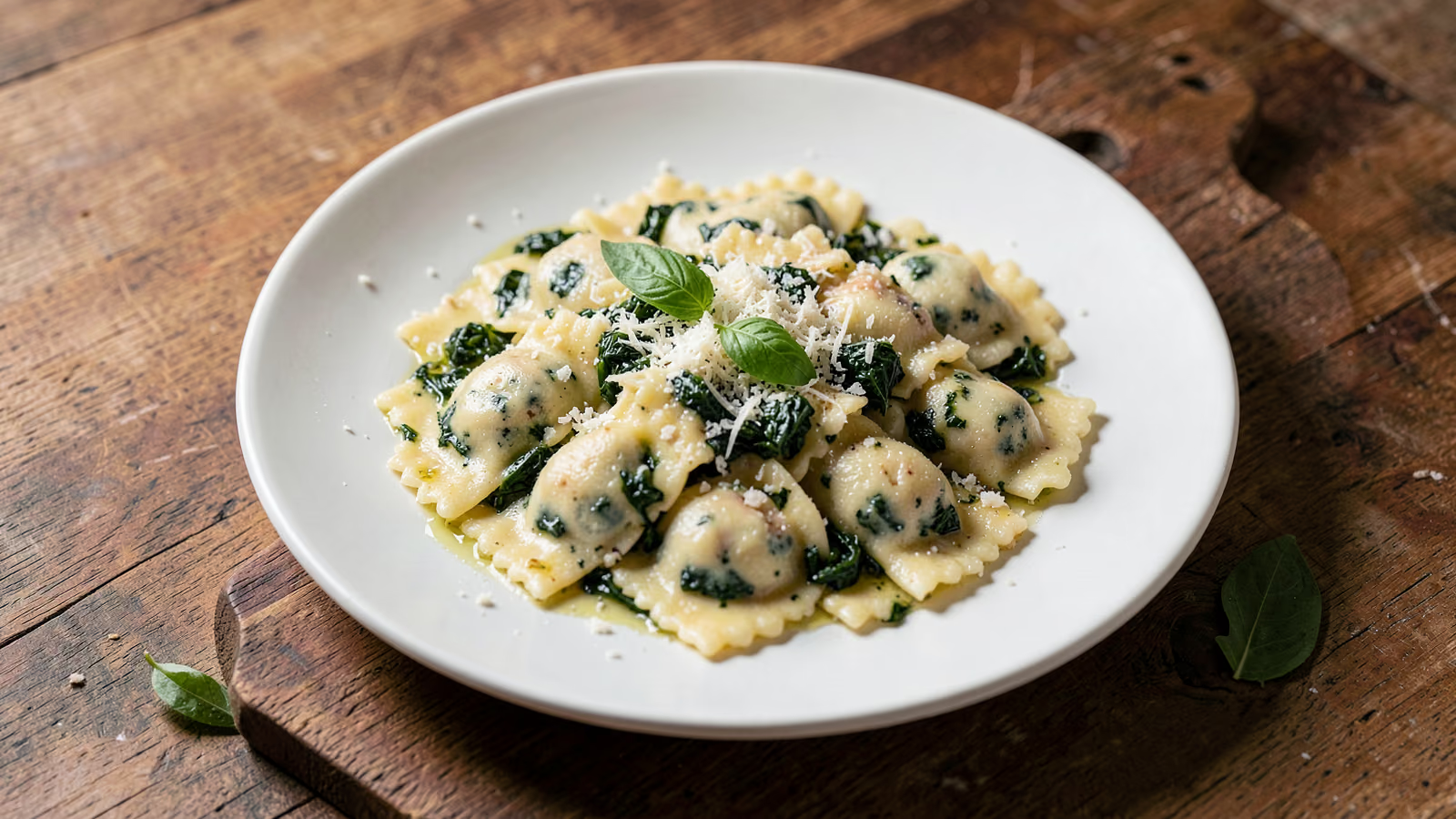
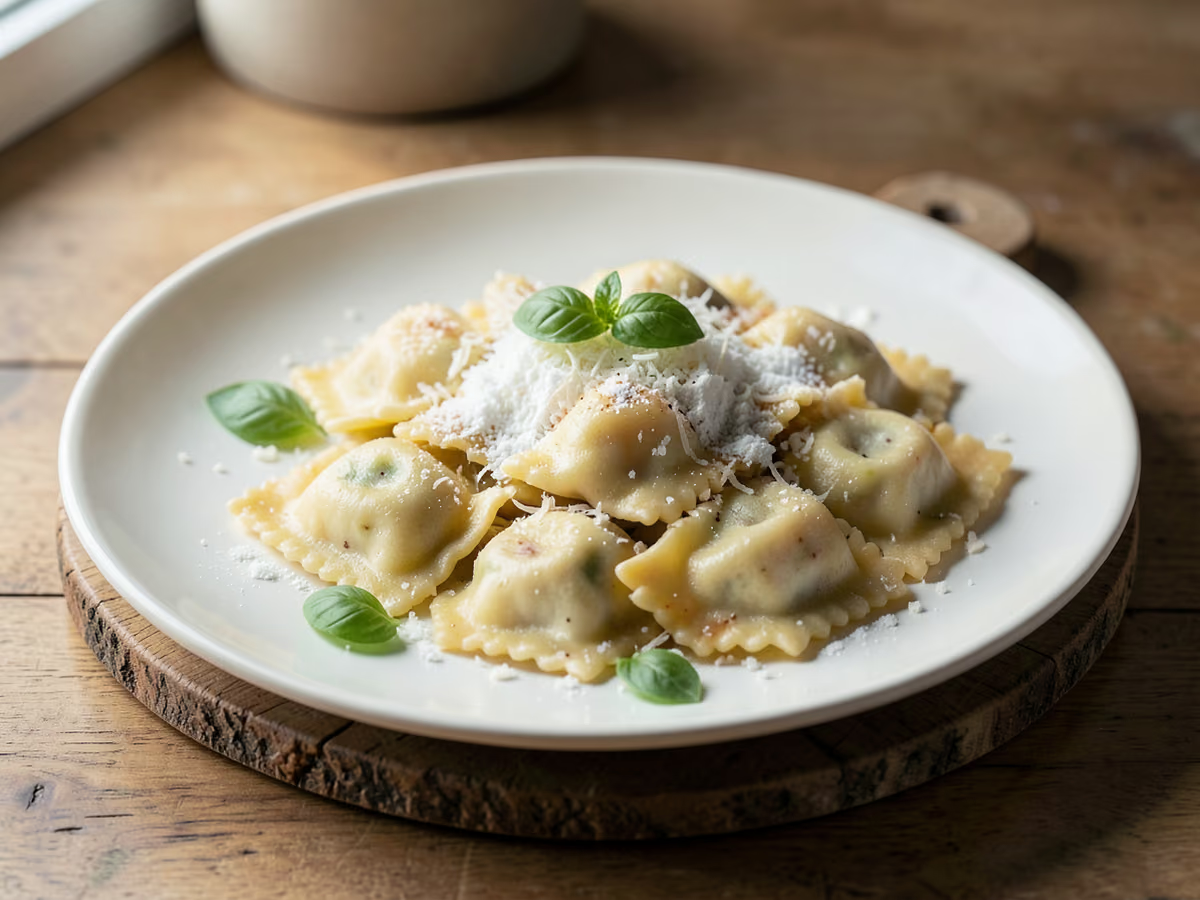
Ricotta ravioli are the quiet classic of Italy's filled pasta: thin sheets of fresh egg dough folded around drained ricotta, parmesan, egg yolk and a whisper of nutmeg, then finished in foaming butter with crisp sage. This version makes the dough from 300 g flour and 3 eggs, rests it 30 minutes and rolls it to about 1 mm so the pasta and its filling cook together in a 3 to 4 minute boil. Expect about 80 minutes from flour to table, mostly hands-on rolling; vegetarian as written. Serves 4.
- Prep
- 60 min
- Cook
- 20 min
- Total
- 110 min
- Additional time
- 30 min
- Serves
- 4
Ingredients
What you’ll need — tap to tick off as you go
- 300 g
- 1 tbsp
- 1 tsp
- 400 g
- 80 g
- 1 pinch
- 1 pinch
- 80 g
- 2 tbsp
Process
Timers built in · swap anything · ask as you cook
Make the pasta dough: mound the 300 g all-purpose flour on a clean work surface and make a well wide enough to hold 3 eggs. Add the eggs, 1 tbsp olive oil and 1 tsp fine salt, beat the liquids with a fork, then draw in flour from the walls of the well, a little at a time, until a shaggy dough forms; moving slowly from the centre keeps it even.
Knead for 8 to 10 minutes, pushing with the heel of your hand, folding and turning a quarter each time, until the dough is smooth, elastic and slightly tacky but not sticky. Wrap tightly in plastic wrap and rest at room temperature for 30 minutes. Kneading builds the gluten that lets the sheets stretch to 1 mm, and the rest relaxes it so the dough stops fighting the pin.
Make the filling: in a bowl, combine the 400 g drained ricotta, 80 g finely grated parmesan, 1 egg yolk, 1 pinch freshly grated nutmeg and 1 pinch black pepper. Mix until completely smooth, then taste and adjust the salt; the filling should be well seasoned on its own. Chill it while you roll the pasta, because a cold filling is firmer and portions more cleanly.
Divide the rested dough into 4 pieces and keep three covered so they do not dry out. Roll one piece through a pasta machine from the widest setting down to the second-thinnest, dusting with flour as needed, until you have a sheet about 1 mm thick and roughly 12 cm wide. Hold it up to the light: a faint shadow of your hand should show through.
Lay the sheet on a lightly floured surface. Place teaspoon-sized mounds of the ricotta filling, about 2 tsp each, along the lower half of the sheet, spacing them 4 cm apart. Brush the pasta around the filling with a little water; the water activates surface starch so the layers grip, and the gaps keep each seal clean.
Fold the top half of the sheet over the filling and press gently around each mound to push out every pocket of air, since trapped air expands in the pot and splits the seams. Seal the edges firmly with your fingers, then cut between the mounds with a knife or fluted pastry wheel. Transfer the ravioli to a floured tray and repeat with the remaining dough and filling.
Bring a large pot of water to a boil and add the 2 tbsp coarse salt. Meanwhile, melt the 80 g butter in a wide skillet over medium heat and add the 12 sage leaves. Cook for 2 to 3 minutes, until the butter is golden and smells nutty and the sage is crisp; take the pan off the heat before either darkens, and set it aside.
Drop the ravioli into the boiling water in batches of about 8 to 10, so the water stays at a rolling boil and the pillows never stick together. Cook for 3 to 4 minutes, until they float to the surface and the pasta is tender at the edges with a slight bite at the centre. Lift them out with a slotted spoon straight into the sage butter.
Warm the skillet over low heat and toss the ravioli gently in the sage butter for about 30 seconds, so every piece is coated and the little pasta water travelling with them melts into the sauce. Serve immediately, with extra grated parmesan and a grind of black pepper; fresh pasta waits for no one.
Why this recipe works
Kneading lines the flour's gluten into an elastic network, and the 30-minute rest lets hydration finish and the gluten relax, so the dough rolls to 1 mm without springing back or tearing. Thinness matters because fresh pasta cooks in 3 to 4 minutes: at 1 mm, dough and filling finish together instead of the pasta staying raw while the ricotta overheats. Draining the ricotta first is the safeguard; its whey is free water, and free water turns to steam in the pot and blows the seals open. Egg yolk and parmesan add fat and salt that keep the filling creamy and seasoned, and cooking in batches keeps the water rolling so the pillows cook evenly.
Equipment
- Pasta machine with a second-thinnest setting, or a heavy rolling pin — the machine makes the 1 mm sheet repeatable, while a pin takes longer and rewards a steady arm
- Large clean work surface, a wooden board or stone counter, for mounding the flour and rolling the sheets
- Large pot, 5 to 6 liters, filled generously so the ravioli move freely and the water comes back to a boil quickly
- Wide skillet or saute pan, about 28 cm, for the sage butter and tossing the ravioli without crowding
- Fine-mesh sieve and a bowl underneath, for draining the ricotta thoroughly
- Fluted pastry wheel or a sharp knife, for cutting between the mounds
- Kitchen scale, since gram-accurate measures drive both the dough and the filling
- Floured tray or large platter plus clean kitchen towels, for holding the ravioli in one layer and covering pasta that is waiting its turn
Kitchen notes
Kitchen notes
- Drain the ricotta over a bowl in the fridge, covered; the pale whey that collects is exactly the liquid that would otherwise find the weakest seam in the pot, and the drained cheese tastes sweeter and less soupy.
- Grate the nutmeg fresh on a microplane and taste the filling as you go; one pinch lifts the ricotta, while a heavy hand turns the whole plate medicinal.
- No pasta machine is no problem: roll each quarter with a heavy rolling pin on a floured board, giving the sheet a quarter turn after every few strokes, and use the same hand-shadow test to judge thickness.
- Save a cup of the starchy cooking water before the last batch goes in; a spoonful tossed with the butter lets it emulsify into a sauce that clings instead of pooling.
- Raw pasta dries from the edges within minutes, and a dried edge will not seal — keep waiting sheets under an upside-down bowl or a clean towel, and only roll what you can fill right away.
Common mistakes
- Watery filling that seeps from the seams: the ricotta went in with its whey — drain it in a fine-mesh sieve over a bowl for at least half an hour, or overnight in the fridge, and if the mix is already loose, stir in another spoonful of parmesan and chill it before filling.
- Ravioli split open in the pot: trapped air, a rushed seal or overfilled pillows — press out every air pocket as you fold, moisten the edges and press firmly, keep the mounds to about 2 tsp, and boil a single test raviolo before committing the batch.
- Doughy, heavy ravioli: the sheet was rolled too thick, so the pasta needs longer than the brief 3 to 4 minute boil allows — aim for 1 mm with a faint hand-shadow when the sheet is held up, and roll all four pieces to the same thickness.
- Dough tears or snaps back while rolling: it was under-rested or drying at the edges — give it the full 30 minutes, re-cover the pieces waiting their turn, and if a sheet still springs back, wrap it and rest it 10 minutes more.
- Bitter butter and black sage: the skillet ran too hot — keep the heat at medium, put the sage in with the butter, and pull the pan off the heat the moment the butter turns golden and nutty, before it browns past gold.
Serving suggestions
- Serve the moment they are tossed: heap the ravioli into warmed shallow bowls, spoon the sage butter and crisp leaves over the top, and pass extra parmesan and a pepper mill at the table.
- Sage butter is the classic finish, but a light fresh tomato sauce or a drizzle of olive oil with lemon zest works too; skip heavy, soupy sauces that bury the delicate ricotta.
- A crisp salad with lemon and olive oil or a plate of bitter greens cuts the richness, and crusty bread is there if you want to mop what the pasta leaves behind.
- Four servings is a generous main; as a first course, plan five or six smaller portions. A straight count from the ingredients as written puts a main-sized serving around 750 kcal, so keep the rest of the meal simple.
Variations
- Ravioloni: cut 6 to 7 cm pillows instead of small squares — the same dough and filling, one or two per plate, boiled about a minute longer; the balance shifts toward the cheese.
- Herbed filling: fold a small handful of finely chopped parsley or basil, or the zest of a lemon, into the ricotta for a softer, brighter version that suits a plain olive-oil finish; the dough and method stay the same.
- Lighter plate: use part-skim ricotta and halve the butter — the filling sets a little firmer and the sauce is less glossy, but the dish keeps its character and eats lighter.
Refrigerator
- RefrigeratorUncooked ravioli: one layer on a floured tray, covered, up to 24 hours; refrigerate within 2 hours of shaping. Cooked ravioli: an airtight container, up to 2 days.
- ReheatingReheat gently so the seals survive — a covered skillet over low heat with a splash of water, or the microwave at 50 percent power for 1 to 2 minutes, until steaming hot throughout, 74°C.
- FreezingFreeze uncooked ravioli on the tray until firm, then bag them: up to 2 months, and best within 1 month. Cook straight from frozen, adding 1 to 2 minutes to the boil; never thaw first.
- Make aheadDrain the ricotta up to a day ahead and mix the filling up to 2 days ahead; the dough itself rests 30 minutes. Shaped ravioli hold up to 24 hours in the fridge or can be frozen, so the dish can be built in stages and boiled to order.
Updated:
How this recipe was developed
- Serious Eats, fresh ricotta ravioli recipe: fresh ravioli poached about 3 minutes until they float, with a little starchy cooking water reserved to bring the sauce together.
- GialloZafferano, Ravioli di ricotta: Italian reference for the plain ricotta version — fresh egg pasta, ricotta and grana filling, butter-and-sage or tomato finish, cooking from frozen, and an energy value around 448 kcal per portion.
- The Clever Carrot, beginner's guide to fresh homemade ravioli: drain store-bought ricotta before filling (a 454 g tub can release about 80 g of whey), mix the filling up to 2 days ahead, and boil 1 to 2 test ravioli first to set your timing.
- USDA FSIS Leftovers and Food Safety and FoodSafety.gov cold storage guidance: refrigerate leftovers within 2 hours, keep 3 to 4 days, reheat to 74°C, and freeze for quality up to 2 to 3 months.
Editorial references are kept internally for verification. This page makes no claim of external certification or professional testing.
FAQ
The questions we get asked most
What is ricotta ravioli made of?
Fresh egg pasta and a cheese filling: the dough is 300 g all-purpose flour, 3 eggs, 1 tbsp olive oil and 1 tsp salt; the filling is 400 g drained ricotta with 80 g parmesan, 1 egg yolk, a pinch of nutmeg and a pinch of black pepper; the finish is 80 g butter and 12 sage leaves. It is vegetarian as written and serves 4.
Why is my ricotta ravioli filling watery?
Because the ricotta still held its whey. Supermarket ricotta can shed a surprising amount of liquid, so spoon it into a fine-mesh sieve over a bowl, cover, and drain at least half an hour — overnight in the fridge is better. If the mixed filling still looks loose, stir in another spoonful of parmesan and chill it for 15 minutes; a cold filling portions cleanly and seals without weeping.
Can I use wonton wrappers instead of fresh pasta dough?
Yes, as a shortcut: thin wrappers stand in for the egg-pasta sheets. Moisten the edges, fill, press out the air, seal, and boil 2 to 3 minutes until they float. The result is softer and less chewy than rolled dough, so treat it as a quick weeknight pan of sage butter rather than the from-scratch centrepiece; keep the filling well drained either way.
Why did my ravioli split open during boiling?
Three usual suspects: trapped air, weak seals, or overfilled pillows. Air expands as the water boils and pushes the seams apart, so press every pocket out as you fold; moisten the edges so the layers fuse, press firmly, and keep the mounds to about 2 tsp. A hard, rattling boil also tears delicate ravioli, so cook them in batches at a steady boil and lift them gently.
How long do fresh ricotta ravioli take to cook, and how do I know they are done?
Usually 3 to 4 minutes once they hit a rolling boil: they float to the surface, the pasta at the edges turns tender, and the centre keeps a slight bite. They can float before they are truly done, so taste one — if the dough still tastes raw, give it another minute. From frozen, add 1 to 2 minutes.
Can I make ricotta ravioli ahead of time or freeze them?
Both. The filling can be mixed up to 2 days ahead, and the shaped ravioli keep in a single floured layer, covered, for up to 24 hours in the fridge. For longer storage, freeze them on the tray until firm, bag them for up to 2 months, and boil straight from frozen, adding 1 to 2 minutes — do not thaw, or the pasta turns soft and sticky.
What sauce goes best with ricotta ravioli?
The classic is sage butter: 80 g butter cooked with 12 sage leaves until golden and crisp, loosened with a spoonful of starchy pasta water. A light fresh tomato sauce or a drizzle of olive oil with lemon zest also suit it. Whatever you choose, keep it thin — heavy sauces bury the delicate ricotta, and parmesan with black pepper at the table finishes the plate.
Ask KitchenMind about this recipe
Tell it what’s different tonight — it works within the actual recipe.