Saganaki Fried Cheese
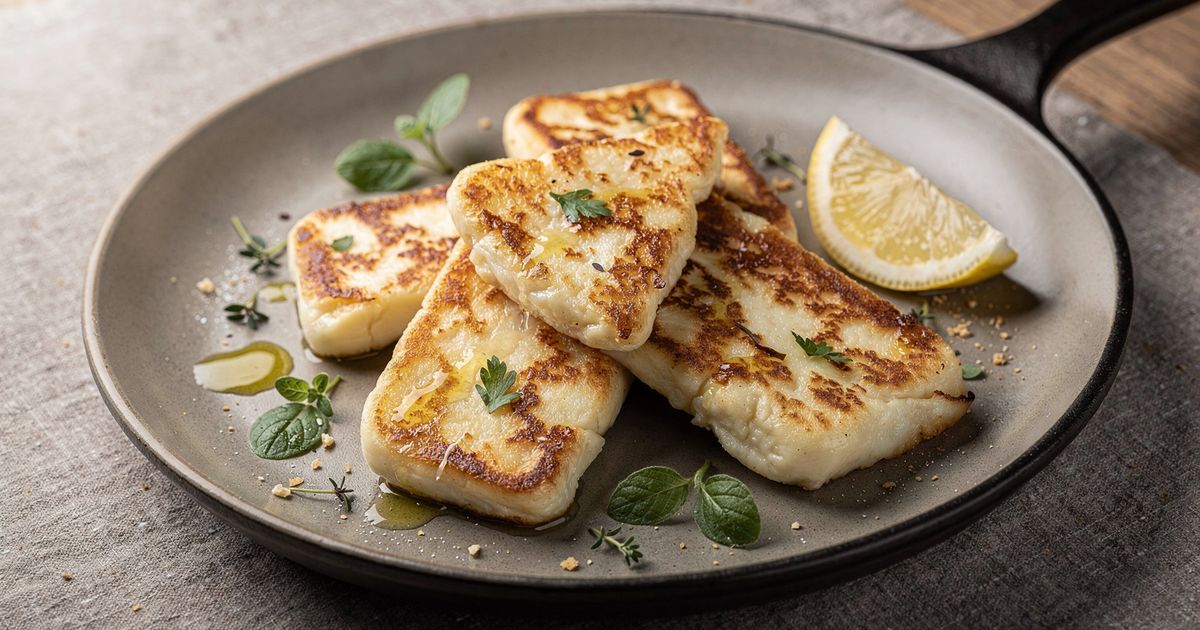
Kefalograviera sizzles in olive oil until the edges crisp, then gets a squeeze of lemon and a dusting of dried oregano and black pepper. Ready in 5 minutes for 4.
- Prep
- 5 min
- Cook
- 5 min
- Total
- 10 min
- Serves
- 4
Ingredients
What you’ll need — tap to tick off as you go
- 400 g
- 40 g
- 3 tbsp
- 1 tsp
- 1 pinch
Process
Timers built in · swap anything · ask as you cook
Pat the kefalograviera slices completely dry with paper towel. Any surface moisture will make the crust steam instead of crisp.
Spread the all-purpose flour on a shallow plate and press each cheese slice into it, turning once so both flat sides and the edges get a thin, even coat. Shake off the excess.
Heat the olive oil in a heavy non-stick or cast-iron pan over medium-high heat until it shimmers but does not smoke.
Lay the floured cheese slices in the pan with space between them. Fry for 60 to 90 seconds per side, without moving them, until the underside is deep golden and releases easily.
Flip carefully with a thin spatula and fry the second side for another 60 to 90 seconds, until golden and the cheese just begins to soften at the centre.
Lift the slices onto a warm plate, squeeze the lemon wedges over them while they are still sizzling, then scatter with the dried oregano and a pinch of black pepper. Serve immediately.
Kitchen notes
Kitchen notes
- The single biggest mistake is using a wet or too-thin slice of cheese: dry it thoroughly and keep it at least 1.5 cm thick, or it will slump into a puddle before it browns.
- Do not crowd the pan. If the slices touch, they steam each other and the crust turns leathery instead of crisp; fry in two batches if your pan is small.
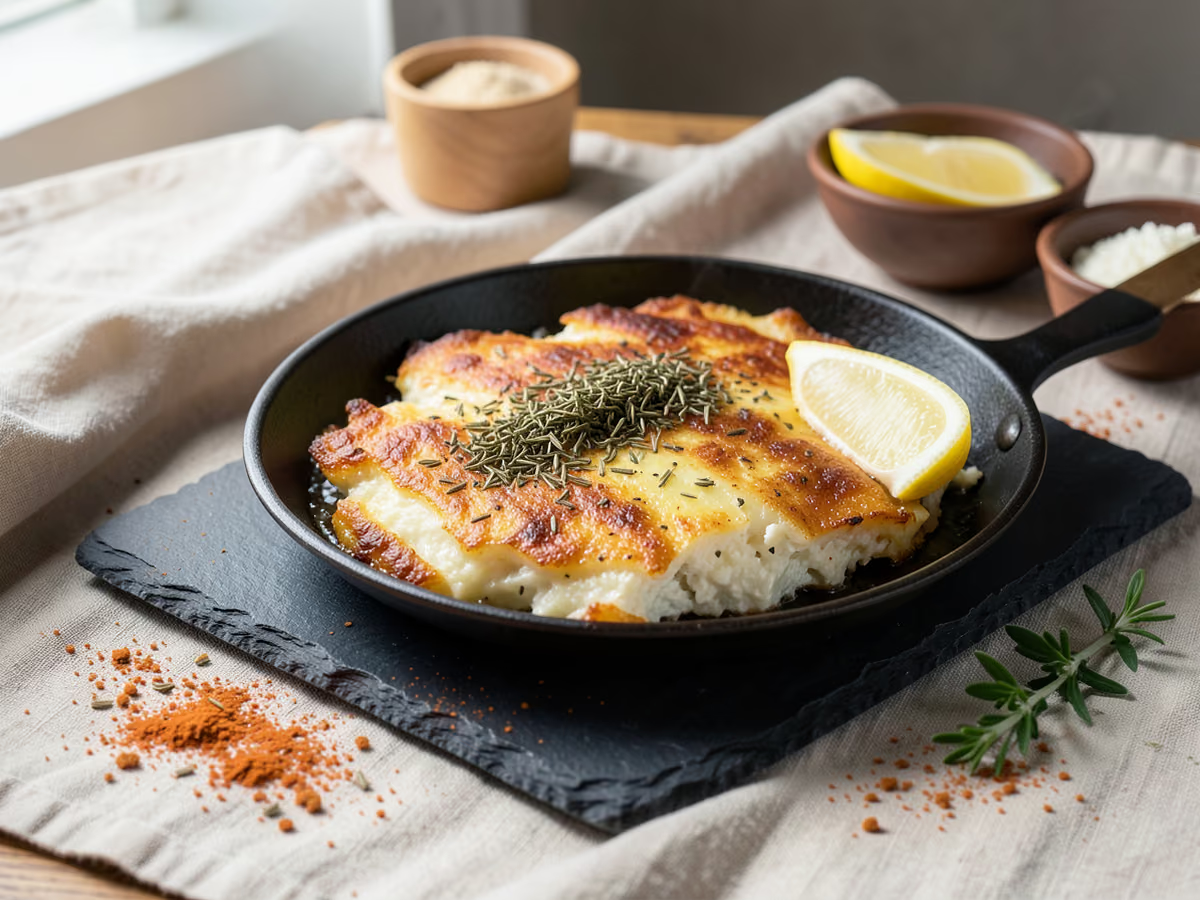
- The tell-tale sign of doneness is a rigid, golden crust that slides when nudged and a centre that gives only slightly when pressed with a finger. If it wobbles freely, it is over-melted.
- Use a cheese that squeaks when bitten, such as kefalograviera, kasseri or halloumi. Soft cheeses like feta or mozzarella will collapse and burn before they form a crust.
- Have the lemon, oregano and a warm plate ready before the cheese hits the pan. Saganaki waits for no one and is best eaten within two minutes of frying.
Substitutions
- kefalograviera cheese→halloumi or kasseri cheese, sliced to the same thickness
- all-purpose flour→fine semolina or cornstarch for a gluten-free crust
- olive oil→any neutral frying oil with a high smoke point
- dried oregano→dried thyme or a pinch of crushed red pepper flakes
Storage & reheating
Saganaki is at its best straight from the pan and does not keep well. If you must store leftovers, cool them completely, place in an airtight container and refrigerate for up to 2 days. Reheat in a dry non-stick pan over medium heat for about 2 minutes per side, or in a 180°C oven for 6 to 8 minutes, until the crust re-crisps; the microwave will make it rubbery and is not recommended. Do not freeze fried saganaki, as the crust breaks down and the cheese becomes grainy on thawing.
FAQ
The questions we get asked most
Why did my saganaki cheese melt into a puddle instead of staying in a slice?
The slice was too thin or the pan was not hot enough. Cut the cheese at least 1.5 cm thick and let the oil shimmer over medium-high heat before adding it, so the crust sets within seconds and holds the shape. A soft cheese such as feta or mozzarella will always collapse, so choose kefalograviera, kasseri or halloumi.
Can I make saganaki without flour?
Yes. A dry slice of kefalograviera or halloumi will brown on its own in a hot oiled pan, though the crust will be thinner and less crisp. For a gluten-free coating, dredge the slices in cornstarch or fine semolina instead of wheat flour, which gives a very similar golden shell.
What is the best cheese to use for saganaki?
Kefalograviera is the traditional choice because it is salty, firm and holds its shape when heated. Kasseri is the softer, milder alternative, and halloumi is the easiest to find outside Greece and behaves almost identically. Avoid any cheese that is young, soft or high in moisture.
How do I know when the saganaki is done?
The underside should be deep golden and the slice should slide freely when you nudge it with a spatula, about 60 to 90 seconds per side over medium-high heat. The centre should feel slightly soft but not liquid when pressed. If it wobbles like jelly, it has gone too far and will be hard to lift.
Can I prepare saganaki ahead of time for a party?
You can slice and flour the cheese up to 2 hours ahead and keep it covered in the fridge, but fry it only when guests are seated. Fried saganaki loses its crunch within a few minutes, so it is not a dish that can be held or reheated for a crowd. Set up a frying station and cook in batches as people arrive.
Why did the flour coating fall off in the pan?
The cheese was damp or the coating was too thick. Pat the slices bone dry, dust off all excess flour, and do not move the cheese until the crust has set and releases on its own. Flipping too early tears the coating and leaves bare cheese to stick and burn.
Is saganaki supposed to be served with lemon or with a sauce?
The classic finish is a squeeze of fresh lemon and a pinch of dried oregano, which cuts the richness of the fried cheese. Some tavernas flambé it, but a simple lemon wedge and good bread are all it needs. A drizzle of honey is a popular modern variation if you prefer a sweet-salty contrast.
Ask KitchenMind about this recipe
Tell it what’s different tonight — it works within the actual recipe.