Gazpacho
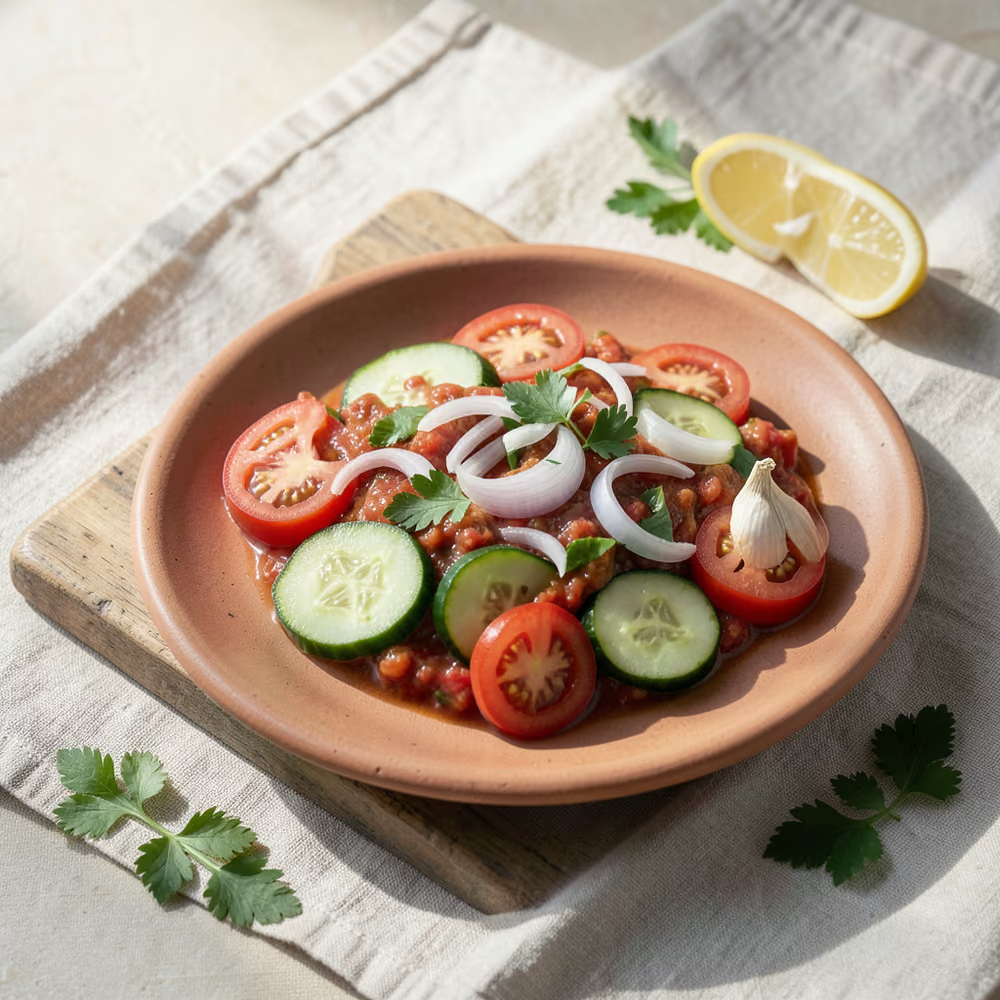
Gazpacho is Andalusia's chilled tomato soup, blended raw and served properly cold: ripe tomatoes, cucumber, red pepper and a little onion with garlic, olive oil, vinegar and a few slices of stale bread that quietly thicken the lot. Nothing is cooked and the blender does the heavy work in about 60 to 90 seconds; 15 minutes of chopping is the honest hands-on time. What it asks in return is patience with chilling, at least 1 hour and ideally 2, after which the flavours round out into something far smoother than the parts suggest.
- Prep
- 15 min
- Cook
- 0 min
- Total
- 75 min
- Additional time
- 60 min
- Serves
- 4
Ingredients
Ingredients
- 600 g
- 1 clove
- 3 tbsp
- 2 tbsp
- ½ tsp
- ¼ tsp
- 4 slices
Process
Seven steps · one pan · ask anything
Roughly chop the 600 g tomatoes, 1 cucumber, 1 red bell pepper and 0.5 onion into chunks of similar size. Knife work past this point is wasted, since everything is blended smooth; peel the cucumber first if its skin is thick, and leave the vegetables at room temperature so the soup does not start out cold and flat.
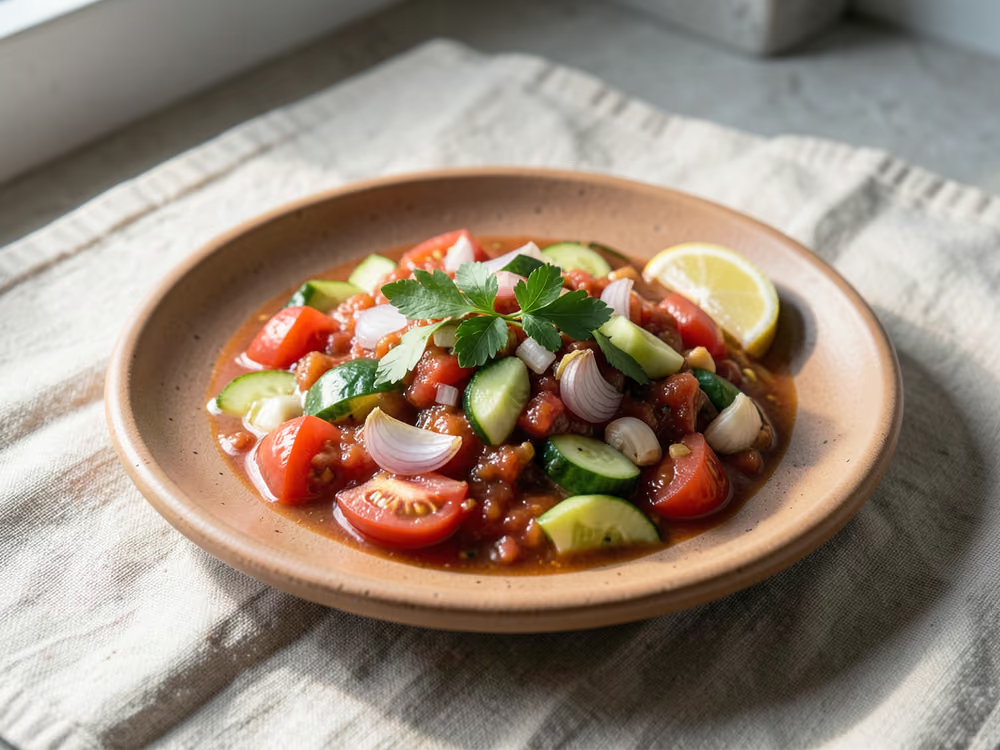
Put the chopped vegetables in the blender with the 1 garlic clove and the 2 tbsp red vinegar, and blend on high until no large pieces remain, stopping once or twice to scrape down the sides. The vinegar goes in now rather than at the end, so its acidity settles evenly into the soup instead of landing as a sharp splash.
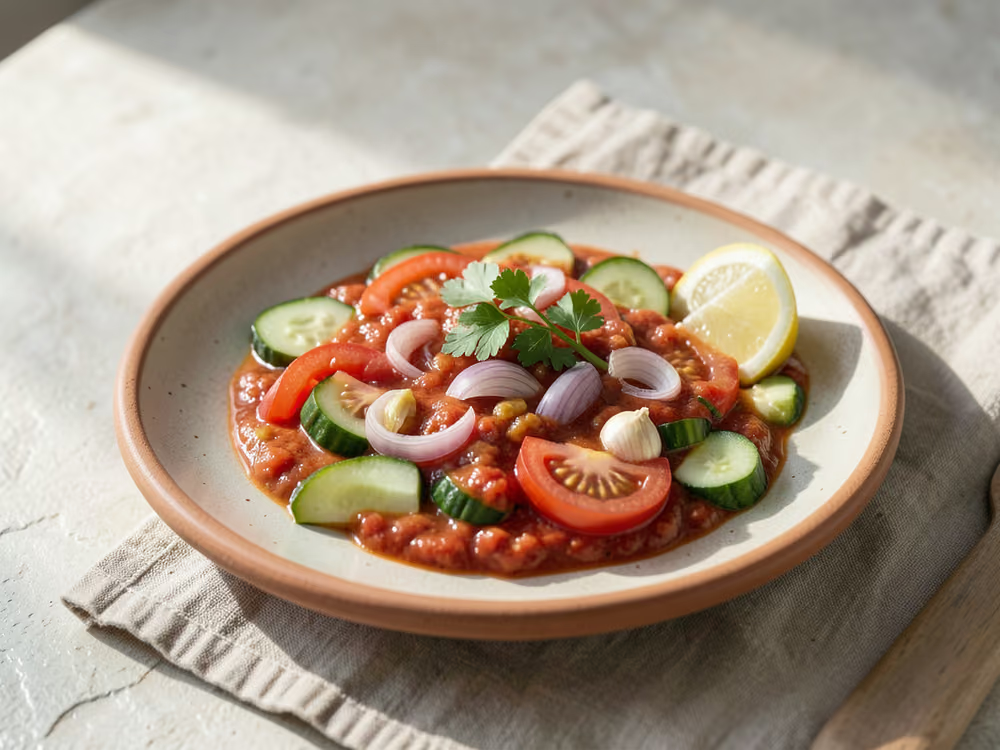
Add the 3 tbsp olive oil, 0.5 tsp salt and 0.25 tsp black pepper, then blend on high for a full 60 to 90 seconds, until the soup is completely smooth and the oil has disappeared into it. This is the emulsion step: the oil must be broken into tiny droplets, and a 10-second blend leaves flecks of skin and oil floating on top.
With the blender still running, pour in the cold water in a slow stream, stopping as soon as the soup just coats the back of a spoon. Water is the easiest way to ruin gazpacho: a little too much and the texture turns thin and the flavour dilute, and there is no taking it back out.
Tear the 4 slices of bread into pieces, add them last, and blend only 20 seconds more, just until the soup turns silky. The bread gives gazpacho its body, but longer blending makes it gluey; added after the water, its starch binds the finished texture rather than thickening the vegetables into paste.
Taste and adjust: more salt, or a little more vinegar if the soup tastes flat. Then refrigerate for at least 1 hour, ideally 2, until thoroughly chilled; cold mutes both salt and acidity, so plan on tasting once more just before serving and correcting again.
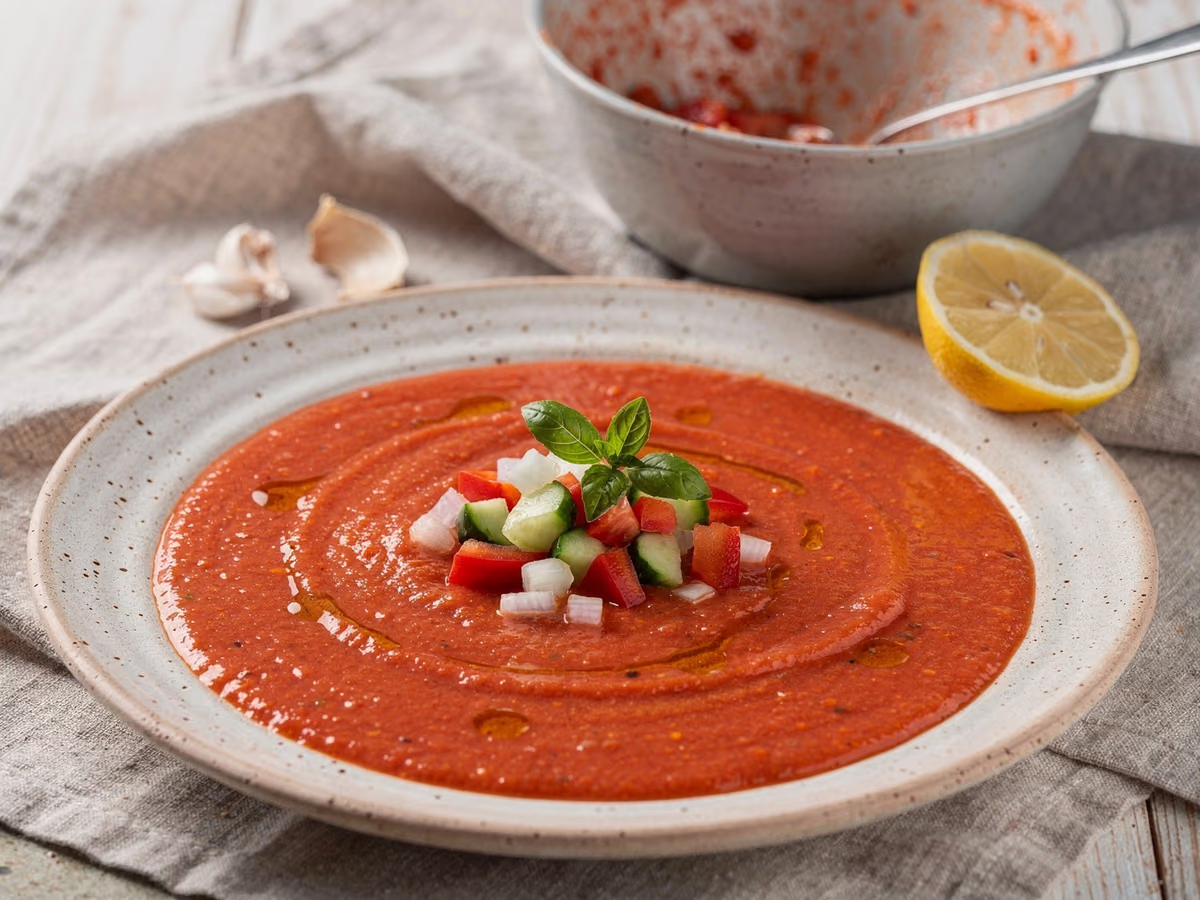
Serve in chilled bowls or glasses with a drizzle of olive oil and a scatter of finely diced cucumber or pepper, and crusty bread on the side. Gazpacho is at its best the moment it leaves the fridge, so take it to the table straight away rather than letting it sit.
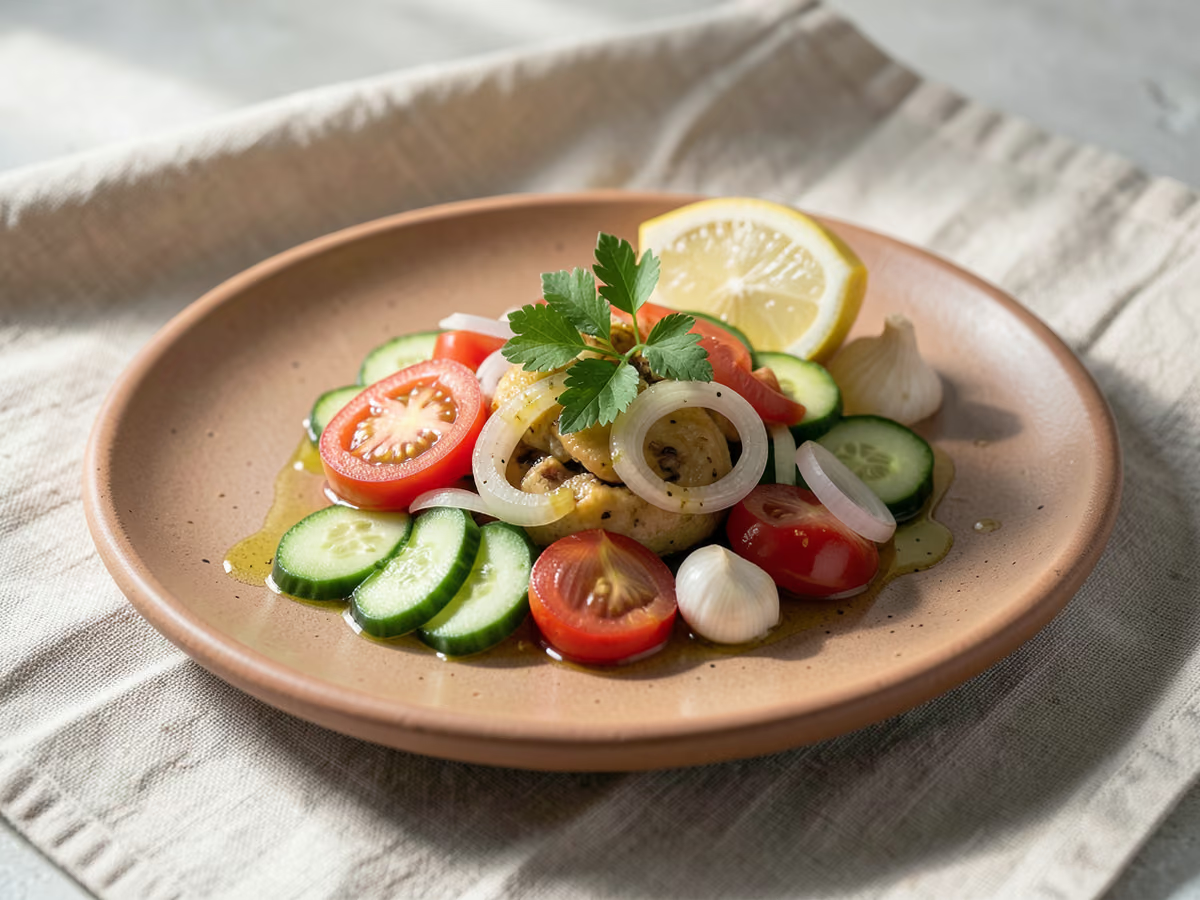
Why this recipe works
Gazpacho is an emulsion before it is a soup. Blended hard, the 3 tbsp of olive oil shatters into droplets that the tomato solids and bread starch hold in suspension, which is what turns watery vegetable juice into something pale, creamy and thick; add the oil too fast or blend too briefly and it stays greasy and separates as it stands. The 4 slices of bread are the second structural trick, thickening the soup without flour and rounding off the raw edge of the vegetables. Chilling does more than cool: cold mutes the sharp, grassy notes of raw vegetables and lets the sweet, savoury side of the tomatoes come forward.
Equipment
- Blender with a 1.5 litre jug or larger
- Chef's knife and cutting board
- Measuring spoons and a measuring jug
- Fine-mesh sieve, optional for a silkier soup
- Large jug or bowl for chilling
- Airtight jar or bottle for storage
Kitchen notes
Kitchen notes
- Chill the serving glasses, bowls or jug while the soup chills; gazpacho warms quickly in a room-temperature bowl, and its charm is that it arrives properly cold.
- Keep a few tablespoons of the cucumber and pepper back, dice them very fine, and stir them in after blending if you like texture; deliberate little cubes beat half-pulverised lumps.
- Taste it twice, once seasoned as blended and once again when cold, because cold blunts salt and acidity. Most gazpacho needs a final pinch of salt and a few drops of vinegar at the last moment.
- Bread should be stale, not fresh: day-old slices thicken the soup and blend invisibly, while fresh bread clumps and turns the texture pasty.
- A thread of fresh olive oil over the bowl at the table adds an aroma that blending flattens; keep a small bottle out for serving.
Common mistakes
- Gluey, pasty texture: the bread sat in the blender far longer than it needed. Tear the 4 slices and give them only 20 seconds at the end, just until the soup turns silky.
- Thin, watery soup: too much water went in, or the tomatoes were pale and bland to begin with. Add the water in a slow stream and stop at the spoon-coat mark, and start with the ripest room-temperature tomatoes you can buy.
- Flat, raw-tasting soup: it went from blender to bowl without a proper chill. The 1 hour minimum is doing real work, because cold is what softens the raw vegetable notes and brings the tomatoes forward.
- Oil floating on top or the soup splitting in the jug: the oil went in too fast or the blend was too short. Once the vegetables are smooth, give the oil the full 60 to 90 seconds to emulsify, and re-blend briefly if it separates after standing.
- A bitter aftertaste: too much garlic, garlic blended too long, or an olive oil that has gone old and harsh. One fresh clove is the ceiling, and taste your oil before it goes in.
- Flecked with skin and seeds: blended only briefly. Count on a full 60 to 90 seconds once the oil is in, and if you want the silkiest possible bowl, push the finished soup through a fine-mesh sieve.
Serving suggestions
- Serve in chilled bowls or straight-sided glasses as four portions, with a thread of olive oil and a scatter of finely diced cucumber or pepper on top.
- Crusty bread on the side is close to mandatory in Andalusia; a bowl of gazpacho and good bread is a lunch, not a starter.
- Chilled sparkling water or iced tea alongside keeps the theme, and the jug belongs in the fridge between pours rather than on the table.
- For a party, serve in small glasses as a first bite, or set out garnishes such as diced vegetables and croutons and let people build their own bowl.
Variations
- Strained, Seville-style: push the blended soup through a fine-mesh sieve and serve it in glasses over ice, if you like; the texture goes silky and the flavour tastes cleaner and colder.
- Chunky salad style: blend most of the vegetables smooth and fold in a finely diced handful of cucumber, pepper and tomato at the end, so the bowl has deliberate texture instead of stray lumps.
- White gazpacho, a different soup: the same bread-and-oil emulsion built on ground almonds, garlic and water instead of tomatoes, finished with a splash of vinegar and served with grapes; same technique, completely different bowl.
Refrigerator
- RefrigeratorUp to 3 days in a sealed glass jar or airtight container; stir or shake well before serving, because the emulsion separates naturally as it stands.
- ReheatingNever reheat it: heat breaks the emulsion and cooks the fresh edge the soup depends on. Serve it straight from the fridge, and if it has thickened overnight, loosen it with 1 to 2 tbsp of ice-cold water.
- FreezingNot ideal: the emulsion breaks and the cucumber turns mushy. If you must, freeze for up to 1 month in a container filled to the top to keep out air, then thaw overnight in the fridge and re-blend briefly before serving.
- Make aheadThis is the ideal make-ahead soup, and it genuinely improves on day 2 as the flavours meld. Blend it, chill it for at least 1 hour, and re-taste before serving, because seasoning that was right when it was blended tastes shy when cold.
Updated:
How this recipe was developed
- Serious Eats gazpacho guidance (blend at high speed until completely smooth, strain for silkiness, keeps up to 3 days refrigerated)
- NYT Cooking gazpacho guidance (drizzle the olive oil in with the motor running to build the emulsion, chill until very cold, loosen with ice water)
- USDA FSIS leftovers guidance (refrigerate within 2 hours; leftovers 3 to 4 days in the fridge)
Editorial references are kept internally for verification. This page makes no claim of external certification or professional testing.
Gallery
FAQ
Real questions, straight answers
Why did my gazpacho turn out watery and bland?
Usually underripe or fridge-cold tomatoes plus too much water. Use ripe room-temperature tomatoes, add the cold water in a slow stream and stop when the soup just coats a spoon, and wake the bowl up with a pinch more salt and a teaspoon of vinegar.
Can I make gazpacho ahead of time?
Yes, it is built for it. Blend it, chill it for at least 1 hour, and it keeps up to 3 days in the fridge, often tasting better on day 2. Stir well before serving and taste for salt again, since seasoning fades when cold.
How do I know when gazpacho is done?
When it is completely smooth, with no visible bits of skin or seed, and the olive oil is fully emulsified with none pooling on top. It should be pourable but thick enough to coat the back of a spoon; if it still looks grainy, blend another 30 seconds.
Can I use canned tomatoes instead of fresh?
Yes. Use 600 g of canned whole peeled tomatoes, drained, and skip or reduce the added water because they are juicier. They are often sweeter and more consistent out of season; add the extra vinegar only after tasting, since they can be more acidic.
Why did my gazpacho separate or taste bitter?
Separation means the oil did not emulsify: it went in too fast or the blend was too short, and a brief re-blend pulls it back together. Bitterness usually comes from too much garlic blended too long, or from old, harsh olive oil, so use one small clove and a fresh, mild oil.
Can I leave the bread out or use gluten-free bread?
Yes. The bread only thickens the soup, so omit it and cut the water slightly, or use 2 tbsp of stale gluten-free breadcrumbs or 1 tbsp of ground almonds. Without it the texture is lighter and more juice-like, so chill it well before serving.
Ask KitchenMind about this recipe
Adapt it in one sentence — it stays grounded in the recipe.