- Prep
- 25 min
- Cook
- 20 min
- Total
- 45 min
- Serves
- 6
Ingredients
What you’ll need — tap to tick off as you go
- 500 g
- 7 g
- 8 g
- 10 g
- 500 ml
- 40 g
- 150 g
- 15 ml
Process
Timers built in · swap anything · ask as you cook
In a large bowl, whisk the bread flour, instant yeast, fine salt and granulated sugar until evenly combined.
Pour in the lukewarm water and mix with a wooden spoon until a shaggy dough forms, then knead in the bowl for 2 minutes.
Turn the dough onto a lightly floured surface and knead for 8 to 10 minutes, until smooth, elastic and only slightly tacky.
Lightly brush a clean bowl with olive oil, place the dough inside, cover and let it rise at room temperature for 60 minutes, until doubled in size.
Punch down the dough, divide it into 6 equal pieces of about 135 g each, then roll each piece into a tight ball. Cover and rest for 10 minutes.
Roll each ball into a rope about 60 cm long and 2 cm thick. Lift one rope, twist it into a loose two-strand spiral, then bring the ends together to form a ring, pressing firmly to seal.
In a wide shallow dish, stir the grape molasses into the 200 ml water until fully dissolved. Spread the sesame seeds on a separate plate.
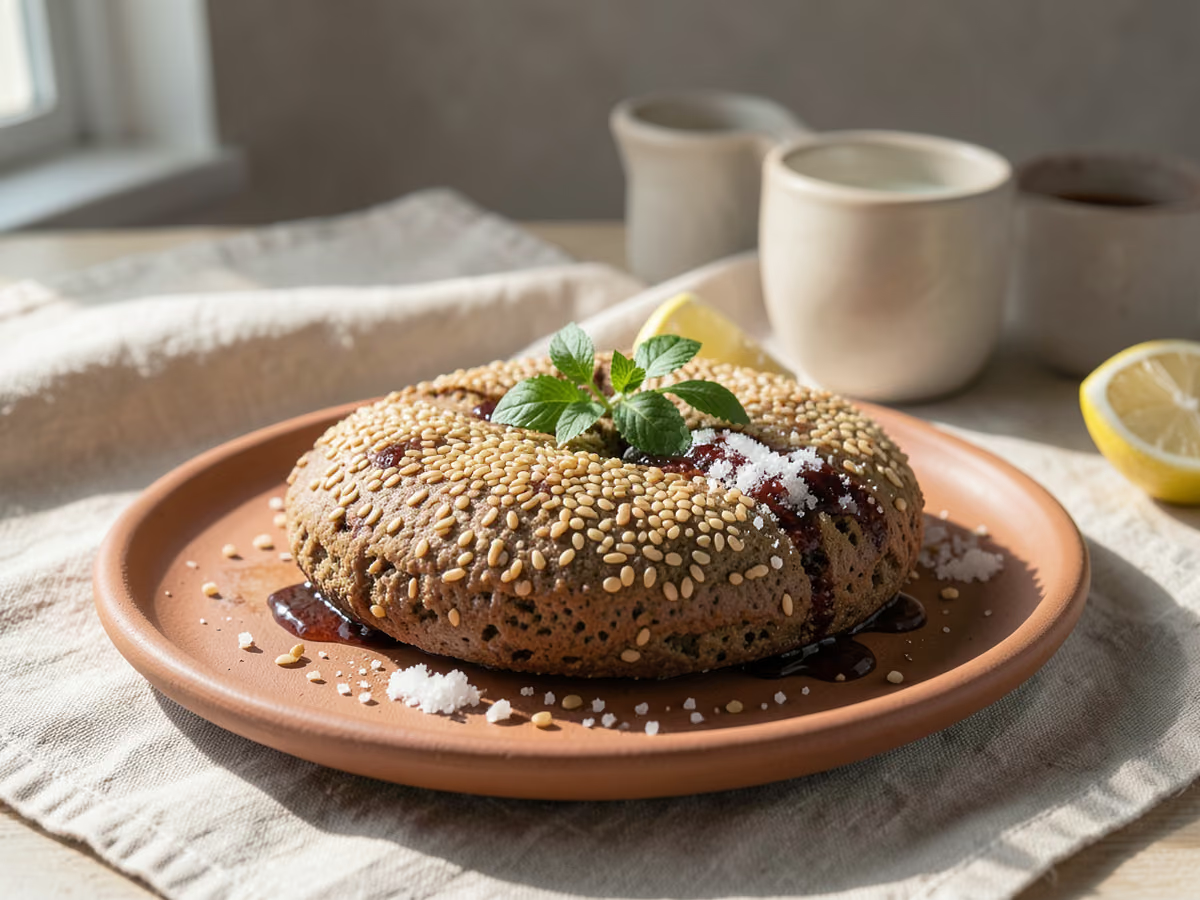
Dip each ring into the molasses water for 5 seconds, turning once, then press it into the sesame seeds so the entire surface is thickly coated. Place on a parchment-lined baking tray.
Let the coated rings rest uncovered for 20 minutes while you heat the oven to 220°C with a rack in the middle.
Bake for 18 to 20 minutes, until deep golden brown and crisp. The rings should sound hollow when tapped on the base.
Cool on a wire rack for at least 15 minutes before eating; the crust crisps further as it cools.
Kitchen notes
Kitchen notes
- The most common mistake is a thin, patchy sesame coating: press the wet dough firmly into the seeds and do not shake off the excess, or the crust will bake up pale and bare.
- The molasses bath is what gives simit its colour and shine. If you skip it, the bread will taste flat and stay blond no matter how long you bake it.
- Do not over-flour the dough while shaping. A slightly tacky dough gives the characteristic chew; too much flour makes the rings dense and bready.
- Rest the coated rings for 20 minutes before baking. This short proof lets the dough relax so the rings do not split open at the seam in the oven.
- Bake until the base is firm and the ring sounds hollow when tapped. Underbaked simit turns leathery as it cools instead of crisp.
Substitutions
- grape molasses→date molasses or pomegranate molasses
- bread flour→all-purpose flour (add 2 minutes to the kneading time)
- instant yeast→active dry yeast (dissolve in the lukewarm water first and increase the first rise to 90 minutes)
- sesame seeds→a 50/50 mix of sesame and nigella seeds
Storage & reheating
Keep baked simit in a paper bag or a loosely covered bread box at room temperature for up to 2 days; the crust softens in plastic, so avoid airtight containers. For longer storage, wrap each ring in foil and freeze for up to 2 months. To refresh, sprinkle with a little water and warm in a 180°C oven for 5 to 6 minutes, or split and toast cut-side down in a dry pan over medium heat for 2 minutes.
FAQ
The questions we get asked most
Why did my simit turn out pale instead of dark brown?
The colour comes almost entirely from the molasses bath, not the oven. Use a ratio of 40 g molasses to 200 ml water and dip each ring for a full 5 seconds, turning once. If you diluted the bath too much or brushed it on instead of dipping, the crust will stay blond even at 220°C.
Can I make simit dough the night before?
Yes. After the first rise, punch down the dough, cover the bowl tightly and refrigerate for up to 16 hours. Let it sit at room temperature for 30 minutes before dividing and shaping. The cold dough is slightly stiffer, so add a teaspoon of water if it feels dry.
Why did my rings split open at the seam during baking?
The seal was not pressed firmly enough or the ring was shaped too tightly. Pinch the joined ends hard, then roll the seam gently on the counter to fuse it. Also let the coated rings rest 20 minutes before baking so the gluten relaxes and the dough expands without tearing.
Can I use blackstrap molasses instead of grape molasses?
Blackstrap is much more bitter and will darken the crust too aggressively. Date molasses or pomegranate molasses are the closest match. If you only have blackstrap, use half the amount and add 5 g of sugar to the bath to balance the bitterness.
How do I know when simit is fully baked?
The crust should be deep mahogany and the base firm and dry. Lift one ring and tap the bottom; a hollow sound means it is done. If the base still feels soft or spongy, return it to the oven for 3 more minutes, as underbaked simit goes leathery as it cools.
Can I freeze simit and reheat it later?
Yes, simit freezes well. Cool completely, wrap each ring in foil and freeze for up to 2 months. Reheat from frozen at 180°C for 8 to 10 minutes, or thaw at room temperature for 2 hours and warm for 5 minutes. The sesame crust stays crisp if you reheat in the oven rather than a microwave.
Why is my simit dry and crumbly inside?
Too much flour or an over-long bake is usually the cause. Measure the flour by weight, not by scooping with a cup, and stop kneading as soon as the dough is smooth and elastic. Also check the oven with an thermometer, since a hot oven can dry the crumb before the crust browns.
Ask KitchenMind about this recipe
Tell it what’s different tonight — it works within the actual recipe.