- Prep
- 30 min
- Cook
- 35 min
- Total
- 65 min
- Serves
- 8
Ingredients
What you’ll need — tap to tick off as you go
- 400 g
- 240 ml
- 100 ml
- 50 g
- 7 g
- 6 g
- 40 g
- 1 tbsp
Process
Timers built in · swap anything · ask as you cook
Make the tangzhong: in a small saucepan, whisk 20 g of the bread flour with the 100 ml water until smooth. Cook over medium heat, whisking constantly, for 1–2 minutes until the mixture thickens into a glossy paste that holds a trail. Scrape into a bowl and let it cool to room temperature.
In a large bowl or stand mixer bowl, combine the remaining 380 g bread flour, granulated sugar, instant yeast and fine salt. Add the cooled tangzhong, lukewarm whole milk and beaten egg.
Mix on low speed with a dough hook, or knead by hand, for 5 minutes until a shaggy dough forms. Add the softened unsalted butter in two additions and knead for 8–10 minutes more, until the dough is smooth, elastic and pulls away from the bowl.
Shape the dough into a ball, place it in a lightly oiled bowl, cover and let it rise in a warm spot for 60–90 minutes, until doubled in size.
Punch down the dough and divide it into 4 equal pieces, about 190 g each. Roll each piece into a smooth ball, cover and rest for 10 minutes.
Roll one ball into an oval about 20 cm long, fold the two long sides to the center, then roll it up from the short end into a tight cylinder. Repeat with the remaining pieces.
Place the 4 cylinders seam-side down in a greased 20 x 10 cm loaf pan, spacing them evenly. Cover and proof for 45–60 minutes, until the dough rises to just below the rim of the pan.
Heat the oven to 180°C. Brush the top of the loaf with the egg wash, if using.
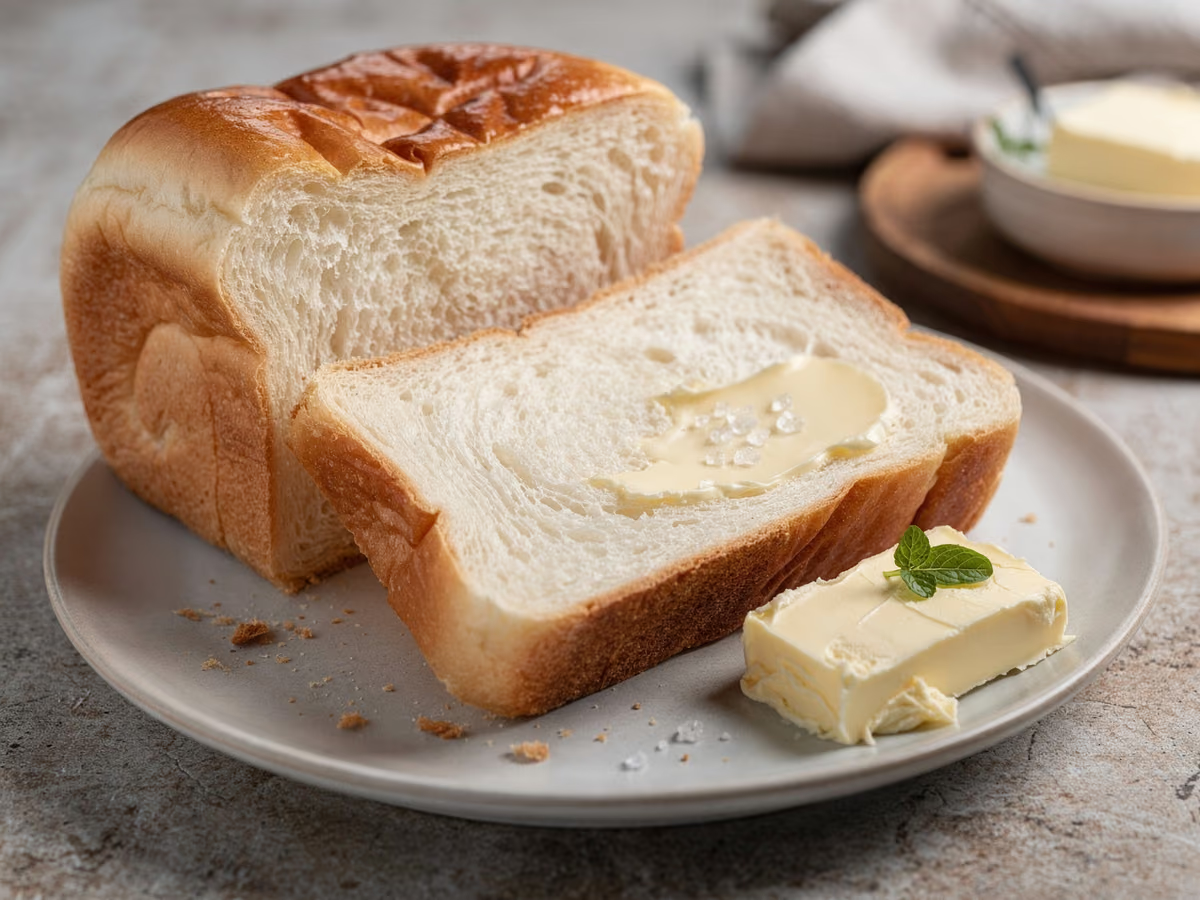
Bake for 30–35 minutes, until the top is deep golden brown and the loaf sounds hollow when tapped. If the top browns too fast, tent it loosely with foil after 20 minutes.
Remove from the pan and cool completely on a wire rack for at least 1 hour before slicing, so the crumb sets.
Kitchen notes
Kitchen notes
- The tangzhong is what makes shokupan soft: cook it until it is thick like pudding and let it cool before adding, or the heat will kill the yeast.
- Knead until the dough passes the windowpane test (stretch a small piece thin enough to see light through without tearing); under-kneaded dough bakes up tight and dry.
- Proof until the dough reaches just below the pan rim; if it over-proofs, the loaf collapses in the oven and the crumb turns gummy.
- Cool completely before slicing. Cutting hot bread smears the crumb and makes it seem underbaked.
Substitutions
- whole milk→oat milk or soy milk
- unsalted butter→vegan butter or coconut oil
- instant yeast→active dry yeast (same weight, proof in the lukewarm milk for 10 minutes first)
- bread flour→all-purpose flour (the loaf will be slightly less chewy)
Storage & reheating
Keep the cooled loaf in a paper bag or a bread box at room temperature for up to 2 days, or wrap it tightly in plastic and refrigerate for up to 4 days. For longer storage, slice and freeze in a zip-top bag for up to 2 months. Reheat slices in a toaster or in a 150°C oven for 5 minutes; avoid the microwave, which makes the crust rubbery.
FAQ
The questions we get asked most
Why is my shokupan dry and crumbly?
Dry shokupan usually means the dough was under-kneaded or the tangzhong was too thin, so it could not hold moisture. Knead until the dough is smooth and windowpane-elastic, and cook the tangzhong until it is a thick paste. Also measure the flour by weight, since too much flour is the most common cause of a dry loaf.
Can I make shokupan without a stand mixer?
Yes. Mix the dough with a wooden spoon, then knead by hand on a lightly floured counter for 12-15 minutes, adding the butter after the first 5 minutes. The dough will be sticky at first; resist adding extra flour and use a bench scraper to lift and fold it until it becomes smooth.
Why did my loaf collapse in the oven?
The dough was over-proofed, so the gluten structure could not support the rise. Next time, proof only until the dough reaches just below the rim of the pan, about 45-60 minutes in a warm spot. If your kitchen is very warm, check at 35 minutes.
How do I know when shokupan is fully baked?
The top should be deep golden brown and the loaf should sound hollow when tapped on the bottom. An instant-read thermometer inserted into the center should read about 93-96°C. If it is lower, return it to the oven for 5 more minutes.
Can I use active dry yeast instead of instant yeast?
Yes, use the same 7 g. Warm the whole milk to about 35°C, stir in the yeast with a pinch of the sugar, and let it sit for 10 minutes until foamy before mixing it into the dough. This proofing step confirms the yeast is alive.
Can I bake shokupan in a regular 23 x 13 cm loaf pan?
Yes, but the loaf will be wider and slightly flatter. Divide the dough into 4 pieces as written and place them side by side; the bake time stays about the same. Start checking at 28 minutes, since a wider pan exposes more surface area.
How long does homemade shokupan stay fresh?
At room temperature in a paper bag it stays soft for about 2 days; in a sealed plastic bag it keeps for 3 days. For longer storage, slice and freeze for up to 2 months, then toast slices directly from frozen.
Ask KitchenMind about this recipe
Tell it what’s different tonight — it works within the actual recipe.