- Prep
- 30 min
- Cook
- 25 min
- Total
- 55 min
- Serves
- 8
Ingredients
What you’ll need — tap to tick off as you go
- 300 g
- 2 tbsp
- 30 g
- 1 tsp
- 1 pinch
- 1 l
- 250 g
- 3 tbsp
- 40 g
Process
Timers built in · swap anything · ask as you cook
In a large bowl, whisk 300 g all-purpose flour, 2 tbsp granulated sugar, 1 tsp baking powder and 1 pinch fine salt until evenly combined.
Add 3 eggs, 30 g softened unsalted butter and the finely grated zest of 1 orange. Mix with a fork, then knead on a lightly floured surface for 5 to 6 minutes until the dough is smooth, supple and only slightly sticky. If it clings to your hands, work in 1 tbsp more flour at a time.
Wrap the dough in plastic and rest at room temperature for 20 minutes so the gluten relaxes and the orange zest perfumes the dough.
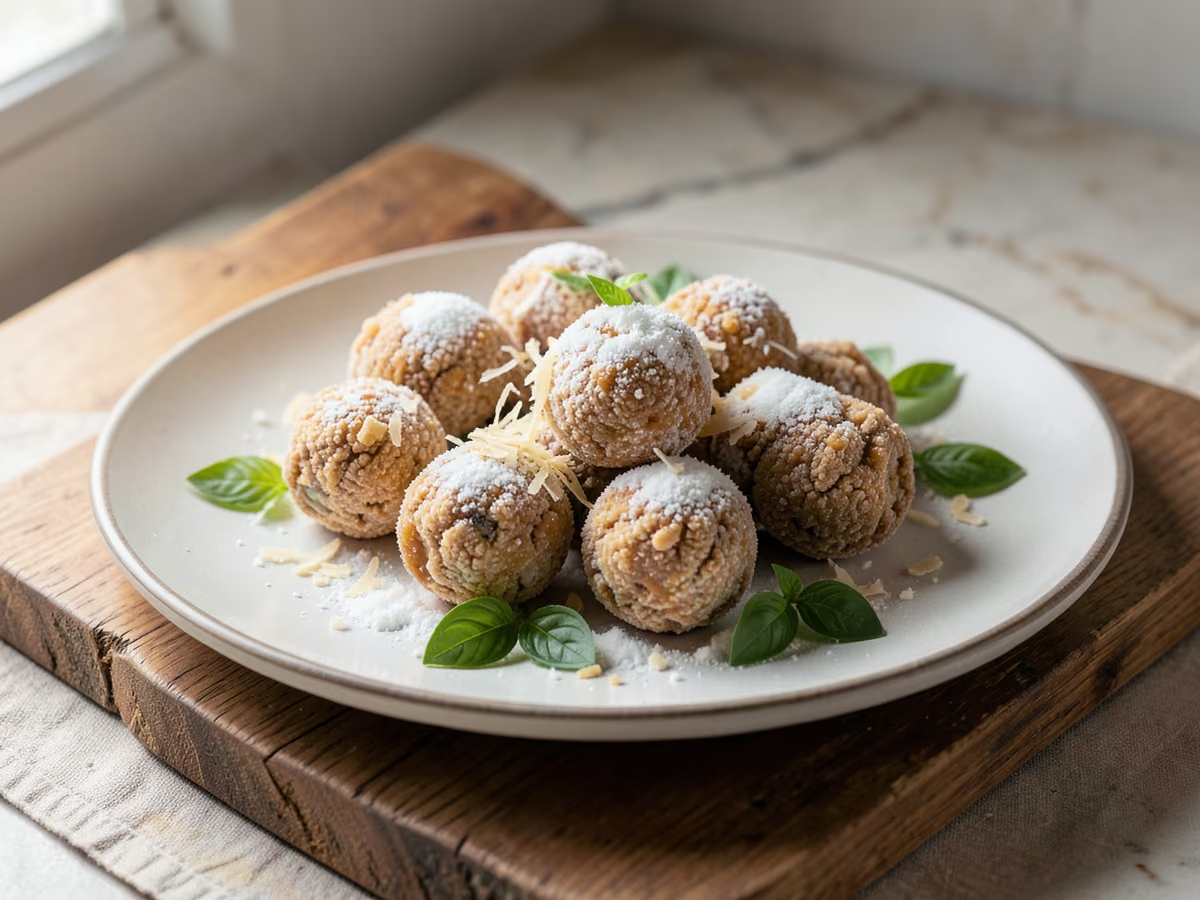
Divide the dough into 6 pieces. Roll each piece into a rope about 1 cm thick, then cut into 1 cm pieces. Roll each piece between your palms into a small ball. Keep the finished balls on a floured tray, uncovered, so they dry slightly and fry without bursting.
Pour 1 l vegetable oil into a deep, heavy pot, filling it no more than halfway. Heat over medium heat until a dough ball dropped in sizzles gently and rises to the surface within 2 seconds, about 170°C. Do not let the oil smoke.
Fry the balls in batches of about 20, without crowding, for 2 to 3 minutes, stirring gently with a slotted spoon, until deep golden brown and puffed. Adjust the heat to keep the oil at a steady 170°C. Remove with a slotted spoon and drain on a tray lined with paper towels. Repeat with the remaining balls.
In a wide, heavy saucepan, warm 250 g honey over low heat for 2 to 3 minutes until it is fluid and just beginning to bubble at the edges. Do not let it boil hard or it will turn bitter.
Add all the fried balls to the honey at once and toss gently with a wooden spoon or silicone spatula for 1 to 2 minutes, until every ball is evenly coated and the honey has thickened slightly and clings to the dough.
Immediately transfer the honey-coated balls to a serving platter and, using a spoon, shape them into a loose wreath or mound about 20 cm wide. Work quickly while the honey is still warm and pliable.
Scatter 3 tbsp rainbow sprinkles and, if using, 40 g chopped candied orange peel over the top, pressing them lightly so they stick. Let the struffoli set at room temperature for at least 30 minutes before serving.
Kitchen notes
Kitchen notes
- The most common mistake is frying at too low a heat: the balls soak up oil and turn greasy. Keep the oil at 170°C and test with one ball before frying a batch.
- Do not overboil the honey. It should be fluid and barely bubbling; a hard boil makes it dark and bitter and it will set rock-hard around the balls.
- Roll the dough balls small and uniform, about 1 cm. Larger balls stay raw in the center while the outside browns.
- Toss the balls in the honey only when both the honey and the fried balls are still warm; cold balls make the honey seize and clump.
- If the honey coating becomes too thick while shaping, set the platter over a bowl of hot water for 30 seconds to loosen it again.
Substitutions
- orange zest→lemon zest or 1 tsp vanilla extract
- honey→date syrup or maple syrup
- rainbow sprinkles→finely chopped toasted almonds or pistachios
- unsalted butter→same amount of olive oil or dairy-free margarine
Storage & reheating
Store struffoli in an airtight container at room temperature for up to 5 days; the honey keeps them moist, but they soften each day. Do not refrigerate, as the honey turns grainy and the balls harden. To refresh, spread them on a baking tray and warm in a 150°C oven for 5 to 7 minutes, then let cool for 10 minutes before serving. For longer storage, freeze in a single layer for up to 2 months and thaw at room temperature for 2 hours before warming.
FAQ
The questions we get asked most
Why did my struffoli turn out hard and crunchy?
The dough was likely overworked or too dry, or the balls were fried too long at too low a heat. Knead only until smooth, keep the dough soft, and fry at 170°C until just golden. The honey coating softens them slightly as they sit, so a short rest after assembly helps.
Can I make struffoli ahead of time?
Yes. Fry the balls up to 2 days ahead and store them in an airtight container at room temperature. Toss them in warm honey and decorate on the day you serve, because the sprinkles and the glossy coating look best fresh.
How do I keep the honey from hardening into a solid block?
Warm the honey only until fluid and barely bubbling, then toss the balls off the heat and shape them immediately. If the honey cools too much while you work, set the bowl over a pan of simmering water for a few seconds to loosen it.
Can I bake the dough balls instead of frying them?
You can, but the texture will be more like small cookies than the classic light, crisp struffoli. Arrange the balls on a lined tray and bake at 180°C for 12 to 15 minutes, turning once, until golden. Toss them in honey while still warm.
Why did my struffoli fall apart when I tried to shape the wreath?
The honey was too hot and thin, or you waited too long and it set. Toss the balls in honey that is warm but not boiling, then shape the wreath immediately with lightly oiled hands or a spoon. If it sets, warm the whole platter briefly over hot water.
Can I use a different sweetener instead of honey?
Yes. Date syrup or maple syrup both work, though the flavor will differ and the coating may stay slightly softer. Use the same weight, warm it gently, and toss the balls as soon as it is fluid.
How do I know when the dough balls are fried through?
They should float, puff slightly and turn an even deep golden brown, about 2 to 3 minutes per batch. Cut one open: the inside should be cooked and dry, not doughy. If the center is pale and sticky, lower the oil temperature slightly and fry a little longer.
Ask KitchenMind about this recipe
Tell it what’s different tonight — it works within the actual recipe.