- Prep
- 15 min
- Cook
- 10 min
- Total
- 25 min
- Serves
- 4
Ingredients
What you’ll need — tap to tick off as you go
- 250 ml
- 250 ml
- 60 g
- 2 g
- 1 tsp
- ½ g
- 150 g
- 1 tsp
Process
Timers built in · swap anything · ask as you cook
In a small bowl, whisk the agar-agar powder with 2 tbsp of the whole milk until completely dissolved and lump-free. Set aside for 5 minutes; this hydrates the agar and prevents speckled, uneven setting.
Pour the remaining whole milk, heavy cream and granulated sugar into a medium saucepan. Add the pinch of salt. Warm over medium heat, stirring gently with a spatula, until the sugar has fully dissolved and the mixture is steaming hot but not boiling, about 4–5 minutes. Do not let it come to a rolling boil.
Stir the hydrated agar-agar mixture once more, then pour it into the warm cream. Bring to a gentle simmer over medium heat and cook, stirring constantly, for 2 minutes. This brief simmer is essential to fully activate the agar-agar; skipping it is the main reason panna cotta stays liquid.
Remove the pan from the heat and stir in the vanilla extract. Let the mixture rest for 2 minutes, then skim off any foam with a spoon so the surface sets smooth.
Pour the warm mixture through a fine-mesh sieve into a jug, then divide evenly among 4 ramekins or small glasses (about 150 ml each). Cool to room temperature, about 20 minutes, then cover each with cling film and refrigerate for at least 4 hours, or overnight, until fully set.
For the berry coulis, combine the mixed berries and lemon juice in a small saucepan. Cook over medium heat for 4–5 minutes, mashing the berries with a fork, until they collapse and release their juices. Press through a fine-mesh sieve into a bowl and discard the seeds. Chill until ready to serve.
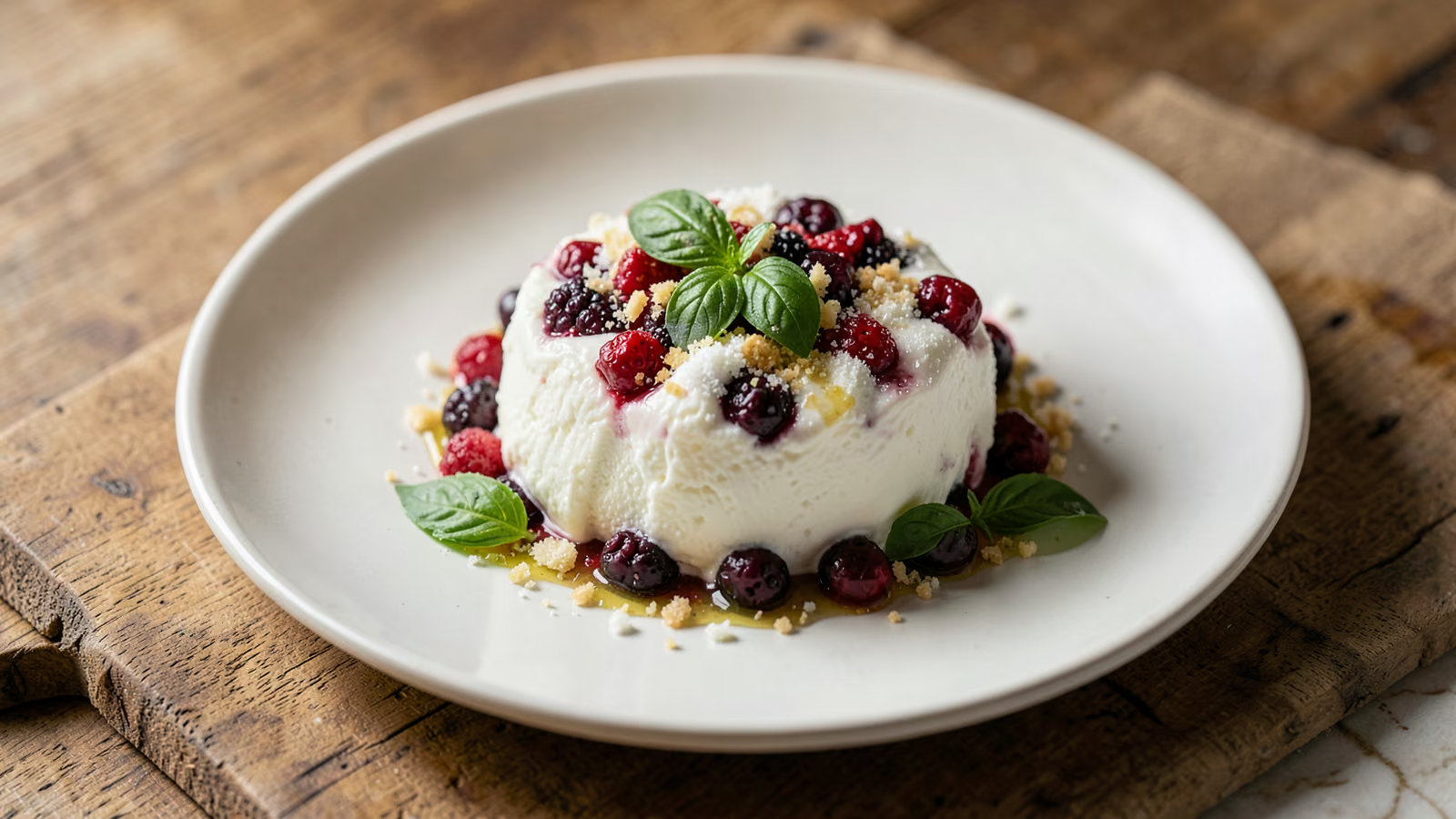
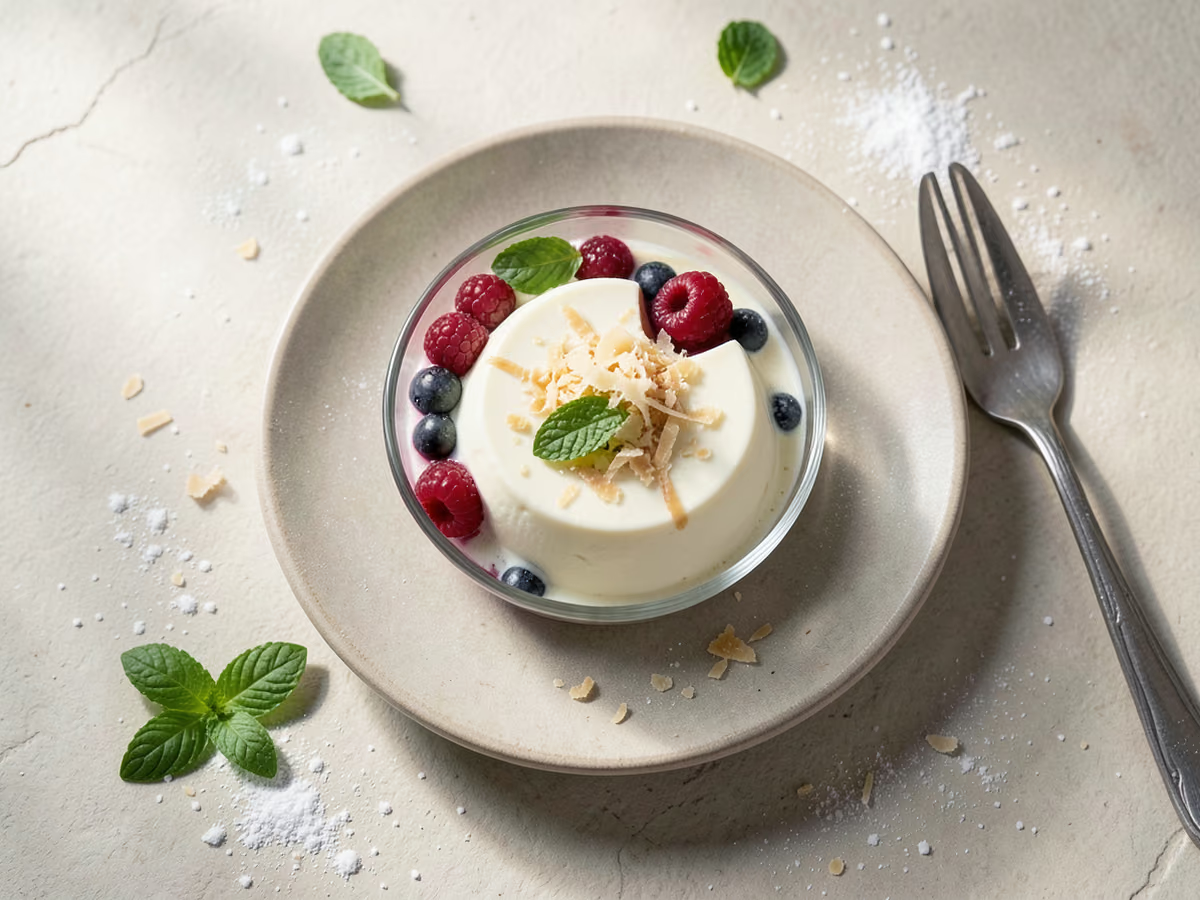
To serve, run a thin knife around the edge of each ramekin, dip the base briefly in hot water for 5 seconds, then invert onto a plate. Spoon the chilled berry coulis over the top and serve immediately.
Kitchen notes
Kitchen notes
- The single biggest mistake is not simmering the agar-agar long enough. Agar needs a full 2 minutes at a gentle simmer to hydrate and activate; if you only stir it into hot cream, the panna cotta will stay soft or separate.
- Agar-agar sets firmer than other setting agents and can turn rubbery if overused. Weigh it precisely: 2 g for this volume gives a tender, wobbly set. If your kitchen is very warm, use 2.5 g maximum.
- To test if it is set, gently tilt a ramekin. The surface should be firm with a slight jiggle in the centre, like a softly set custard. If it ripples like liquid, return it to the fridge for another hour.
- Make-ahead: the panna cotta can be prepared up to 2 days in advance and kept covered in the fridge. The coulis can be made up to 3 days ahead and stored in a jar.
- Serving suggestion: pair with fresh berries, a drizzle of berry coulis, or a crisp biscuit for contrast. The panna cotta is rich, so keep the garnish light and tart.
Substitutions
- heavy cream→full-fat coconut milk for a dairy-free version (note: the set will be slightly softer; add an extra 0.5 g agar-agar)
- granulated sugar→honey or maple syrup, using 50 g and reducing the milk by 1 tbsp
- mixed berries→mango puree, raspberries or strawberries for the coulis
- vanilla extract→the seeds of 1/2 vanilla pod, simmered with the cream and strained out
Storage & reheating
Store set panna cotta in its ramekins, covered with cling film, in the fridge for up to 3 days. The berry coulis keeps in an airtight jar in the fridge for up to 5 days. Do not freeze: agar-agar becomes spongy and weeps liquid when thawed, ruining the silky texture. Serve cold straight from the fridge; there is no reheating step for this dessert.
FAQ
The questions we get asked most
Why didn't my panna cotta set?
The most common reason is that the agar-agar was not simmered long enough to activate. Agar must be hydrated in a little cold liquid first, then brought to a gentle simmer for a full 2 minutes while stirring. If you skipped that step or used old agar-agar, the mixture will stay liquid. Also check your measurement: too little agar (under 2 g for this recipe) will not set.
Can I use agar-agar instead of other setting agents?
Yes, this recipe is built around agar-agar, which is a plant-based setting agent. It sets firmer and faster than other options and does not require refrigeration to begin setting, but it must be boiled briefly to activate. Use the exact weight given; agar-agar is powerful and too much will make the panna cotta rubbery.
How do I get the panna cotta out of the mould cleanly?
Run a thin, flexible knife around the inside edge of the ramekin. Dip the base in hot water for just 5 seconds, then dry the outside and invert onto a plate. If it does not release, dip for another 2 seconds. Do not leave it in hot water longer, or the edges will melt.
Can I make panna cotta ahead of time?
Yes, it is ideal for making ahead. Prepare it up to 2 days in advance, cover each ramekin with cling film once cooled, and refrigerate. The berry coulis can be made up to 3 days ahead and kept in a jar in the fridge. Assemble just before serving.
Can I freeze panna cotta?
Freezing is not recommended. Agar-agar sets a gel that becomes spongy and expels water when frozen and thawed, so the texture turns grainy and weepy. It is best enjoyed fresh from the fridge within 3 days.
Why is my panna cotta grainy or speckled?
Graininess usually means the agar-agar was not fully dissolved before adding it to the cream, or the mixture was not strained. Always whisk agar-agar into a small amount of cold milk first, let it hydrate for 5 minutes, then simmer it in the cream for 2 minutes. Pouring the final mixture through a fine-mesh sieve removes any undissolved particles.
Ask KitchenMind about this recipe
Tell it what’s different tonight — it works within the actual recipe.