Aseed
Aseed is the Gulf's savory flour porridge: a smooth, thick base of flour cooked in salted water, spread onto a warm platter and crowned with a spiced lamb and tomato topping, with lemon squeezed over at the table. This version keeps the two parts separate so the porridge stays silky and the topping stays bright, and it builds the base from a cold-water slurry, the reliable way to a lump-free pot. Count on 15 minutes of prep, about 40 minutes of cooking, and four generous servings.
- Prep
- 15 min
- Cook
- 40 min
- Total
- 55 min
- Serves
- 4
Ingredients
What you’ll need — tap to tick off as you go
- 200 g
- 1 l
- 1 tsp
- 300 g
- 1 tbsp
- 2 tbsp
- 1 tsp
- 1 tsp
- ½ tsp
- ½ tsp
- 500 ml
- 1 tbsp
Process
Timers built in · swap anything · ask as you cook
Whisk the 200 g all purpose flour into 500 ml of the cold water in a large bowl until the mixture is completely smooth, then set it aside while you start the topping. Doing this cold is the trick: every particle of flour hydrates separately, so it cooks into a silky porridge later instead of seizing into lumps.
Warm the 2 tbsp vegetable oil in a wide skillet over medium heat, add the chopped onion and cook for about 5 minutes, stirring now and then, until it turns soft, translucent and just begins to colour at the edges. This softened onion is the soft, mild layer the lamb and spices will build on.
Raise the heat to medium-high, add the 300 g lamb cubes in a single layer and leave them untouched for 2 minutes before turning. Brown for about 8 minutes in total, until deeply coloured on all sides and a thin film of fat has rendered out; a crowded pan steams the meat grey instead of browning it.
Turn the heat down to medium, stir in the 2 chopped tomatoes, 1 tbsp tomato paste, 1 tsp ground cumin, 1 tsp ground coriander, 0.5 tsp black pepper and 0.5 tsp cinnamon, and fry for about 2 minutes, until the paste darkens a shade and the spices smell toasted rather than raw. The hot fat is what blooms them.
Pour in the 500 ml beef broth, scrape the browned bits off the base of the pan and bring the sauce to a gentle simmer. Cook it uncovered for about 15 minutes, stirring occasionally, until it thickens enough to coat the lamb and a spoon drawn across the pan leaves a brief trail.
Give the flour slurry one more whisk, pour it into the heavy pot and set it over medium heat. Cook for about 10 minutes, stirring constantly with the wooden spoon and scraping the base, until the porridge is glossy and pulls away from the sides of the pot. Loosen it with the remaining 500 ml water, a splash at a time, if it tightens too far, then stir in the 1 tsp salt.
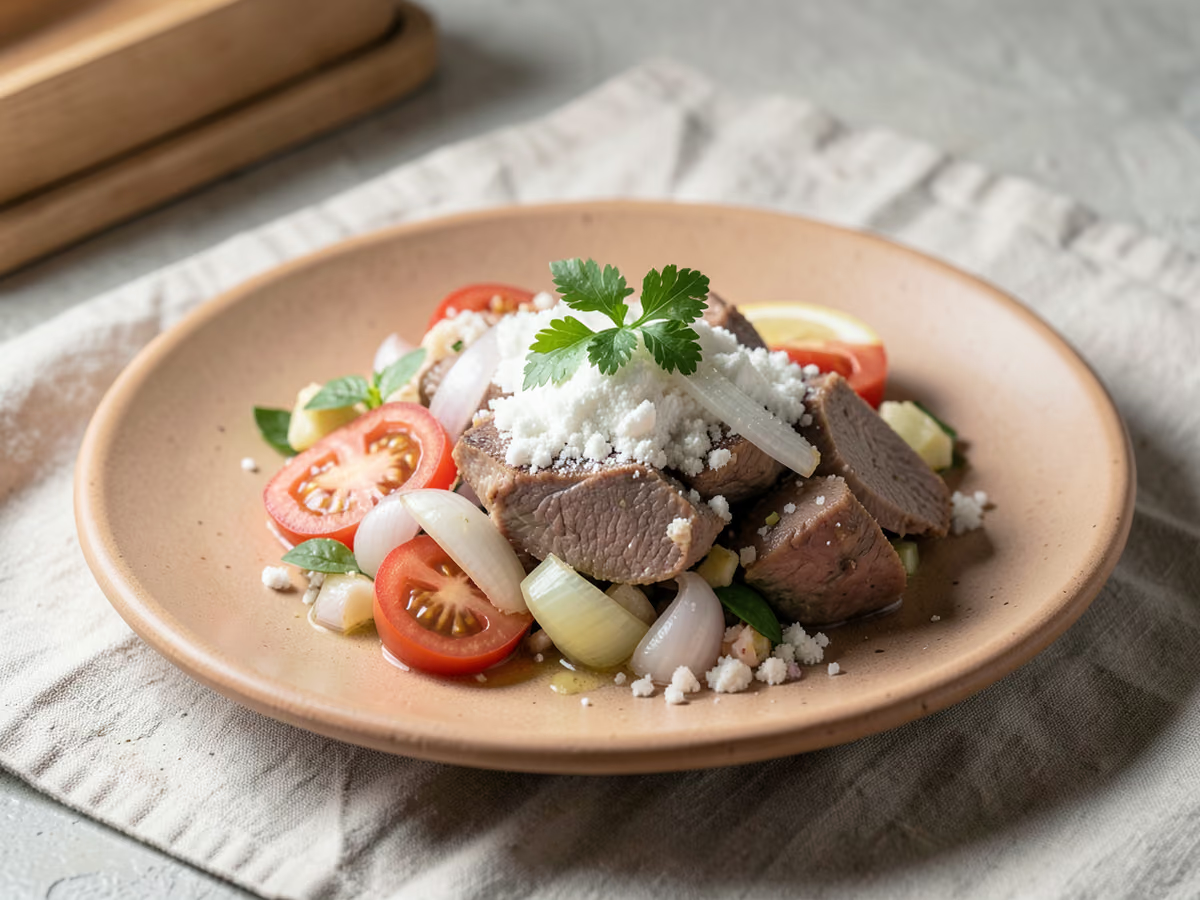
Smooth the porridge over a warm serving platter or divide it between four shallow bowls and press a wide well into the centre with the back of a spoon. Spoon the lamb and tomato topping into the well, letting some of the sauce spill over the border, and finish with the 1 tbsp lemon juice. Serve straight away, while the base is loose and steaming.
Why this recipe works
A lump-free aseed is a stirring problem before it is a seasoning one: whisked into cold water, flour particles disperse and hydrate separately, so when the pot heats they thicken individually instead of fusing into lumps the way dry flour does on contact with boiling water. Constant stirring over medium heat keeps the swollen starch moving and off the base of the pot, and when the porridge pulls cleanly from the sides, the starch network has set. The topping runs on the same logic: lamb browns first for roasted depth and rendered fat, the ground spices bloom in that fat, and the uncovered simmer concentrates the tomato and broth into a sauce that clings.
Equipment
- Heavy-bottomed 3-4 l pot for the porridge (a Dutch oven works well)
- Wide 28 cm skillet or frying pan for the lamb topping
- Balloon whisk for the cold-water slurry
- Sturdy wooden spoon with a flat edge, for stirring and scraping
- Chef's knife and cutting board
- Measuring jug and measuring spoons
- Warm serving platter, or four shallow bowls
Kitchen notes
Kitchen notes
- Once the porridge thickens, a flat-edged wooden spoon beats a balloon whisk: its broad face sweeps the base and the corners of the pot, which is where scorched patches and stubborn lumps start.
- Keep a jug of hot water at the stove and loosen the porridge with that rather than cold water; hot water folds into the starch smoothly, while a cold splash can stiffen a thickened pot before it blends.
- Let the finished topping sit off the heat for 5 minutes before it goes into the well; the fat and sauce settle together, the flavours round out, and it stays warm enough to serve.
- If the lamb renders more fat than you want, spoon off all but a thin film before the spices go in; a heavy pool of fat mutes the cumin and coriander and leaves the sauce greasy at the table.
- Warm the platter or the bowls first. This porridge stiffens quickly once it leaves the pot, and a warm dish keeps it glossy and spoonable through the whole meal.
Common mistakes
- A lumpy base: dry flour hit hot liquid, or the pot was not stirred right into the corners. Whisk the flour into cold water first, keep the heat at medium and move the spoon in slow circles across the whole base; if lumps still appear, press them out against the side of the pot, or sieve the raw slurry before it cooks.
- A porridge that sets like paste: too little liquid, or a few minutes too long on the heat. The base should hold a soft mound yet still flow from a spoon, so keep the reserved 500 ml of water within reach and loosen the pot a splash at a time as it thickens, remembering that it firms further as it cools.
- A thin, flat-tasting topping: the lamb was crowded and steamed, or the sauce never got its full uncovered simmer. Brown the cubes in a single layer and let the sauce reduce for the whole 15 minutes, until it coats the meat, instead of pulling the pan off the heat early.
- A raw, pasty note in the base: the flour was not cooked through. Ten minutes of constant stirring after the first thickening is the minimum here; taste a little from the centre and keep going until the raw flour taste is gone and the porridge turns glossy.
- A pale, one-note sauce: the spices went in after the liquid. The cumin, coriander, pepper and cinnamon need roughly 2 minutes in the hot fat, together with the tomato paste, before the broth arrives; that short fry builds nearly all of the topping's aroma.
- Scorched porridge at the base of the pot: the heat was too high, or the spoon skipped the bottom. Stay at medium, use a heavy pot, and scrape the full base on every pass; even a light scorch flavours the whole pot.
Serving suggestions
- Spread the porridge on one warm platter for the table or divide it between four shallow bowls, and let each person spoon the topping from the well together with the soft border; the mix of plain base and saucy middle is the point of the dish.
- Finish with the 1 tbsp lemon juice, or set out lemon wedges so everyone can brighten their own portion; the acid cuts the lamb fat and wakes up the cumin.
- Warm flatbread or a simple rice pilaf rounds out the Gulf table, and bread also cleans up the last of the sauce once the porridge is gone.
- Keep the drinks light and cold: sparkling water with lime, iced tea or chilled barley tea, all of which clear the palate between spoonfuls without competing with the spices.
Variations
- Chicken aseed: use the same 300 g of boneless chicken thigh in place of the lamb and simmer until the pieces are cooked through, 74°C at the centre. The sauce turns lighter and milder, and the dish reads more weeknight than feast.
- Beef aseed: the same 300 g of beef chuck, cut small, browns and simmers just like the lamb but wants about 10 extra minutes to soften, for a deeper, beefier sauce.
- A green chili version: fry 1 small chopped green chili with the onion, as many Gulf and Yemeni kitchens do, for a gentle fresh heat; keep it as a variation, and leave the chili out when the table includes children.
Refrigerator
- RefrigeratorCool the porridge and the topping separately within 2 hours of cooking, then cover and refrigerate each for up to 3 days. Keep them in separate containers: stored together, the porridge soaks up the sauce and turns soupy.
- ReheatingReheat the porridge in a pot over low heat with a splash of water, stirring constantly until it is loose and steaming, and warm the topping in a covered pan or in short microwave bursts. Reheat to 74°C if you want certainty; avoid high heat, which makes the porridge catch.
- FreezingNot recommended for the porridge: a thawed flour-thickened base turns spongy and weeps water that stirring cannot bring back. The lamb topping alone freezes well for up to 3 months; thaw it overnight in the fridge and warm it gently.
- Make aheadBoth parts can be made up to a day ahead: cook, cool and refrigerate them separately, then reheat with a little water and a gentle stir. The porridge is silkiest straight from the pot, so when timing allows, cook it fresh and keep only the topping made ahead.
Updated:
How this recipe was developed
- Saudipedia, 'Al-Aseedah' (Saudi encyclopedia entry) - the savory lamb version: whole-wheat flour porridge cooked with lamb, onion and whole spices, stirred with a wooden paddle and done when the dough pulls away from the pot (about 30 minutes).
- Sheba Yemeni Food, 'Yemeni Aseeda, Aseed' - stir flour into the water briskly to prevent lumps; to thicken a broth with flour, ladle the broth into the flour, never flour into the broth; lamb is tender when nearly falling apart.
- Mawdoo3, 'Al-Aseed Al-Yemeniya bil-Maraq' - the Yemeni savory form: a flour-and-water base served with a broth poured over, made for family occasions.
- USDA FSIS and FoodSafety.gov - lamb to a 63°C minimum with a 3-minute rest; refrigerate cooked food within 2 hours; leftovers kept 3-4 days and reheated to 74°C.
Editorial references are kept internally for verification. This page makes no claim of external certification or professional testing.
FAQ
The questions we get asked most
What is aseed?
Aseed, also spelled asida or aseeda, is a Gulf and Yemeni comfort dish made of two parts: a thick, savory porridge of flour cooked in salted water, and a spiced topping of lamb, onion and tomato simmered in broth. The porridge is spread smooth with a well in the middle, the topping goes into the well, and it is eaten hot, traditionally by hand with pieces torn from the border or with a spoon and a squeeze of lemon.
Why did my aseed turn out lumpy?
Almost always because dry flour met hot liquid. Flour sets on contact with boiling water, so any particles that are not already separated fuse together; whisking the flour into cold water before the pot goes on the heat keeps them apart while they hydrate. If lumps do appear anyway, press them out against the side of the pot with the spoon, or pass the raw slurry through a sieve and start again.
How do I know when the aseed porridge is done?
Watch for three signs: it turns glossy and holds a soft mound, it pulls away from the sides of the pot as you stir, and it no longer tastes of raw flour. That usually takes about 10 minutes of constant stirring from the moment the slurry thickens. Stop early and the base tastes pasty; cook it much longer and it tightens past the loose, spoonable point.
Can I make aseed ahead of time?
Yes, up to a day ahead is realistic: cook the porridge and topping, cool both separately within 2 hours and refrigerate. Reheat the porridge over low heat with a splash of water, stirring until smooth, and warm the topping in a pan; the dish comes back well, though the porridge is at its silkiest straight from the pot.
Can I use a different type of flour for aseed?
Whole wheat flour stands in at the same 200 g, giving a denser, nuttier porridge that absorbs more water, so keep the reserved 500 ml close by. Fine rice flour or cornflour behave differently and the base loses its smooth, elastic body; treat those as a different dish rather than a match for the wheat original.
Is aseed gluten-free?
Not as written: the base is wheat flour, so it contains gluten. A 1:1 gluten-free all-purpose blend can replace the same 200 g, but expect a slightly grainy, less elastic porridge that thickens faster, so stir gently and watch it closely. That version is its own variation, not a match for the traditional wheat base.
What can I use instead of lamb in aseed?
Beef chuck or boneless chicken thigh, the same 300 g cut into small cubes. Beef needs a few extra minutes of simmering to soften, while chicken thigh cooks through in about 10 minutes and carries the spices well. Cooked chickpeas can stand in for a meat-free topping, though the sauce loses some body.
Ask KitchenMind about this recipe
Tell it what’s different tonight — it works within the actual recipe.