Margoog
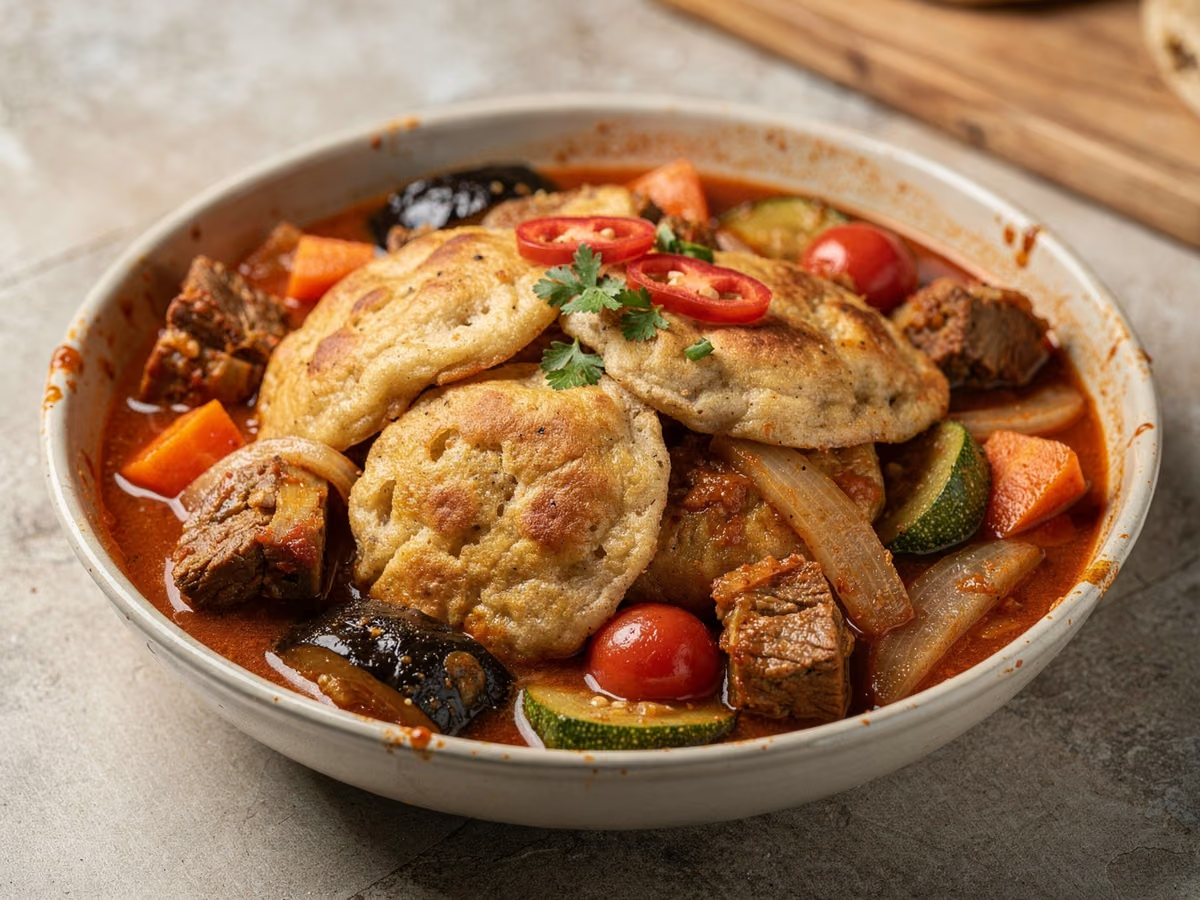
Margoog is a one-pot Gulf Arabic stew: 800 g of lamb shoulder and chickpeas simmered with carrots, potato and zucchini in a warm tomato-and-spice broth, finished with simple flour-and-water dumplings cooked straight in the liquid. Everything happens in one pot — browning, simmering, then the dumplings poaching in the same broth — so the stew thickens itself and there is nothing to time separately. Prep takes about 20 minutes and the pot needs 90 minutes, most of it unattended; six generous bowls come out of it.
- Prep
- 20 min
- Cook
- 90 min
- Total
- 110 min
- Serves
- 6
Ingredients
What you’ll need — tap to tick off as you go
- 800 g
- 4 cloves
- 2 tbsp
- 1 tsp
- 1 tsp
- ½ tsp
- ½ tsp
- ½ tsp
- 1 ½ tsp
- 400 g
- 1 ½ l
- 200 g
- 100 ml
- 2 tbsp
Process
Timers built in · swap anything · ask as you cook
Heat the 2 tbsp olive oil in a large pot over medium heat and cook the chopped onion until soft and translucent, about 5 minutes. Add the 4 minced garlic cloves and stir for 1 minute, just until the smell turns sweet. The onion builds the sweet base of the stew, and the garlic goes in late because it scorches long before the onion softens.
Add the 800 g lamb cubes and brown on all sides, about 6–8 minutes, in two batches if the pot is crowded; the cubes need room to sear rather than steam. Stir in the 2 tbsp tomato paste, 1 tsp ground coriander, 1 tsp ground cumin, 0.5 tsp each ground cinnamon, ground turmeric and black pepper, and 1.5 tsp salt, then cook for 2 minutes to toast the spices.
Pour in the 1.5 l beef broth and bring it to a boil, scraping the base of the pot with the spoon. Turn the heat to low, cover, and simmer for 45 minutes, until the lamb gives way under a fork but still holds its shape; a lazy bubble is what slowly softens the meat, where a hard boil tightens the fibres and can leave the cubes tough.
Add the 2 carrots and 2 potatoes and simmer, covered, for 15 minutes. Then stir in the 400 g chickpeas and the zucchini and cook for 10 minutes more, until the root vegetables are tender and the zucchini is just soft. Staggering them by density is what keeps the quick-cooking zucchini from collapsing while the potato still needs time.
While the stew simmers, make the dumplings: mix the 200 g all-purpose flour, 100 ml water and a pinch of salt into a soft dough, knead it briefly until smooth, then roll it into small balls about 2 cm across. A short knead is enough — it develops just enough structure for the balls to hold together without turning dense and chewy.
Drop the dumplings into the simmering stew one at a time, leaving a little space between them, then cover the pot and cook for 10 minutes, until they are doubled in size and tender all the way through. Keep the heat low and resist stirring: a hard boil or a spoon knocking the balls around is what breaks them apart and clouds the broth.
Taste the broth and adjust the salt — the canned chickpeas and the reduced broth carry salt already — then serve hot in deep bowls, making sure every portion gets lamb, vegetables and dumplings. Ladle gently so the dumplings stay whole, and keep a little extra broth back to loosen bowls that sit too long, because the stew keeps thickening as it stands.
Why this recipe works
Stewing rewards patience: the cubes are browned first because the seared surface is where most of the deep, roasted flavour is built, and the lamb shoulder's connective tissue then needs a long, gentle simmer — a lazy bubble, never a rolling boil — to soften into gelatin and give that spoon-tender texture. Toasting the tomato paste and ground spices in the fat blooms their aromatics before any liquid goes in, so the broth tastes seasoned rather than raw, and adding the vegetables in stages by density keeps the potato and carrot intact while the zucchini stays whole. The dumplings cook covered, so steam sets them; their flour releases starch that thickens the broth.
Equipment
- Lidded heavy pot or Dutch oven, about 5 l
- Chef's knife and cutting board
- Wooden spoon or heatproof spatula
- Mixing bowl, for the dumpling dough
- Measuring jug and measuring spoons
- Colander, for draining and rinsing the chickpeas
- Instant-read thermometer (optional, for checking reheated leftovers)
Kitchen notes
Kitchen notes
- Dry the lamb cubes well with paper towels before they meet the pot: a damp surface steams instead of browning, and the drier the cube, the faster the crust forms.
- Keep the lid on while the dumplings cook. They set by steam as much as by the simmer, and every peek lets the heat out and slows them down — give them the full 10 minutes before you look.
- The dough is easiest to shape after a rest: mix it as soon as the stew is simmering, cover the bowl, and leave it while the lamb finishes — by the time the vegetables are in, it rolls into balls without fighting the gluten.
- Waxy potatoes hold their shape through the simmer, where floury baking potatoes collapse into the broth. Pick a waxy variety and keep the pieces even so nothing breaks down before the rest is ready.
- Margoog is at its deepest on the second day: overnight the spices settle and the gelatin from the shoulder gives the broth extra body, so it is worth cooking a pot when you know you will be eating it twice.
Common mistakes
- Tough, chewy lamb: the stew boiled hard or the cubes never got long enough at a gentle simmer, so the connective tissue stays tight. Keep the pot at a lazy bubble, not a rolling boil, and give the lamb an extra 10-15 minutes if a fork still meets resistance before the vegetables go in.
- Dumplings that break apart or fuse into a lump: the dough was too soft, the pot boiled instead of simmered, or the balls went in as a heap. Mix the full 200 g flour with the 100 ml water, keep the heat low, slide each ball in with space around it, and do not stir once they are in.
- Mushy zucchini and disintegrating potatoes: every vegetable went in at once, or the pot kept boiling after they were tender. Stagger them — carrots and potatoes first for 15 minutes, chickpeas and zucchini after, 10 minutes more — and turn the heat down to the quietest simmer that still bubbles.
- A stew that ends up too thick or too thin: the covered simmer reduces unpredictably, and the dumplings keep thickening everything after the heat is off. Loosen an over-thick pot with a splash of broth or water; if it is loose, simmer it uncovered for a few minutes before the dumplings go in.
- A flat, one-note broth: the salt went in before the chickpeas, which carry their own, or the ground spices have been in the cupboard too long. Adjust the salt only after everything is in the pot, and start from spices that still smell sharp when the jar opens.
Serving suggestions
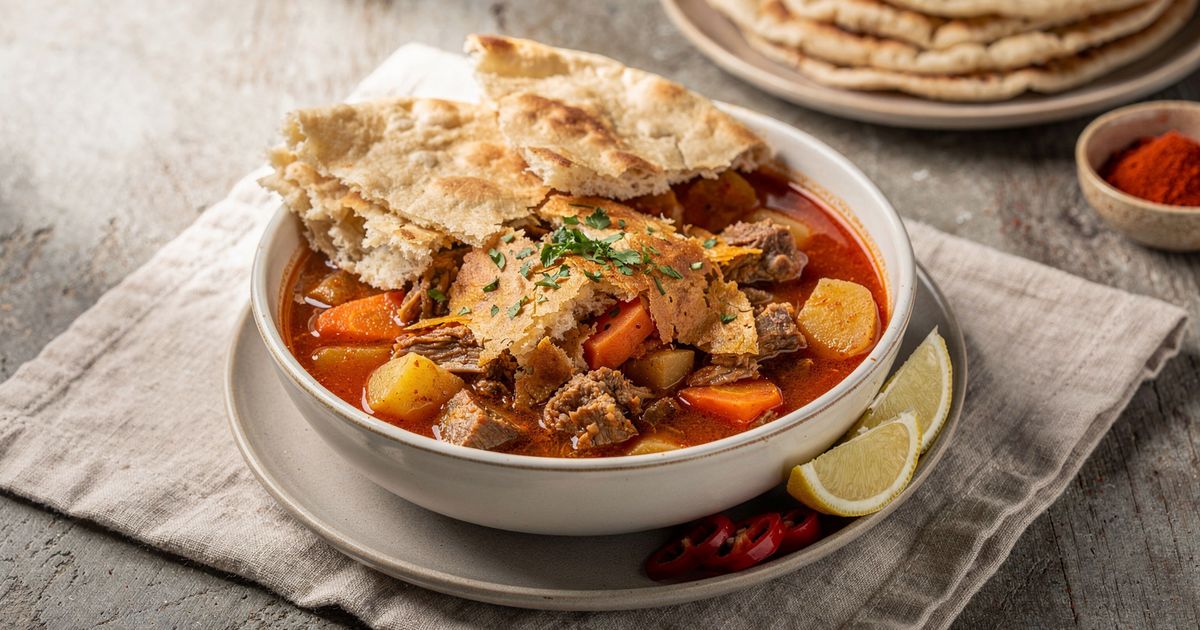
- Ladle it hot into deep bowls and eat straight away, while the dumplings are still firm and whole; a stack of flatbread on the table is there for mopping up what the spoon leaves.
- A squeeze of lemon over each bowl lifts the tomato and the warm spices, and Gulf tables often put out lemon wedges and sliced pickles for exactly that.
- For a bigger meal, spoon the stew over plain basmati rice and let the broth soak in; bread or rice both belong next to margoog.
- Finish with hot tea or Arabic coffee, which is how the meal usually ends at home and settles the richness of the lamb.
Variations
- Thin-sheet Najdi style: roll the dough paper-thin and tear it into pieces instead of shaping balls, adding the pieces one by one so they stay separate in the pot; they turn soft and pasta-like and thicken the broth a little more.
- Dried lime and pumpkin version: tuck a dried lime into the broth when it goes in, and add a handful of peeled pumpkin or eggplant cubes with the zucchini. The lime brings the tangy edge of Gulf home kitchens and the extra vegetables make a heavier, richer pot.
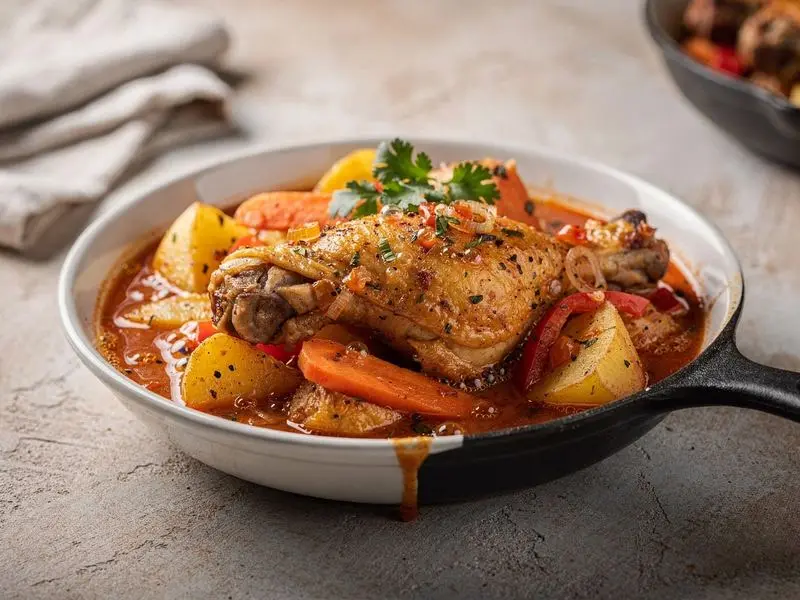
- Chicken version: use 800 g of boneless chicken thighs cut into 3 cm pieces. Brown and spice them the same way, then simmer just until cooked through — 74°C, the USDA FSIS poultry minimum — before the vegetables go in, and finish as written for a lighter stew.
- Gluten-free variation, a different dish from the original: swap the 200 g all-purpose flour for a gluten-free blend, let the dough stand a few minutes so it hydrates, and keep the simmer gentle because these dumplings are more fragile; check the broth is gluten-free too.
Refrigerator
- RefrigeratorCool it fast — divide it into shallow containers rather than leaving a deep pot to sit — then cover and refrigerate for up to 3 days. The stew thickens and the dumplings soften as it keeps, so loosen each portion with a splash of broth as you reheat it. Do not leave it at room temperature for more than 2 hours.
- ReheatingWarm it gently on the stovetop over medium-low heat, stirring as little as possible, until it is steaming hot all through and reads 74°C on a food thermometer (the USDA FSIS reheat target). Microwave single bowls covered, though the stovetop is kinder to the dumplings.
- FreezingNot recommended: the dumplings go mushy and the potatoes turn grainy on thawing. If you want to get ahead, freeze the stew base before the dumplings go in, for up to 3 months (USDA FSIS keeps frozen leftovers for 3-4 months), and simmer a fresh batch of dumplings in the reheated base; the potatoes will still soften a little.
- Make aheadThe base keeps beautifully: cook it up to 2 days ahead, cool it quickly, and refrigerate, then reheat and poach dumplings in the last 10 minutes so they are fresh. The full dish tastes deeper on day two, but plan on softer dumplings if you make it complete and store it.
Updated:
How this recipe was developed
- USDA FSIS safe minimum internal temperature chart (lamb 63°C with a 3-minute rest; cook to temperature, measured with a food thermometer)
- USDA FSIS, Leftovers and Food Safety (refrigerate within 2 hours; keep 3-4 days; frozen leftovers good for 3-4 months; reheat to 74°C)
- Dalool's Kitchen, 'Margoog or Margooga? The Real Story Behind the Name' (margoog is a Najdi-Kuwaiti stew whose dough cooks directly in the broth; slow simmering is the whole game; better the next day)
- Atayeb, 'Najdi Marqooq Recipe' (dough of flour, water and salt kneaded smooth; pieces added to the simmering broth one by one on low heat; lamb and warm spices; served hot and shared)
Editorial references are kept internally for verification. This page makes no claim of external certification or professional testing.
FAQ
The questions we get asked most
What is margoog?
Margoog, also spelled marqooq, is a Gulf Arabic stew of lamb, vegetables and pieces of wheat dough cooked directly in a spiced, tomato-rich broth. The name comes from an Arabic word for thin or rolled out, after the dough itself, and the dish belongs to the Najd heartland and the Gulf coast alike, where it is a family-pot meal rather than restaurant food. This version's dough is shaped into small dumplings; it is not the same as thareed, which is built on torn flatbread.
What cut of lamb is best for margoog?
Lamb shoulder, cut into 3 cm cubes: it has enough fat and connective tissue to turn tender over the 45-minute simmer without falling apart. Boneless leg is leaner and tastes cleaner but dries out if the pot is boiling, so keep the heat low if you use it. Even piece sizes matter more than the exact cut — uneven cubes finish at different times.
Can I make margoog with beef instead of lamb?
Yes. Beef chuck is the usual swap, cut into the same 3 cm cubes and simmered until a fork slides in; it has a firmer chew and a beefier broth and may want a few extra minutes before the carrots go in. Goat is another traditional option, and the spices and dumplings stay exactly as written.
How do I make the dumplings for margoog?
Mix 200 g all-purpose flour with 100 ml water and a pinch of salt into a soft dough, knead it briefly until smooth, then roll it into small balls about 2 cm across. Slide the balls into the simmering stew one at a time, cover, and cook for 10 minutes, until they have doubled in size. If the dough clings to your hands, work in a little more flour; if it cracks, add a few drops of water.
Why did my dumplings fall apart?
Usually one of three causes: dough that was too soft, a stew boiling hard rather than simmering, or dumplings dropped in as a heap and then stirred. Hold the dough at the 200 g flour to 100 ml water ratio, keep the pot at a lazy bubble with the lid on, slide each ball in on its own, and leave them alone for the 10 minutes — one gentle shake of the pot is all the movement they need.
Can I make margoog ahead of time?
Yes — cook the stew base up to 2 days ahead and refrigerate it, then reheat it and poach fresh dumplings in it for the last 10 minutes. A fully cooked pot also keeps for 3 days and tastes even better the next day, but the dumplings are softest when fresh, so keeping a little base back for a fresh batch is worth it.
How thick should margoog be?
It should eat like a full stew, not a soup: thick enough that a spoon drawn through leaves a brief trail, with the dumplings adding body as they cook and after they sit. If yours is looser, simmer it uncovered for a few minutes; if it is closer to porridge, stir in a splash of broth or water. The pot tightens again as it stands, so aim slightly loose.
Ask KitchenMind about this recipe
Tell it what’s different tonight — it works within the actual recipe.