Baked Falafel
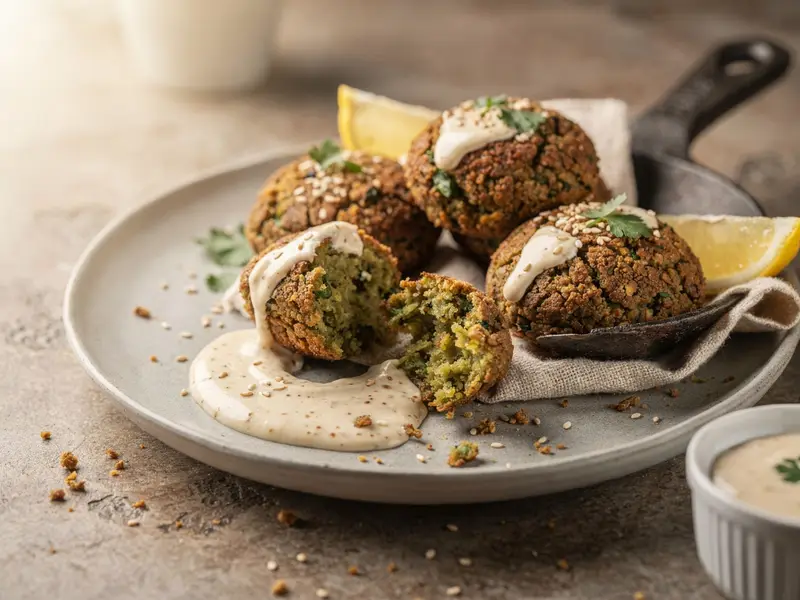
A tray of baked falafel usually fails in the same place. The patties hold their shape, the colour looks right, and the middle tastes of damp chickpea flour. More oil will not fix that. Neither will a longer bake. The answer sits in the soaking bowl and the food processor: raw chickpeas ground to a coarse crumb that still holds its starch, 30 minutes of chilling, and patties thin enough for the oven to crust both faces. Count 25 minutes of hands-on work, 30 in the oven, and 16 patties that hold together in a pita.
- Prep
- 25 min
- Cook
- 30 min
- Total
- 85 min
- Additional time
- 30 min
- kcal
- 333.1
- protein
- 13.6 g
- Serves
- 4
Ingredients
What you’ll need — tap to tick off as you go
- 250 g
- 3 cloves
- 30 g
- 30 g
- 2 tsp
- 1 tsp
- 1 tsp
- 1 tsp
- ½ tsp
- 2 tbsp
- 1 tbsp
Process
Timers built in · swap anything · ask as you cook
Drain the chickpeas in a colander, shake out the water, then roll them in a clean towel and pat the skins dry, because surface moisture has to boil off before a crust can form. Set the oven to 200°C and place a rack in the middle, then line a baking sheet with parchment. Give the oven a full 15 minutes, since a tray that goes in early bakes pale and never catches up.
Put the chickpeas, onion, 3 garlic cloves, 30 g parsley and 30 g cilantro in the processor and pulse in short bursts, scraping down between them. Stop at coarse couscous: small even grains that hold a shape when you squeeze them, with no whole beans left. (A few flecks of herb are fine.) A few more seconds and the mix turns to paste, which bakes into a dense, heavy puck.
Tip the ground mixture into a large bowl and stir in 2 tsp ground cumin, 1 tsp ground coriander, 1 tsp baking powder, 0.5 tsp black pepper and 1 tsp salt. Fold from the bottom with a flexible spatula. There is no liquid stage here to carry the seasoning, so a streak of cumin stays a streak.
Cover the bowl and chill the mixture for 30 minutes. The rest does two jobs: starch from the ground chickpeas seeps out and turns the mix tacky, and the cold firms it enough to shape. Skip this and your patties slump on the tray. Leave it longer and the mix only gets easier to handle.
Shape 16 patties, each about 4 cm across and 2 cm thick, packing them just firmly enough to hold. Damp hands stop the mix from clinging. Flat even discs are the point, because only the faces that touch oil and hot metal will brown; a thick ball stays pale and raw-tasting at the core while its outside darkens.
Arrange the patties on the lined sheet with a little space between them, brush the tops with olive oil and scatter over 1 tbsp sesame seeds if you are using them. Press the seeds down with the back of a spoon. (Loose seeds roll onto the paper and scorch.) The oil is not a garnish here; it is the only fat that will crisp the surface.
Bake for 15 minutes, then slide the tray out and turn each patty with a thin spatula. Brush the second side with the remaining olive oil and return the tray for 15 minutes more. (The paper can stay for both halves.) They are ready when both faces are deep gold, the edges look dry and lacy, and a patty feels firm and light in the hand. Pale means soft, so give them another few minutes.
Leave the falafel on the tray for 5 minutes before you move them. They finish setting as they cool, and that short wait is what keeps a patty from breaking apart when you split it for a sandwich. Serve them warm.
Why this recipe works
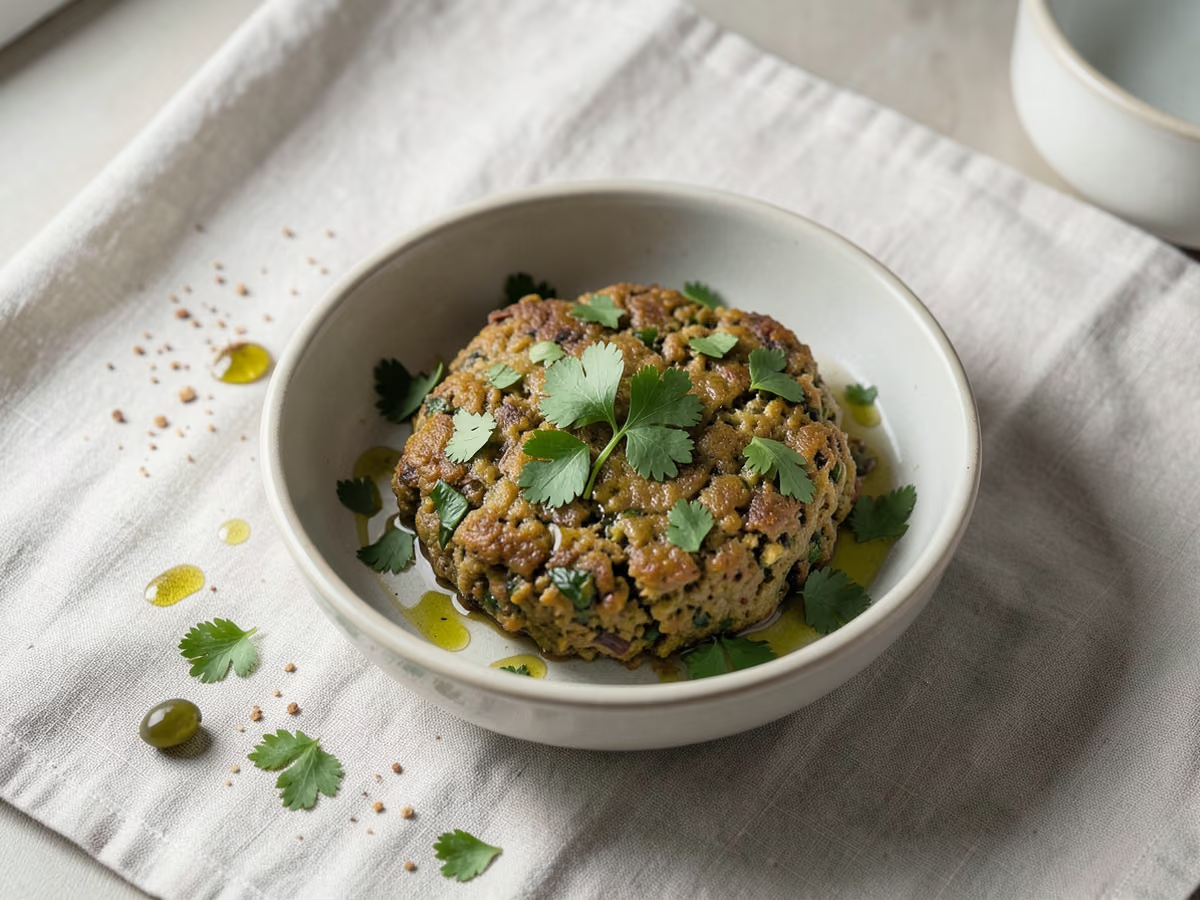
Why dried chickpeas and not canned? A soaked but uncooked chickpea still holds intact starch, and grinding it releases that starch along with the water bound to it, which is why this mix needs no flour at all. Canned chickpeas have already spent theirs: the grains burst during cooking and the sticky part washed into the liquid, so a canned mix cannot bind without help. Add flour to rescue a canned mix and you trade a patty that crumbles for one that bakes dense and pasty, which is a different failure rather than a fix. Baking powder pulls the other way, releasing gas as the patty heats so the crumb opens instead of compacting. That is the whole mechanism.
Equipment
- Food processor with a 2-litre bowl or larger
- Large rimmed baking sheet
- Parchment paper
- Colander and a clean kitchen towel
- Large mixing bowl and measuring spoons
- Thin flexible spatula
- Pastry brush
- Instant-read thermometer, optional
Kitchen notes
Kitchen notes
- Dry the chickpeas properly. Spread them on a towel, cover with a second one and roll them around for a minute, because water left on the skins turns to steam in the first minutes of the bake and that steam is what holds the crust back. Stick with a fresh bag, too, because old beans soak up water slowly and stay chalky at the centre.
- Taste the mix before you shape it. Fry a spoonful in a little oil and check the salt, because that one spoonful is your only chance to correct 16 patties. Don't worry if it tastes a little sharp; the oven rounds the raw edge off.
- If the mix crumbles instead of holding when you squeeze it, add water a teaspoon at a time rather than flour, letting each spoonful disappear before you add the next one. Starch needs moisture to turn tacky. Flour buys cohesion by making the patty dense. Water is the better choice here.
- If you are using sesame, toast the seeds in a dry pan for a minute before they go on. It is worth the extra pan, since the flavour deepens and they colour with the crust rather than after it. (They should smell nutty, never dark.)
- A 2 tbsp scoop portions the mix evenly, so all 16 patties reach the same point at the same time and none of them dry out on the tray waiting for the pale ones to catch up. A flat-bottomed cup works too, but the scoop is your best bet.
- Bake one test patty if your oven runs hot. A single falafel tells you more about your oven than any dial, and it costs you one patty instead of a batch. Want a browner top? Switch on the fan for the last few minutes.
Common mistakes
- Mushy, pasty middles: canned chickpeas are already cooked, so their starch cannot bind and the mix turns to paste around the herbs. Soak 250 g of dried chickpeas overnight and grind them raw. Never boil them first.
- Patties that crumble on the tray: the mix was ground too coarsely, so no starch was released, or it went into the oven without its 30 minutes of chilling. Pulse to coarse couscous and give it the full rest.
- Gummy, dense interior: the processor ran until the mix was smooth, or the patties were shaped thicker than 2 cm. Stop at coarse couscous. Keep every patty 2 cm thick, so the middle sets before the outside dries.
- Pale, soft crust: the parchment went in bare, or the patties were never brushed on top, so the surface had nothing to carry heat into it and simply dried. Fat carries heat. Oil both faces and use the full 2 tbsp.
- The flip tore the base open: the patty had not set, or the paper underneath was dry. Oil the parchment lightly, and if a corner tears, don't worry; press it back and keep going. Wait the whole 15 minutes before you turn them.
- Dry, chalky falafel: they stayed in past the moment they felt firm and light. Pull them at 30 minutes total. They carry on firming as they cool on the tray.
Serving suggestions
- Stuff 3 or 4 warm patties into a pita with tahini sauce, sliced tomato, cucumber and pickled turnip, then press the whole thing gently so it holds together.
- Build a mezze plate: hummus, tabbouleh, olives, a dish of tahini, and the falafel at room temperature rather than hot from the tray, where the herbs and lemon come through more clearly.
- Spoon them over a grain bowl with bulgur or couscous, plenty of chopped herbs, lemon and a thin drizzle of olive oil.
- Cold falafel makes a good sandwich the next day. Split them and layer with tahini and cucumber, or crumble day-old patties into a salad like a crisp crouton.
- Carry the tray to the table and let everyone dig in while the edges are still crisp.
Variations
- Green version: swap half the parsley for fresh mint and add it with the other herbs, for a sharper, more herbal patty whose interior stays bright green once you break it open.
- Air-fryer batch: 200°C for 12 to 15 minutes, turning once, gives a firmer crust with less oil. Brush the patties first. The basket has no fat of its own.
- Small mezze patties: shape the mix into smaller discs and start checking at 10 minutes, because a thin patty crosses from gold to dry quickly.
- Spice route: add 1 tsp ground caraway with the cumin for a seedier accent, or a pinch of cayenne for heat that builds slowly.
Refrigerator
- RefrigeratorCool the falafel completely, then chill it, covered, for up to 4 days. The crust softens within a few hours. That is expected, and the flavour holds.
- ReheatingReheat on a baking sheet at 180°C for 8 to 10 minutes, until hot through and crisp at the edges. A short blast in a hot oven beats the microwave every time, because the microwave traps steam against the crust and hands you back a patty that tastes reheated rather than baked.
- FreezingFreeze cooled falafel in a single layer on a tray, then tip them into a bag. They keep for up to 2 months. Bake straight from the freezer at 200°C for 15 to 20 minutes, and there is no need to thaw first.
- Make aheadThe mix keeps up to 24 hours, covered, in the cold, and shaped patties hold on a lined tray for up to 12 hours. Cold patties need a few extra minutes. Judge by colour and feel rather than the clock.
Updated:
How this recipe was developed
- Serious Eats, The Food Lab: Homemade Falafel (dried soaked chickpeas ground raw for natural binding; canned chickpeas cannot bind; resting the mix lets starch seep out; frying oil at 190°C)
- RecipeTin Eats, Falafel (dried chickpeas soaked but not cooked; baking powder gives a lighter, moister interior; 30-minute chilling; fridge and freezer storage)
- The Kitchn, How to Make Baked Falafel in the Oven (flattened patties for maximum pan contact; oiled sheet and brushed tops; golden on both sides with a centre that still gives)
- USDA FSIS, Leftovers and Food Safety (refrigerate cooked food within 2 hours; keep 3 to 4 days; reheat to 74°C; freeze up to 3 to 4 months)
Editorial references are kept internally for verification. This page makes no claim of external certification or professional testing.
| Nutrient | Per serving |
|---|---|
| Calories | 333.1 kcal |
| Protein | 13.6 g |
| Carbohydrates | 45.4 g |
| Fat | 12.3 g |
| Saturated fat | 1.5 g |
| Fiber | 12.5 g |
| Sugar | 8.5 g |
| Sodium | 728 mg |
| Cholesterol | 0 mg |
FAQ
The questions we get asked most
Can I use canned chickpeas instead of dried?
No, and it is not a matter of preference. Canned chickpeas are already cooked, so their starch has set and much of the glue that would hold a patty together has washed into the liquid. Force a canned mix to bind with flour and you get dense and pasty instead of light. Use 250 g of dried chickpeas, soaked overnight and never boiled.
Why did my falafel fall apart in the oven?
There are three causes, in order of likelihood: the mix was too wet, it never had its 30 minutes in the fridge, or the patties went onto dry parchment and stuck. Squeeze a ball of mix before shaping. If it will not hold, chill it longer. Oil the paper, and wait the full 15 minutes before the flip.
How do I know when the falafel is done?
Look for deep gold on both faces, edges that look dry and slightly lacy where the mix meets the hot paper, and a patty that feels firm and light when you lift it with a spatula. Steam escaping at the edge is a good sign too. No thermometer? Those three cues are the test. If you want a number, a probe pushed into the centre should read 75°C, past the 74°C that food-safety guidance uses for reheated food.
Can I make the falafel mixture ahead of time?
Yes. The mix sits in the cold, covered, for up to 24 hours, and shaped patties hold on a lined tray for up to 12 hours. Both improve rather than suffer, because the rest lets starch come out and the cold firms the mix. Add a few minutes to the bake if the patties go in cold. It's fine if the mix looks a little grey after a day in the fridge; the colour comes back in the oven.
How can I make baked falafel crispier without deep-frying?
Oil is the whole answer. Brush both faces, use the full 2 tbsp, and bake on a dark or preheated tray so the base gets contact heat. Flatten each patty to 2 cm, leave space between them, and finish with a few minutes of fan heat. A sesame coat adds crunch as well as flavour. Worried about a dry crumb? Pull them a few minutes earlier and let the tray finish the job.
Can I freeze baked falafel?
Yes, and they come back well. Freeze them in a single layer first, then seal them in a bag for up to 2 months. Straight from frozen they bake at 200°C for 15 to 20 minutes without thawing. The crust re-forms and the middle stays moist.
What should I serve with baked falafel?
Pita, tahini sauce, tomato and cucumber, pickled turnip, and something sharp alongside, such as a cabbage slaw or a lemony salad. They also work on a mezze table with a dozen other small plates, in a grain bowl with bulgur and herbs, or cold in a sandwich the next day once the crust has given up. Serve them warm, though. The crust is the point.
Ask KitchenMind about this recipe
Tell it what’s different tonight — it works within the actual recipe.