Falafel Bowl
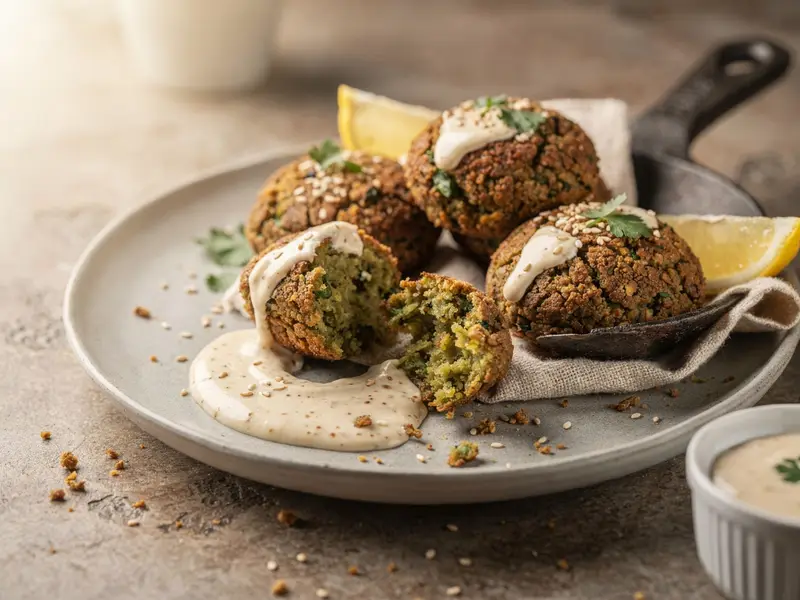
Dried chickpeas, onion, garlic, parsley and cilantro get blitzed with cumin and coriander, then baked — not fried — for 20 minutes. Pile them over couscous with tomato, cucumber, lemon and tahini. Serves 4.
- Prep
- 20 min
- Cook
- 20 min
- Total
- 40 min
- Serves
- 4
Ingredients
What you’ll need — tap to tick off as you go
- 250 g
- 4 cloves
- 30 g
- 20 g
- 2 tsp
- 1 tsp
- 1 tsp
- 1 ½ tsp
- ½ tsp
- 500 ml
- 200 g
- 250 ml
- 2 tbsp
- 80 g
- 60 g
- 80 g
Process
Timers built in · swap anything · ask as you cook
Drain the soaked dried chickpeas and pat them very dry with a clean towel. Spread on a tray and leave to air-dry for 10 minutes while you prepare the other ingredients.
Put the chickpeas, onion, garlic, parsley, cilantro, ground cumin, ground coriander, salt and black pepper into a food processor. Pulse in short bursts until the mixture looks like coarse sand and holds together when squeezed. Do not puree it smooth.
Transfer the falafel mixture to a bowl, cover and rest in the fridge for 15 minutes. Stir in the baking powder just before shaping.
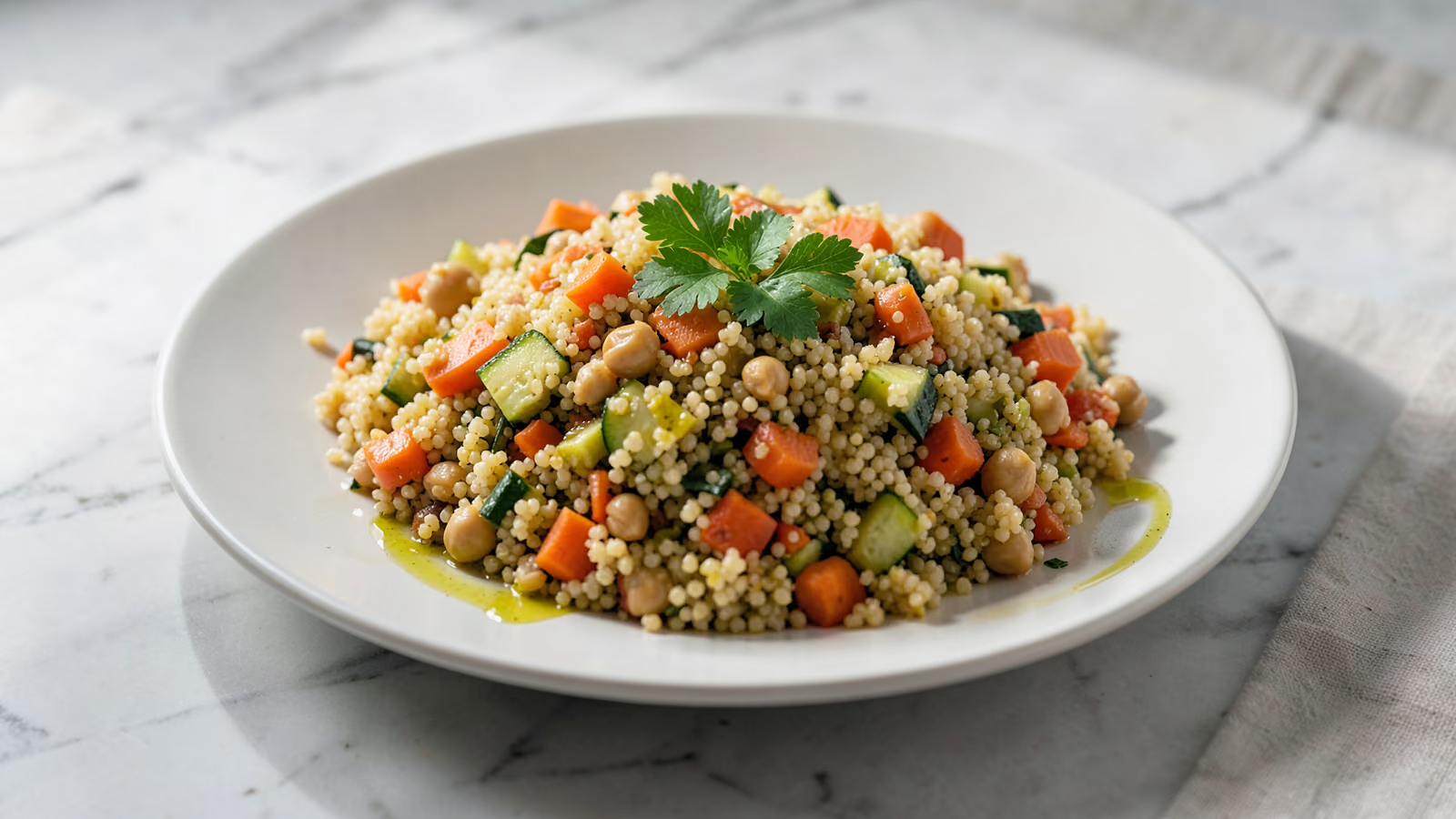
While the mixture rests, put the couscous in a heatproof bowl, pour over the hot vegetable broth and 1 tbsp olive oil, cover and leave for 10 minutes. Fluff with a fork.
In a separate bowl, combine the diced tomato, diced cucumber, sliced red onion, the juice of half the lemon and 1 tbsp olive oil. Season with a pinch of salt and set aside.
Whisk the tahini with the yogurt (if using), the juice of the remaining half lemon and 3–4 tbsp cold water until the sauce is smooth, pale and pourable. Season with a pinch of salt.
Shape the falafel mixture into 16 small balls or patties, about 3 cm wide, pressing firmly so they hold together.
Heat the vegetable oil in a deep frying pan over medium heat until a small piece of mixture sizzles immediately. Fry the falafel in batches for 3–4 minutes per side, until deep golden brown and crisp. Drain on a rack or paper towels.
Divide the couscous between four bowls. Top with the tomato-cucumber salad, 4 falafel each, pickled turnips if using, and a generous drizzle of tahini sauce. Serve immediately.
Kitchen notes
Kitchen notes
- The most common falafel mistake is using canned chickpeas: they are already cooked and wet, so the mixture turns to mush and the balls fall apart in the oil. Only soaked, raw, well-dried chickpeas give the coarse texture that fries crisp.
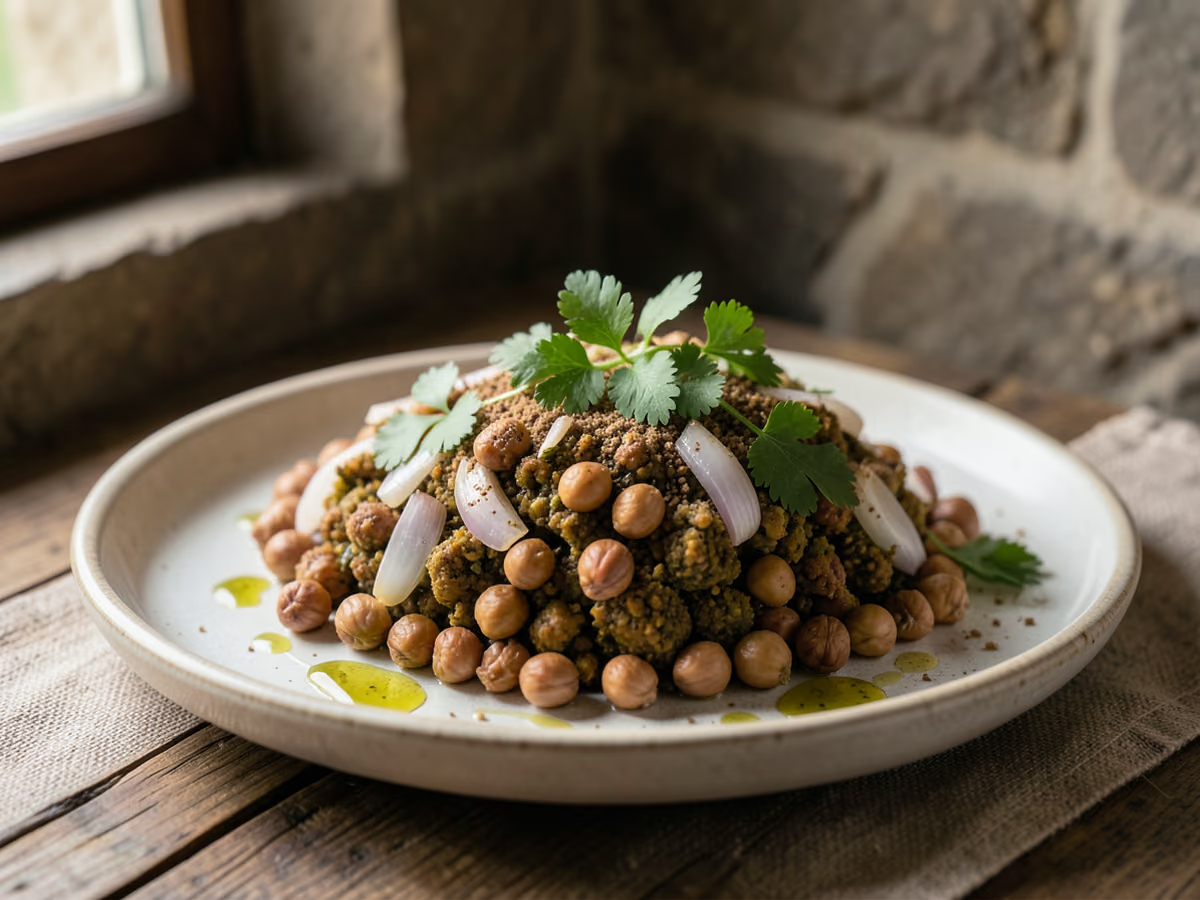
- Do not over-process the mixture. Stop when it looks like couscous or wet sand and a handful pressed in your fist holds its shape. A smooth paste steams inside and becomes dense.
- Fry at a steady medium heat. If the oil is too hot the falafel browns outside while staying raw inside; if too cool they soak up oil. A piece of mixture should sizzle gently and rise within a second or two.
- Resting the shaped falafel for 10 minutes before frying helps them hold together, and adding the baking powder at the last moment keeps them light.
Substitutions
- couscous→cooked quinoa, bulgur or brown rice for a gluten-free bowl
- plain yogurt→coconut yogurt or extra tahini thinned with water to keep the sauce vegan
- vegetable oil for frying→air fryer at 200°C for 12-14 minutes, turning once, for a lighter version
- fresh cilantro→extra fresh parsley if you dislike cilantro
Storage & reheating
Store fried falafel in an airtight container in the fridge for up to 3 days; keep the couscous, salad and tahini sauce in separate containers for up to 3 days. Reheat falafel in a 180°C oven for 8-10 minutes, or in a dry frying pan over medium heat, until hot and crisp again; avoid the microwave, which makes them soft. The tahini sauce thickens in the fridge, so loosen it with a spoonful of cold water before serving.
FAQ
The questions we get asked most
Why did my falafel fall apart in the oil?
The usual causes are canned chickpeas, a mixture that is too wet, or balls that are too large. Use only soaked raw chickpeas that you have dried thoroughly, pulse the mixture to a coarse sandy texture, and press each ball firmly. If the mixture still feels wet, chill it for 30 minutes before shaping.
Can I use canned chickpeas instead of dried?
No, canned chickpeas are cooked and too moist, so the falafel will crumble or turn mushy in the oil. If you want a quick shortcut, use a store-bought falafel mix and follow its package instructions instead.
Can I bake or air-fry the falafel instead of frying?
Yes. For the oven, brush the falafel with oil and bake at 200°C for 20-25 minutes, turning halfway, until golden and firm. For the air fryer, cook at 200°C for 12-14 minutes, shaking the basket once. Both versions are slightly drier than fried, so serve extra tahini sauce.
How do I know when the falafel is cooked through?
The outside should be deep golden brown and crisp, and a skewer inserted into the center should come out hot with no raw green paste. If you are unsure, cut one open: the inside should be pale green, fluffy and steaming, not dense or wet.
Can I make falafel ahead of time?
You can shape the raw falafel and keep them covered in the fridge for up to 24 hours before frying; add the baking powder just before shaping. Fried falafel also reheat well, so you can fry them a day ahead and crisp them in a 180°C oven for 8-10 minutes.
Why is my tahini sauce bitter or seized?
Tahini naturally thickens and can look seized when it meets lemon juice, but it loosens again as you whisk in cold water a spoonful at a time. If it still tastes bitter, add a pinch of salt and a little more lemon juice; a small amount of yogurt also rounds out the flavor.
Can I freeze falafel?
Yes. Freeze shaped raw falafel on a tray, then transfer to a bag for up to 2 months; fry them straight from frozen, adding 1-2 minutes to the cooking time. Cooked falafel can also be frozen for up to 2 months and reheated in a 180°C oven until crisp.
Ask KitchenMind about this recipe
Tell it what’s different tonight — it works within the actual recipe.