Beef Nihari
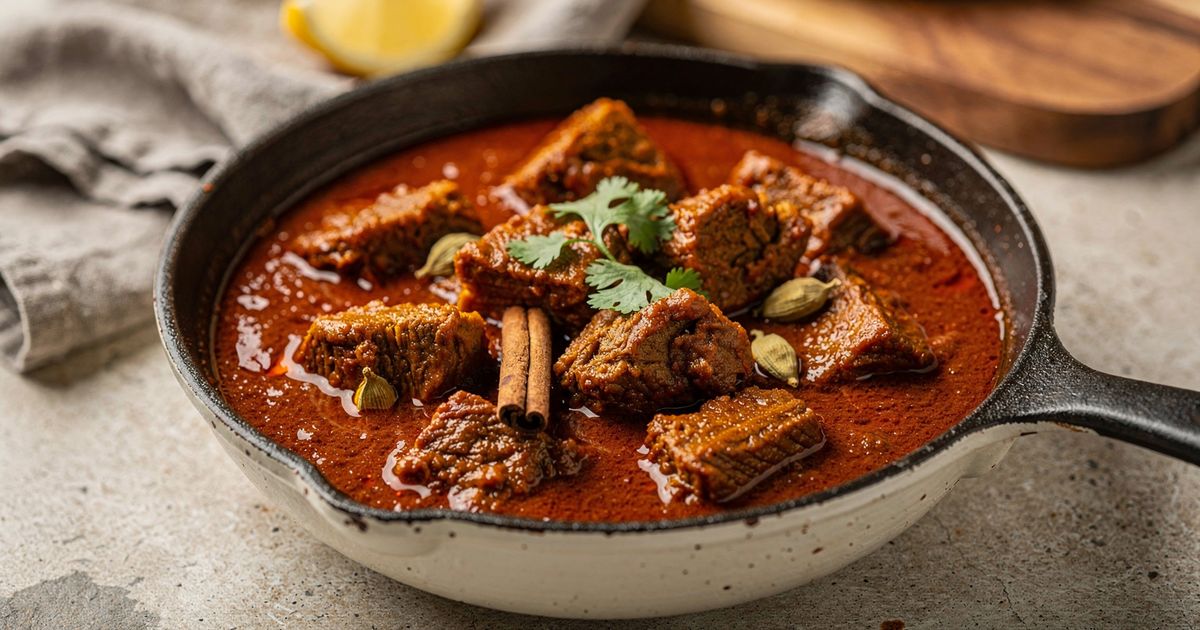
Beef nihari is the subcontinent's slow-simmered shank dish: 1.2 kg of beef shank cooked low for 2.5 to 3 hours in a fennel-and-red-chili masala, stabilized with yogurt and thickened with a simple flour slurry. The traditional version simmers overnight; this one delivers the same deep, glossy gravy in an evening, with about 25 minutes of prep and a mostly hands-off pot. Julienned ginger, sliced green chili, cilantro and lemon go on at the table, and the meat arrives tender enough to shred with a spoon.
- Prep
- 25 min
- Cook
- 180 min
- Total
- 220 min
- Additional time
- 15 min
- Serves
- 6
Ingredients
What you’ll need — tap to tick off as you go
- 1 ¼ kg
- 4 tbsp
- 2 tbsp
- 1 cup
- 3 tbsp
- 2 tsp
- 1 tsp
- 1 tsp
- 1 tsp
- ½ tsp
- 1 tsp
- 2 tsp
- 6 cups
- ½ cups
Process
Timers built in · swap anything · ask as you cook
Pat the 1.2 kg of beef shank pieces dry with paper towels — a dry surface seasons and browns better than a wet one. Season all over with 1 tsp of the salt and set the meat aside for 15 minutes while you slice the onions and measure the spices; the short rest lets the salt begin seasoning the surface.
Heat the 4 tbsp of ghee in a heavy-bottomed pot over medium heat. Add the 2 sliced onions and cook, stirring often, for 8 to 10 minutes, until deep golden brown and glossy. Take them this far — the onions' color becomes the gravy's color — but do not let them blacken, or the pot turns bitter.
Stir in the 2 tbsp of ginger garlic paste and cook for 1 minute, until the raw smell disappears. Add the 2 tsp red chili powder, 1 tsp ground coriander, 1 tsp ground fennel, 1 tsp ground cumin and 0.5 tsp ground turmeric, and cook for 30 seconds to bloom the spices in the hot fat.
Reduce the heat to low. Add the 1 cup of whisked yogurt one spoonful at a time, stirring constantly so the proteins never seize. Cook for 3 to 4 minutes, until the yogurt is fully incorporated and glossy oil begins to separate at the edges of the masala.
Add the seasoned beef shank and turn the pieces to coat in the masala. Cook for 5 minutes, turning once, until the meat is lightly browned on all sides. Keep the heat gentle — the point is color and coating, not a hard sear that could tighten the shank.
Pour in the 6 cups of beef broth and add the remaining 1 tsp salt. Bring to a boil over high heat, then reduce the heat to low, cover, and simmer gently for 2.5 to 3 hours, stirring every 30 minutes, until the beef is fork-tender and shreds easily.
Whisk the 3 tbsp of all-purpose flour with 0.5 cup of water until completely smooth. Pour the slurry slowly into the simmering pot, stirring as it goes, then cook uncovered over low heat for 15 to 20 minutes, stirring often, until the gravy coats the back of a spoon.
Stir in the 1 tsp garam masala and taste for salt, adding more if the gravy needs it. Simmer for 2 more minutes so the finishing spice blooms, then remove the pot from the heat.
Ladle the nihari into deep bowls. Top with the julienned ginger, sliced green chili and the 0.5 cup of chopped cilantro, if using, and serve hot with lemon wedges on the side so each person can brighten their own bowl.
Why this recipe works
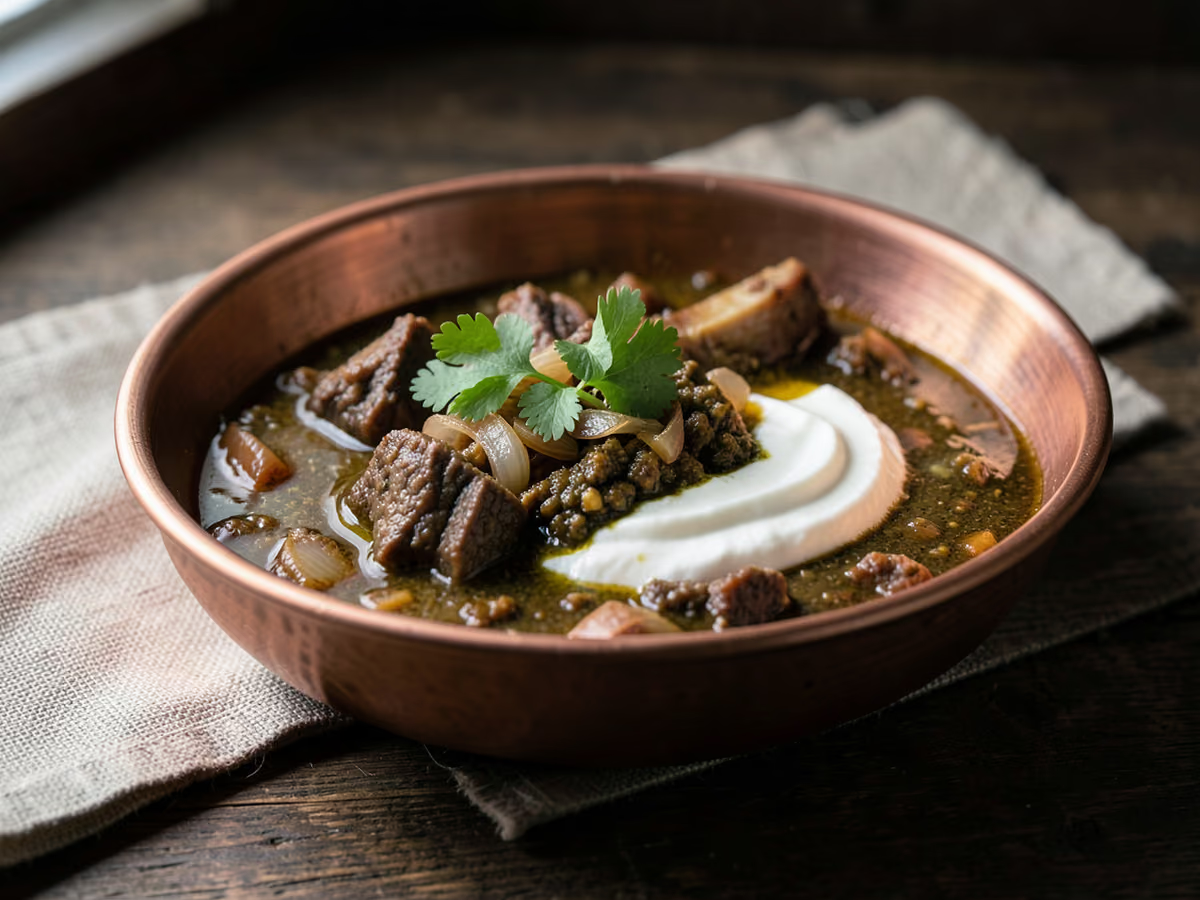
Beef shank is the engine of the dish: its connective tissue melts into gelatin only after hours at a bare simmer, and that gelatin is what gives the gravy its body and its spoon-coating gloss. The yogurt is the other delicate piece. Yogurt is an acidic gel of milk proteins; heat and acidity set those proteins into curds, so the pot comes down to low and the yogurt goes in a spoonful at a time, staying silky instead of grainy. The flour slurry thickens because starch granules swell, burst and release starch as they cook, and simmering it uncovered for the full 15 to 20 minutes lets it gelatinize, so the gravy turns glossy rather than pasty.
Equipment
- Heavy-bottomed pot or Dutch oven, 5 to 6 liters, with a tight-fitting lid — a thick base spreads the low, even heat the long simmer needs, and the lid traps steam so the pot does not dry out
- Wooden spoon or heatproof spatula, for stirring often and scraping the pot's base clean through the long simmer
- Small bowl and whisk, for mixing the flour slurry to a completely smooth paste before it meets the pot
- Ladle, for adding the slurry in a slow stream and for serving
- Measuring spoons and cups, for the spices, the flour and the water for the slurry
- Chef's knife and cutting board, for slicing the onions, the chilies and the ginger garnish
- Large bowl, for whisking the yogurt perfectly smooth before it goes into the pot
Kitchen notes
Kitchen notes
- Bone-in pieces, or an extra marrow bone tucked in, melt richness into the gravy that boneless cuts cannot match; ask the butcher to cut the shank across the bone if you can.
- Cook it a day ahead if the schedule allows: overnight in the fridge the spices marry and the fat sets into a lid you can lift off, leaving a cleaner, deeper gravy to reheat.
- Temper the slurry like custard: whisk a ladleful of hot gravy into the cool flour-water mix first, then return it all to the pot — the slurry enters warm and cannot seize.
- Toast whole coriander, fennel and cumin seeds and grind them fresh; in a masala that leans on fennel and coriander, that fresh-ground perfume is the difference between flat and vivid.
- Finish with a quick tarka: sizzle a spoonful of ghee with a pinch of the red chili powder and pour it over the pot just before serving — it lifts the aroma and puts the traditional sheen back on top.
Common mistakes
- Tough, tight meat after three hours: a hard boil tightens the shank faster than its collagen can melt — drop the heat to the barest simmer, one or two lazy bubbles at a time, and give it more time rather than more heat.
- Grainy, split yogurt: the yogurt met high heat while cold and in a single pour, so its proteins clumped — take the pot down to low, add it a spoonful at a time, and keep stirring; whisking a little flour into the yogurt first protects the proteins further.
- Gravy still thin at the end: the slurry was stirred in but not cooked long enough, so the starch never finished swelling — simmer it uncovered for the full 15 to 20 minutes; if it is still loose, whisk up a small second slurry of flour and water and simmer a few minutes more.
- Lumpy gravy: the slurry went into the pot in one hot dump, so the flour seized into beads — whisk it with cool water to a smooth paste first, then pour it in a slow stream while stirring.
- Bitter, scorched base: the onions were fried past amber, or the pot sat unstirred while the flour settled — stop the onions while they are still amber-brown, stir down to the bottom every 30 minutes, and if a patch does catch, leave it be and finish over a smaller flame.
Serving suggestions
- Serve it hot in deep bowls with soft breads for mopping — naan, kulcha, sheermal or khameeri roti — or plain basmati rice if you prefer.
- Set out a garnish plate before you sit down: julienned ginger, sliced green chilies, chopped cilantro, lemon wedges and, if you have them, crisp fried onions (birista); each bowl is finished at the table.
- An onion salad or cucumber salad on the side cuts the richness, and a spoon of plain yogurt cools the heat for anyone who needs it.
- Traditionally eaten at breakfast after the pot has simmered through the night, and just as good at dinner; a small cup of masala chai alongside nods to the morning ritual.
Variations
- Pressure-cooker nihari: after browning the coated meat (step 5), add the broth, seal, and cook at high pressure for 45 minutes — 50 if the pieces are large or bone-in — then let the pressure release naturally for 15 minutes; open, stir in the slurry, and simmer uncovered on the sauté setting for 10 to 15 minutes until the gravy thickens.
- Slow-cooker nihari: brown the onions, spices and meat on the stovetop through step 5, then transfer everything to the slow cooker with the broth and cook on low for 6 to 8 hours; whisk in the slurry and cook uncovered on high for the last 30 to 45 minutes, until the gravy coats a spoon.
- Overnight dum style: seal the lid with a rope of dough, keep the flame at its absolute lowest, and let the pot go 6 to 8 hours through the night; the Lahori method, ready to eat at breakfast with the garnish plate alongside.
Refrigerator
- RefrigeratorCool the nihari promptly — divide it into shallow containers so it stops steaming quickly — and refrigerate within 2 hours. It keeps up to 4 days; the fat sets into a layer on top that you can stir back in or lift off.
- ReheatingReheat gently on the stovetop over low heat, adding a splash of broth or water if the gravy has tightened, until it is steaming hot throughout, 74°C. Skip hard boiling, which can make the meat stringy, and stir gently so the pieces stay whole.
- FreezingFreezes very well: portion into freezer-safe containers for up to 3 months, thaw overnight in the refrigerator, and reheat as above. The gravy can look slightly grainy after thawing, but gentle stirring over low heat brings it back together.
- Make aheadIt is even better made a day ahead, and it rewarms for days after. Cook it fully, cool, and chill; the flavors deepen overnight, and the set fat is easy to skim before reheating.
Updated:
How this recipe was developed
- USDA FSIS and FoodSafety.gov, leftovers and cold food storage guidance — refrigerate leftovers within 2 hours, keep soups and stews 3 to 4 days in the fridge or 2 to 3 months frozen, and reheat to 74°C (165°F).
- Wikipedia, article on Nihari — the dish's identity: slow-cooked shank of beef, lamb or goat with bone marrow and long pepper, its Awadhi, Pakistani and Bangladeshi associations, and the taar tradition of carrying over part of the previous day's pot.
- Tea for Turmeric (Izzah Cheema), stovetop, slow-cooker and Instant Pot nihari — pressure times of 45 to 50 minutes for shank, thickening through a slurry of cooled liquid to avoid lumps, dry-roasted brown rice or sorghum flour as a gluten-free thickener, and the garnish plate.
- Harold McGee, On Food and Cooking — starch gelatinization (why the flour slurry needs its full uncovered simmer) and milk-protein coagulation under heat and acid (why the yogurt goes in slowly, at low heat).
Editorial references are kept internally for verification. This page makes no claim of external certification or professional testing.
FAQ
The questions we get asked most
What is nihari made of?
Beef nihari is a slow-simmered shank dish, and its masala is what sets it apart: red chili powder, coriander, fennel, cumin and turmeric bloomed in ghee with onions and ginger garlic paste. This version cooks 1.2 kg of beef shank in 6 cups of broth, loosens the mix with 1 cup of yogurt, and thickens the gravy with a 3 tbsp flour slurry; julienned ginger, green chili, cilantro and lemon finish each bowl at the table. It is not gluten-free or dairy-free as written — both have easy swaps in the substitutions.
Is nihari beef or lamb?
Both are traditional: nihari is made with the shank cut across the subcontinent, and the choice shifts by city and kitchen — lamb or goat are common in the older South Asian versions, while Pakistani nihari is most often beef. This recipe is the beef rendition; the name itself comes from nahar, morning, because the pot was cooked overnight and eaten at dawn. You will also see nalli nihari at restaurants — the same dish cooked with marrow bones for a richer, butterier gravy — but it is the shank that carries it either way.
Why did my nihari gravy turn out thin?
Almost always the slurry. Flour thickens only once its starch has fully swollen and gelatinized, so the mix has to be smooth before it goes in, and then it needs to simmer uncovered for the full 15 to 20 minutes, stirring, until it coats the back of a spoon. If the gravy is still loose after that, whisk up a small second slurry of flour and water and simmer a few minutes more.
How do I stop the yogurt from curdling in the gravy?
Keep the heat low and add the 1 cup of whisked yogurt slowly, a spoonful at a time, stirring until each addition disappears into the masala. A cold dump into a boiling pot is what makes yogurt split: heat and acidity clump its milk proteins into curds. For extra insurance, whisk a little flour or cornstarch into the yogurt first, or temper it with a ladleful of the hot masala before it goes in; if a few flecks still appear, whisk them smooth — the gravy tastes the same.
Can I make nihari in a pressure cooker or Instant Pot?
Yes — follow the recipe through browning the coated meat, then add the broth, seal, and cook at high pressure for 45 minutes (50 for large or bone-in pieces), letting the pressure release naturally for 15 minutes. Open the lid, stir in the flour slurry, and simmer uncovered on the sauté setting for 10 to 15 minutes until the gravy thickens. The meat comes out tender and the flavor lands close; what you lose is some of the slow reduction of the stovetop version.
How spicy is nihari, and can I make it milder?
As written it is warmly spiced rather than fiery: the 2 tsp of mild red chili powder, the deep-red kind, color the gravy more than they heat it, and much of the bite comes from the sliced green chili garnish. For a milder pot, cut the chili powder to 1 tsp and pass the green chilies at the table; the fennel, coriander and garam masala keep the gravy aromatic even with the heat dialed back.
What is the difference between nihari and haleem or paya?
They are separate dishes that share the long, slow method. Nihari is a shank dish with a flour-thickened, chili-and-ginger-forward gravy; haleem is wheat and meat pounded smooth, closer to a savory porridge; paya is built on trotters, lighter and more gelatinous, with gentler spicing. Of the three, nihari's gravy is the thickest and boldest.
Ask KitchenMind about this recipe
Tell it what’s different tonight — it works within the actual recipe.