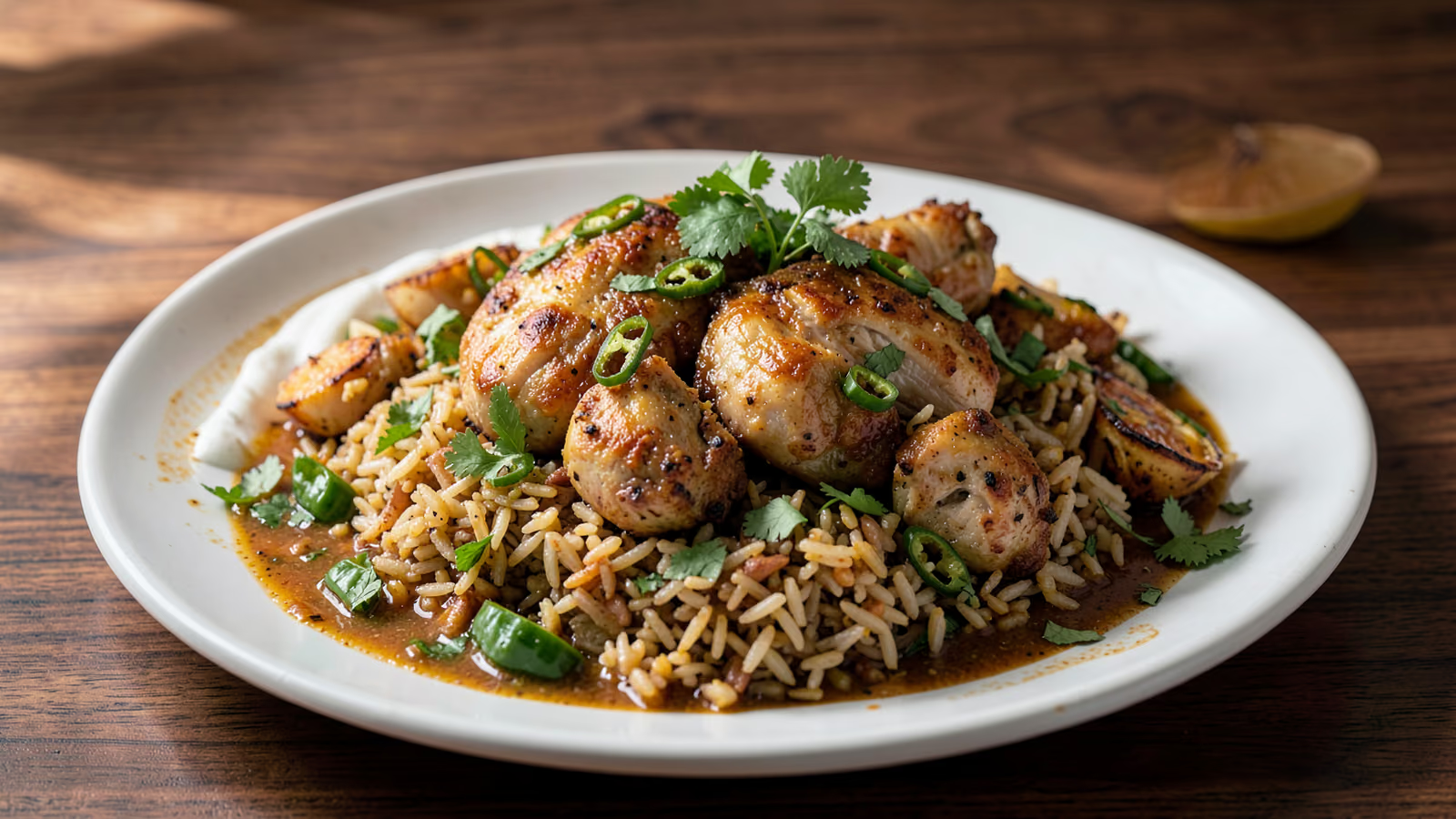
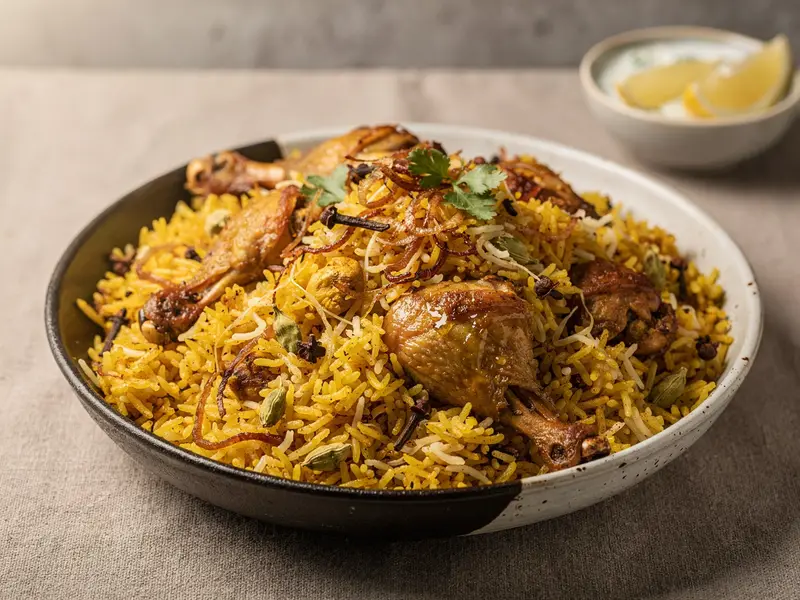
Chicken Dum Biryani
Chicken dum biryani is the layered Hyderabadi classic: bone-in thighs marinated in yogurt and warm spices, part-cooked with fried onions, then sealed beneath par-boiled basmati that finishes cooking in the pot's own aromatic steam. Nothing is stirred after the layers go in, which is what keeps the grains separate and perfumed with everything below them. Expect about 40 minutes of prep and 55 minutes at the stove, with the marinade resting in between; the challenge is calibration rather than speed, and the pot does its final half hour alone.
- Prep
- 40 min
- Cook
- 55 min
- Total
- 140 min
- Additional time
- 45 min
- Serves
- 6
Ingredients
What you’ll need — tap to tick off as you go
- 1000 g
- 250 g
- 3 tbsp
- 2 tsp
- ½ tsp
- 2 tsp
- 1 tsp
- 1 tsp
- 2 ½ tsp
- 2 tbsp
- 600 g
- 4 tbsp
- 30 g
- 30 g
- ¼ tsp
- 60 ml
- 1 tsp
- 2 tbsp
- 3 l
Process
Timers built in · swap anything · ask as you cook
Combine the 1000 g chicken thighs, 250 g yogurt, 3 tbsp ginger garlic paste, 2 tsp red chili powder, 0.5 tsp turmeric, 1 tsp garam masala, 1 tsp cumin, 1 tsp coriander, 2 tsp salt and 2 tbsp lemon juice, and turn until every piece is coated. Cover and refrigerate for at least 30 minutes, or up to 4 hours; the salt and lemon start tenderising the meat as the spices infuse.
Heat 3 tbsp ghee in a wide heavy skillet over medium heat, about 135°C in the pan, until it shimmers. Add the 3 sliced onions and a pinch of salt and fry for 12 to 15 minutes, stirring often, until deep golden brown and crisp. Lift out half with a slotted spoon and set aside for layering; leave the rest in the skillet.
Add the marinated chicken and its marinade to the skillet with the onions. Cook over medium-high heat for 8 to 10 minutes, turning the pieces once, until the chicken is lightly browned and the marinade has thickened into a glossy gravy that clings to the pieces. It is deliberately not fully cooked yet; the dum finishes it.
Bring the 3 litres of water to a rolling boil with the 2 bay leaves, 4 green cardamom, 1 black cardamom, 4 cloves, 1 cinnamon stick, 1 tsp cumin seeds and 1 tbsp salt. Add the drained 600 g basmati rice and boil for 5 to 6 minutes, until 70 percent cooked: a grain bends between your fingers and breaks around a firm white core. Drain at once and spread on a wide tray.
Warm the 60 ml whole milk and stir in the 0.25 tsp crushed saffron threads. Leave to steep for 5 minutes, until the milk turns deep orange. Warm, not boiling, milk draws the colour out without driving off the perfume.
Choose a heavy-bottomed pot with a tight lid and spread the chicken and its gravy across the bottom in one even layer. Layer half the par-boiled rice over the chicken, then scatter half the fried onions, half the mint, half the cilantro and 2 slit green chilies. Repeat with the remaining rice, onions, mint, cilantro and green chilies, finishing level.
Drizzle the saffron milk and the remaining 1 tbsp ghee evenly over the top, and dust with the remaining 1 tsp garam masala. Work the 2 tbsp all purpose flour with 3 tbsp water into a stiff paste for the seal.
Set the lid on and press the flour paste all around the rim to make an airtight seal, or wrap the rim with foil before pressing the lid down. Cook over high heat for 5 minutes to build steam, then drop to the lowest heat for 30 minutes. Do not open the lid — every escape of steam is aroma and moisture the rice will not get back.
Turn off the heat and leave the pot sealed for 10 minutes; residual steam finishes the rice and settles the layers. Break the seal, fluff the rice gently with a fork from the sides, and lift rice and chicken together onto plates. For certainty, the thickest piece of chicken should read 74°C, the USDA FSIS minimum for poultry.
Why this recipe works
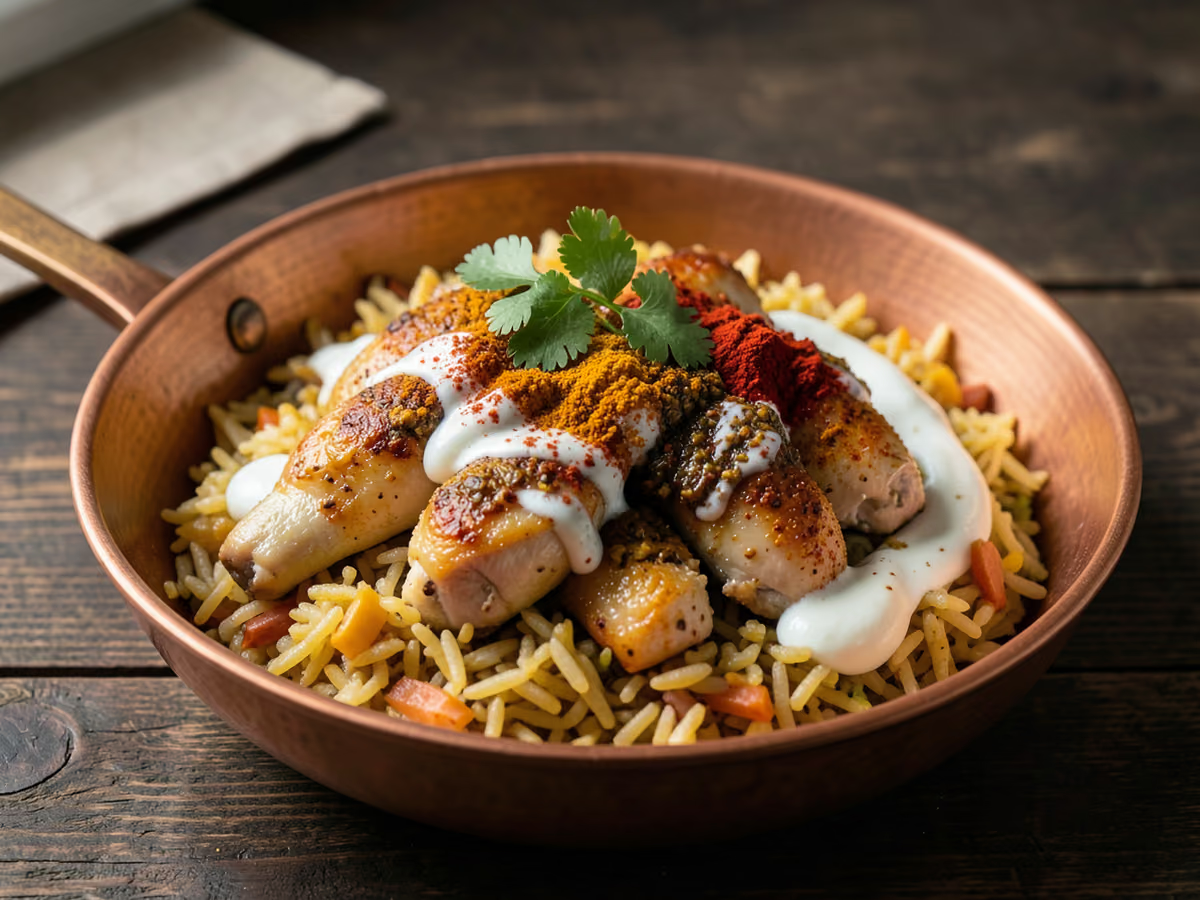
Both the rice and the chicken reach the pot deliberately undercooked, because the sealed vessel finishes the job: five minutes of high heat builds steam, then the lowest flame lets that steam work through the layers for half an hour, finishing the rice from above while the chicken finishes in its gravy below. The yogurt marinade does more than flavour: its acidity and the salt loosen the thigh meat, so it stays tender through the long gentle cook. Layering rice over chicken, rather than folding the two together, is what keeps the grains separate — stirring crushes them and collapses the structure the dum depends on.
Equipment
- 4-5 litre heavy-bottomed pot with a tight-fitting lid (Dutch oven or handi)
- Flat griddle or tawa to diffuse the heat under the pot
- Wide heavy skillet for frying the onions and cooking the chicken
- Large pot for par-boiling the rice
- Wide tray or sheet pan for spreading the drained rice
- Small bowl for the saffron milk
- Slotted spoon
- Instant-read thermometer
Kitchen notes
Kitchen notes
- Taste the gravy just before layering with a bias towards bold: it should read slightly saltier and spicier than you want on its own, because it will spread through unsalted rice as the pot steams. Under-seasoning here is the mistake there is no fixing later.
- Slice the onions about 2 mm thick and lengthwise, and separate every layer before they hit the ghee. Onion rings that stay nested steam instead of crisping, and a flat or burnt birista flattens the whole dish.
- Take the marinated chicken out of the fridge 20 to 30 minutes before it goes into the pan; a cold, heavy mass drops the pan temperature and turns the sear into a stew.
- Wipe the pot's rim completely dry before pressing on the flour paste or foil. Any film of grease or water gives the steam a path out, and the seal is the whole technique.
- If you want to listen to the dum without opening the pot, tilt it briefly: a faint, steady sizzle means the base is fine, while a loud crackle means the heat is too high and should drop immediately.
Common mistakes
- Mushy rice: the grains crossed the 70 percent line in the par-boil, or sat in hot water while draining. Pull the rice at the bend-but-firm stage, drain it at once, and spread it on a wide tray so residual heat stops rather than keeps cooking it.
- A scorched bottom: high heat ran too long under a thin pot. Use the heavy pot, drop to the lowest flame after the 5-minute steam build, and set the pot on a flat griddle or tawa if your stove's lowest setting still runs hot.
- Dry chicken or a pink centre at the bone: pieces were cut unevenly or the dum ran short. Cut eight even pieces, keep the full 30-minute low cook with the lid sealed, and check the thickest piece reads 74°C before serving.
- A watery base layer: the yogurt was not whisked smooth, or loose marinade was layered with the chicken. Use full-fat yogurt whisked to silkiness and reduce the chicken for the full 8 to 10 minutes until the gravy is glossy and clings.
- A flat, faint aroma: saffron was skipped, or the seal leaked steam for half an hour. Steep the saffron milk properly, build a real airtight seal with the flour paste or foil, and resist lifting the lid to check.
Serving suggestions
- Bring the pot to the table and scoop from the side, lifting rice and chicken together so every plate gets all the layers, including the golden grains and a spoonful of gravy.
- Raita is the traditional cooling partner: yogurt stirred with roasted cumin, a little chopped onion and coriander, and a light seasoning.
- Sliced raw onion and a lemon wedge finish the plate; the sharpness cuts the richness of the ghee and spice.
- Mirchi ka salan, the peanut and chilli curry, is the full Hyderabadi pairing if you have time; a simple tomato gravy works almost as well.
- Serve hot, straight after the sealed rest. The dish is at its best within the first hour, while the grains are still separate and the aroma is at full strength.
Variations
- Boneless chicken: cut the thighs into 2-inch chunks, brown them well in step 3, and shorten the low dum to 20 minutes — boneless pieces cook faster and dry out over the full 30.
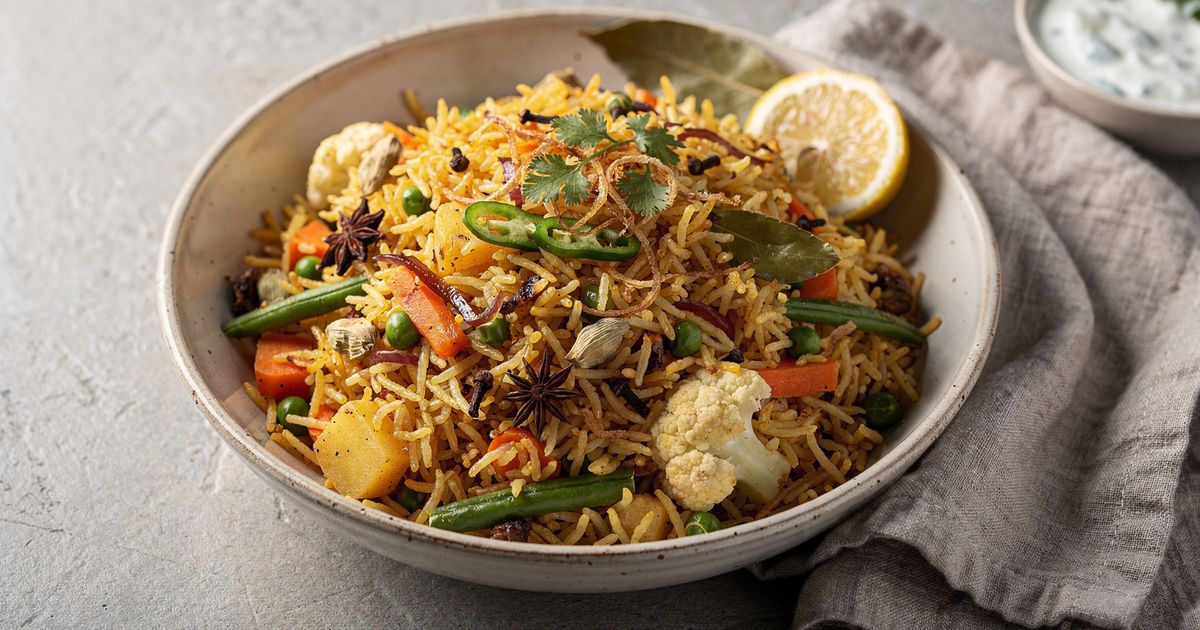
- Vegetable biryani (vegetarian): replace the chicken with boiled potato, chickpeas and cauliflower, simmered briefly in the marinade before layering; keep the same rice, saffron and dum.
- Oven dum: after sealing, put the pot in a 160°C oven for about 25 minutes instead of the stovetop — gentler on the base of the rice, with a softer sizzle and no risk of a scorched layer.
- Floral top note: stir a teaspoon of kewra or rose water into the saffron milk before it goes over the rice; the perfume intensifies as the sealed pot steams.
Refrigerator
- RefrigeratorCool the leftovers within 2 hours, then refrigerate in an airtight container for up to 3 days. The rice softens a little each day — day one is noticeably the best — and leftovers should be reheated until steaming hot before eating.
- ReheatingThe steaming method restores the dum texture best: transfer to a covered oven-safe dish with a splash of water, cover with foil, and warm at 160°C for 15 to 20 minutes. Microwave covered in 1-minute bursts as a faster option. Reheat to 74°C throughout, the USDA FSIS guidance for leftovers.
- FreezingPortion it while fresh: single servings freeze for up to 2 months and keep far better than the fridge for longer stretches. Thaw overnight in the fridge, then reheat covered with a splash of water. Expect slightly softer grains and a little less perfume, and do not reheat straight from frozen — the rice turns mealy.
- Make aheadMarinate the chicken up to 24 hours ahead and fry the onions up to 2 days ahead, stored airtight. Layer the pot up to 2 hours before cooking and keep it covered; do not par-boil the rice more than 30 minutes in advance or the drained grains dry at the edges and clump.
Updated:
How this recipe was developed
- USDA FSIS safe minimum internal temperature chart (all poultry 74°C / 165°F; leftovers reheated to 74°C)
- USDA FSIS leftovers and food safety guidance (refrigerate within 2 hours; 3-4 days refrigerated, 3-4 months frozen)
- Tiffins ToGo, caterer-tested chicken dum biryani guide — birista oil temperature, 85-90 percent chicken doneness cues, dum heat cadence, sealed rest
- eathealthy365, Hyderabadi dum biryani layering guide — the 70 percent par-cook rule, grain doneness tests, heavy-pot and tawa guidance
Editorial references are kept internally for verification. This page makes no claim of external certification or professional testing.
FAQ
The questions we get asked most
Can I marinate the chicken overnight?
Yes, up to 24 hours in the fridge, covered, and the flavour deepens. Beyond that the yogurt's acidity starts breaking the meat down too far and the texture can turn mushy, so keep it to a day at most.
Can I use chicken breast or boneless thigh instead?
Boneless thigh works if you cut it into 2-inch chunks, brown it well, and shorten the dum to 20 minutes. Breast is the weakest choice: it has little fat and dries out over the long sealed cook. Bone-in thigh is what the timing is built around.
My rice was still firm after the dum, what went wrong?
Either the par-boil stopped short of the bend-and-break stage, or the dum never built real steam. Next time boil to 70 percent before draining, use a tight seal, and keep the flame at its true lowest rather than low-medium. If the rice is still firm when you open the pot, re-seal and give it 5 more minutes on low.
How do I know the chicken is cooked through when the lid stays shut?
The timing is designed so the 30-minute low dum finishes it and the 10-minute sealed rest carries it further. For certainty, check the thickest piece with an instant-read thermometer once the pot is open: it should read 74°C, the USDA FSIS minimum for poultry.
Can I assemble the biryani ahead of time?
Yes, up to the dum. Marinate a day ahead, fry the onions two days ahead, and layer the pot up to 2 hours before cooking, kept covered. Par-boil the rice only when you are within about half an hour of layering, because drained rice sitting around dries and clumps.
Is chicken dum biryani gluten-free?
Not as written: the flour paste that seals the pot contains wheat. Seal with foil or a heavy tight-fitting lid instead, and check that your garam masala and other blends are certified gluten-free. The rice, chicken and yogurt are naturally gluten-free.
How spicy is it, and can I tone it down?
Moderately warm as written: the Kashmiri chilli is mostly for colour, so the heat rides on the 4 slit green chilies and the garam masala. Scrape the seeds out and use three for a mild pot, or keep the seeds and add a fifth for real heat; raita on the side resets the palate.
Ask KitchenMind about this recipe
Tell it what’s different tonight — it works within the actual recipe.