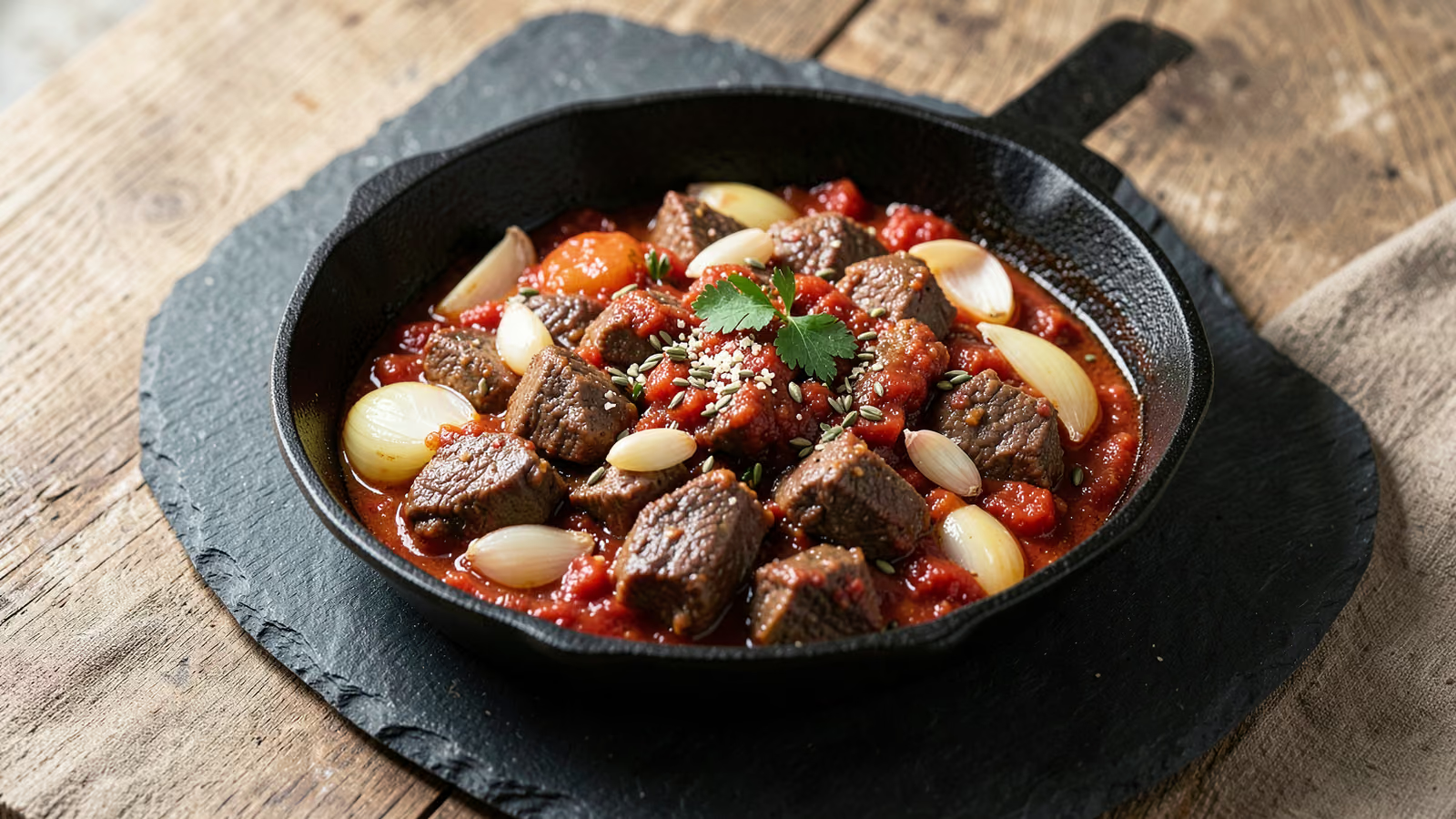
Beef Goulash Stew
Beef goulash stew is the Hungarian-inspired answer to a cold evening, and the list is short: 1200 g of chuck, 3 tbsp of sweet paprika, and time. Brown the beef in batches. Low and slow. The collagen relaxes into a glossy red-brown gravy, and the beef crushes under a spoon, which is exactly where you want it after a long, quiet simmer. Bloom the paprika off the heat so it perfumes the pot instead of scorching. Prep takes 25 minutes. The stove does the other 150. Most of that needs nothing from you.
- Prep
- 25 min
- Cook
- 150 min
- Total
- 175 min
- Serves
- 6
Ingredients
What you’ll need — tap to tick off as you go
- 1200 g
- 4 cloves
- 3 tbsp
- 1 tsp
- 2 tbsp
- 800 ml
- 500 g
- 2 tbsp
- 1 ½ tsp
- ½ tsp
- 1 tbsp
- 10 g
Process
Timers built in · swap anything · ask as you cook
Pat the beef chuck cubes dry with paper towels, and season all over with the 1.5 tsp salt and 0.5 tsp black pepper; season now, not later. A dry surface crusts and browns, while a damp one steams and turns grey, and your stew loses the roasted depth that comes from a properly browned crust.
Heat the 2 tbsp sunflower oil in the Dutch oven over high heat until it shimmers. Brown the beef in three batches without crowding, turning the pieces to color two or three sides, about 3 minutes per side (a heavy skillet with a tight lid works too), then set them aside. Give each batch room: crowding drops the temperature, so the meat releases water instead of browning, and the browned layer left behind is the deepest flavor in the stew. That browning is worth the wait.
Lower the heat to medium and add the 3 onions. Cook for 8 minutes, stirring and scraping the browned bits loose as they soften, until the pieces are soft with golden edges. Nothing dark, nothing charred. Those onions melt into the gravy later. The bits you scrape up are where the stew's deep flavor starts.
Stir in the 4 minced garlic cloves. Cook for 30 seconds, just until it smells sweet. Pull your pot off the heat (a small bowl helps you add the paprika in one quick move). Stir in the 3 tbsp sweet paprika with the 1 tsp caraway seeds. 20 seconds is all they need. The residual heat in the fat and onions does the work. Over a live flame, the paprika can turn bitter in seconds, and no amount of simmering later will bring the flavor back.
Return the pot to medium heat and stir in the 2 tbsp tomato paste; cook for 1 minute, stirring, until it darkens and smells toasted rather than raw. This short fry turns the paste from sharp and tinny into a savory layer; it deepens your color without competing with the paprika.
Return the beef and any juices from the plate to the pot; pour in the beef broth and add the 2 bay leaves. Bring it to a gentle simmer, stirring once and scraping the base clean; a controlled simmer keeps the meat relaxed while the liquid does its slow, steady work. Not a boil.
Cover the pot with the lid slightly ajar and simmer on low for 90 minutes (a heat diffuser tames a stubborn burner), stirring every 20 minutes and scraping the bottom of the pot. The beef is nearly ready when a knife slides into a cube with only slight resistance at the center. The gap lets just enough steam escape to hold the broth below a boil, where the chuck's collagen relaxes into gelatin instead of being agitated to shreds.
Drop in the potatoes, carrots, and diced red bell pepper, then leave the pot uncovered and cook for 30 to 40 minutes more. Test as you go. The potato chunks should give way completely, and a cube of beef should yield under gentle pressure from a spoon. Holding the roots back until this stage is what keeps them intact, and with the lid off the broth reduces toward a gravy while their starch quietly thickens it.
If the broth still looks thin once the vegetables are tender, whisk the 1 tbsp all-purpose flour into 2 tbsp cold water (cornstarch works as well, in a smaller dose) and stir it through, then simmer 5 minutes. Cold water keeps the flour from clumping. The short simmer cooks out the raw starch taste. Already coating a spoon? Skip this step.
Discard the 2 bay leaves, taste the broth, and adjust the salt for your taste. Scatter the chopped parsley over the top. Serve it hot, in deep bowls, while the potatoes still hold their shape; the parsley is a fresh counterweight to the deep red gravy. It fades quickly. Add it last.
Why this recipe works
Two slow processes carry this stew. Start with browning. A dry surface and a hot pot drive the Maillard reaction, and the crust and fond you scrape into the onions carry that roasted depth through the whole pot. Then comes conversion: chuck is threaded with collagen that only relaxes after a long stretch of wet heat around 70 to 90°C, far below a boil. Keep the bubbles lazy. The meat stays intact. The paprika wants the opposite treatment: seconds in hot fat off the flame release its color and aroma, while minutes over direct heat turn it bitter. That is why the flame goes off first. An uncovered finish reduces the broth, and the starch from the potatoes thickens what is left into the glossy, spoon-coating gravy you are after.
Equipment
- Heavy 5 L Dutch oven or wide heavy pot with a lid
- Chef's knife and cutting board
- Paper towels for drying the beef
- Large plate or tray for holding the browned batches
- Wooden spoon or stiff spatula, for scraping the fond
- Measuring spoons, a small bowl, and a liquid measuring jug
- Instant-read thermometer (optional, for checking the simmer stays below a boil)
Kitchen notes
Kitchen notes
- Sniff the paprika before you commit to it. It should smell sweet, bright, and peppery. Dusty cardboard smell? Your stew will taste flat, and there is no fixing it later.
- Chuck, shin, and cheek all work because of their collagen. Shin and cheek can taste even silkier, though you may need to give them more time; lean cuts such as sirloin stay dry and tough at any length of cooking. For a first run, go with chuck; it is the hardest to ruin.
- If the pot tastes flat, check the salt before you reach for more paprika; it gives color and aroma more than savoriness, and flat stews want salt, not spice.
- Stir the pot gently once the potatoes go in; hard stirring breaks their edges, and the gravy turns cloudy and starchy rather than glossy and clear.
- A wide pot beats a deep narrow one: more surface area means the broth thickens evenly during the uncovered stretch, without a single furious boil.
Common mistakes
- Bitter, acrid aftertaste: the paprika sat over direct heat and scorched. Pull the pot off the flame before it goes in, stir for about 20 seconds, then add the broth right after. A faint bitterness can be rounded off with a spoonful of tomato paste. A sharp, acrid one cannot be rescued.
- Watery broth instead of gravy. Too much liquid went in, or the lid stayed on for the whole simmer and trapped the steam. Keep the pot partly covered during the long stretch, then uncover it with the potatoes so your broth can reduce to a spoon-coating consistency. If it stays looser than you like at the end, don't worry; a few more minutes uncovered will pull it in.
- Beef still chewy after two hours: the simmer drifted to a boil, or the cubes were uneven. Keep the bubbles lazy and the cubes a uniform 3 cm, and test by pressing a piece against the pot wall, not by trusting the clock. Underdone collagen needs more gentle time, not more heat.
- Potatoes dissolved into the broth: they went in with the beef. Add them only for the final 30 to 40 minutes, and stir gently from then on. A few broken edges thicken the gravy; fully collapsed chunks leave it pasty.
- Flat, muddy flavor: the beef was not browned properly, or the paprika was old. Brown in batches until each piece has a real crust, and use the full 3 tbsp of fresh paprika; tired jars give up almost no color or aroma.
Serving suggestions
- Deep bowls, and slabs of rye or crusty white bread for dunking. The broth is meant to be eaten with a spoon.
- Buttered egg noodles, boiled new potatoes, or small pinched dumplings if you want the pot to stretch further. Leftover gravy thinned with a splash of water makes a quick sauce for noodles.
- A cold, sharp salad to cut the richness between spoonfuls: cucumber with onion, or quick-pickled peppers.
- Serve it steaming hot, straight from the pot; the gravy tightens as it cools, so bring it back to a bare simmer if it has been waiting. Gather everyone at the table while the bowls still steam; cold evenings were made for a pot like this.
Variations
- Oven-braised version: once the broth is in, cover the pot with the lid ajar and slide it into a 150°C oven, checking the beef on the same schedule. The all-around heat browns the surface gently, and it needs less stirring.
- Spicier version: replace the last teaspoon of the sweet paprika with hot Hungarian paprika, tasting as you go; heat levels vary jar to jar. The stew should stay sweet first.
- Goulash-soup style: keep the broth topped up so the stew stays loose, and serve it in deep bowls with small pinched noodles added near the end of the simmer. In Hungary, the dish is eaten closer to a soup than a thick stew.
Refrigerator
- RefrigeratorCool the stew within 2 hours of cooking, then keep it covered in the fridge; it holds up to 4 days and gets richer on day two.
- ReheatingReheat gently on the stovetop over low heat until steaming hot throughout, about 10 minutes; add a splash of broth or water if the gravy looks tight. The USDA reheat target for leftovers is 74°C. A hard boil will break up the potatoes.
- FreezingFreeze it in portions with 2 cm of headspace for up to 3 months, and thaw overnight in the refrigerator. Potatoes soften and can turn grainy after freezing, so your best bet is to freeze the stew without them, then boil fresh potatoes to fold in when you reheat.
- Make aheadCook it a full day ahead, cool it quickly, and refrigerate; lift the set fat the next day, then reheat gently and add the parsley just before you serve. There's no need to chase every trace of fat; a little left behind carries flavor.
Updated:
How this recipe was developed
- Serious Eats, Hungarian Goulash by J. Kenji Lopez-Alt (generous fresh paprika as the flavor backbone; brief bloom of paprika before the liquid goes in; vegetables added in two stages; low oven with the lid cracked).
- Serious Eats, Stew Science by J. Kenji Lopez-Alt (collagen converts to gelatin in stages; start checking the beef at about 80 percent of the suggested time; test simmer held near 190F, about 88C).
- USDA FSIS, Leftovers and Food Safety (refrigerate within 2 hours; keep 3 to 4 days; freeze 3 to 4 months; reheat leftovers to 74C).
- Zaffaron, Authentic Hungarian Goulash (pull the pot off the heat before the paprika, stir briefly, add liquid immediately; home goulash is soupier than the thick international stew; roots added late and simmered uncovered).
Editorial references are kept internally for verification. This page makes no claim of external certification or professional testing.
FAQ
The questions we get asked most
Why did my goulash turn out watery instead of thick?
Either the pot was covered the whole time, or too much liquid went in. Keep it partly covered for the long simmer, then leave the lid off for the final 30 to 40 minutes. The potatoes go in. Their starch thickens the broth as it reduces. Still thin once the vegetables are tender; mash a few potato chunks against the side of the pot, or thicken with the flour slurry.
How do I know when the beef is done?
Fish out a cube. Press it against the pot wall with the back of a spoon; you are looking for it to give with barely any pushback, starting to shred as it crushes. If it springs back or chews tough, the collagen needs longer at a gentle bubble, not a hotter pot. Give it time. Nudge it along in short stretches; never let it boil hard, and the cubes pass the USDA beef minimum of 63°C long before they soften. Texture, not safety, is what the clock is for.
Can I make it ahead of time?
Absolutely, and most cooks find it better on day two: cook the stew through, cool it inside 2 hours, and chill it overnight. Come back the next day, spoon off the cap of set fat, and warm the pot over low heat. Stir the parsley through at the end; the extra time deepens the flavor and firms up the gravy. Feel free to double the batch; the pot only gets better as it waits.
Can I freeze goulash with the potatoes in it?
Freezing works, and the stew holds for up to 3 months; the potatoes are the weak spot and can come back grainy once thawed. Best texture comes from freezing the stew without the potatoes. Boil fresh ones to fold in later; if you would rather freeze the pot exactly as it stands, thaw it overnight in the refrigerator and warm it gently.
Can I use a different paprika?
Sweet Hungarian-style paprika is the backbone of this dish, and the closer you stay to it, the truer the result. Working with hot paprika instead? Use half as much and check the heat as you go. Intensity swings between jars. Smoked paprika can cover part of the ground: blend it half and half with sweet, hold the total at 3 tbsp, and the smoke stays in the background.
My goulash tastes bitter. What went wrong?
Nine times out of ten, the culprit is scorched paprika; it turns harsh and bitter within seconds once it meets direct heat. Add it off the flame. Stir for about 20 seconds before the broth follows; a slight bitterness can be tamed with a spoonful of tomato paste plus a pinch of sugar. If the taste is sharply acrid, there is no way back.
Why should the stew stay at a bare simmer instead of a boil?
A hard boil agitates the cubes so they shred before the collagen has fully relaxed, and it whips fat and starch into the broth until it turns cloudy. A bare simmer, with an occasional bubble breaking the surface, keeps the meat relaxed and the gravy clear. Slower on paper. Faster to the texture you want. Stick with the gentle heat; the pot does the rest of the work.
Ask KitchenMind about this recipe
Tell it what’s different tonight — it works within the actual recipe.